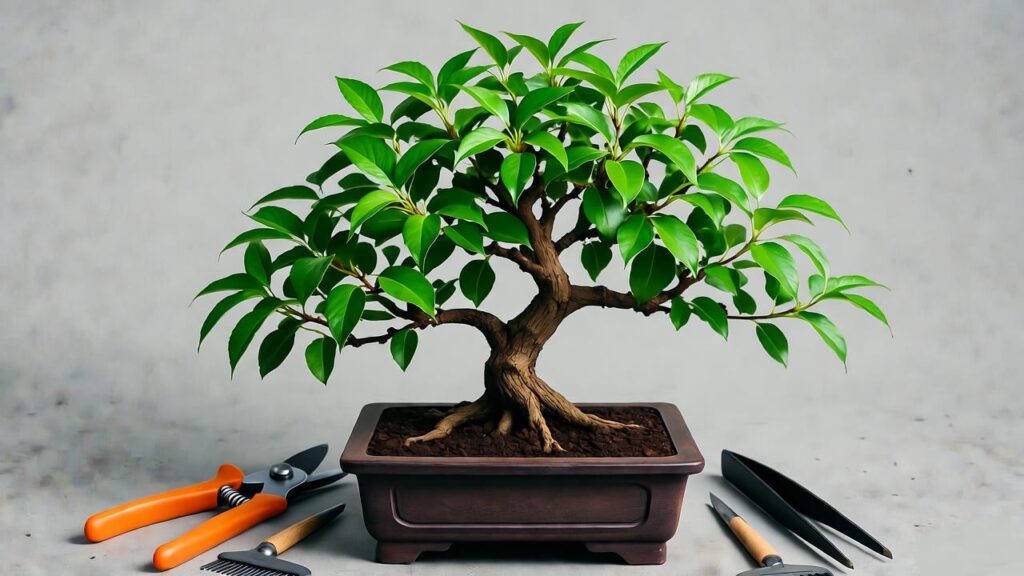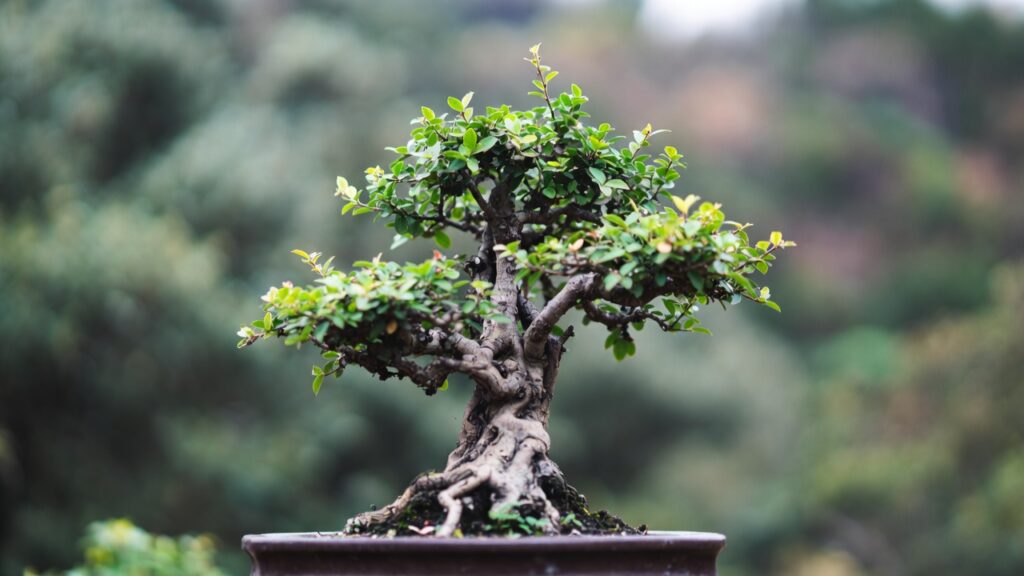

We’ve all been there. You walk into a nursery, spot a beautifully shaped, miniature tree sitting serenely in a shallow ceramic pot, and you buy it on impulse. You bring it home, set it on your coffee table, and almost immediately, the panic sets in. How do I keep this alive? Bonsai has a notorious reputation for being fragile, intimidating, and unforgiving. But if you brought home a ficus bonsai tree, you can let out a sigh of relief.
Through years of running diagnostics on countless indoor tropicals and troubleshooting everything from root rot to sudden leaf drop, I can assure you that while bonsai looks like a complex art form, it is governed by the exact same fundamental botanical rules as your everyday houseplants. The Ficus is the ultimate forgiving first step into this world.
In this comprehensive guide, we are going to move past the vague advice found on generic plant tags. We will break down the exact care metrics, pruning basics, and visual diagnostic cues you need to not just keep your indoor miniature alive, but to help it thrive.
Why the Ficus is the Ultimate “Starter” Bonsai
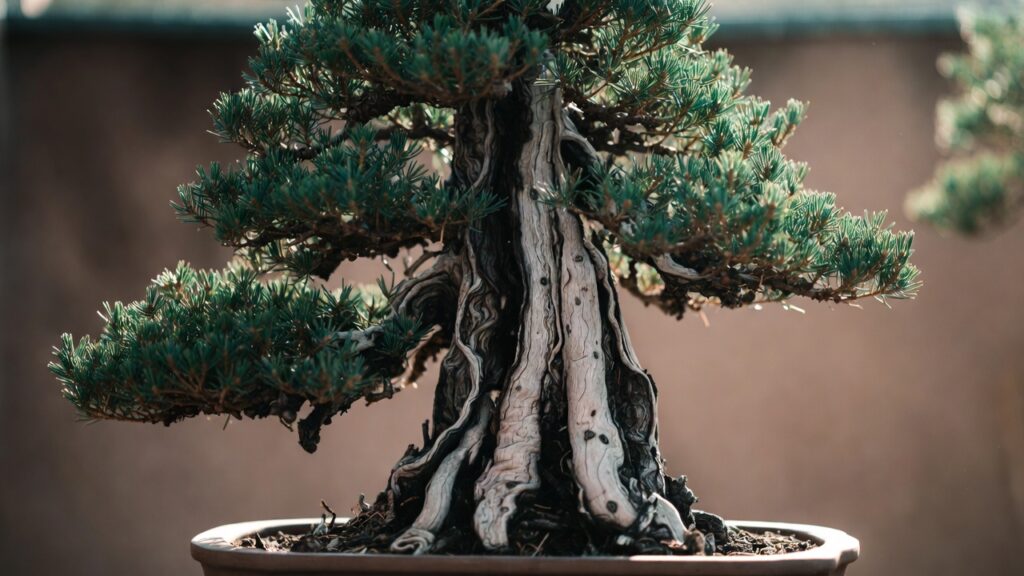
If you want to succeed with indoor bonsai, you have to choose a species that actually wants to live indoors. Many beginners make the heartbreaking mistake of buying a Juniper bonsai—a tree that requires harsh winter dormancy and full outdoor sun—only to watch it crisp up on their kitchen counter.
The Ficus (most commonly Ficus retusa, Ficus microcarpa, or the “Ginseng” Ficus) is fundamentally different.
-
Resilience to Indoor Conditions: As a tropical and subtropical species, the Ficus naturally adapts to the consistent temperatures and lower light levels found in the average living room. It won’t throw a fit if it misses a cold winter rest period.
-
Vigorous Growth Rate: One of the best ways to learn bonsai is by making mistakes. Because Ficus trees are fast growers during the spring and summer, an accidental over-prune or an awkward cut will quickly be hidden by a new flush of foliage.
-
The Aerial Roots Aesthetic: As the tree matures in humid environments, it drops stunning, dramatic aerial roots from its branches down to the soil, creating the iconic banyan-tree look. It offers maximum visual impact with minimum structural styling required.
The Core Care Guide: Building a Thriving Environment
When troubleshooting a declining bonsai, 90% of the issues stem from the environment. Bonsai trees are planted in incredibly small volumes of soil, which means there is very little buffer for extreme errors. Here is how to lock in the perfect conditions.
Light: The Non-Negotiable Factor
Light is food. The single biggest reason indoor ficus bonsai trees fail is slow starvation from inadequate lighting.
-
The Ideal Setup: Your tree needs bright, indirect light for at least 6 to 8 hours a day. The perfect spot is typically right in front of an east-facing window or a few feet back from a south-facing or west-facing window.
-
Visual Diagnostic Cues: How do you know if the lighting is wrong? If your tree is pushing out “leggy” growth—where the internodes (the stem space between leaves) are abnormally long and the leaves are unusually large and pale—it is desperately stretching for light. Conversely, if the leaves develop crispy, bleached brown patches, it is suffering from sunburn due to too much direct, harsh afternoon rays.
Watering: The #1 Way People Kill Bonsai
Because bonsai pots are shallow and use highly specialized soil, you cannot water them on a set weekly schedule like a pothos or a philodendron. Watering must be a dynamic response to the plant’s actual needs.
-
The “Soak and Dry” Method: When it is time to water, you must water thoroughly. Use a watering can with a fine rosette to gently shower the soil until water pours freely out of the drainage holes at the bottom. This flushes out stagnant air and pulls fresh oxygen into the root zone.
-
Ditch the Schedule: Never water on “Tuesdays.” Instead, use the tactile test. Press your finger about half an inch into the soil. If it feels completely dry, it is time to water. If it is still damp, wait another day. For deep pots, the “chopstick trick” is invaluable: leave a wooden chopstick pushed into the soil. Pull it out to check the moisture level deeper in the root zone—if the wood is dark and damp, hold off on watering.
-
Water Quality: Ficus trees can be somewhat sensitive to chlorine and heavy minerals. Using room-temperature, filtered water or rainwater will prevent the unsightly buildup of white mineral crusts on the soil surface and the rim of your pot.
Temperature and Humidity: Creating a Microclimate

Tropical plants thrive on stability. The Ficus bonsai prefers a temperature range between 60°F and 80°F (15°C to 26°C), which conveniently mirrors most home environments.
-
Draft Danger: While they tolerate average home temperatures perfectly, they despise sudden shifts. Keep your bonsai far away from AC vents, drafty winter windows, or the direct blast of a heating grate.
-
Humidity Hacks: Central heating and air conditioning strip moisture from the air, often dropping indoor humidity below 30%. Your Ficus prefers it closer to 50% or higher. To boost local humidity without risking fungal issues on your walls, place the bonsai pot on a humidity tray (a shallow tray filled with pebbles and water). Ensure the water level stays below the top of the pebbles so the pot never sits directly in the water, which would cause root rot.
Soil and Fertilizing: Feeding the Miniature Ecosystem
If you take away nothing else from this guide, remember this: standard, off-the-shelf indoor potting soil is a death sentence for a bonsai.
-
The Right Bonsai Mix: Traditional houseplant soils are designed to retain moisture. In a shallow bonsai pot, this creates a muddy, compacted environment that chokes the roots of oxygen. Ficus bonsai trees require a specialized, fast-draining aggregate mix. An ideal blend consists of inorganic materials (like Akadama, pumice, and black lava rock) for aeration and drainage, mixed with a small percentage of organic compost or pine bark fines for moisture retention.
-
The Feeding Schedule: Because bonsai soil is largely inorganic, it contains very few natural nutrients. You are entirely responsible for feeding the tree. During the active growing season (early spring through late summer), apply a balanced liquid fertilizer (diluted to half-strength) every two weeks. When the days shorten in autumn and winter, the tree’s metabolism slows down; drop your feeding schedule to once a month, or stop entirely if the tree halts active growth.
Diagnostic Clinic: Troubleshooting Common Ficus Bonsai Problems
Even with the best care, indoor tropicals will occasionally run into issues. As someone who has spent years analyzing indoor plant symptoms—from the subtle yellowing of a pothos leaf to advanced root rot in sensitive ferns—I can tell you that the Ficus bonsai will always visually communicate what it needs. You just have to know how to read the signs.
The Ficus “Tantrum” (Sudden Leaf Drop)
This is the number one cause of panic among new bonsai owners. You bring the tree home, set it in its new spot, and within a week, it drops 30% of its green leaves.
-
The Cause: Ficus trees are creatures of habit. They acclimate specifically to the light angle and humidity of their environment. Moving the plant from a greenhouse to a dark living room, subjecting it to a sudden temperature drop, or even just rotating it too drastically can trigger shock.
-
The Fix: Do absolutely nothing. Resist the urge to overwater or dump fertilizer into the soil (fertilizer is not medicine for a stressed plant). Keep the watering consistent, ensure the light is adequate, and wait. The Ficus will naturally shed leaves that are inefficient for its new environment and will push out a fresh flush of foliage perfectly adapted to your home within a few weeks.
Yellowing Leaves and Root Rot

If your tree’s lower leaves are turning a sickly, mushy yellow and dropping off, and you notice a swampy, damp odor emanating from the soil, you are dealing with the most critical indoor plant emergency: root rot.
-
The Diagnosis: Root rot occurs when the soil stays too wet for too long, depriving the root system of oxygen and allowing anaerobic bacteria and fungi to thrive. The roots turn from firm and white to brown, stringy, and mushy.
-
The Cure: You must act quickly. Gently unpot the tree and rinse the soil away from the root mass. Using sterilized bonsai shears, aggressively trim away any black, foul-smelling, or mushy roots until you reach healthy, firm tissue. Repot the tree in a completely fresh, sterile, and highly aerated bonsai mix. Withhold watering for a day or two to let the cut roots callus over, then resume watering carefully.
Common Indoor Pests
Indoor environments lack natural predators, making your bonsai a prime target for common sap-sucking insects.
-
Spider Mites: Look for faint, dusty webbing between the leaves and branches. If you hold a piece of white paper under a branch and tap the leaves, you may see tiny specks crawling on the paper. Spider mites thrive in dry, warm indoor air.
-
Scale Insects: These look like small, brown, waxy bumps firmly attached to the stems and the undersides of leaves. They often leave behind “honeydew,” a sticky residue that can lead to black sooty mold.
-
The Treatment Protocol: First, isolate the affected tree immediately to protect your other indoor plants. For spider mites, a strong shower of water to physically dislodge them, followed by a thorough spray of horticultural Neem oil, works wonders. For scale, use a cotton swab dipped in rubbing alcohol to physically wipe away the armored bugs, followed by a treatment with an indoor-safe insecticidal soap.
Shaping Your Miniature: Pruning and Wiring Basics
The art of bonsai is about creating the illusion of an ancient, mature tree in miniature. This is achieved through calculated styling.
Maintenance Pruning (Keeping the Shape)

Without pruning, your Ficus will simply revert to looking like a standard houseplant. Maintenance pruning directs energy away from the tips of the branches, forcing the tree to back-bud and create a denser, ramified canopy.
-
The “Rule of Thumb”: Allow a new shoot to grow out to six or eight leaves. Then, using sharp shears, cleanly snip the branch back to two or three leaves.
-
Directional Pruning: Always make your cut just above a leaf node that is pointing in the direction you want the new branch to grow.
Structural Pruning (Major Changes)
If you need to remove a thick, unsightly branch entirely, do so during the height of the active growing season (early summer) when the tree has the energy to heal quickly. Always use specialized concave cutters for thick branches; these tools create a slight indentation in the trunk that heals over perfectly flat, rather than leaving an ugly, protruding stump.
A Primer on Wiring
Wiring allows you to bend and position branches to mimic the downward droop of an aged banyan tree.
-
The Technique: Wrap anodized aluminum wire around the trunk and gently coil it up the target branch at a 45-degree angle. The wire should be snug, but not strangling.
-
The Warning: Because Ficus trees grow incredibly fast, the branches will swell quickly. You must check the wire weekly. If you see the wire beginning to bite into the bark, remove it immediately by cutting it off with wire cutters (do not try to uncoil it, or you risk snapping the branch).
Repotting: Giving Roots Room to Breathe

As a Ficus bonsai grows, its root system will eventually fill the pot, displacing the soil. If left unchecked, water will pool on top of the soil rather than penetrating, and the tree will begin to choke. You will typically need to repot an indoor Ficus every two to three years.
-
The Signs: Check the drainage holes. If a thick mat of roots is pushing out of the bottom, or if the tree seems to be pushing itself upward out of the pot, it is root-bound.
-
The Step-by-Step Process:
-
Wait until early to mid-spring, just as the tree is pushing out its most vigorous growth.
-
Carefully cut the anchoring wires holding the tree in the pot and gently lift it out.
-
Use a root rake or a wooden chopstick to gently tease out the old soil from the perimeter and bottom of the root mass.
-
Using sharp shears, trim away up to 1/3 of the root mass. Focus on removing thick, downward-pointing taproots, preserving the fine, hair-like feeder roots near the trunk.
-
Place fresh bonsai mix in the bottom of the pot, set the tree in place, and thread new anchoring wires over the root ball to secure it. Fill the remaining space with fresh soil, using a chopstick to work the soil deep into the root pockets to eliminate air gaps.
-
Water thoroughly until it runs clear.
-
Frequently Asked Questions (FAQ)
To ensure your Ficus bonsai journey is seamless, here are the most common questions indoor growers encounter:
Can I keep my Ficus bonsai outside? Yes, but only during the summer. Once nighttime temperatures consistently stay above 55°F (12°C), your Ficus will love a vacation on a shaded patio. The natural sunlight, humidity, and airflow will result in explosive growth. However, you must bring it back indoors well before the first autumn frost.
Are Ficus bonsai trees toxic to cats and dogs? Yes. The sap of the Ficus contains latex, which is mildly to moderately toxic to pets if ingested. It can cause drooling, vomiting, and oral irritation. Keep the tree out of reach of curious chewers.
How long does a Ficus bonsai live? With proper care, soil management, and routine repotting, a Ficus bonsai can live for generations, easily outliving its owner. Some documented Ficus bonsai trees are hundreds of years old.
Why are there white spots on my Ficus leaves? Do not panic! Many beginners confuse these with pests or powdery mildew. Ficus leaves naturally have tiny, white, waxy dots near the edges of the leaves called lithocysts. They are perfectly normal botanical structures. However, if the white spots are fuzzy and easily wipe off, you may be dealing with mealybugs.
Conclusion
Growing a Ficus bonsai tree indoors is an immensely rewarding pursuit. It is a daily practice of observation, patience, and minor adjustments. By abandoning arbitrary watering schedules in favor of tactile testing, investing in proper, fast-draining soil, and learning how to read the visual diagnostic signs your tree provides, you remove the guesswork from bonsai care.
Remember that your miniature tree is a living, breathing ecosystem, not a static piece of furniture. It will drop leaves, it will grow awkward branches, and it will require your active participation to thrive. Embrace the process, keep your pruning shears sharp, and enjoy the lifelong journey of shaping your own indoor masterpiece.