Essential Indoor Plants

bonsai ficus

Bonsai Ficus Care Guide: How to Keep Your Tree Healthy, Compact, and Thriving Indoors

A bonsai tree can transform an ordinary room into a calm, living space — but many beginners quickly discover that keeping one healthy is harder than it looks. Leaves suddenly fall off, branches become weak, growth slows down, and before long, the tree starts looking nothing like the beautiful miniature masterpiece they bought.

The good news? A bonsai ficus is one of the easiest and most forgiving bonsai trees you can grow indoors. With the right balance of light, watering, pruning, humidity, and patience, your bonsai ficus can thrive for years and become even more beautiful over time.

This complete bonsai ficus care guide will teach you everything you need to know to grow a healthy, compact, and vibrant indoor bonsai tree — whether you’re a complete beginner or an experienced indoor plant enthusiast looking to improve your bonsai care routine.

Table of Contents

What Is a Bonsai Ficus?

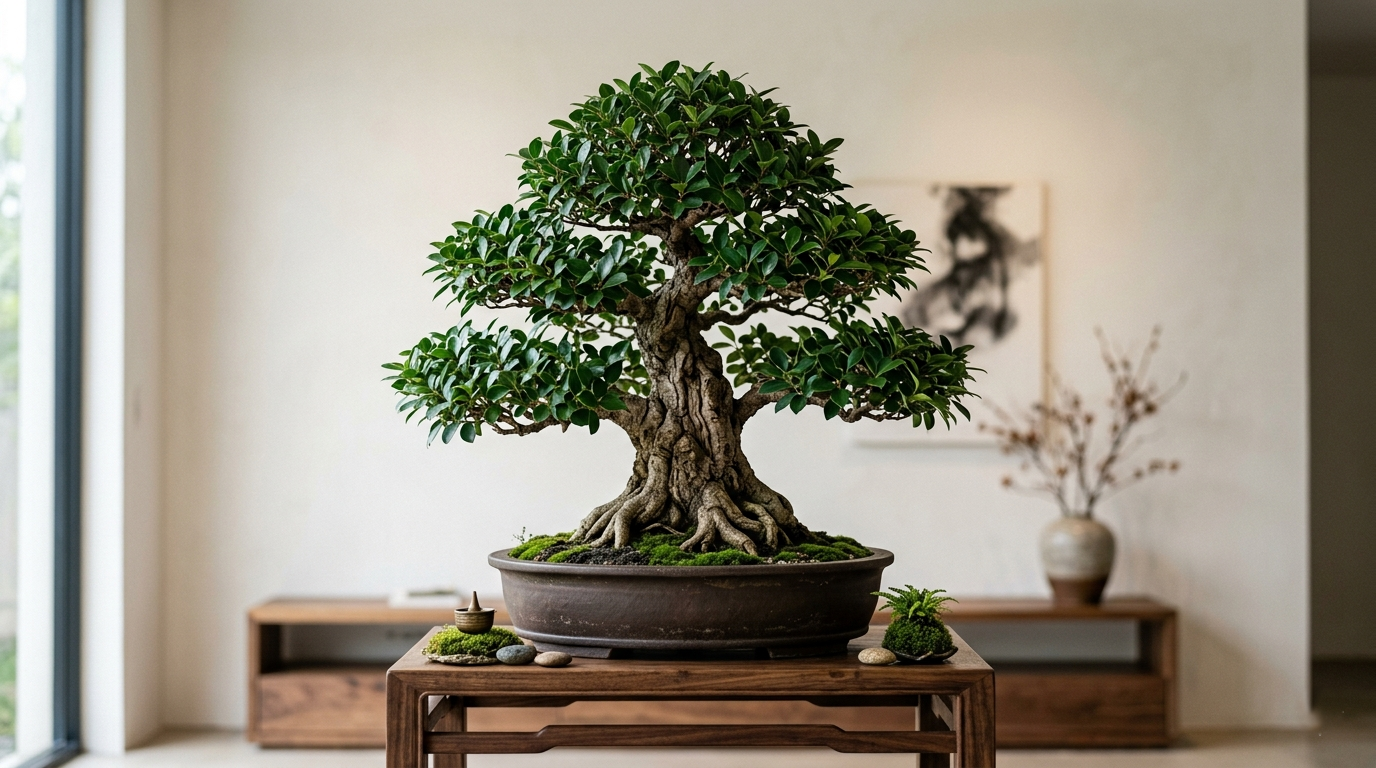
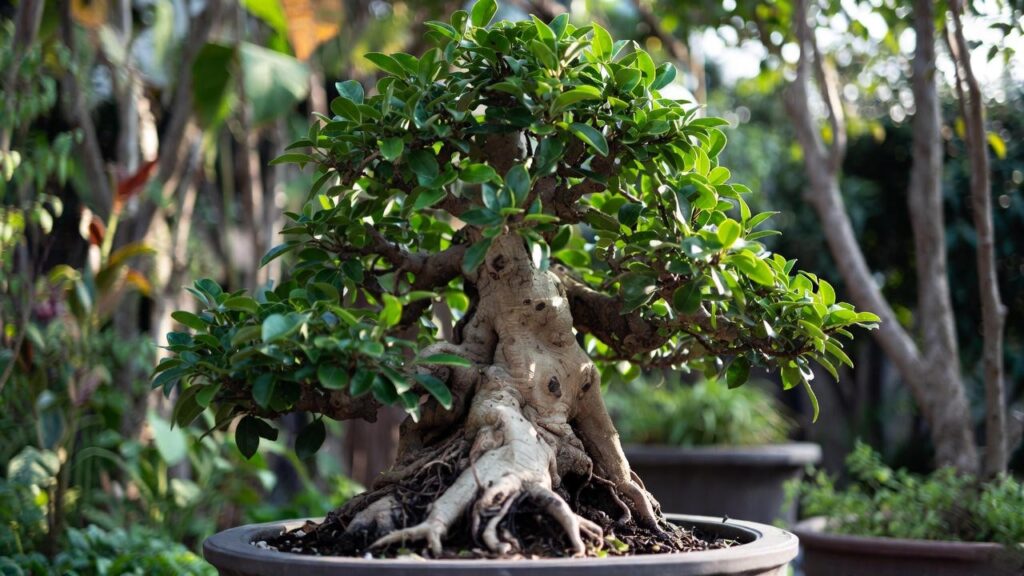
A bonsai ficus is a miniature tree created from species within the Ficus genus, carefully pruned and trained to grow in compact bonsai form. Unlike many traditional bonsai species that require outdoor conditions, ficus bonsai trees adapt exceptionally well to indoor environments.

Their glossy green leaves, thick trunks, and aerial roots give them a mature, tropical appearance that makes them highly desirable as indoor bonsai plants.

Because of their resilience and adaptability, bonsai ficus trees are often recommended for beginners learning the art of bonsai cultivation.

Why Bonsai Ficus Is So Popular Indoors

Several qualities make the bonsai ficus one of the best indoor bonsai trees:

  • Tolerates indoor humidity better than many bonsai species
  • Recovers well from pruning mistakes
  • Grows relatively fast
  • Handles occasional neglect better than delicate bonsai varieties
  • Develops attractive roots and trunk structure over time
  • Thrives under artificial grow lights

For apartment dwellers and indoor gardeners, few bonsai species are as practical and rewarding.

Common Types of Bonsai Ficus

Ficus Retusa

One of the most common bonsai ficus varieties, known for its smooth trunk and oval leaves.

Ficus Ginseng

Popular for its thick, bulbous roots and sculptural appearance.

Ficus Benjamina

Features elegant weeping branches and smaller leaves.

Tiger Bark Ficus

Highly valued for its textured bark and excellent bonsai aesthetics.

Bonsai Ficus Lifespan and Growth Potential

With proper care, a bonsai ficus can live for decades. Some bonsai trees are passed down through generations.

Indoors, most bonsai ficus trees remain compact, but they continuously develop thicker trunks, denser foliage, and more refined branching as they mature.

Bonsai Ficus Care at a Glance

Before diving deeper into care techniques, here’s a quick overview of ideal bonsai ficus growing conditions.

Care Factor Ideal Condition
Light Bright indirect light
Watering Water when topsoil slightly dries
Humidity Moderate to high humidity
Temperature 60–80°F (16–27°C)
Soil Fast-draining bonsai mix
Fertilizer Every 2–4 weeks during growth
Pruning Regular light pruning
Repotting Every 2–3 years

Is Bonsai Ficus Good for Beginners?

Absolutely.

Many bonsai species demand strict outdoor conditions and precise care routines. Bonsai ficus trees are far more forgiving. They tolerate pruning, adapt to indoor conditions, and recover quickly from stress.

This resilience allows beginners to learn bonsai techniques without constant fear of killing the tree.

Best Light Conditions for Bonsai Ficus
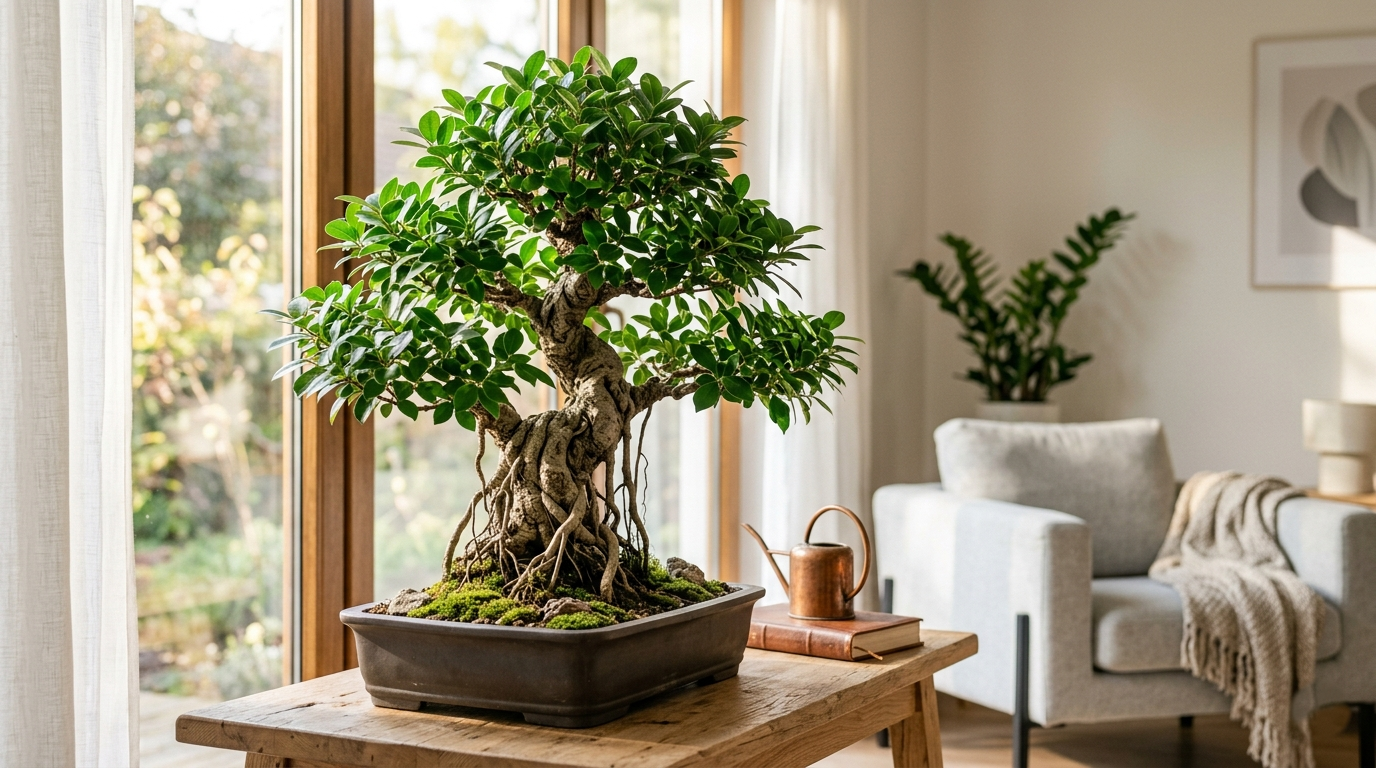
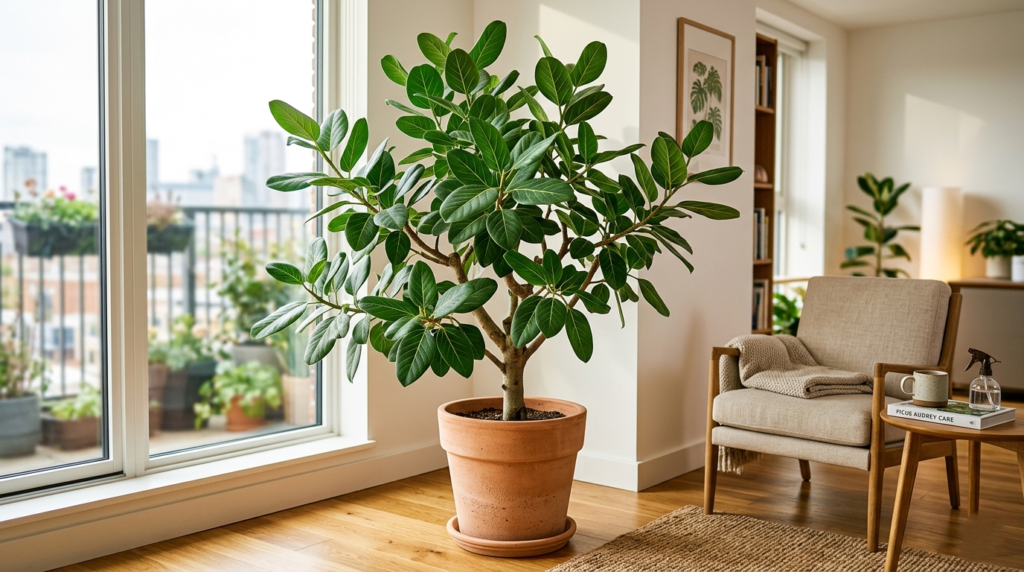
Healthy bonsai ficus tree receiving bright indirect indoor sunlight

Light is one of the most important factors in bonsai ficus care. Poor lighting is often the hidden reason behind weak growth, leaf drop, and unhealthy foliage.

How Much Light Does a Bonsai Ficus Need?

A bonsai ficus thrives in:

  • Bright indirect sunlight
  • Several hours of filtered light daily
  • Gentle morning sun

The ideal location is usually near:

  • East-facing windows
  • South-facing windows with filtered curtains
  • Bright indoor spaces with stable lighting

If natural light is limited, supplemental grow lights can help maintain healthy growth.

Signs Your Bonsai Ficus Needs More Light

Low light conditions often cause:

  • Sparse foliage
  • Pale leaves
  • Long, stretched stems
  • Slow growth
  • Sudden leaf drop

If your bonsai ficus appears weak or leggy, insufficient lighting is often the cause.

Can Bonsai Ficus Grow Under Artificial Lights?

Yes — bonsai ficus trees grow very well under LED grow lights.

For best results:

Grow lights are especially useful during winter when daylight hours decrease.

Seasonal Light Adjustments

Indoor light intensity changes dramatically throughout the year.

During Summer

  • Protect from harsh afternoon sun
  • Increase airflow around the tree

During Winter

  • Move closer to brighter windows
  • Supplement with grow lights if necessary

Consistent lighting helps prevent seasonal stress and leaf drop.

How to Water a Bonsai Ficus Properly
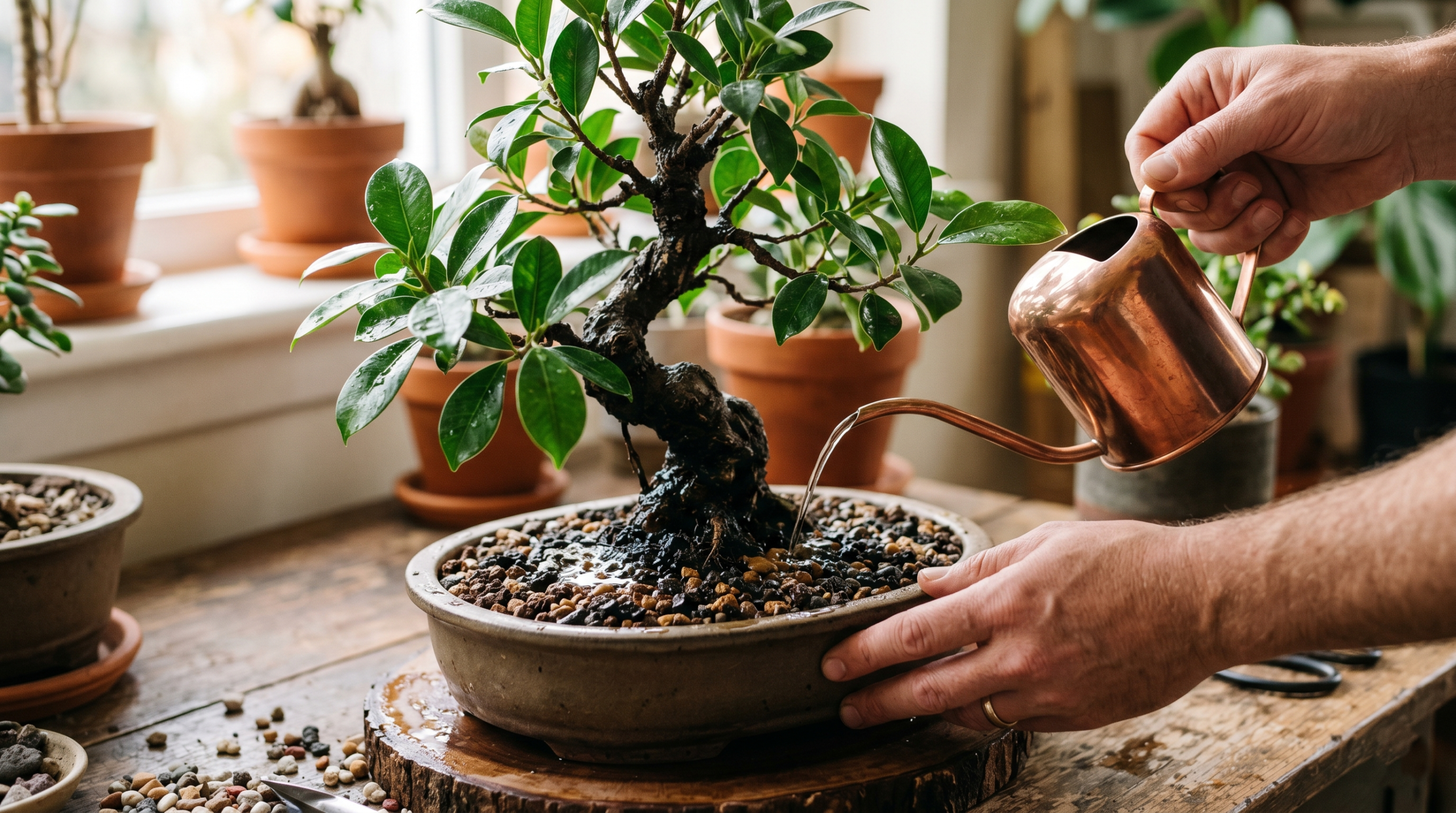
Proper watering method for indoor bonsai ficus tree care

Improper watering kills more bonsai ficus trees than almost any other issue.

The key is understanding that bonsai containers behave differently from regular houseplant pots.

The Biggest Mistake: Overwatering

Because bonsai pots are shallow, many beginners water too frequently out of fear that the soil dries quickly.

Unfortunately, constantly wet soil suffocates roots and encourages root rot.

Common signs of overwatering include:

  • Yellow leaves
  • Mushy roots
  • Foul-smelling soil
  • Leaf drop
  • Blackened roots

Healthy bonsai roots need both moisture and oxygen.

How Often Should You Water a Bonsai Ficus?

There is no universal watering schedule.

Instead, watering depends on:

  • Room temperature
  • Humidity
  • Pot size
  • Soil mix
  • Season
  • Tree size

In general:

  • Summer may require watering every 1–2 days
  • Winter may require watering every 4–7 days

Always check the soil before watering.

The Finger Test Method Explained

The safest watering method is simple:

  1. Insert your finger about 1 inch into the soil
  2. If the soil feels slightly dry, water thoroughly
  3. If still moist, wait another day

This method prevents both underwatering and overwatering.

Best Water Type for Bonsai Ficus

Filtered water or rainwater is ideal because it reduces mineral buildup.

Hard tap water may eventually cause:

  • White crust on soil
  • Salt accumulation
  • Leaf tip browning

If using tap water, allow it to sit overnight before watering.

Signs of Underwatering vs Overwatering

Underwatering

  • Crispy leaves
  • Dry soil
  • Wilting
  • Leaf curling

Overwatering

  • Yellow leaves
  • Soft roots
  • Constantly wet soil
  • Mushy trunk base

Learning to distinguish these symptoms is essential for long-term bonsai success.

Choosing the Best Soil for Bonsai Ficus

Soil quality directly affects root health, drainage, oxygen flow, and overall tree vitality.

Why Regular Potting Soil Doesn’t Work Well

Standard potting soil retains too much moisture for bonsai containers.

This creates:

  • Poor airflow
  • Compacted roots
  • Root rot risk
  • Weak growth

Bonsai ficus trees need fast-draining soil.

Ideal Bonsai Soil Mix for Ficus

A good bonsai soil blend usually contains:

  • Akadama
  • Pumice
  • Lava rock
  • Pine bark or organic matter

These ingredients create excellent drainage while retaining enough moisture for healthy roots.

DIY Bonsai Ficus Soil Recipe

A beginner-friendly bonsai soil mix:

  • 40% pumice
  • 30% akadama
  • 20% lava rock
  • 10% pine bark

This combination balances drainage, moisture retention, and airflow.

How Good Soil Prevents Root Rot

Healthy bonsai roots require oxygen.

Fast-draining soil:

  • Prevents waterlogging
  • Reduces fungal problems
  • Encourages stronger root systems
  • Improves nutrient uptake

Soil is often the hidden foundation of a thriving bonsai ficus.

Temperature and Humidity Requirements

Because bonsai ficus trees are tropical plants, they prefer warm temperatures and moderate humidity.

Ideal Indoor Temperature Range

The best temperature range is:

  • 60–80°F (16–27°C)

Avoid:

  • Cold drafts
  • Sudden temperature changes
  • Air conditioner vents
  • Heating vents

Extreme fluctuations stress the tree and trigger leaf loss.

Why Humidity Matters for Bonsai Ficus

Indoor air often becomes very dry, especially during winter.

Low humidity may cause:

  • Brown leaf edges
  • Dry foliage
  • Weak growth
  • Increased pest problems

Maintaining humidity improves overall tree health.

Easy Ways to Increase Humidity

Use a Pebble Tray

Place water beneath the pot without submerging roots.

Run a Humidifier

Especially useful during winter.

Group Indoor Plants Together

Plants naturally raise surrounding humidity levels.

Mist Occasionally

Helpful, but not a replacement for proper humidity management.

Can Bonsai Ficus Go Outside?

Yes — during warm months.

Outdoor exposure can:

  • Improve vigor
  • Increase trunk thickening
  • Promote dense foliage

However:

  • Avoid temperatures below 55°F (13°C)
  • Gradually acclimate the tree to sunlight

Sudden outdoor exposure may scorch leaves.

How to Prune and Shape a Bonsai Ficus
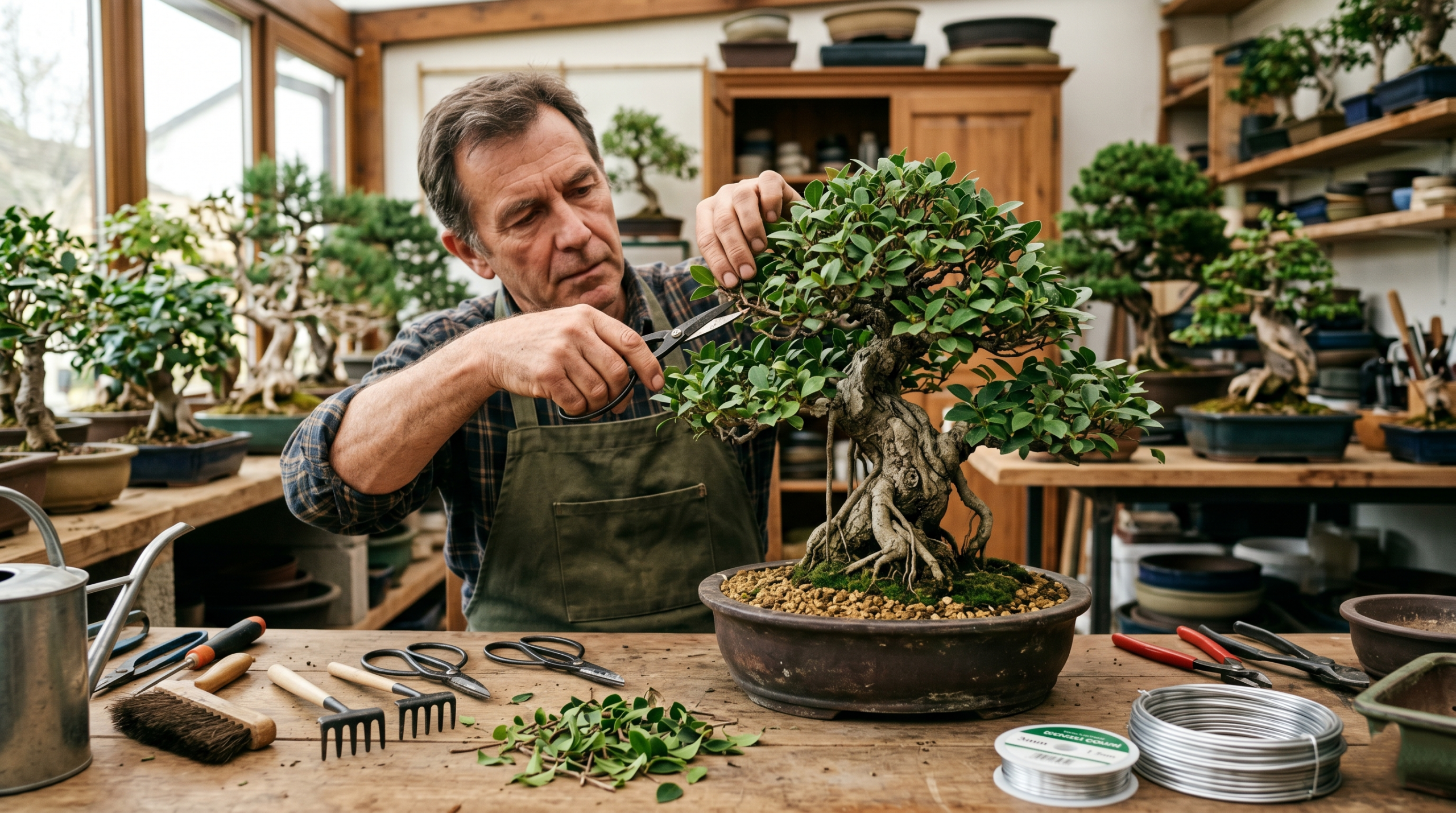
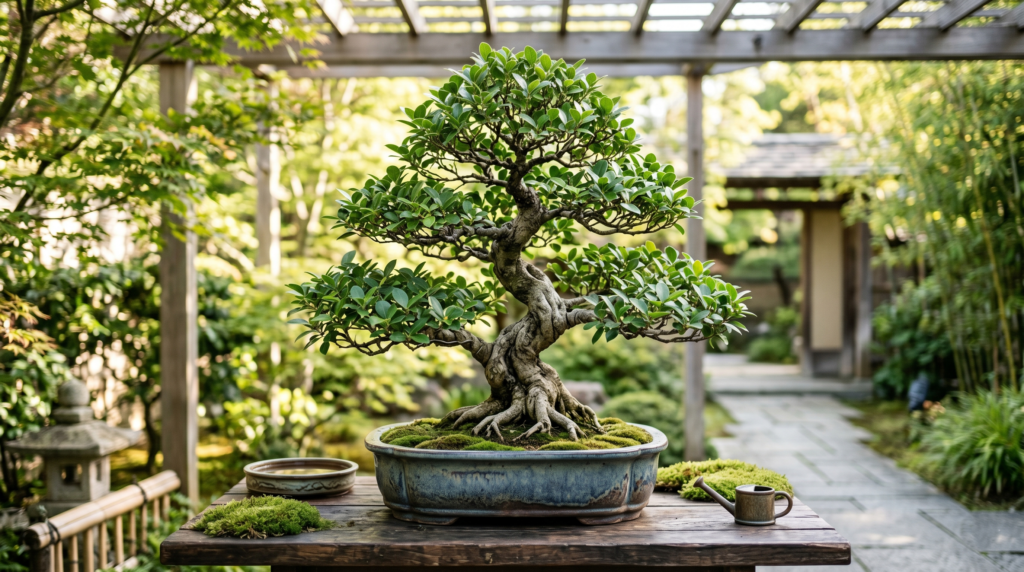
Pruning and shaping a bonsai ficus tree indoors

Pruning is what transforms an ordinary ficus into a beautiful bonsai tree.

Without pruning, the plant quickly loses its compact structure.

Why Pruning Is Essential

Proper pruning:

  • Encourages branching
  • Maintains miniature proportions
  • Improves airflow
  • Creates aesthetic structure
  • Stimulates dense foliage

Consistent shaping is central to bonsai artistry.

When to Prune Bonsai Ficus

The best time to prune is during active growth:

  • Spring
  • Early summer

Light maintenance pruning can continue year-round indoors.

Step-by-Step Bonsai Ficus Pruning Guide

Step 1: Inspect the Tree

Identify:

  • Crossing branches
  • Weak growth
  • Overextended shoots

Step 2: Remove Unwanted Growth

Trim:

  • Dead branches
  • Leggy stems
  • Inward-growing branches

Step 3: Maintain Shape

Cut back long shoots to 2–4 leaves.

Step 4: Sterilize Tools

Always use clean pruning scissors to prevent disease spread.
Wiring Techniques for Beginners

Wiring allows you to gently guide branches into elegant bonsai shapes. While pruning controls size and density, wiring helps create the artistic structure that defines bonsai design.

For bonsai ficus trees, wiring is generally easier than with brittle bonsai species because ficus branches are flexible and resilient.

How to Wire a Bonsai Ficus Safely

Follow these beginner-friendly steps:

  1. Choose anodized aluminum bonsai wire
  2. Wrap the wire around the branch at a 45-degree angle
  3. Avoid wrapping too tightly
  4. Slowly bend the branch into the desired position
  5. Monitor the branch weekly

Ficus branches grow quickly, and wire can leave scars if forgotten too long.

Best Time to Wire Bonsai Ficus

The ideal time is during active growth:

  • Spring
  • Early summer

Avoid heavy wiring when the tree is stressed or unhealthy.

Common Wiring Mistakes

Beginners often:

  • Bend branches too aggressively
  • Use wire that’s too thick
  • Leave wire on too long
  • Wire weak branches

Gentle adjustments produce better long-term results.

Fertilizing Bonsai Ficus for Healthy Growth

Even the best bonsai soil contains limited nutrients. Since bonsai trees grow in shallow containers, regular fertilizing is essential for sustained health and compact growth.

A properly fertilized bonsai ficus develops:

  • Rich green leaves
  • Strong roots
  • Dense branching
  • Faster recovery after pruning

Best Fertilizer Types for Bonsai Ficus

Several fertilizer types work well.

Liquid Fertilizer

  • Fast nutrient absorption
  • Easy to control
  • Ideal for active growth periods

Slow-Release Fertilizer

  • Convenient for beginners
  • Provides steady nutrition
  • Reduces overfeeding risk

Organic Bonsai Fertilizer

Popular choices include:

  • Fish emulsion
  • Seaweed extract
  • Organic bonsai pellets

Organic fertilizers often improve soil biology and reduce fertilizer burn risk.

How Often to Fertilize

Spring and Summer

Feed every 2–4 weeks during active growth.

Fall

Reduce feeding frequency as growth slows.

Winter

Indoor bonsai ficus trees may continue slow growth, but fertilizer needs are lower.

Avoid heavy fertilizing during winter dormancy-like periods.

Signs of Nutrient Deficiency

Your bonsai ficus may need feeding if you notice:

  • Pale green leaves
  • Weak branch growth
  • Small new leaves
  • Slow development
  • Reduced vigor

Consistent fertilization supports long-term bonsai refinement.

Organic vs Synthetic Fertilizers

Organic Fertilizer Synthetic Fertilizer
Gentle nutrient release Faster results
Improves soil biology Highly concentrated
Lower burn risk Easier to overfeed
Environmentally friendly Often cheaper

Both can work well when used properly.

Repotting Bonsai Ficus the Right Way

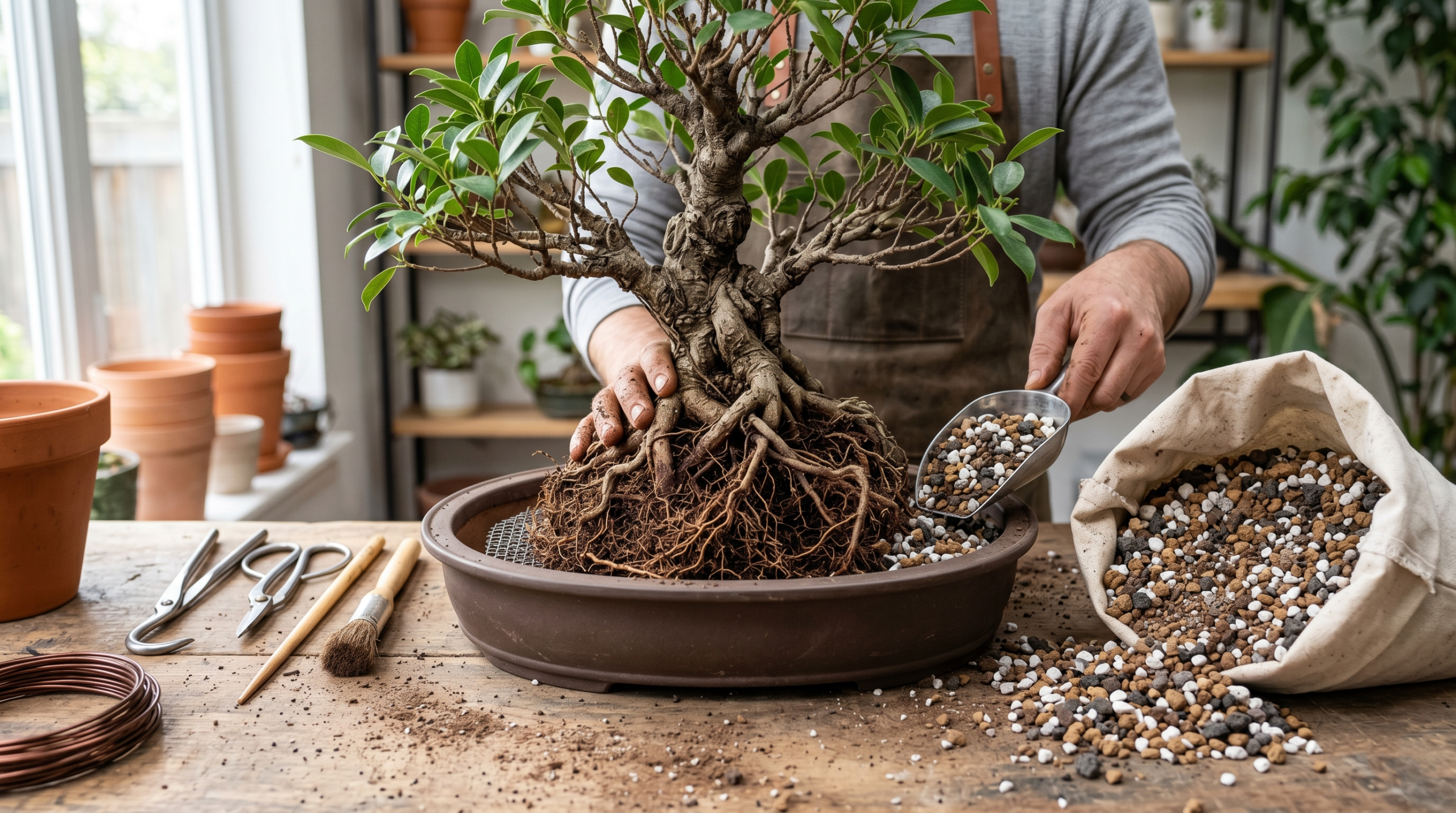
Repotting bonsai ficus tree using fast-draining bonsai soil

Repotting is critical for maintaining healthy roots and preventing compacted soil.

Unlike regular houseplants, bonsai trees require periodic root pruning and soil replacement to remain healthy in shallow containers.

When Should You Repot a Bonsai Ficus?

Most bonsai ficus trees need repotting every:

  • 2–3 years for young trees
  • 3–5 years for mature trees

Signs your bonsai needs repotting:

  • Water drains poorly
  • Roots circle the pot
  • Growth slows dramatically
  • Soil becomes compacted

Best Time of Year to Repot

The best repotting period is:

  • Late spring
  • Early summer

At this stage, the tree recovers more quickly from root disturbance.

Step-by-Step Repotting Process

Step 1: Remove the Tree Carefully

Gently loosen roots from the pot.

Step 2: Remove Old Soil

Use chopsticks or root hooks carefully.

Step 3: Prune Roots

Trim:

  • Dead roots
  • Long circling roots
  • Damaged roots

Avoid removing excessive healthy roots.

Step 4: Add Fresh Bonsai Soil

Use fast-draining bonsai soil mix.

Step 5: Secure the Tree

Prevent movement while roots establish.

Step 6: Water Thoroughly

Fully saturate the new soil.

Aftercare Following Repotting

For the first few weeks:

  • Avoid direct intense sunlight
  • Reduce fertilizing
  • Keep soil lightly moist
  • Monitor for stress

Repotting temporarily weakens the tree, so gentle care is important.

Common Bonsai Ficus Problems and How to Fix Them

Even healthy bonsai ficus trees occasionally develop issues. The key is identifying problems early before severe damage occurs.

Why Is My Bonsai Ficus Dropping Leaves?

Leaf drop is one of the most common concerns among bonsai owners.

Common causes include:

  • Sudden environmental changes
  • Overwatering
  • Underwatering
  • Low light
  • Temperature stress
  • Draft exposure

Ficus trees are sensitive to abrupt changes in their environment.

How to Fix Leaf Drop

  • Maintain stable lighting
  • Avoid moving the tree frequently
  • Improve watering consistency
  • Increase humidity if necessary

Most healthy bonsai ficus trees recover once conditions stabilize.

Yellow Leaves on Bonsai Ficus

Yellowing leaves often indicate:

  • Overwatering
  • Poor drainage
  • Nutrient deficiencies
  • Root stress

If the soil remains constantly wet, inspect for root rot immediately.

Brown Leaf Tips and Crispy Leaves

This usually points to:

  • Low humidity
  • Underwatering
  • Salt buildup from hard water

Improving humidity and flushing the soil occasionally can help.

Root Rot Symptoms and Solutions

Root rot is among the most dangerous bonsai problems.

Symptoms

  • Mushy roots
  • Blackened roots
  • Foul odor
  • Yellowing leaves
  • Weak growth

Treatment

  1. Remove the tree from the pot
  2. Trim infected roots
  3. Replace old soil
  4. Improve drainage
  5. Reduce watering frequency

Early intervention greatly improves survival chances.

Pests That Affect Bonsai Ficus

Indoor bonsai ficus trees occasionally attract pests, especially under dry conditions.

Spider Mites

Signs:

  • Tiny webbing
  • Speckled leaves

Mealybugs

Signs:

  • White cotton-like clusters

Scale Insects

Signs:

  • Brown bumps on stems

Regular inspection prevents severe infestations.

Natural Pest Control Methods

Safer treatment options include:

  • Neem oil
  • Insecticidal soap
  • Cotton swabs with rubbing alcohol
  • Gentle leaf cleaning

Avoid overusing harsh chemical pesticides indoors.

How to Make Your Bonsai Ficus Grow Thicker and Healthier

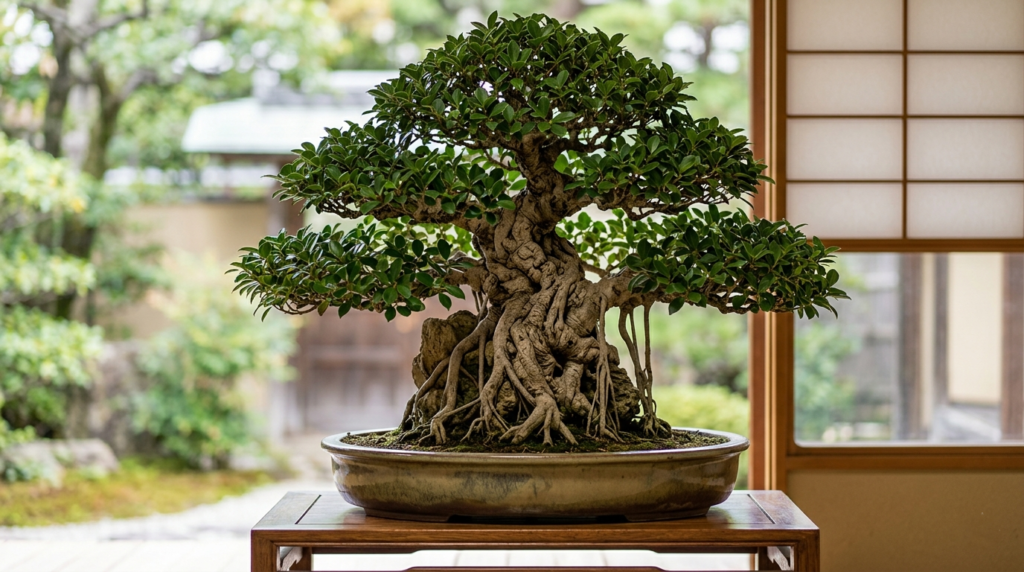
Mature bonsai ficus tree with thick trunk and dense foliage

Many bonsai growers want a stronger trunk, denser foliage, and more mature appearance.

Developing a beautiful bonsai takes time, but the right techniques accelerate progress significantly.

Encouraging Strong Trunk Development

A thicker trunk creates the illusion of age and stability.

Effective Techniques

  • Allow sacrifice branches to grow temporarily
  • Increase light exposure
  • Feed consistently during active growth
  • Move outdoors during warm months

Healthy growth drives trunk thickening.

How to Promote Dense Foliage

Dense foliage pads create a refined bonsai appearance.

Key Strategies

  • Regular pruning
  • Proper lighting
  • Balanced fertilization
  • Rotating the tree for even growth

Weak light often causes sparse foliage.

Balancing Growth and Bonsai Shape

Fast growth is not always beneficial.

Overgrown branches can:

  • Ruin proportions
  • Create leggy growth
  • Reduce ramification

Consistent maintenance is more effective than aggressive occasional pruning.

Seasonal Bonsai Ficus Care Guide

Indoor bonsai care changes throughout the year. Understanding seasonal needs helps prevent stress and keeps growth stable.

Spring Care Checklist

Spring is the primary growth season.

Priorities

  • Resume fertilizing
  • Increase watering gradually
  • Begin pruning and shaping
  • Repot if needed

Watch for vigorous new growth.

Summer Care Checklist

Summer provides ideal growing conditions.

Focus Areas

  • Monitor soil moisture carefully
  • Protect from scorching afternoon sun
  • Increase humidity during heat waves
  • Consider outdoor placement

Growth is usually fastest during this period.

Fall Care Checklist

Growth gradually slows.

Important Tasks

  • Reduce fertilizer frequency
  • Prepare for lower indoor light
  • Inspect for pests before bringing indoors
  • Adjust watering routines

Avoid sudden environmental changes.

Winter Care Checklist

Winter is challenging for many indoor bonsai trees.

Winter Care Tips

  • Increase light exposure
  • Reduce watering frequency
  • Protect from heating vents
  • Maintain humidity

Dry winter air is a major issue for tropical bonsai ficus trees.

Beginner Mistakes That Kill Bonsai Ficus

Many bonsai problems stem from a few common beginner mistakes.

Avoiding these issues dramatically increases success rates.

Watering on a Schedule Instead of Checking Soil

Rigid watering schedules often cause:

  • Root rot
  • Dehydration
  • Inconsistent moisture

Always assess soil moisture first.

Keeping the Tree in Low Light

Insufficient light weakens the tree over time.

Low-light symptoms include:

  • Sparse leaves
  • Weak branches
  • Slow growth
  • Frequent leaf drop

Light is essential for long-term health.

Using the Wrong Soil

Dense soil suffocates roots and traps moisture.

Fast drainage is critical for bonsai health.

Ignoring Humidity

Dry indoor air stresses tropical ficus trees.

Humidity becomes especially important during winter.

Pruning Too Aggressively

Heavy pruning weakens the tree if performed excessively.

Healthy bonsai development requires balance and patience.

Expert Tips for Long-Term Bonsai Ficus Success

Experienced bonsai growers focus less on perfection and more on consistency.

Healthy bonsai care comes from observation and gradual refinement.

How Experienced Growers Maintain Healthy Trees

Successful growers:

  • Observe trees daily
  • Adjust watering seasonally
  • Prioritize root health
  • Avoid unnecessary stress

Small adjustments prevent major problems.

Creating a Stable Indoor Environment

Bonsai ficus trees prefer stability.

Try to maintain:

  • Consistent temperatures
  • Reliable lighting
  • Moderate humidity
  • Predictable watering

Environmental stability reduces stress dramatically.

Why Observation Is the Most Important Skill

Your tree constantly communicates through:

  • Leaf color
  • Growth patterns
  • Soil moisture
  • Branch vigor

Learning to recognize subtle changes helps you respond before problems worsen.

Building a Bonsai Care Routine

Simple routines improve long-term success.

Weekly routine example:

  • Check soil moisture
  • Rotate the tree
  • Inspect for pests
  • Remove dead leaves
  • Monitor branch growth

Consistency matters more than complexity.

Frequently Asked Questions About Bonsai Ficus

Is Bonsai Ficus Toxic to Cats or Dogs?

Yes. Ficus sap can irritate pets if ingested. Keep bonsai ficus trees out of reach of curious animals.

How Fast Does Bonsai Ficus Grow?

Under good conditions, bonsai ficus trees grow relatively quickly compared to many bonsai species.

Growth depends on:

  • Light
  • Temperature
  • Fertilization
  • Overall health

Can Bonsai Ficus Survive in Low Light?

They tolerate moderate light better than many bonsai trees, but prolonged low light weakens growth and increases leaf drop.

Why Are My Bonsai Ficus Leaves Falling Off?

Common causes include:

  • Environmental stress
  • Watering issues
  • Low humidity
  • Poor lighting
  • Sudden temperature changes

How Often Should I Mist My Bonsai Ficus?

Occasional misting helps temporarily, but maintaining room humidity is more effective long-term.

Can I Keep Bonsai Ficus Outdoors Year-Round?

Only in warm tropical or subtropical climates.

Cold temperatures can seriously damage ficus bonsai trees.

What Is the Best Fertilizer for Bonsai Ficus?

Balanced bonsai fertilizers with equal NPK ratios work well for most indoor bonsai ficus trees.

Organic fertilizers are also excellent for sustained health.

Final Thoughts

A healthy bonsai ficus is not created overnight. It develops through consistent care, observation, patience, and gradual refinement.

The beauty of bonsai lies not only in the finished tree, but in the process of nurturing and shaping it over time.

By providing:

  • Bright light
  • Proper watering
  • Fast-draining soil
  • Balanced fertilization
  • Regular pruning
  • Stable humidity

…your bonsai ficus can remain healthy, compact, and thriving for many years.

Whether you’re just starting your indoor bonsai journey or refining an established tree, remember that small daily improvements create extraordinary long-term results.

Table of Contents

Index
Scroll to Top