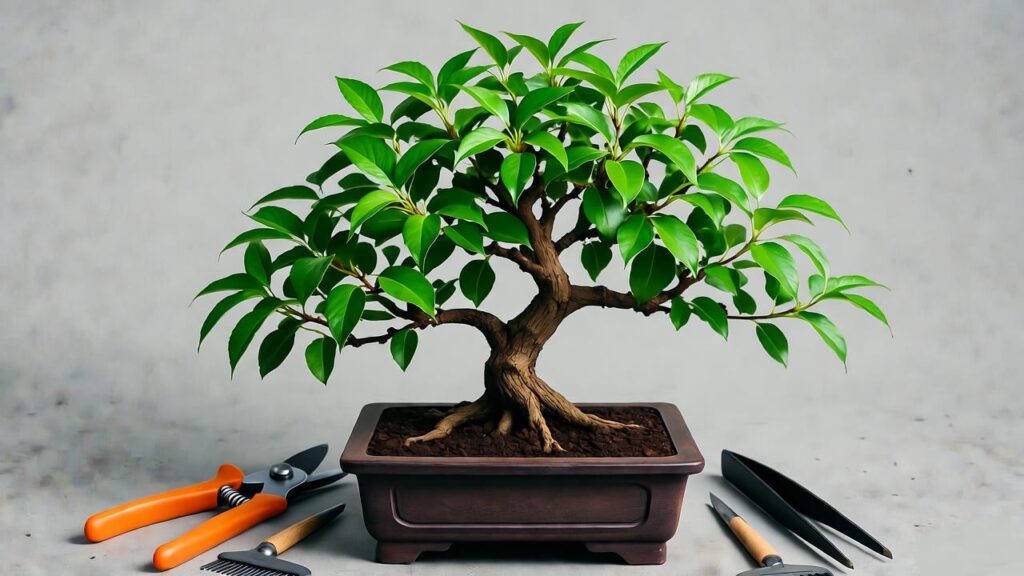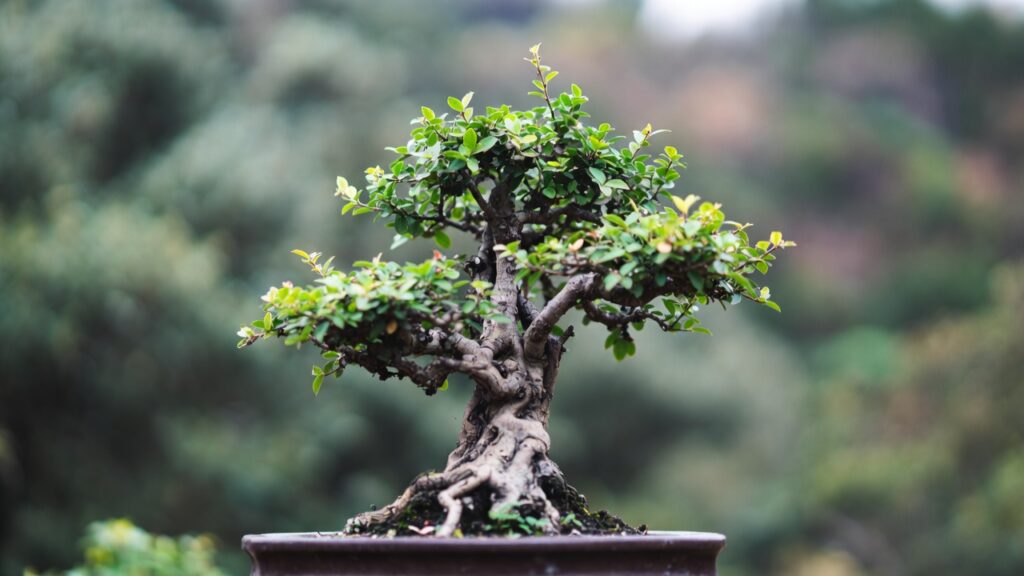

Few plants bring as much elegance to a home as a maple japanese bonsai (Japanese Maple). With its delicate, hand-shaped leaves and spectacular seasonal color changes, it looks like a piece of living art. However, keeping this outdoor tree inside introduces a major challenge. Traditional gardening advice says that temperate trees cannot survive in a living room.
If you have tried keeping one on your windowsill only to watch its leaves dry up and drop, you are not alone. A typical home is very different from a cool, misty mountain slope. But here is the secret: by setting up a simple environment and understanding how the tree works, you can easily break the rules. This guide will show you the exact, easy-to-follow steps to help your miniature maple thrive inside your home year-round.
Understanding the Botany: Why It Is an “Advanced Art”
To successfully grow a Japanese Maple indoors, we must first understand how it works. A maple is not a tropical houseplant like a Pothos or a Monstera; it is a tree that is wired to react to the shifting rhythms of the four seasons.
The Biological Needs of the Tree
The Role of Daylight
In nature, a maple relies on the changing duration of daylight to regulate its internal clock. As summer ends, shorter days signal the tree to stop growing and reveal its brilliant red and orange colors before going to sleep for winter. Indoors, constant artificial lights confuse the tree’s internal clock, resulting in weak growth and eventual failure.
The Need for Fresh Air
Outdoors, gentle wind currents shake the tree trunk, which naturally forces it to grow thicker and pump water up from the roots. In a closed indoor room with still air, this water movement slows down. Moisture sits too long around the roots, creating a prime breeding ground for mold and causing the leaves to droop.
The False Maple Alternative: A Beginner’s Secret
Creating the Ultimate Indoor Environment
To keep a true Japanese Maple healthy indoors, you need to create a specific micro-climate around it using light, temperature, and humidity.
1. Light Requirements (No Direct Harsh Sun)
Japanese Maples love bright light, but they hate harsh, baking heat.
-
The Best Spot: An East-facing window. It offers cool morning sunlight which gives the tree energy without burning the leaves.
-
What to Avoid: Keep it away from South or West-facing windows. The intense afternoon sun can pass through the glass and scorch the delicate leaves in minutes.
-
Using Artificial Lights: If your room is dark, hang a standard LED grow light 8 to 12 inches above the tree. Keep it turned on for 14 hours a day during spring and summer.
2. Airflow and Temperature Management
-
Use a Small Fan: Stagnant, still indoor air is dangerous for trees. Place a small desktop fan a few feet away on a low, oscillating setting. This keeps the air moving and prevents mold.
-
Avoid AC and Heaters: Never place your bonsai near air conditioning vents or heating radiators. This artificial air will dry out the leaves almost instantly.
3. Fixing Dry Indoor Air (Humidity)

The air inside our homes is usually too dry for a maple bonsai. These trees need a steady humidity level of 50% to 60%.
-
The Humidity Tray Solution: Fill a wide tray with small pebbles and pour water into it. Place your bonsai pot right on top of the pebbles. Make sure the bottom of the pot does not touch the water directly. As the water evaporates, it creates a moist pocket of air around the leaves.
The Master Key: Winter Rest (Dormancy)

This is the most important step where most beginners make a mistake. A Japanese Maple cannot stay green and grow all year long. In nature, it drops its leaves and goes into a deep winter sleep (dormancy) for 2 to 3 months. This allows the tree to rest and save energy for the coming spring. If you keep it warm inside all winter, it will get exhausted and die within 1 or 2 years.
How to Give Your Tree a Winter Sleep Indoors:
-
Late Autumn (October – November): Stop giving the tree any fertilizer and reduce its light hours. The leaves will naturally turn yellow or red and drop off. This is completely normal!
-
Winter Deep Sleep (December – February): Once the tree is completely bare, move it to a cold, dark place like an unheated garage, a cold basement, or a closed porch. The temperature needs to stay between $35^\circ\text{F}$ and $45^\circ\text{F}$ ($2^\circ\text{C}$ to $7^\circ\text{C}$). Because the tree has no leaves, it does not need any light during these 3 months.
-
Spring Awakening (March): When winter ends, bring the tree back to its warm indoor spot. Give it a good watering and turn on your grow lights. Within 1 to 2 weeks, you will see beautiful new buds popping open.
Watering, Soil, and Feeding
The Right Way to Water
Never water on a strict calendar schedule (like “every two days”). Instead, use your finger.
-
Poke your index finger half an inch deep into the soil. If it feels dry, it is time to water. If it feels damp and cool, check again tomorrow.
-
When you water, pour it thoroughly over the soil until it runs freely out of the drainage holes at the bottom of the pot.
The Ultimate Bonsai Soil Mix

Regular potting soil from the store holds too much water and will suffocate your bonsai roots. You need a mix made of hard, gritty particles that allows water to drain out instantly.
(If you cannot find these specialty rocks, you can use a mix of 40% tiny crushed bricks, 30% coarse grit sand, and 30% fine bark chips. The main goal is that water must drain away immediately.)
Feeding Your Tree (Fertilizer)
-
Spring and Summer: Use gentle, organic slow-release fertilizer pellets. These feed the tree slowly without burning the delicate roots.
-
Autumn and Winter: Stop feeding the tree completely by October so it can prepare to rest.
Pruning and Shaping Your Bonsai
To keep your tree looking small and beautiful, you need to trim it regularly.
Controlling Leaf Size Indoors

Because it lives indoors, you want the leaves to stay small so they match the tiny trunk.
-
The Pinching Method: In spring, when a new shoot grows out and shows its first pair of leaves, pinch out the tiny green tip growing right between them using your fingers. This stops the branch from getting too long and forces the tree to grow much smaller leaves.
-
Trimming Branches: Always trim large branches in late winter right before the tree wakes up. Use sharp shears to make clean cuts so the tree heals quickly.
Troubleshooting Common Problems
Crispy, Brown Leaf Edges
-
The Cause: This is caused by dry air, a hot wind from a heater, or too much direct afternoon sun.
-
The Fix: Move the tree away from the window glass, make sure your humidity tray has water, and never let the soil dry out completely.
Long, Thin Branches (Leggy Growth)
-
The Cause: The tree is not getting enough light and is stretching out to find a light source.
-
The Fix: Move your grow light closer to the top of the tree (about 8 to 12 inches away).
Simple Care Checklist
Here is a quick and simple summary of the tasks you need to do:
-
Daily: Check the soil with your finger. If it feels dry, water it thoroughly. Check the water in the humidity tray.
-
Weekly: Look under the leaves to check for bugs. Rotate the pot a little bit so all sides get equal light.
-
Springtime: Trim back long branches to keep the tree in a beautiful shape. Start adding organic fertilizer pellets.
-
Wintertime: Move the bare tree to a cold room ($35^\circ\text{F}$ to $45^\circ\text{F}$) so it can have its mandatory winter sleep.
Conclusion
Growing a true maple japanese bonsai indoors is definitely a project that requires patience, but it is highly rewarding. By treating it differently than a regular houseplant and giving it the specific environment it needs—especially its mandatory winter rest and fast-draining soil—you can successfully keep this stunning tree alive inside your home. It is not just a plant; it is a living masterpiece that changes beautifully with the seasons right in your living room!