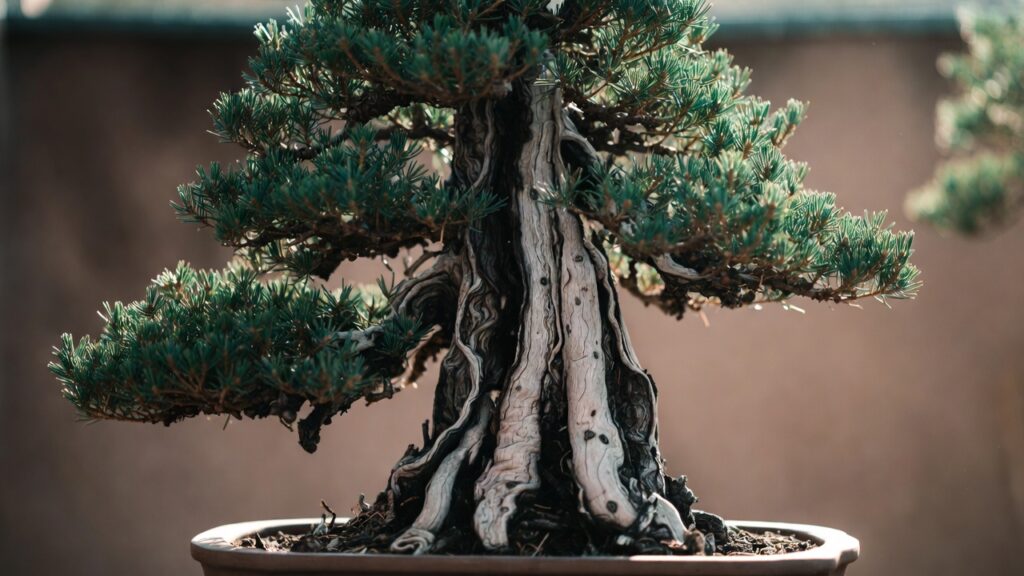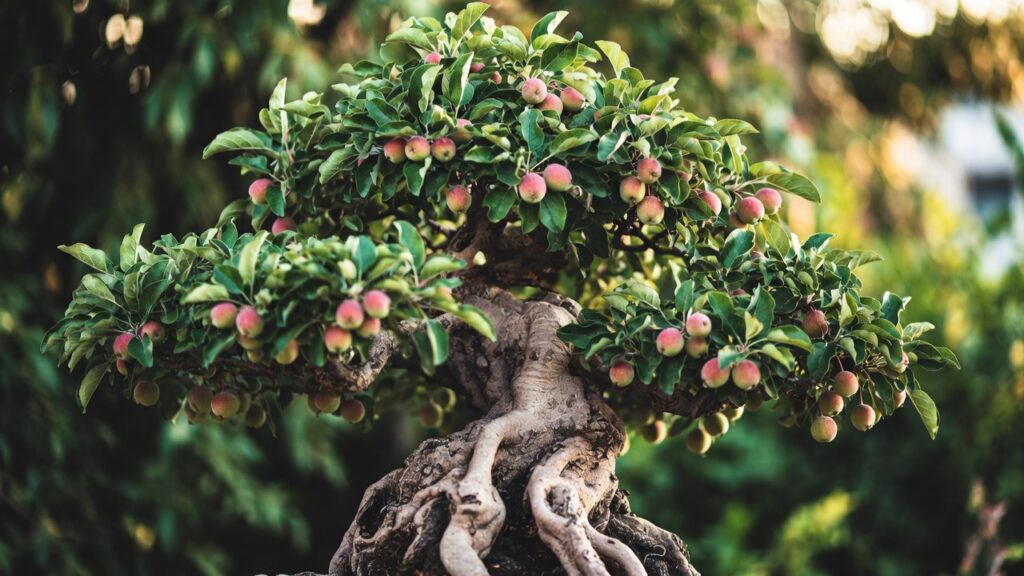

Imagine stepping into your living room on a crisp autumn morning, reaching over to a miniature tree on your side table, and plucking a perfectly formed, bright red apple. It sounds like a scene straight out of a fantasy novel or a high-end interior design magazine. The allure of cultivating an apple bonsai indoors is undeniable—it combines the ancient, meditative art of bonsai with the rewarding magic of home orchardry.
But if you have ever browsed online plant forums, you have likely run into a wall of skepticism. Traditionalists will tell you that fruit trees belong outside, that houses are too dark, and that temperate trees cannot survive the tropical climate of a modern living room. They aren’t entirely wrong. Treating a fruit-bearing tree like a low-maintenance pothos is a guaranteed recipe for yellowing leaves, zero blossoms, and an ultimately dead plant.
However, with the right technical approach, specialized equipment, and an understanding of tree biology, you can defy the standard assumptions. This comprehensive guide will dispel the myths, address the core biological hurdles, and reveal the five essential secrets to successfully growing an apple bonsai indoors while securing real, tangible fruit.
Understanding the Challenge: Why Apple Bonsai Aren’t Typical Indoor Plants
To succeed where many well-intentioned indoor gardeners fail, you must first understand the fundamental biological differences between a tropical houseplant and a temperate fruit tree. The majority of common indoor plants originate from the understories of tropical rainforests. They evolved to thrive in stable, warm temperatures year-round and can tolerate the relatively low light conditions found inside human homes.
An apple tree (Malus species) is entirely different. It is a temperate deciduous tree native to regions that experience distinct, dramatic seasonal shifts. Its entire genetic blueprint is hardwired to respond to the changing of the seasons—from the bright, intense sun of midsummer to the freezing, dark days of midwinter.
When you bring a temperate tree indoors permanently, you disrupt this biological clock. Without the natural environmental triggers that signal when to grow, when to flower, and when to rest, the tree becomes confused. Its energy reserves slowly deplete, its growth becomes weak and leggy, and it will eventually succumb to pests or structural exhaustion within two to three seasons.
Furthermore, producing fruit requires an immense amount of metabolic energy. A plant cannot generate this energy without intense, direct sunlight to fuel photosynthesis. Therefore, growing a miniature fruit tree inside requires you to stop thinking like a traditional houseplant collector and start thinking like an indoor orchardist. You aren’t just decorating a space; you are replicating a complete outdoor ecosystem within four walls.
The Miniature Fruit Phenomenon
A common misconception among beginners is that bonsai trees are engineered through specialized genetics or dwarf seeds to stay small. In reality, a bonsai is a genetically normal tree kept small through meticulous root confinement, strategic pruning, and artistic training.
This presents a unique botanical quirk when dealing with fruit trees: while the leaves, branches, and root systems can be dramatically miniaturized through bonsai techniques, the fruit itself often retains much of its original, full-sized genetic potential. If you were to style a standard Honeycrisp apple tree as a twelve-inch bonsai, the tree would struggle to support even a single full-sized apple, which would look comically disproportionate and likely snap the delicate branches.
To overcome this, experienced growers utilize specific dwarf cultivars and wild varieties, most notably crabapples. These varieties naturally produce much smaller, proportional fruit and tightly clustered blossoms. They offer the exact same seasonal drama—vibrant spring flowers, lush summer foliage, and bright autumn fruit—but at a scale that perfectly complements a miniature indoor landscape.
Secret 1: Choosing the Right Apple Variety for Indoor Cultivation

Your journey to a fruiting indoor bonsai begins long before you pick up a pair of pruning shears; it starts with choosing the correct genetic stock. Attempting to grow a tree from a seed found in a grocery store apple is the most common mistake made by novices, and it almost always ends in disappointment.
Why Seed-Grown Apples Fail the Bonsai Test
Apples are highly heterozygous, meaning their seeds do not grow “true to type.” If you plant a seed from a Fuji apple, the resulting tree will possess a completely random combination of genetic traits from its lineage, often reverting to wild, vigorous growth characteristics. More importantly, seed-grown apple trees spend an extended period in a juvenile phase. It can take anywhere from seven to ten years of unrestricted outdoor growth for a seedling to naturally reach reproductive maturity and produce its first flower. When confined to a small bonsai pot indoors, a seedling may never fruit at all.
To bypass this juvenile phase, professional growers use grafted trees. Grafting involves taking a mature, fruit-bearing branch (the scion) from a proven cultivar and fusing it onto a sturdy, disease-resistant rootstock. Because the scion code originates from an adult tree, a grafted bonsai retains the ability to flower and fruit immediately, even when kept at a height of less than two feet.
The Best Cultivars for Indoor Bonsai
When selecting a specimen for indoor cultivation, look for grafted varieties that naturally exhibit small leaves, dense branching, and miniature fruit. The following species are highly recommended by bonsai professionals for their resilience and aesthetic appeal:
-
Malus baccata (Siberian Crabapple): This is arguably the most popular choice for apple bonsai. It is exceptionally hardy, boasts incredibly fragrant white or pink spring blossoms, and produces tiny, cherry-sized apples that turn brilliant shades of red and yellow in autumn. The proportional size of the fruit makes it look highly realistic as a miniature tree.
-
Malus halliana (Hall’s Crabapple): Renowned for its breathtaking, deep pink flowers that drape elegantly from the branches in late spring. It produces small, purple-toned fruits and adapts remarkably well to container culture, showing a higher tolerance for slightly warmer conditions than other varieties.
-
‘Callaway’ and ‘Harvest Gold’ Crabapples: These cultivars are frequently selected for their strong disease resistance (particularly against apple scab and rust) and their reliable, heavy fruit sets.
Whenever possible, purchase your tree from a reputable bonsai nursery rather than a standard big-box garden center. A specialized nursery will ensure the root system has already undergone early container training, saving you years of development time and reducing the risk of root shock when transitioning indoors.
Secret 2: Mastering the Indoor “Chilling Hours” Requirement

This is the absolute core secret to long-term success, and it is where the vast majority of indoor plant enthusiasts fail. To survive, produce flowers, and set fruit, an apple tree must go through a distinct period of winter rest known as dormancy.
What is Dormancy and Why Does Your Bonsai Need It?
During the autumn, as days shorten and temperatures drop, a hormone called abscisic acid builds up within the apple tree, signaling it to shed its leaves and enter a metabolic sleep state. This dormancy protects the tree from freezing temperatures, but it also serves a vital reproductive function. Inside the dormant buds, the tree is tracking time through a mechanism known as “chilling hours.”
Chilling hours are cumulative hours spent in a specific temperature window, typically between 32°F and 45°F (0°C to 7°C). Most classic apple varieties require anywhere from 500 to 1,000 chilling hours to break dormancy correctly. If a tree does not accumulate these hours because it is kept in a warm, climate-controlled living room all winter, its internal clock breaks down. In the spring, the buds will either fail to open, or the tree will produce erratic, weak foliage without ever developing blossoms.
How to Simulate Winter Indoors (Without Killing the Tree)
Because you cannot simply leave a small bonsai pot exposed to freezing outdoor winds on a balcony (the limited soil volume will freeze solid, killing the roots), indoor growers must utilize strategic winterization methods. Here are the two most reliable techniques for providing chilling hours to an indoor bonsai:
The Unheated Space Method (Preferred)
If you have access to an unheated garage, a bright enclosed porch, or a cold cellar that stays consistently between 35°F and 45°F (1°C to 7°C) throughout the winter, this is the ideal environment.
-
Wait for the tree to naturally shed its leaves indoors or outdoors during late autumn as temperatures cool.
-
Once the tree is completely bare, move it into the cold, unheated space.
-
Since the tree has no leaves, its light requirements are minimal, but it still needs a small amount of ambient light.
-
Check the soil moisture every one to two weeks. The tree’s water consumption drops drastically during dormancy, but the roots must never be allowed to dry out completely.
The Refrigerator Method (For Apartment Dwellers)
If you live in a climate-controlled apartment with no access to a cold storage space, you can use a standard kitchen refrigerator to save your tree.
-
Allow the tree to drop its leaves naturally in late autumn by placing it near a chilly window or outside on a ledge.
-
Once dormant, thoroughly water the tree and wrap the entire pot and soil surface in a plastic bag to lock in moisture and prevent the refrigerator fan from drying out the root ball. Leave the bare branches exposed.
-
Place the bonsai in a designated section of your refrigerator.
-
Critical Safety Warning: Do not store ripening fruit (especially apples or bananas) in the same refrigerator. Ripening fruit releases ethylene gas, which acts as a powerful plant hormone. In a confined space, ethylene will seep into the dormant buds of your bonsai, causing them to rot and die before spring.
-
Keep the tree in the refrigerator for roughly 6 to 8 weeks (approximately 1,000 hours), checking periodically to ensure the soil remains barely damp.
In late winter or early spring, remove the tree from its cold storage and place it in your designated indoor growing area. The sudden shift to warm temperatures and bright light will simulate spring, triggering rapid bud break and a dramatic burst of flowers.
Secret 3: Replicating the Orchard Environment Indoors

Once your apple bonsai wakes up from its winter slumber, it enters a phase of intense metabolic activity. To support leaf development, flower production, and fruit growth, you must transform your indoor space into a high-energy environment that mimics an open, sunny orchard.
Lighting: The Micro-Sun Setup
A standard window, even a large south-facing one, is rarely sufficient to power a fruiting apple bonsai. Window glass filters out a significant portion of the light spectrum, and the ambient intensity drops off exponentially for every foot a plant is moved away from the pane. To get real fruit, you will need to supplement your setup with artificial lighting.
Invest in a high-quality, full-spectrum LED grow light designed for indoor horticulture. Look for systems that specify their photosynthetic photon flux density (PPFD) rather than simple wattage. For an apple tree to photosynthesize effectively enough to produce sugars for fruit development, it needs a PPFD of at least 400 to 600 $\mu$mol/m²/s at the canopy level.
Position the grow light roughly 12 to 18 inches above the top of the tree and set it on a digital timer to run for 14 to 16 hours a day during the spring and summer. This long photoperiod simulates the peak of summer days, giving the tree the energy reserves it needs to swell its fruits.
Air Circulation and Humidity Balance
Outdoor orchards are dynamic environments with constant airflow. Modern homes, conversely, are structurally sealed environments with stagnant air. This lack of air movement creates a microclimate around the dense foliage of your bonsai, trapping moisture and creating the perfect breeding ground for fungal pathogens.
To combat this, place a small, low-powered oscillating fan near your indoor growing station. The fan should not blow directly on the tree with high force, but rather create a gentle, continuous breeze throughout the room. This moving air does two things: it accelerates transpiration, helping the roots absorb water and nutrients efficiently, and it mechanically strengthens the branches, preparing them to support the weight of the upcoming harvest.
Unlike tropical houseplants that require high humidity, apple trees prefer moderate humidity levels (around 40% to 50%). Avoid using heavy misting bottles on the leaves, as wet foliage combined with indoor temperatures can quickly lead to powdery mildew outbreaks. Focus instead on maintaining consistent soil hydration.
Secret 4: The Art of Indoor Pollination (Be the Bee)

In an outdoor setting, a burst of springtime apple blossoms attracts thousands of native bees and pollinators that handle the mechanical transfer of pollen. Indoors, your growing space lacks these natural helpers. If you leave the flowers alone, they will eventually wither and drop off, leaving you with empty branches and zero fruit. To bridge this gap, you must step into the role of the pollinator.
The Self-Sterility Issue in Apples
Before you attempt hand pollination, you need to understand the reproductive biology of your specific tree. Many apple varieties are self-sterile, meaning their flowers cannot be fertilized by pollen from the exact same tree or even another tree of the same cultivar. They require cross-pollination from a genetically distinct apple or crabapple variety that blooms at the identical time.
When purchasing your apple bonsai, look carefully at the cultivar specifications. If you are growing a self-sterile variety, you will need to keep a second, compatible bonsai nearby to swap pollen between them. Fortunately, many of the popular crabapple varieties used for bonsai (such as Malus baccata) are partially self-fertile or can easily set fruit if you have a pair of them blooming simultaneously.
Step-by-Step Hand Pollination Technique
Hand pollination is a delicate, precise task that should be performed daily as long as the flowers are open. The optimal time to pollinate is midday, when indoor humidity is typically at its lowest and the pollen is dry and powdery.
The Indoor Pollination Process:
-
[Anther] (Produces yellow pollen dust)
-
Transfer via fine brush
-
[Stigma] (Sticky center surface of a different flower)
-
Ovary Fertilization
-
[Fruit Set Initiates]
-
Acquire the Tool: Obtain a highly delicate, fine-tipped artist’s paintbrush (synthetic sable works best) or a high-quality cosmetic eyeshadow brush. Alternatively, a clean, dry cotton swab can work in a pinch.
-
Identify the Anatomy: Look closely at an open blossom. Around the outer ring of the flower center, you will see a circle of tiny stalks topped with pale yellow sacks. These are the anthers, which produce the powdery yellow pollen. In the absolute center of the flower cluster, you will see a small group of green stalks. These are the stigmas, the female receptive organs that lead down to the plant’s ovary.
-
Collect the Pollen: Gently swirl the tip of your brush against the yellow anthers of an open flower. Look closely at the bristles; you should see a fine coating of yellow dust.
-
Transfer to the Stigma: Take that loaded brush and gently dab it directly onto the sticky tips of the central stigmas of a different flower cluster (or a different tree if cross-pollinating).
-
Repeat the Cycle: Move systematically from flower to flower, swirling and dabbing. Repeat this process every afternoon for 3 to 5 days.
Within a week after the petals naturally fade and fall away, look closely at the base of the old flower structure. If the pollination was successful, you will notice the tiny green base swelling into a minute fruitlet. If it turned brown and fell off, fertilization failed, usually due to low light levels or improper timing.
Secret 5: Strategic Thinning for Tree Health
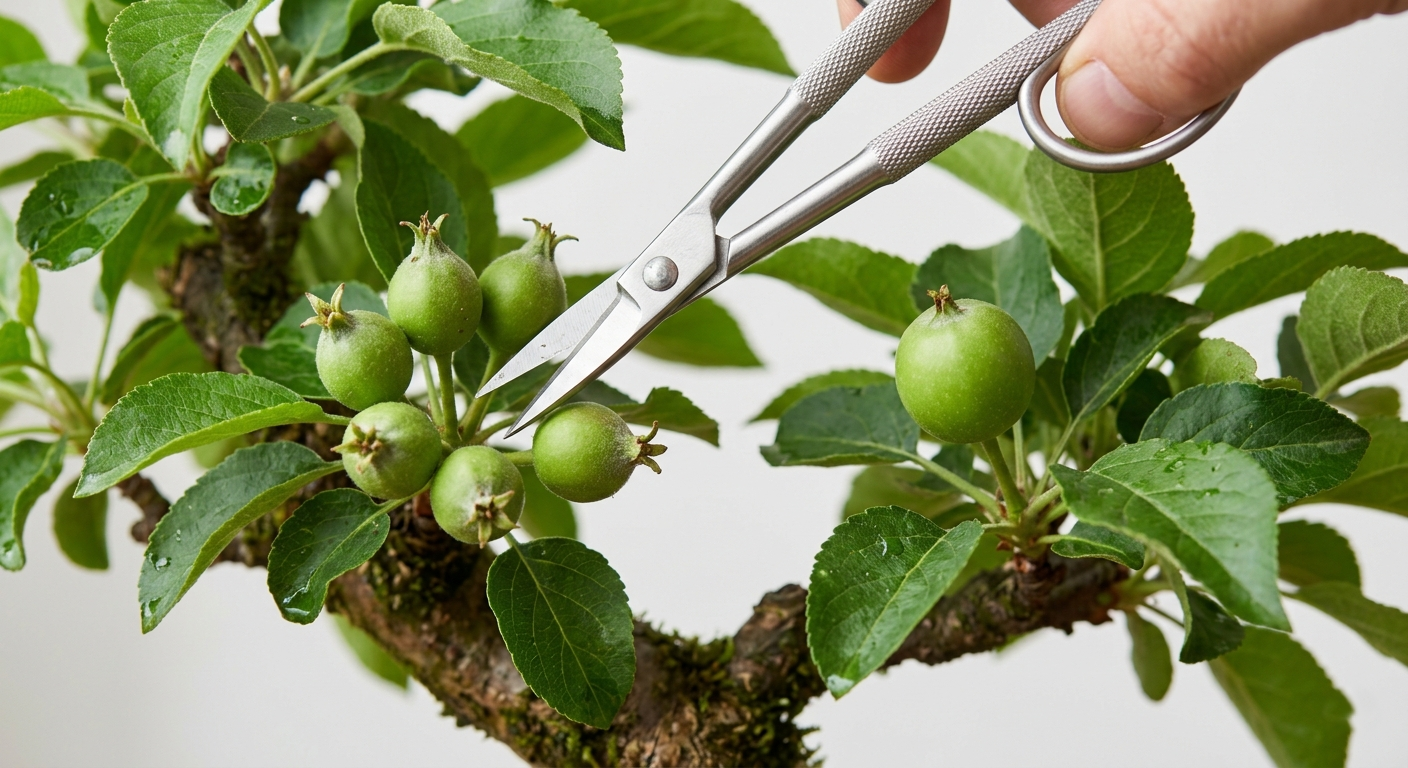
When an apple bonsai is healthy and successfully pollinated, it will often attempt to produce dozens of small fruits. While a heavy fruit set looks impressive initially, allowing all of those fruits to mature is one of the quickest ways to severely damage or even kill a miniature tree.
Energy Economics of a Miniature Tree
Developing seeds and swelling fruit flesh requires an immense expenditure of a tree’s carbohydrate reserves. In an outdoor orchard, a massive root system and thousands of leaves easily share this metabolic load. In a bonsai, the tree is confined to a tiny pot with limited soil, restricted root structures, and a fraction of the foliage.
If you allow a small bonsai to ripen too many apples, it will direct all of its energy into the fruit at the expense of its own survival. The tree will stop growing new roots, fail to store sugars for the upcoming winter, and enter a state of severe biological exhaustion. In the bonsai community, this is known as letting a tree “fruit itself to death.” Even if the tree survives, it will often enter a pattern of biennial bearing, completely skipping flower production for the next two to three years to recover its strength.
The Rule of Thumb for Fruit Thinning
To protect your tree’s health and ensure a reliable crop every year, you must practice disciplined fruit thinning. This requires patience, as you will have to intentionally remove perfectly good young fruitlets.
-
The Waiting Period: After pollination, wait for the tree to go through its natural “June drop” (an early summer phase where the tree naturally sheds weak, unfertilized fruitlets).
-
The Selection Process: Once the remaining fruitlets reach the size of a small pea, assess the canopy. Look for the strongest, most structurally sound fruit that is positioned closest to the base of a thick, sturdy branch.
-
The Ratio: As a general rule of thumb for a small-to-medium-sized bonsai (12 to 18 inches tall), allow no more than one apple per major branch structure, with a maximum total of 3 to 5 fruits on the entire tree. For very young or newly styled trees, limit the crop to just 1 or 2 apples.
-
The Execution: Use a sharp pair of micro-pruning shears to cleanly snip the stems of the excess fruits. Do not pull or rip them off by hand, as this can easily tear the delicate bark of the fruiting spur, inviting bacterial infections like fire blight.
By concentrating the tree’s limited energy into just a handful of select fruits, the individual apples will grow larger, display richer coloration, and remain on the branches longer into the autumn without draining the tree’s vital reserves.
Comprehensive Seasonal Care Blueprint for Apple Bonsai
To successfully manage an apple bonsai over the course of a full calendar year, you can follow this actionable seasonal guide.
Spring: Awakening, Pruning, and Repotting
Spring is the busiest and most dynamic time of the year for your tree. As you bring the bonsai out of its winter chilling zone into your warm, brightly lit indoor setup, its metabolic engine restarts.
-
Repotting Schedule: Apple bonsai grow roots aggressively and generally require repotting every 1 to 2 years when young. This must be done in early spring, just as the leaf buds show green tips but before they completely open.
-
The Right Soil Mix: Traditional houseplant potting soil is lethal to an apple bonsai because it retains too much water and lacks structural oxygen. Use a professional, coarse bonsai substrate consisting of equal parts Akadama (fired Japanese clay), Pumice, and Lava Rock. This mix ensures instant drainage while retaining the precise amount of microscopic moisture needed by the fine root hairs.
-
Root Pruning: When repotting, gently comb out the outer edge of the root ball and trim back long, circling structural roots by about 20% to 30%. Focus on preserving the fine, white feeder roots, which are responsible for absorbing water and nutrients.
-
Structural Pruning: Avoid heavy structural branch pruning right before flowering, as you will inadvertently cut off the fruiting spurs that developed the previous autumn. Save major styling work for late winter when the tree is bare.
Summer: Hydration and Feeding
Summer is all about energy accumulation and managing the developing fruit.
-
Watering Dynamics: Because the engineered bonsai soil drains so freely, and because an apple tree has a high transpiration rate during fruit development, watering demands will spike. You cannot water on a strict calendar schedule. Check the soil daily by pressing your finger a half-inch into the substrate; if it feels dry to the touch, water thoroughly until water streams freely out of the bottom drainage holes. On hot summer days under high-intensity lights, you may need to water your tree twice a day.
-
Fertilization Protocol: To fuel growth without causing excessive, long branch growth (which ruins the bonsai’s compact shape), avoid high-nitrogen chemical fertilizers. Instead, use balanced, slow-release organic fertilizer cakes (such as Biogold or a gentle organic fish emulsion). Apply these consistently from late spring through mid-summer to provide a steady stream of micronutrients that support fruit density and overall vitality.
Autumn: The Harvest and Preparation
Autumn is the season where your dedication pays off visually. The leaves will slowly shift color, and the fruits will take on their deep, final hues.
-
Signs of Maturity: Crabapples are typically mature when they develop a deep red, yellow, or purple color (depending on the cultivar) and start to feel slightly soft when compressed very gently.
-
The Energy Shift: Once the fruit ripens, snip the stems to harvest them. Leaving mature fruit on a miniature tree for too long continues to drain its carbohydrate reserves.
-
Hardening Off: In mid-autumn, stop applying any fertilizers containing nitrogen. Switch to a low-nitrogen, high-potassium fertilizer instead. This tells the tree to stop producing new soft green leaves and focus on woody bark lignification, hardening off the branches so they can safely withstand the upcoming winter dormancy.
Winter: The Cold Rest Period
This is the quiet phase where the tree recharges its biological battery.
-
The Strip down: Allow the tree to drop its leaves naturally. Once it is bare, move it to your designated cold zone (unheated room, garage, or refrigerator) as detailed in Secret 2.
-
Minimalist Hydration: The tree still needs water, but at a fraction of the summer rate. Check the soil every 10 to 14 days. Ensure the soil remains slightly damp but never soggy, as cold, waterlogged soil will quickly cause root rot.
Troubleshooting Common Indoor Apple Bonsai Problems

Even with precise care, indoor conditions can occasionally cause issues. Use this quick-reference diagnostic table to identify and fix common structural and biological problems before they damage your tree.
Frequently Asked Questions (FAQ)
How long does it take for an apple bonsai to produce fruit?
If you start with a grafted tree or nursery stock purchased from a reputable dealer, it can bloom and produce fruit within its very first spring season. However, if you attempt to grow an apple tree from a seed, it can take 7 to 10 years of growth to reach sexual maturity, and it may never fruit at all under restricted bonsai conditions.
Can an apple bonsai live indoors permanently without a winter?
No. An apple tree cannot survive indefinitely in a permanent tropical environment. Without an annual winter dormancy period of 500 to 1,000 chilling hours below 45°F (7°C), the tree’s internal hormonal cycles break down. It will exhibit weak, erratic leaf production, stop flowering entirely, and usually die within 2 to 3 years.
Are apple bonsai fruits edible?
Yes, they are real, non-toxic apples! However, because most successful apple bonsais are grown from crabapple cultivars (like Malus baccata), the fruit is naturally quite tart and fibrous. While they are safe to eat raw, they are generally better suited for visual display, wildlife feeding, or processing into home-cooked jams and preserves rather than fresh table consumption.
How often should I water my indoor apple tree?
There is no fixed schedule. Because proper bonsai soil is highly porous, you must check the soil daily. Whenever the top layer of substrate feels completely dry to the touch, water the pot thoroughly until water flows out of the bottom drainage holes. During peak summer fruiting, this may require watering once in the morning and once in the evening.
Conclusion: Is the Indoor Apple Bonsai Worth the Effort?
Cultivating an apple bonsai indoors is admittedly more demanding than maintaining a standard collection of tropical houseplants. It requires you to step outside the comfort zone of traditional indoor gardening and take on the active responsibilities of an orchardist—simulating winters, balancing high-intensity light setups, and acting as the local pollinator with a paintbrush.
Yet, it is precisely this level of involvement that makes the apple bonsai one of the most rewarding and fulfilling projects in the entire plant hobbyist world. The visual progression from naked winter branches to a cloud of fragrant spring blossoms, followed by lush summer growth, and concluding with a harvest of miniature apples, is a stunning testament to what can be achieved with a clear understanding of tree biology. By applying these five core secrets, you can confidently bring the beauty of a fruiting orchard directly onto your living room table.