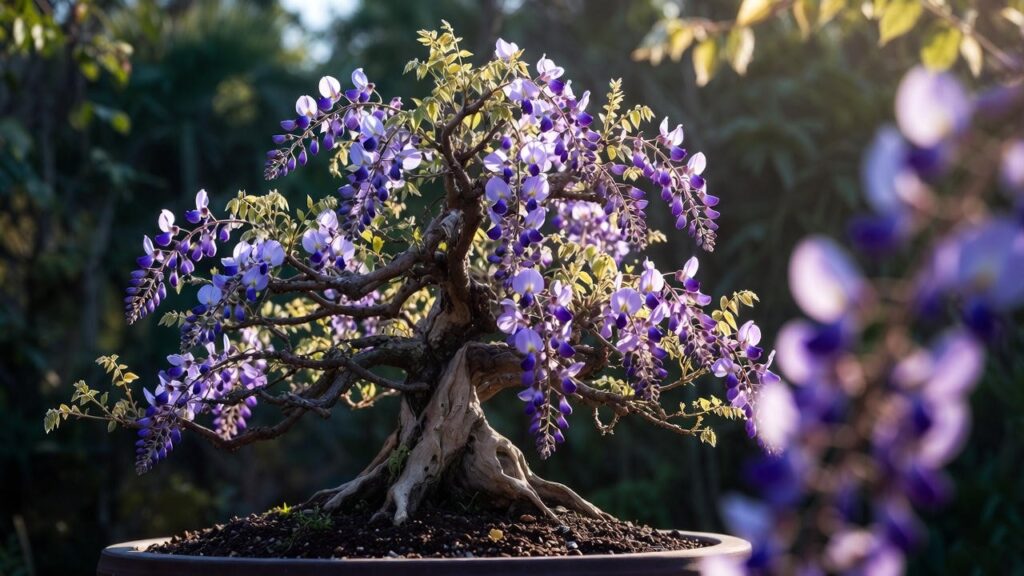

Imagine a miniature, cloud-like canopy of striking, electric-purple blooms sitting right on your living room table or office desk. That is the intoxicating promise of cultivating a jacaranda bonsai. Famous worldwide for transforming entire cityscapes into oceans of violet every spring, the Jacaranda mimosifolia is a bucket-list species for plant enthusiasts.
However, there is a glaring problem: while traditionally a massive, fast-growing subtropical tree, attempting to train it into a miniature form within an indoor environment is notoriously tricky. Standard houseplant care—characterized by passive watering and moderate window light—will quickly kill this light-hungry species or leave it completely barren of its signature purple blossoms.
The good news? It is entirely possible to cultivate a thriving, flowering specimen indoors if you know how to manipulate its microclimate. This definitive guide reveals the exact environmental adjustments, advanced pruning techniques, and lighting secrets used by master horticulturists to successfully grow a blooming jacaranda bonsai indoors. If you are ready to move past generic houseplant advice and master the technical precision required for this stunning tree, you are in the right place.
2. Meet the Jacaranda (Jacaranda mimosifolia): Can It Truly Grow Indoors?
To successfully cultivate a jacaranda bonsai, we must first look at its genetic blueprint. Native to the high-altitude, subtropical river valleys of South America—primarily Argentina and Bolivia—the Jacaranda mimosifolia is built for intense sunlight, distinct seasonal temperature shifts, and highly aerated, fast-draining soils.
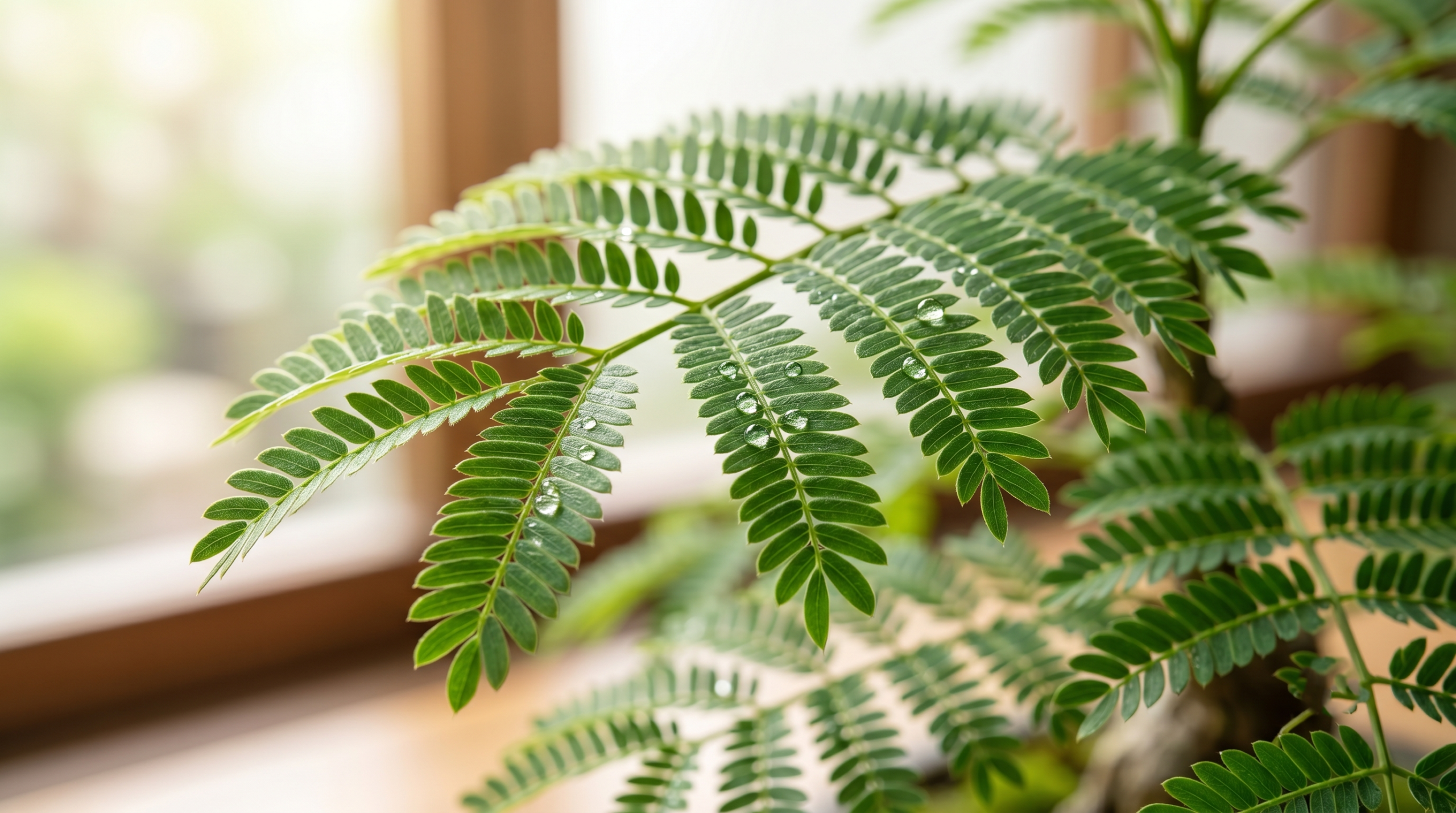
The tree is highly celebrated for its bipinnate, fern-like foliage. Each large leaf is actually a complex compound structure made of dozens of tiny leaflets (pinnules). This unique foliage gives the tree an airy, elegant, and naturally delicate appearance even before it develops a woody trunk, making it an incredibly attractive candidate for bonsai training.
The “Indoors” Reality Check
Let’s address the elephant in the room: in traditional horticulture, the term “indoor bonsai” is somewhat of a misnomer. Trees are outdoor organisms. However, because the Jacaranda cannot tolerate freezing temperatures (suffering severe wood damage below 40°F / 4.5°C and dying at 32°F / 0°C), it is classified as an indoor-tolerant tropical/subtropical bonsai. This means it must spend winters indoors in temperate climates, and with the correct technical setups, it can be grown indoors year-round.
The Bloom Paradox
The ultimate challenge of the indoor jacaranda bonsai is forcing it to flower. In the wild, these trees reduce their leaf size easily under consistent pruning, but they only bloom after experiencing a dry, cooler winter dormancy followed by an explosion of high-intensity spring sunlight. Indoors, our homes stay a constant, comfortable, humid temperature year-round, which confuses the tree’s internal clock. To get those electric purple panicled flowers, you cannot just let the tree sit there; you must intentionally replicate these outdoor seasonal shifts inside your home.
The Ideal Cultivar: ‘Bonsai Blue’
If you are sourcing material for your project, look specifically for Jacaranda ‘Bonsai Blue’. Developed as a dwarf, heavy-blooming cultivar, this variation features naturally smaller internodes (the space between leaf joints) and is biologically triggered to bloom at a much younger age and smaller size than standard wild seeds.
3. The 4 Non-Negotiable Pillars of Indoor Jacaranda Care
If you want your jacaranda bonsai to survive more than a single season indoors, you must treat your indoor space like a biological laboratory. You cannot rely on luck. You must stabilize four environmental pillars: light, temperature, humidity, and substrate.
H3: 1. Lighting: The Fuel for Purple Blooms

Light is the single most critical factor for this species. A lack of sufficient light causes long, leggy, weak branches, massive leaf structures that ruin the scale of your bonsai, and a complete absence of flowers.
-
The 6-Hour Baseline: Your tree requires a bare minimum of 6 hours of direct, unfiltered sunlight daily. Placing it three feet away from a window reduces usable light energy by over 50% due to the inverse-square law of physics.
-
Window Positioning: An unobstructed South-facing window is mandatory if you are relying on natural light. East and West windows will provide enough energy for survival, but will rarely provide enough raw energy to trigger flower bud differentiation.
-
Supplemental Lighting (The Secret Weapon): Because modern window glass filters out vital UV rays, serious indoor growers use dedicated LED grow lights. To trigger blooming, look for a full-spectrum LED fixture with a high Photosynthetic Photon Flux Density (PPFD). Set a digital timer to run a 12 to 14-hour photoperiod during the spring and summer growing seasons, keeping the light fixture roughly 6 to 12 inches above the canopy. During autumn and winter, this should be reduced to 8 to 10 hours of dimmed or natural ambient window light.
H3: 2. Temperature & The Winter Protection Zone
Jacarandas love heat, but indoor cultivation requires careful management of seasonal temperature fluxes to protect the delicate root system housed in shallow ceramic pots.
-
The 60°F (15°C) Critical Threshold: During the active growing phase, maintain indoor temperatures between 65°F and 85°F (18°C to 30°C). If indoor temperatures drop below 60°F during the summer, the tree’s metabolic rate halts, causing metabolic stunting. Conversely, during the winter dormancy, dropping the room temperature slightly to around 55°F to 62°F (13°C to 16°C) helps the tree rest properly.
-
The Radiator Danger Zone: The biggest killer of indoor bonsais during winter is placement near HVAC vents, radiators, or fireplaces. The blast of dry, artificial heat bakes the shallow soil mix, killing the fine, microscopic root hairs responsible for water absorption within hours. Keep your tree in a room with stable air, away from direct draft sources.
H3: 3. Humidity Management for Subtropical Species
Our homes during winter often drop below 20% relative humidity—a climate akin to a desert. A subtropical jacaranda bonsai exposed to this dry air will experience rapid moisture loss through its delicate pinnules, leading to crispy, yellowing leaves that shed completely.
-
The Target Goal: Aim for a constant relative humidity of 50% to 60%.
-
The Mechanics of Humidity Trays: A traditional bonsai humidity tray (a shallow tray filled with river pebbles and water) provides a localized microclimate. As the water evaporates, it rises directly through the drainage holes of the bonsai pot. Ensure the bottom of the pot rests on the dry rocks and never sits directly in standing water, which causes root rot.
-
Misting vs. Room Humidifiers: Misting your tree with a spray bottle provides psychological comfort to the grower but only raises local humidity for roughly 5 to 10 minutes. For skyscraper-level results, invest in a small ultrasonic room humidifier placed within three feet of your bonsai station.
H3: 4. Soil Science: Drainage Over Everything
Never, under any circumstances, use regular potting soil, garden soil, or commercial “indoor plant mixes” for a jacaranda bonsai. These fine-textured media retain far too much water and collapse structurally, suffocating the roots. Bonsai roots need oxygen just as much as they need water.
The ideal professional substrate mix ratio for a Jacaranda consists of:
-
40% Akadama: Double-Red Line quality for balanced water and nutrient absorption.
-
30% Pumice: For excellent interior water retention and vital structural air pockets.
-
20% Lava Rock (Scoria): For drainage and forcing roots to split into fine Networks.
-
10% Sifted Organic Matter: Such as premium coco coir to buffer indoor drying rates.
-
Targeting pH: Jacarandas prefer a slightly acidic to neutral substrate environment (5.5 to 6.5 pH). Avoid using highly alkaline water sources (like hard city tap water), as a high pH locks out iron and manganese, causing severe interveinal chlorosis (yellowing of leaves while veins stay green).
4. The Delicate Art of Watering: Reading the Foliage
Watering a jacaranda bonsai is a dynamic balancing act. Because they are confined to highly porous soil within a shallow container, their water margins are incredibly thin.
The Rootball Principle
Your goal is to keep the entire substrate core consistently moist like a wrung-out sponge, but never saturated like a marsh. This balance allows the roots to breathe while maintaining cell turgor pressure.
How to Read Your Jacaranda’s Leaves
The tree will communicate its hydric stress clearly through its bipinnate foliage if you know what to look for:
-
Leaves Shrinking, Turning Crispy Brown, and Dropping: This is acute underwatering. The lower leaflets will shrivel first as the tree pulls moisture into its main woody trunk line. If this occurs, immediately submerge the entire pot in a basin of lukewarm water for 15 minutes.
-
Leaves Uniformly Yellowing and Dropping While Soft: This is chronic overwatering. When the soil remains waterlogged, the lack of oxygen kills off root hairs. Unable to breathe, the roots rot, making them unable to pump water up to the canopy. Paradoxically, an overwatered tree looks wilted and dehydrated because its root system has drowned and failed.
The Finger Test vs. Chopstick Method

Electronic moisture meters are notorious for giving false readings in coarse, aggregate bonsai soils because they measure electrical conductivity, which changes based on fertilizer salt accumulation. Instead, rely on tactile feedback. Insert your index finger roughly half an inch into the substrate, or insert a clean wooden chopstick deep into the rootball for 5 minutes. If the wood emerges dry and clean, it is time to water. If it is dark and damp, wait.
Master Class Technique: Bottom-Watering
To ensure no dry pockets form within your compact rootball, utilize the bottom-watering method:
-
Fill a shallow tray or sink with water to roughly half the height of your bonsai pot.
-
Gently lower the pot into the water.
-
Allow capillary action to draw water upward through the drainage holes.
-
Once the top surface of the aggregate mix looks dark and moist (typically 5 to 10 minutes), remove the pot.
-
Allow all excess water to drain freely from the bottom before returning it to its humidity tray.
5. Master Pruning & Shaping Strategies (Step-by-Step)

Because the Jacaranda mimosifolia is naturally an apical-dominant giant designed to rush upward to compete for the jungle canopy, training it into a compact, balanced bonsai requires consistent, assertive intervention.
H3: Structural Pruning vs. Maintenance Pruning
You must distinguish between structural pruning (which dictates the architectural silhouette of the trunk and major branches) and maintenance pruning (which builds fine twig density, known as ramification).
-
Spring Hard Pruning: Perform structural work in early spring just as the buds begin to swell. Using sharp, sterilized concave cutters, remove any thick branches that grow straight up, straight down, or inward toward the center trunk. The concave cutter leaves a slight indentation that heals flat, avoiding ugly, bulbous scars on your bonsai’s trunk.
-
The “Four-to-Two” Leaf Rule: During the active spring and summer growth bursts, your jacaranda bonsai will throw out long, vigorous shoots. Allow a new shoot to expand until it develops 4 or 5 pairs of compound leaves. Then, using fine pruning shears, clip the shoot back to just after the first or second leaf pair. This halts forward momentum and forces the node below the cut to push out two new lateral shoots, doubling your branch density.
-
Defoliation for Scale Reduction: If your tree is healthy and established, you can perform partial defoliation in mid-summer. Carefully snip off the largest compound leaves at the base of their petioles. This induces a secondary mini-flush of growth, forcing the tree to produce a new generation of much smaller, tightly spaced leaflets that look perfectly proportional to a miniature tree.
H3: Wiring a Soft-Wood Tree
Wiring allows you to bend branches into beautiful, wind-swept, or formal upright shapes. However, Jacarandas present a unique challenge: their wood is exceptionally soft and pithy when young, and their bark is paper-thin.
-
Choose the Right Wire: Use annealed aluminum wire rather than structural copper. Aluminum is softer, easier to apply, and gentler on delicate bark. Wrap it around the target branch at a clean 45-degree angle. If the wrap is too tight, it chokes the sap flow; if too loose, it offers zero structural support.
-
The 3-Month Deadline: Because indoor Jacarandas grow fast under powerful LED lights, branches can thicken rapidly. Check the wire every single week. If the wire begins to press into the bark, it will leave deep, permanent scars that can ruin the look of your tree for life. Snip the wire off in small pieces using wire cutters—never try to unwrap it, or you will snap the brittle, soft-wood joints.
6. How to Force Indoor Blooming: The Secrets of the Dormancy Cycle
This section separates amateur growers from true indoor masters. Getting a jacaranda bonsai to stay alive and green is relatively straightforward; forcing it to produce its famous purple blooms indoors requires a deep understanding of its metabolic cycles.
The Natural Rhythm
In their native environment, Jacarandas drop their leaves completely during the cool, dry winter months. This period of rest allows the tree to stop expanding vegetatively and instead allocate its energy into forming flower buds inside the wood. In the spring, these flower buds burst forward before the tree puts energy into growing its new summer leaves.
Managing the Winter Slump Indoors
Do not panic when your indoor tree begins dropping leaves in late autumn. Many beginners see this natural leaf drop, assume the tree is dying, and respond by pumping it full of water and fertilizer—which completely destroys its cycle.
Instead, embrace the winter slump. When daylight hours drop naturally in late autumn, reduce your indoor grow lights to an 8 to 10-hour photoperiod. Drop the room temperature if possible to around 55°F to 62°F (13°C to 16°C). This subtle cooling down signals to the tree that it is time to rest.
The Fertilizer Rotation Strategy
To support this complex metabolic cycle, you must alter your nutritional inputs based on seasonal timelines:
-
Spring and Summer (Active Growth): Apply a balanced, organic liquid fertilizer (such as fish emulsion or a balanced 10-10-10 NPK mix) at half-strength every single week. This provides plenty of nitrogen to fuel rapid foliar and canopy growth.
-
Late Summer to Autumn (Bud & Root Consolidation): Switch to a specialized low-nitrogen, high-phosphorus, and high-potassium fertilizer (often sold as a “Bloom Booster” or a 0-10-10 / 3-20-20 NPK mix). Phosphorus is the chemical trigger for root development and flower bud production, while potassium hardens the soft summer wood, preparing it to resist cold shocks.
-
Winter (Metabolic Rest): Stop fertilizing entirely while the tree is dormant. Feeding a resting tree forces weak, leggy, pale green growth that distorts the silhouette and uses up energy reserves needed for spring blooming.
7. Repotting and Root Pruning a Fast-Growing Species
Because the jacaranda bonsai develops a vigorous, fast-expanding root system, it will rapidly fill a shallow container, becoming completely root-bound within 18 to 24 months.
Frequency and Timing
Plan to repot your indoor tree every 2 years. The optimal window for this procedure is early spring, just as the dormant buds begin to swell but before any new green leaflets have fully opened.
Choosing the Perfect Pot
Bonsai design is an exercise in visual harmony. The pot should complement your tree’s physical characteristics.
-
Dimensions: The depth of your pot should roughly match the diameter of the trunk base. The total length of the pot should occupy approximately two-thirds of the overall height or spread of the tree.
-
Aesthetics: Since the ultimate goal is showcasing vibrant purple flowers, choose a container that provides a stunning visual contrast. Unglazed earthy browns, soft grays, or deep cream-colored ceramic pots accentuate the violet hues perfectly, while a bright, glossy blue or green pot will often clash visually with the blooms.
The Root Trimming Process: A Step-by-Step Guide

Root pruning is essential to keep the tree small and healthy. It forces the root system to branch out into fine hairs, mimicking the way we prune the top canopy.
-
Extraction: Carefully run a root spatula or a blunt knife around the inner rim of the pot to loosen the soil, then lift the tree out cleanly.
-
Combing: Use a single-pronged root rake to gently comb the old substrate outward from the trunk, starting from the bottom and working toward the sides. Avoid damaging the trunk base.
-
The Taproot Check: If your tree was grown from seed, look for a thick, vertical taproot extending straight down. Cut this taproot back significantly using heavy-duty root cutters. This encourages the root system to spread out horizontally in a flat disc, creating a beautiful root flare (nebari) at the soil surface.
-
Trimming Fibrous Roots: Using sharp, dedicated root shears, trim away roughly one-third of the long, matted outer fibrous root mass. Make clean cuts to prevent fungal infections. Keep the core rootball intact.
-
Securing the Tree: Place a layer of fresh aggregate mix into the bottom of the pot. Securely tie your bonsai into the pot using aluminum anchoring wires threaded through the base holes. If a bonsai wobbles in its pot, new micro-root hairs will snap instantly as they try to grow, causing the tree to decline.
-
Aftercare: Fill the rest of the pot with your akadama/pumice/lava mix, poking a wooden chopstick gently down into the substrate to eliminate any hidden air pockets. Thoroughly bottom-water the tree, then place it in a bright, humid spot out of direct afternoon sun and heavy drafts for three weeks while the roots recover.
8.Troubleshooting Common Indoor Jacaranda Problems
Even with careful management, indoor cultivation presents specific biological challenges. Use this quick reference diagnostic checklist to protect your investment.
Pest Identification & Control
The warm, stagnant air found inside homes is an ideal breeding ground for common plant pests:
-
Aphids and Whiteflies: These soft-bodied sap-suckers cluster on fresh, tender spring growth, leaving behind a sticky residue called honeydew. Treat them immediately by spraying the canopy thoroughly with an organic 70% clarified hydrophobic extract of Neem Oil or a specialized insecticidal potassium-soap spray.
-
Spider Mites: If you notice fine, silken webbing tucked between the delicate compound leaflets, you have spider mites. They thrive in dry, hot indoor air. Blast the canopy with a sharp stream of water in the sink to dislodge them physically, then treat the foliage with a dedicated miticide or neem solution every 4 days for two weeks to disrupt their egg-laying cycle.
The “Kit Mistake”
Be highly cautious when purchasing seeds or starter plants online. Many low-quality online vendors market “Brazilian Rosewood Bonsai Kits” or “Purple Flowering Bonsai Seeds.” In reality, these are simply unlabeled wild Jacaranda mimosifolia seeds sold at an inflated premium. Always purchase your specimens from reputable, dedicated bonsai nurseries that can verify the cultivar lineage.
Fungal Root Rot
If your substrate smells foul or sour upon extraction, or if the lower trunk base feels soft and mushy, your tree is suffering from pythium or phytophthora root rot. Immediately trim away all black, slimy roots, treat the remaining healthy root core with a systemic copper fungicide, and repot the tree entirely into a 100% inorganic aggregate mix to restore vital oxygen flow.
9. Comprehensive Seasonal Care Summary
To help you manage your indoor gardening workflow easily, here is a complete text breakdown of how care parameters shift between active growth and dormancy.
Active Growing Season (Spring & Summer)
-
Primary Lighting: Requires a 12–14 hour photoperiod using a mix of direct sun and high-PPFD LED grow lights.
-
Temperature Range: Maintain steadily between 65°F and 85°F (18°C to 30°C); keep protected from cold drafts.
-
Relative Humidity: Keep constantly around 50%–60% using ultrasonic room humidifiers close to the station.
-
Watering Protocol: High frequency. Check daily and ensure the core aggregate substrate stays damp but never stagnant.
-
Fertilization Mix: Apply a weekly half-strength dose of organic, high-nitrogen liquid blends (like fish emulsion).
-
Pruning Strategy: Follow the “Four-to-Two” rule. Trim shoots back to 1–2 leaf pairs after they push out 4–5 pairs to build dense twig ramification.
Dormancy Season (Autumn & Winter)
-
Primary Lighting: Reduced to an 8–10 hour photoperiod, relying primarily on natural window ambient light.
-
Temperature Range: Cool down the room to 55°F to 62°F (13°C to 16°C); position away from dry heat sources like radiators.
-
Relative Humidity: Use localized pebble humidity trays underneath the pot to counteract dry winter indoor heating.
-
Watering Protocol: Greatly reduced frequency. Allow the top 1 inch of the substrate to dry out completely before watering again.
-
Fertilization Mix: Total cessation. Never feed a resting, leafless tree during its winter sleep.
-
Pruning Strategy: Save hard structural styling and heavy architectural branch cuts for early spring, just before bud break.
10. Frequently Asked Questions (FAQs)
How long does it take a Jacaranda bonsai to grow from seed to bloom?
When grown from wild seed, a Jacaranda tree typically needs to reach a substantial structural maturity—often taking 7 to 10 years—before it develops its first blooms. However, if you utilize a specialized dwarf cultivar like Jacaranda ‘Bonsai Blue’ or take a cutting from an already mature, flowering parent tree, you can successfully see vibrant purple blooms within 2 to 3 years of training.
Can I move my indoor Jacaranda bonsai outside during the summer?
Yes, and it is highly recommended. If you have a balcony, patio, or garden deck that receives full outdoor sunlight, move your tree outside once all danger of spring frost has completely passed and nighttime temperatures stay consistently above 55°F (13°C). The natural airflow and intense UV light of an outdoor environment will supercharge the tree’s energy storage, making it much easier to achieve blooms when you bring it back indoors for the winter.
Why isn’t my indoor Jacaranda bonsai flowering?
The absence of purple flowers is almost always caused by a combination of two factors: insufficient light intensity during the summer growing season and the lack of a proper winter rest period. If you leave your tree in a warm room under identical light levels 365 days a year, it will remain in a perpetual vegetative state. You must implement the autumn fertilizer shift and winter temperature slowdown to trigger flower bud production.
Is the Jacaranda tree toxic to indoor pets (cats/dogs)?
According to the ASPCA and toxicological profiles, Jacaranda mimosifolia is non-toxic to domestic pets, including cats and dogs. While your pets should not ingest large amounts of the fibrous compound leaves, an accidental nibble will not cause systemic poisoning, making it a very safe exotic option for pet-friendly households.
11. Conclusion: The Reward of Patience
Cultivating a jacaranda bonsai indoors is undeniably a high-reward horticultural project. It demands a step up from typical houseplant care, requiring you to understand seasonal rhythms, soil porosity, and lighting science.
By shifting away from standard potting soils, providing your tree with high-intensity grow lights, and guiding it through a deliberate winter rest period, you can achieve what many indoor gardeners think is impossible: a healthy, miniature tree that rewards your patience every spring with an unforgettable canopy of vibrant purple blooms. Grab your aggregate mix, set up your grow station, and start your indoor bonsai journey today!