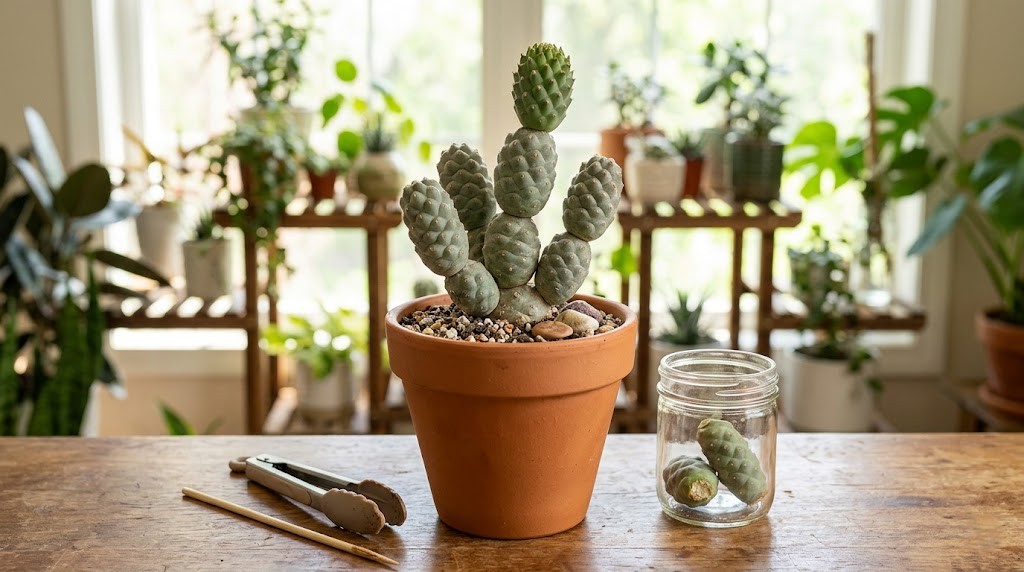
Imagine a plant that looks like a whimsical architectural accident—a wobbly stack of spiky, gray-green orbs balancing precariously on top of one another. The pine cone cactus is undeniably one of the strangest, most captivating specimens you can add to your indoor jungle. Its alien-like, stackable segments make it a trendy, eye-catching centerpiece for modern home decor.
But let’s address the elephant in the room: indoor succulents have a notorious reputation for dying sudden, mushy deaths. If you have ever watched a prized desert plant succumb to root rot on your living room windowsill, you are not alone. It is the number one pain point for indoor growers. Having spent years specifically diagnosing indoor plant ailments—from yellowing foliage and fungal growth to complete root system collapse—I can tell you that keeping this quirky succulent alive isn’t about having a “green thumb.” It is about understanding plant biology.
This guide provides a foolproof, expertly tested blueprint. By the end of this article, you will know exactly how to replicate the harsh native conditions this plant craves, ensuring your succulent remains plump, healthy, and entirely rot-free.
Meet the Pine Cone Cactus: Fast Facts & Origins
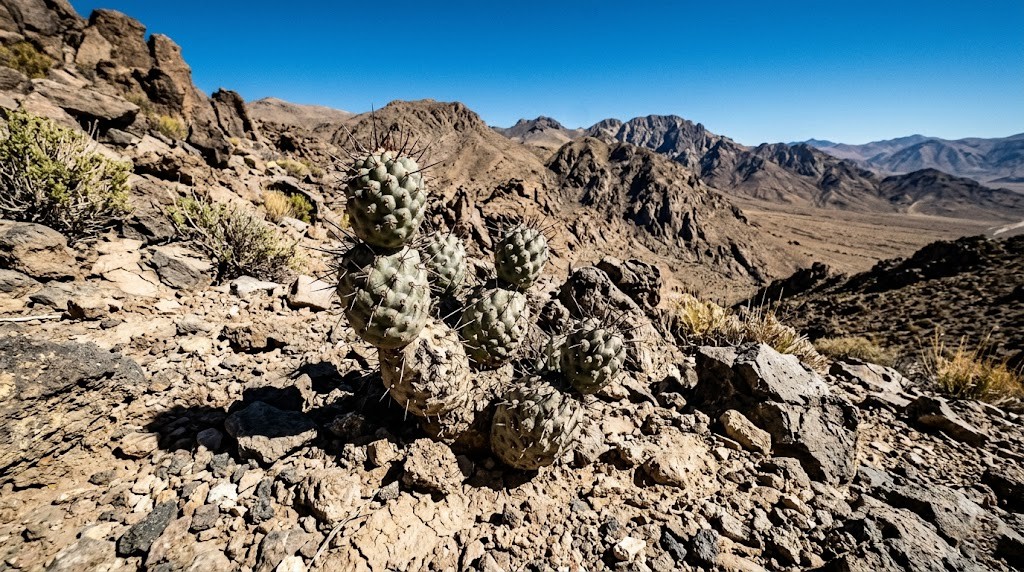
To successfully care for any plant indoors, you must first understand where it comes from. The care requirements of a plant are directly dictated by its evolutionary adaptations.
Botanical Profile & Natural Habitat
Scientifically known as Tephrocactus articulatus, this fascinating species belongs to the prickly pear family (Cactaceae). Depending on the specific variety you bring home, it might look slightly different. The Tephrocactus articulatus var. inermis is the popular spineless version, boasting smooth, pine-cone-shaped segments. Meanwhile, the Tephrocactus articulatus var. diadematus (often called the Paper Spine Cactus) features long, flat, ribbon-like spines that look like dried grass but are surprisingly sharp.
This plant originates in the arid, unforgiving deserts of western Argentina. In its natural habitat, it is subjected to blistering sun, intense heat, rocky terrain, and long periods of extreme drought, followed by brief but heavy deluges of rain.
Understanding this desert origin is the absolute secret to indoor care. Your home is naturally cooler, dimmer, and more humid than the Argentine desert. To keep this plant alive, every care decision you make must aim to bridge that environmental gap.
The “Falling Segment” Phenomenon Explained
Before we dive into the daily care routine, we must address the most common panic-inducing quirk of the Tephrocactus articulatus: its segments fall off.
It is incredibly common for new owners to gently bump the pot, only to watch a top segment snap off and roll across the floor. This often leads to sheer panic, with owners assuming the plant is dying from rot or severe nutrient deficiency.
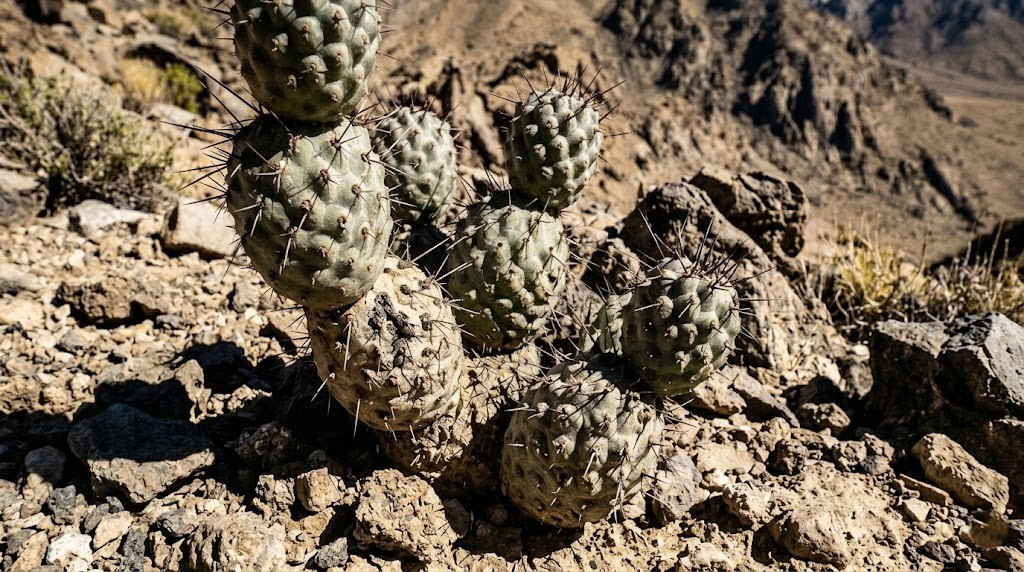
In reality, this is a brilliant evolutionary survival tactic. In the wild, high winds or passing animals easily knock these segments loose. The broken pieces fall to the desert floor, where they quickly root into the sandy soil to form entirely new, independent colonies. This process, known as vegetative propagation, is how the plant naturally spreads. If your plant drops a perfectly healthy, firm, green segment, do not panic. It is not dying; it is simply doing what nature programmed it to do.
The “Don’t Kill It” Blueprint: Core Indoor Care Guide
The majority of indoor succulents do not die from neglect; they die from too much love. Overwatering and insufficient light are a lethal combination. Here is your definitive blueprint for getting it right.
Light Requirements: Chasing the Sun
If there is one non-negotiable rule for the pine cone cactus, it is light. This plant requires a massive amount of solar energy to maintain its compact, globe-like segments and prevent weakened, stretched-out growth.
-
Natural Sunlight: Aim for an absolute minimum of six hours of direct or extremely bright, indirect sunlight every single day.
-
Ideal Placement: An unobstructed South-facing or West-facing window is the best location in a Northern Hemisphere home. These exposures provide the intense afternoon light necessary to mimic a desert environment.
-
The Grow Light Solution: Let’s be realistic—not every home has a perfectly situated, sun-drenched window. If your home is naturally dim, or if you live in a climate with long, dark winters, a full-spectrum LED grow light is essential. Position the grow light about 6 to 12 inches above the top of the plant and leave it on for 12 to 14 hours a day to supplement the lack of natural sun.
Watering Schedule: The Soak-and-Dry Method
Watering is where most indoor gardeners make their fatal error. Watering this plant a little bit every week is a guaranteed recipe for root rot. Instead, you must replicate the weather patterns of the Argentine desert: severe drought followed by a heavy downpour.
-
The Technique: Wait until the soil is 100% bone dry from top to bottom. Do not guess; insert a wooden skewer gently into the drainage hole at the bottom. If it comes out completely dry, it is time to water. Take the pot to the sink and flush it thoroughly with room-temperature water until it pours freely out of the bottom drainage holes. Let it drain completely.
-
Never Let It Sit: Never allow the pot to sit in a saucer of standing water. Succulent roots standing in stagnant water will suffocate and begin to rot within days.
-
Seasonal Adjustments: During the active growing season (Spring and Summer), you may find yourself soaking the plant every two to three weeks, depending on the heat. During its winter dormancy, growth halts. You must drastically reduce watering, sometimes only providing a soak once every month or two, just enough to keep the segments from severely shriveling.
The Ideal Soil Mix for Root Rot Prevention
You cannot buy a bag of standard, peat-heavy indoor potting soil and expect this cactus to survive. Standard soils are engineered to retain moisture, which is the exact opposite of what desert flora requires.
A high-quality, fast-draining substrate is your first line of defense against fungal issues and root suffocation.
The Expert Gritty Mix Recipe: To create an environment where water flows through the root zone instantly, mix your own substrate using the following ratio:
-
40% High-Quality Succulent/Cactus Soil: (Sift out any large chunks of bark or peat).
-
40% Pumice or Perlite: (This creates essential air pockets in the soil, allowing the roots to breathe).
-
20% Coarse Sand, Poultry Grit, or Calcined Clay: (This adds weight to the pot to prevent the top-heavy plant from tipping over and ensures rapid drainage).
Temperature & Humidity Preferences
This succulent thrives in hot, dry conditions. Aim for daytime temperatures between 70°F and 90°F (21°C to 32°C). While it can tolerate nighttime temperature drops, it is not frost-hardy. Keep it far away from cold, drafty windows during the winter months.
Furthermore, household humidity should be kept low. Do not place this plant in a terrarium, in a steamy bathroom, or near a humidifier. High ambient moisture settling on the segments can encourage localized fungal spot diseases and disrupt the plant’s natural transpiration process. Keep the air around it moving and dry.
Routine Maintenance & Handling
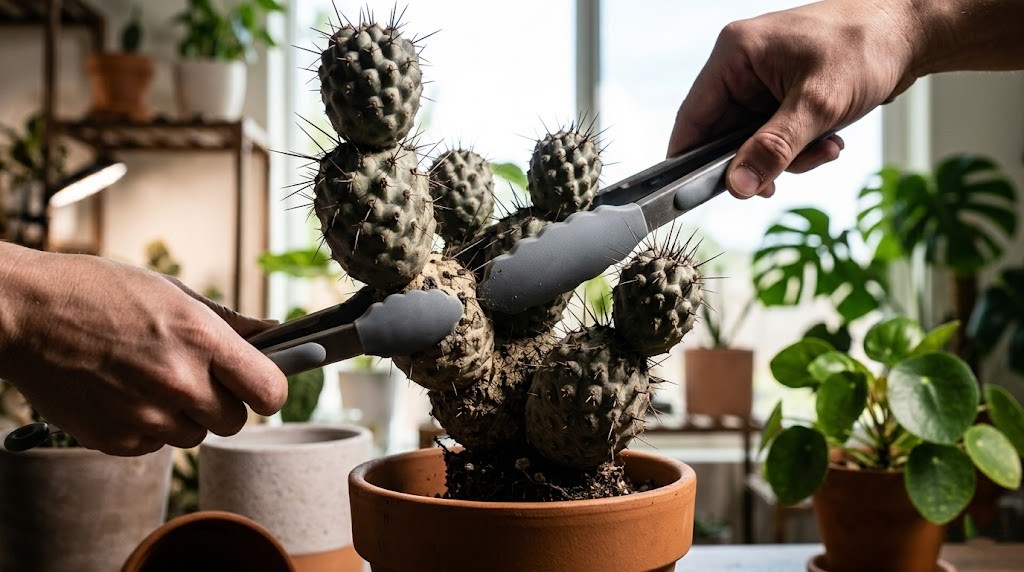
While the daily care of this succulent is largely hands-off, the occasional maintenance requires a delicate touch and a strategic approach. Because of its fragile structure, routine tasks like repotting or simply moving the plant to clean a windowsill can become a precarious balancing act.
How to Safely Handle a Pine Cone Cactus
Whether you own the spineless var. inermis or the paper-spined var. diadematus, handling requires caution. Even the spineless varieties have microscopic, hair-like prickles called glochids nestled in their areoles (the small bumps on the segments). These glochids detach instantly upon contact and embed themselves into your skin, causing intense, lingering irritation.
The paper-spine variety presents a different challenge. The long, flat ribbons look like harmless, dried parchment, but they are remarkably sharp and rigid.
Expert Handling Tip: Never use your bare hands. Invest in a pair of thick, leather gardening gloves, or utilize a standard pair of silicone-tipped kitchen tongs. The silicone provides a gentle but firm grip around the fragile segments, allowing you to lift or steady the plant without knocking the cones loose or catching a handful of glochids.
Repotting Rules & Container Selection
Because this is a slow-growing species, you will only need to repot every two to three years. You will know it is time when the roots begin poking through the bottom drainage hole, or when the stack of segments becomes so top-heavy that the current pot threatens to tip over.
When selecting a new container, unglazed terracotta is absolutely non-negotiable for beginners and highly recommended even for experts. Terracotta is porous; it literally wicks excess moisture away from the soil and allows the root zone to breathe. Plastic or glazed ceramic pots trap moisture, drastically increasing the risk of root suffocation. Choose a pot that is only one to two inches wider than the current root ball. Too much excess soil will hold onto unnecessary water.
Feeding and Fertilizing
Desert soils are notoriously poor in organic nutrients, so this plant does not require heavy feeding. Over-fertilizing can actually cause weak, rapid growth that compromises the structural integrity of the segments.
Limit feeding exclusively to the active growing season (Spring and Summer). Use a specialized liquid cactus and succulent fertilizer, diluted to half the recommended strength, and apply it only once a month. Cease all fertilization completely by early fall to allow the plant to enter its natural winter dormancy.
How to Propagate Pine Cone Cactus (Free Plants!)
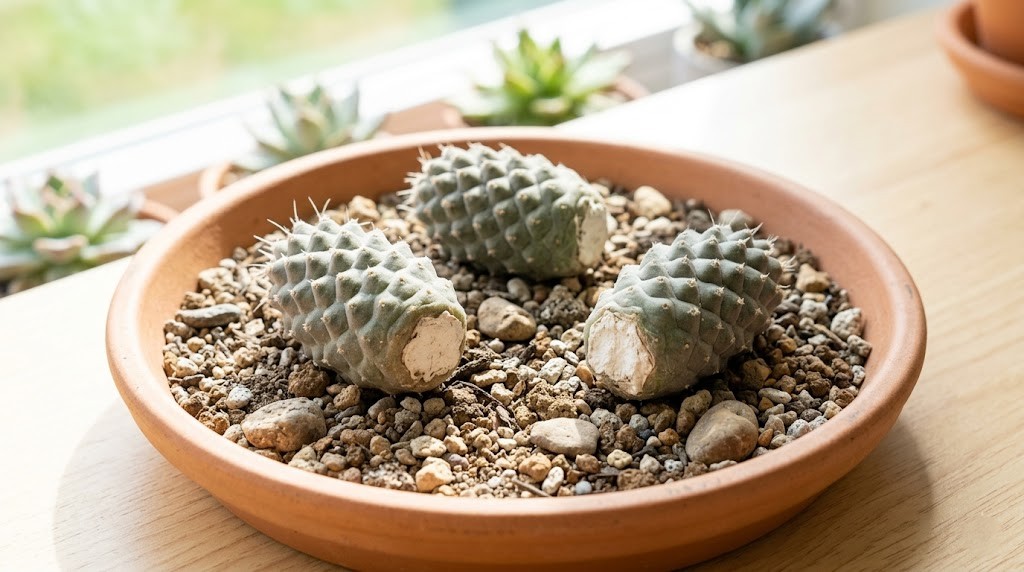
One of the greatest joys of cultivating Tephrocactus articulatus is how effortlessly it multiplies. Because the segments are evolutionarily designed to fall off and root, propagating this plant at home is highly rewarding and has an incredibly high success rate.
Follow this simple, step-by-step process to clone your plant:
-
Sourcing the Cutting: If a segment hasn’t already fallen off by accident, you can intentionally harvest one. Wearing thick gloves or using tongs, gently grasp a top segment and use a firm, twisting motion to snap it off at the joint.
-
Callousing (The Most Critical Step): Do not plant the fresh cutting immediately. The open wound where the segment detached is highly susceptible to bacterial and fungal infections. Set the broken segment in a dry, warm spot out of direct sunlight for 3 to 7 days. Allow the wet wound to dry and form a hard, white callous.
-
Planting: Once fully calloused, prepare a small terracotta pot with your gritty, fast-draining soil mix. Do not bury the segment. Simply rest the calloused end gently on top of the dry soil. You can use a few small top-dressing rocks to prop it upright.
-
Waiting for Roots: Patience is vital here. Do not soak the soil. Because the cutting has no roots, it cannot absorb water; sitting in wet soil will only cause it to rot. Instead, lightly mist the surface of the soil once a week to encourage root growth. After about four to six weeks, gently tug on the segment. If you feel resistance, roots have successfully formed, and you can begin treating it like a mature plant with the standard soak-and-dry watering method.
Troubleshooting: What’s Wrong With My Cactus?

Even with the best intentions, indoor environments can present challenges. Diagnosing ailments quickly relies on keen visual observation. When capturing photos of your collection to track health progress or troubleshoot issues, look for these telltale visual cues.
Yellowing, Mushy Base (Root Rot)
-
The Cause: This is the terminal result of overwatering, poor drainage, or a soil mix that is too dense. The roots have drowned, suffocated, and fallen victim to fungal pathogens, which are now traveling up the stem.
-
The Solution: Immediate emergency surgery is required. Once rot sets into a segment, it cannot be reversed. You must unpot the plant and inspect the damage. If the base is mushy and black/yellow, use a sterilized knife to cut away all rotting tissue. Your only hope is to salvage the firm, healthy, green top segments, allow them to callous completely, and propagate them in entirely fresh, dry soil. Discard the rotting base and the contaminated soil.
Skinny, Stretched-Out New Growth (Etiolation)
-
The Cause: Severe light starvation. When the plant is kept in a dim environment, it abandons its compact, spherical growth habit and stretches out desperately in search of a light source. The new segments will look pale, elongated, and distorted.
-
The Solution: The plant must be moved to a significantly brighter location or placed under a high-quality grow light. Unfortunately, etiolated growth is permanent; those stretched segments will never shrink back into spheres. If the aesthetic bothers you, carefully twist off the stretched segments and allow the plant to push out new, healthy growth in its brighter environment.
Shriveling or Wrinkled Cones
-
The Cause: While rot causes a translucent, squishy mushiness, severe underwatering causes a distinct, leathery wrinkling. The plant is actively consuming the water reserves stored inside its segments to survive.
-
The Solution: If the soil is completely bone dry and the segments look deflated, it is time for a thorough, deep watering. Bottom-watering is highly effective here: place the pot in a bowl of water and allow the soil to wick moisture up through the drainage hole for about 30 minutes. The segments should plump back up within 48 hours.
Common Pests to Watch For
Indoor succulents are generally resilient, but they can fall prey to sap-sucking insects.
-
Mealybugs: These are the most common offenders. They look like tiny, fuzzy white masses of cotton hiding in the crevices between the segments or down near the soil line.
-
Scale: These present as hard, brown, dome-like bumps permanently affixed to the skin of the cactus.
-
The Treatment: Isolate the affected plant immediately. Dip a cotton swab in 70% isopropyl (rubbing) alcohol and dab it directly onto the pests to dissolve their protective coatings and kill them on contact. For larger infestations, treat the entire plant with a targeted application of neem oil or an insecticidal soap, keeping it out of direct sunlight while the treatment dries to prevent chemical burns.
Frequently Asked Questions (FAQs)
Is the pine cone cactus toxic to cats and dogs? Botanically speaking, Tephrocactus articulatus is non-toxic if ingested. However, it is considered highly hazardous to pets purely due to its physical defenses. The microscopic glochids and paper spines can cause severe mechanical irritation, swelling, and pain if lodged in a pet’s mouth, throat, or paws. It should always be kept well out of reach of curious animals.
How fast does a pine cone cactus grow? This is an exceptionally slow-growing species, which is part of its appeal as a low-maintenance houseplant. Under optimal indoor conditions, you can expect to see only one or two new segments form per year.
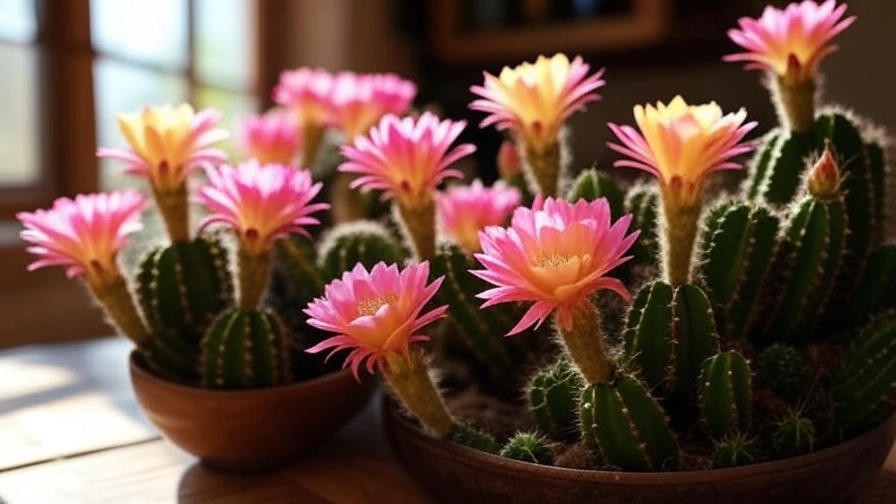
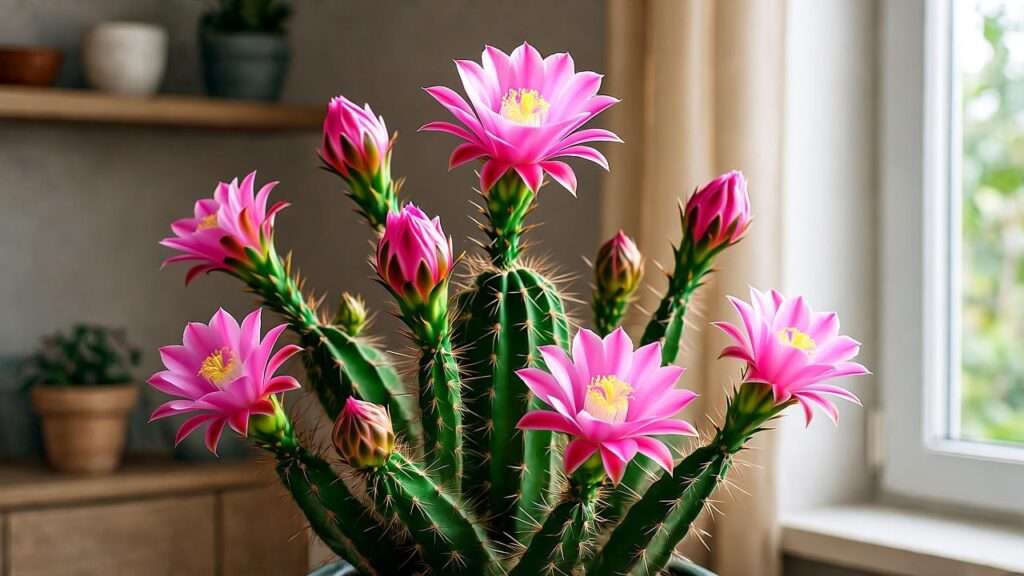
Does the pine cone cactus flower indoors? While they readily bloom in the wild, producing stunning, cup-shaped, pale pink or white flowers, getting them to flower indoors is a rare achievement. It requires perfect replication of their natural environment, including intensely bright light, proper fertilization, and a distinct period of cool, dry winter dormancy.
Conclusion: Embrace the Quirks
Cultivating a Pine Cone Cactus is an exercise in appreciating the wonderfully weird side of botany. Its bizarre, precarious structure, its tendency to drop pieces at the slightest breeze, and its harsh desert demands make it a highly unique addition to any indoor collection.
By prioritizing intense sunlight, mixing a heavily aerated gritty soil, and mastering the patience required for the soak-and-dry watering method, you can easily bypass the common pitfalls of indoor succulent care. Embrace its quirks, respect its native origins, and this fascinating architectural specimen will reward you with years of resilient, rot-free growth.