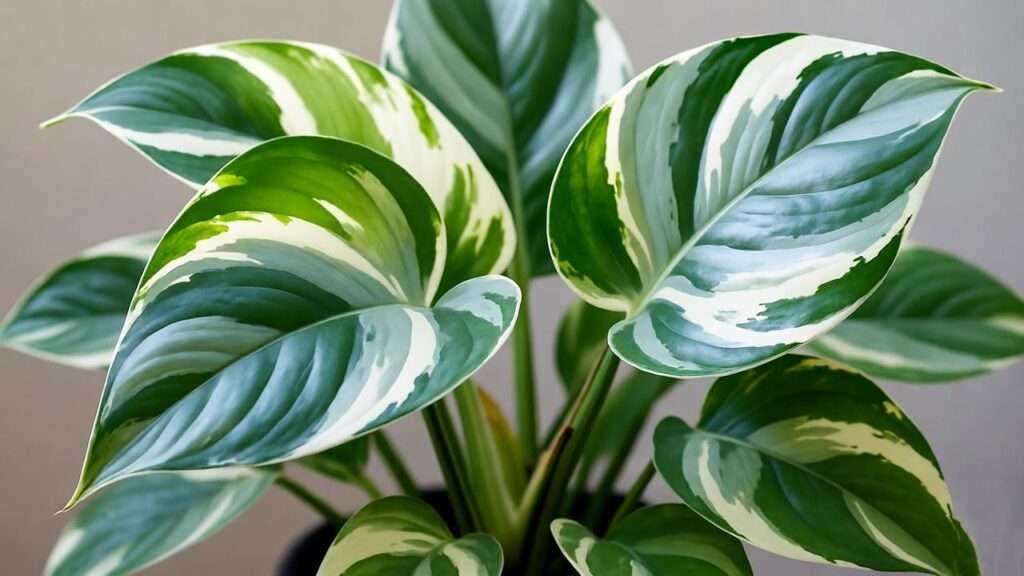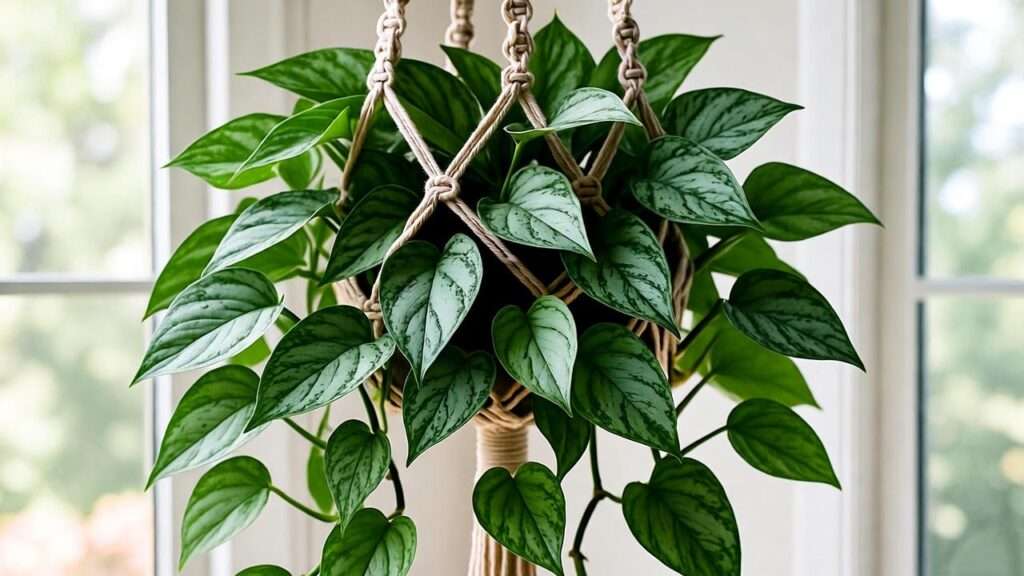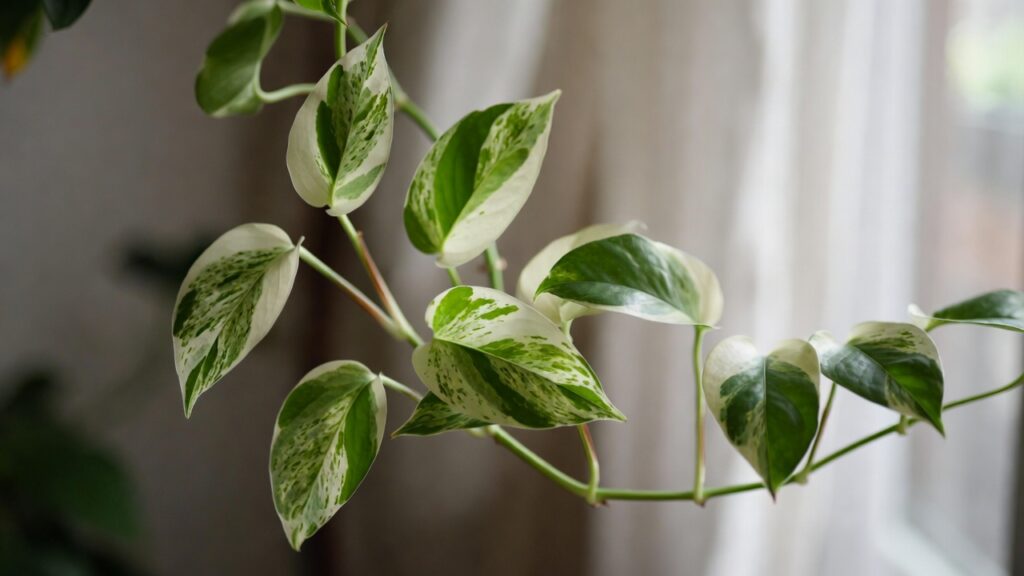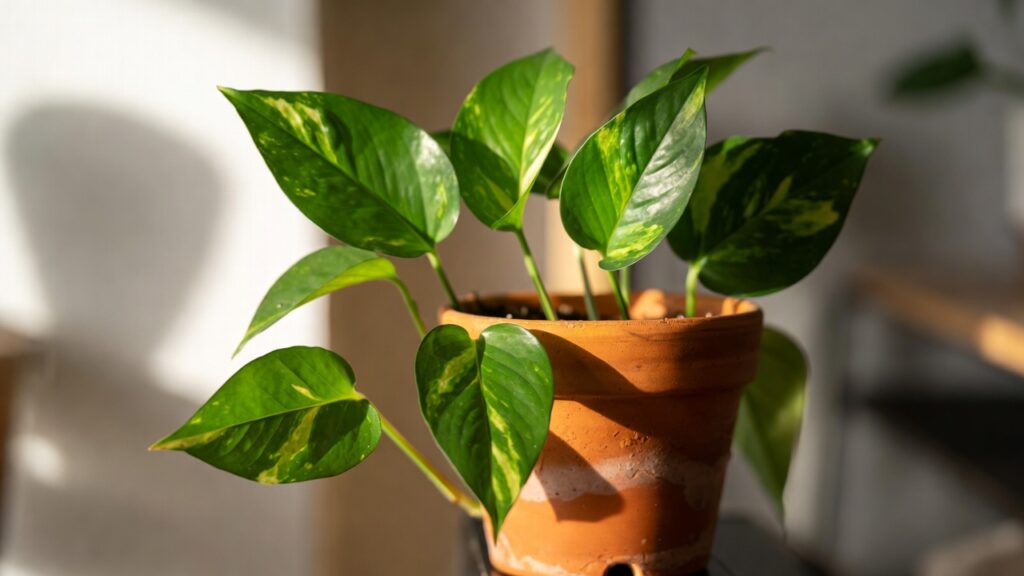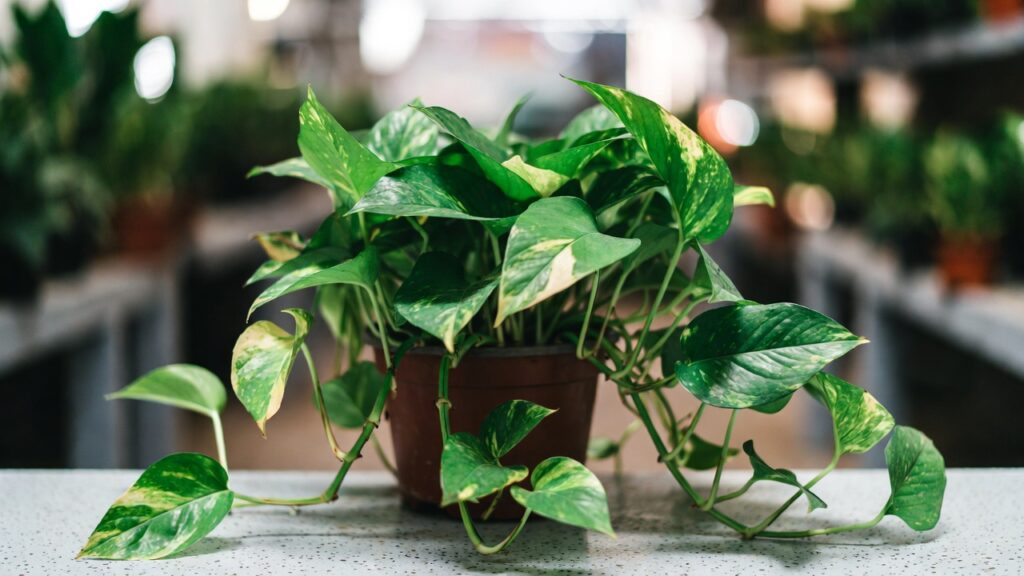

Bringing a Fernando’s Fire Pothos into your indoor plant collection is an absolute delight for anyone who appreciates vivid, flame-like foliage. Also known in collector circles as ‘Fernando’s Fire,’ this remarkable cultivar of Epipremnum aureum is celebrated for its brilliant golden-yellow streaks, creamy highlights, and saturated forest-green leaves. However, many plant parents run into a frustrating issue a few months after bringing one home: the once-vibrant golden variegation begins to fade into a dull, solid green, or the delicate pale leaf tissue develops unsightly brown, paper-thin edges.
Maintaining the rich contrast of a variegated pothos requires a clear understanding of plant physiology, light thresholds, and environmental control. When light levels drop, a plant adjusts its internal biochemistry to survive, producing excess chlorophyll that overrides its unique patterns. Conversely, too much direct sunlight can scorch the low-chlorophyll sections, leaving behind brittle burn marks.
This guide serves as your definitive masterclass for cultivating a thriving, intensely variegated Fernando’s Fire Pothos. Whether you want to fix a fading vine, build a rich, aerated soil mixture from scratch, trim for optimal leaf color, or mount your plant on a moss pole to unlock larger foliage, you will find expert, field-tested guidance below.
What Is the Fernando’s Fire Pothos? (Botanical Overview & Origin)
Horticultural Background and Genetic Lineage
The Fernando’s Fire Pothos (Epipremnum aureum ‘Fernando’s Fire’) is an evergreen, trailing arum in the Araceae family. Botanically, it is a specialized color mutation—often called a “sport”—originating from the classic Golden Pothos. In the wild tropical forests of French Polynesia and across the Solomon Islands, Epipremnum species climb tall tree trunks using thick aerial roots, producing massive, split leaves as they mature.
In indoor settings, this cultivar remains in its juvenile growth phase, offering manageable, heart-shaped leaves on long, cascading vines. The name “Fernando’s Fire” or “Fernando’s Fire” pays homage to the fiery, high-contrast yellow-gold variegation that sets this specific selection apart from standard commercial pothos varieties.
Taxonomically, it belongs to the Kingdom Plantae, Order Alismatales, Family Araceae, Genus Epipremnum, and Species Epipremnum aureum, with ‘Fernando’s Fire’ as its official cultivar designation.
Key Differences: Fernando’s Fire vs. Standard Golden Pothos
While both plants share a common ancestry, several distinct physical characteristics separate a true Fernando’s Fire from a standard Golden Pothos:
-
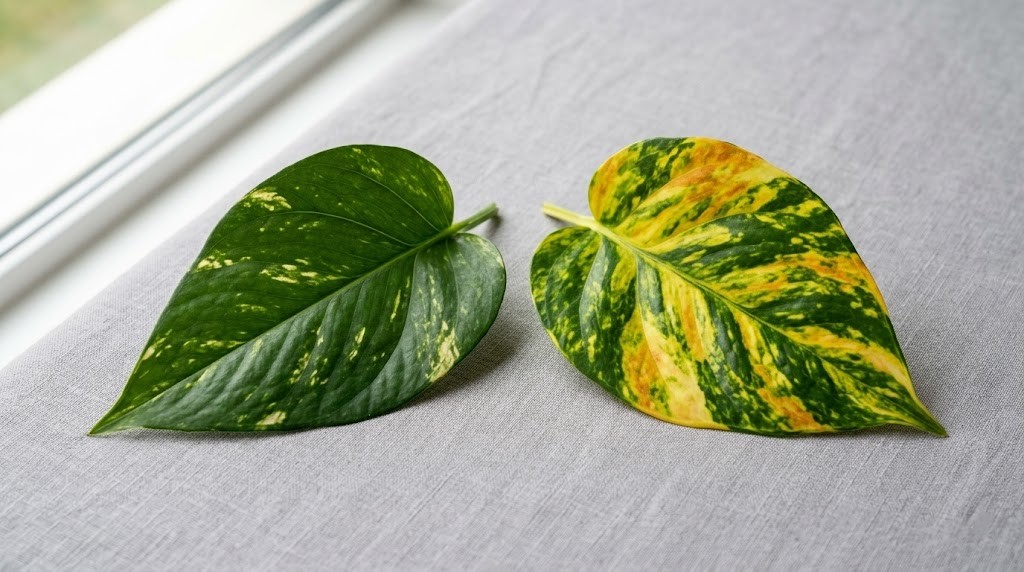
Variegation Intensity and Color Hue: Standard Golden Pothos displays subtle, flecked streaks of soft yellow or cream scattered across deep green leaves. The Fernando’s Fire features broad, sweeping bands, blocky patches, and flame-like brushstrokes of saturated neon-gold, butter yellow, and lime green.
-
Foliage Contrast and Texture: The boundaries between the green and golden zones on a Fernando’s Fire are much sharper. The leaf surface exhibits a rich satin sheen with slightly thicker leaf tissue along the non-variegated sections.
-
Growth Speed and Chlorophyll Content: Because the bright golden sections of the leaf contain significantly less chlorophyll, the Fernando’s Fire photosynthesizes at a slightly slower rate than its fully green ancestors. As a result, its growth rate is somewhat more deliberate, making proper light exposure crucial to maintaining its energy levels.
Light Science: The Secret to Long-Lasting Variegation

How Light Levels Regulate Chlorophyll and Color
To keep your Fernando’s Fire looking its best, it helps to understand how light affects leaf color. Variegation in house plants is essentially a lack of chlorophyll in specific cells. Chlorophyll is the green pigment responsible for capturing energy from light to drive photosynthesis.
When a variegated plant is placed in a dim room, it adapts to the light shortage by producing more chlorophyll in an effort to absorb as much available light as possible. This process leads to “reversion,” where new leaves emerge solid green, covering up the fiery golden patterns.
On the other hand, if you expose the plant to harsh, direct afternoon sunlight, the leaf tissue in the golden areas—which lacks protective pigments—will quickly burn, turning dry, brown, and translucent.
Finding the Ideal Light Exposure
To preserve bright golden tones without burning the foliage, place your plant in an environment that receives 200 to 500 foot-candles (roughly 2,000 to 5,000 lux) of filtered light for 10 to 12 hours a day.
-
East-Facing Windows: This is often the best spot. An eastern exposure provides soft, cool morning light that stimulates photosynthesis without intense heat or scorch risks.
-
South-Facing Windows: Highly effective, provided the plant sits 3 to 5 feet back from the glass or behind a sheer white curtain. Direct south-facing sun during midday will scorch variegated tissue.
-
West-Facing Windows: Good for light intensity, but afternoon sun can be hot. Place the plant a few feet away from the glass or filter the incoming light to prevent heat stress.
-
North-Facing Windows: Typically too dim to sustain bright golden variegation over time. If a north window is your only option, supplement with artificial lighting.
Using Grow Lights for Consistent Color Year-Round
When natural daylight drops during autumn and winter, artificial illumination ensures your Fernando’s Fire continues producing high-contrast leaves.
Full-spectrum LED grow lights are an efficient, reliable solution. Position a 15- to 24-watt full-spectrum LED bulb roughly 12 to 18 inches above the foliage. Set an automated timer for 12 to 14 hours per day. Full-spectrum LEDs deliver balanced blue and red wavelengths, providing the light energy needed to maintain vivid golden variegation through long winter months.
Moisture and Irrigation: Preventing Root Rot and Leaf Tip Burn
The “Dry-Down” Watering Method
Overwatering is the single most common reason indoor pothos plants fail. The roots of Epipremnum aureum need oxygen just as much as they need water. Constant moisture saturates the soil, closing off air pockets and creating an environment where anaerobic fungi thrive, leading to root rot.
To water your Fernando’s Fire properly, use the dry-down approach:
-
Insert a wooden skewer or your finger 2 to 3 inches deep into the potting mix.
-
If the top 50% of the soil feels moist or damp wood sticks to the skewer, leave the plant alone.
-
Only water when the top half of the soil mix is dry to the touch.
-
If using a digital moisture meter, wait until the gauge drops into the dry range before deep watering.
When it is time to water, drench the soil thoroughly until water drains freely from the pot’s bottom drainage holes. Allow all excess water to empty completely—never let the pot sit in standing water inside a saucer.
Water Quality and Leaf Necrosis
Have you noticed crisp, dark brown spots or black margins on the golden portions of your leaves? Tap water might be the issue. Municipal tap water often contains chlorine, chloramines, fluoride, and dissolved mineral salts.
Because variegated leaf tissue is naturally weaker due to lower chlorophyll levels, these excess minerals can accumulate at the leaf edges, causing tip burn and brown patches.
If your tap water is hard, switch to filtered water, rainwater, or distilled water. If you must use municipal tap water, running it through a standard carbon filter pitcher helps remove harsh chemical additives and lowers mineral buildup in the substrate.
Identifying Watering Issues Before It’s Too Late
-
Signs of Overwatering: Lower leaves turn dull yellow, stems feel soft or mushy near the soil surface, the soil smells sour, or leaf tips release excess droplets of water overnight followed by black edges.
-
Signs of Underwatering: Leaves curl inward into tight tubes, stems drop down, older foliage turns pale, and the top layers of soil pull away from the inside edges of the pot.
Soil Mix Blueprint: Crafting the Ideal Substrate

Standard, off-the-shelf potting soil is usually too dense for a Fernando’s Fire pothos. Over time, heavy peat-based soils compact down, trapping excess water around the roots while blocking necessary air circulation. To help your plant build a strong root system, plant it in a light, chunky, highly aerated medium that drains quickly while retaining light moisture.
The Ultimate Aroid Substrate Recipe
Mix your own custom soil blend using this simple breakdown:
-
40% High-Quality Indoor Potting Soil Base: Provides basic nutrients and holds initial moisture.
-
30% Coarse Perlite or Pumice: Creates air pockets and prevents compaction.
-
20% Medium-Grade Orchid Bark Chips: Mimics the natural tree-bark surfaces roots cling to in the wild.
-
10% Worm Castings: Adds gentle, organic slow-release nutrients without risking fertilizer burn.
Pot Selection: Terracotta vs. Plastic Containers
The type of pot you select directly impacts how fast the soil dries out:
-
Unglazed Terracotta Pots: Terracotta is porous, allowing moisture to evaporate through its clay walls. This makes it a safe option for growers who tend to overwater, as it helps prevent root rot.
-
Plastic Nursery Pots with Drainage: Plastic holds moisture longer, which can be helpful in hot, dry environments. Just make sure the pot features multiple, large bottom drainage holes so excess water drains freely.
Avoid pots without drainage holes entirely. Planting directly into a sealed container almost guarantees stagnant water at the bottom, which leads to root decay.
Climate Control: Temperature, Humidity, and Seasonal Adjustments
Temperature Ranges and Cold Draft Hazards
As a tropical native, the Fernando’s Fire pothos prefers warm, steady temperatures. It grows best between 65°F and 85°F (18°C to 29°C).
Cold temperatures slow growth significantly and can harm the leaf cells. Keep your plant away from cold drafts, air conditioning vents, and chilly windowpanes during winter. Exposure to temperatures below 50°F (10°C) can cause black leaf blotches, rapid leaf drop, and root damage.
Humidity Levels for Vibrant Foliage
While the Fernando’s Fire adapts reasonably well to standard home humidity levels (30% to 40%), keeping relative humidity between 50% and 70% results in faster growth, larger leaves, and fewer brown margins on bright variegated areas.
To boost humidity around your plant without dampening furniture:
-
Place a small cool-mist room humidifier near your display shelf.
-
Group tropical plants together to create a natural, humid microclimate.
-
Set the pot on a pebble tray filled with water, making sure the bottom of the pot rests on top of the stones above the water line.
Avoid misting the leaves directly with a spray bottle. Water sitting on indoor leaves creates an ideal environment for bacterial spot infections and fungal spores to take hold.
Pruning, Support, and Reversion Control

Pruning Techniques to Stop Reversion
Even with proper lighting, a Fernando’s Fire pothos can occasionally produce a stem with solid green leaves. If left alone, these all-green stems will outgrow the variegated parts of the plant because they contain more chlorophyll and produce energy faster.
To fix reversion and preserve the plant’s bright golden pattern:
-
Look down the stem to find the last node that produced a leaf with strong golden variegation.
-
Use clean, sharp pruning shears sterilized with rubbing alcohol to cut the vine about a quarter-inch above that variegated node.
-
This encourages dormant buds at the variegated node to grow, giving you new shoots with rich, golden patterns.
Trailing vs. Climbing: The Power of a Moss Pole
You can grow your Fernando’s Fire as a cascading trailing plant in a hanging basket, or train it to climb vertically up a support structure.
While trailing vines look great on high shelves, letting the plant climb a sphagnum moss pole unlocks its full growth potential. When the aerial roots grow into a moist moss pole, the plant senses physical support and transitions toward its mature growth form. This results in thicker stems, shorter spacing between leaves, and larger foliage with broader, richer golden variegation.
Step-by-Step Propagation Guide
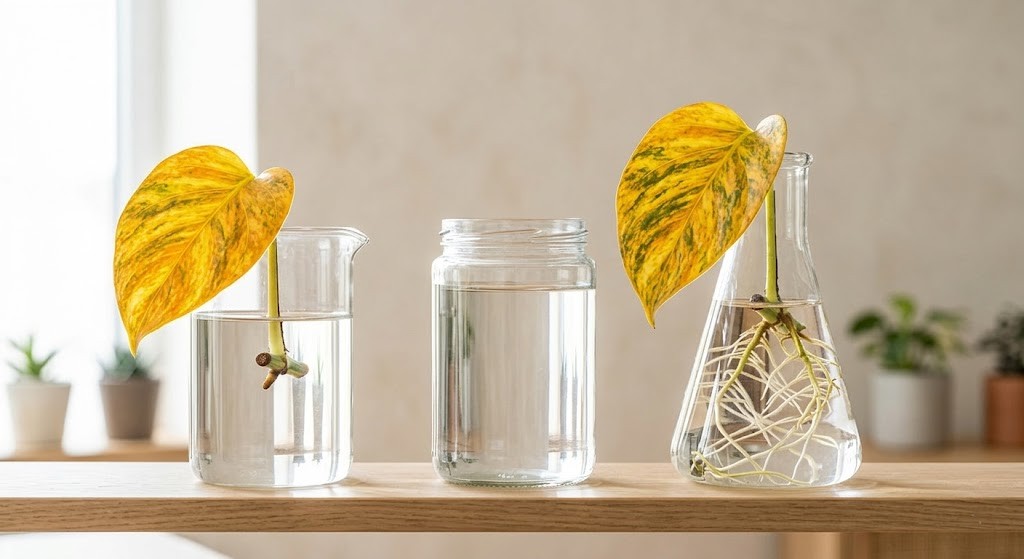
Multiplying your Fernando’s Fire pothos allows you to expand your indoor garden or share cuttings with fellow enthusiasts. The easiest, most reliable propagation method is using single-node stem cuttings in water or sphagnum moss.
Step 1: Select and Cut Healthy Vines
Choose a vibrant, healthy vine with strong golden patterns. Look for nodes—the small, raised bumps along the stem where leaves and aerial roots meet. Using a disinfected razor blade or shears, slice the stem into individual sections. Each cutting should feature one leaf, one node, and a brief section of stem (about 1 inch).
Step 2: Choose Your Rooting Medium
-
Option A: Water Propagation
Place the cuttings into a clear glass jar filled with filtered, room-temperature water. Ensure the node is submerged while keeping the leaf blade out of the water to prevent rot. Set the jar in a warm spot with bright, indirect light. Change the water every 5 to 7 days to keep it clean and oxygenated. Root development usually begins within 10 to 14 days.
-
Option B: Damp Sphagnum Moss
Soak high-grade Chilean sphagnum moss in water, then squeeze out as much moisture as possible until it feels like a damp sponge. Pack the moss loosely into a small plastic cup, insert the cutting’s node into the moss, and put the cup inside a clear plastic bag to lock in humidity. This method often produces strong, resilient root systems quickly.
Step 3: Potting Up Cuttings
Once the primary roots grow 2 to 3 inches long and develop secondary lateral roots, the cutting is ready to pot up. Plant 4 to 6 rooted cuttings together into a 4-inch pot filled with your custom aerated soil mix. Keep the soil slightly moist for the first two weeks as the new roots adapt to living in soil.
Pest Management and Plant Health Troubleshooting
The Fernando’s Fire pothos is a tough, resilient plant, but indoor pests and cultural stress can still occur. Catching these issues early keeps minor problems from spreading across your collection.
Common Pests and Simple Treatments
-
Mealybugs: Look like small, white, cottony spots tucked into the joints where leaves meet the stems.
Treatment: Dab individual bugs directly using a cotton swab dipped in 70% isopropyl alcohol. For larger outbreaks, spray the plant thoroughly with insecticidal soap or a 1% neem oil solution once a week for three consecutive weeks.
-
Spider Mites: Tiny pests that thrive in dry air, leaving fine webbing along the undersides of leaves and creating a faint, yellow-speckled texture on the foliage.
Treatment: Wash the foliage thoroughly under lukewarm running water to knock off the webbing. Increase room humidity and treat the leaves with organic horticultural oil or insecticidal soap.
-
Fungus Gnats: Small black flies that hover around wet soil surfaces. While adult gnats are harmless to foliage, their larvae feed on organic matter and delicate root hairs in soggy potting mix.
Treatment: Allow the top half of the soil mix to dry out thoroughly between waterings. Water the plant using mosquito bit tea to naturally kill larvae in the soil.
Frequently Asked Questions
Is the Fernando’s Fire Pothos rare?
The Fernando’s Fire pothos is considered a specialized, semi-rare cultivar. While it is not as hard to find as high-end rare aroids, it is far less common than standard Golden or Marble Queen pothos varieties in big-box stores. Most collectors acquire them through specialty nurseries or plant swaps.
Is the Fernando’s Fire Pothos safe for pets?
No. Like all Epipremnum cultivars, the Fernando’s Fire contains insoluble calcium oxalate crystals. If chewed or ingested by cats, dogs, or other pets, these sharp micro-crystals cause immediate oral irritation, burning of the mouth and tongue, drooling, vomiting, and difficulty swallowing. Keep this plant on high shelves, in hanging baskets, or out of reach of curious pets.
Why are the new leaves on my plant growing in smaller?
Smaller leaves usually point to three factors: insufficient light, lack of structural climbing support, or depleted soil nutrients. Moving the plant closer to a bright light source, supporting it on a moss pole, and feeding it balanced liquid indoor fertilizer once a month during spring and summer will help encourage larger foliage.
Can a Fernando’s Fire pothos survive in low light?
While the plant can survive in low-light environments, it will lose its defining characteristics. The golden variegation will fade to dark green as the plant produces extra chlorophyll to compensate for the light shortage. For vivid foliage, bright indirect light is essential.
Final Thoughts for Healthy Growth
Growing a vibrant, healthy Fernando’s Fire pothos comes down to balancing bright light, proper soil aeration, and thoughtful watering. By placing your plant in bright, indirect sunlight, potting it in a light, bark-rich soil blend, allowing the soil to dry out partially between waterings, and trimming any all-green stems, you will enjoy a stunning display of golden-yellow foliage for years to come.