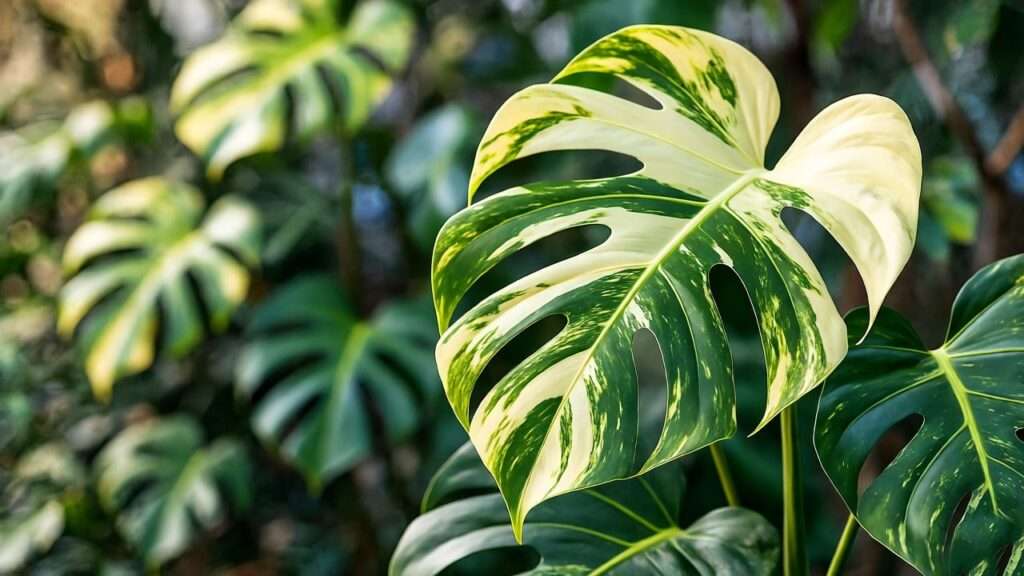
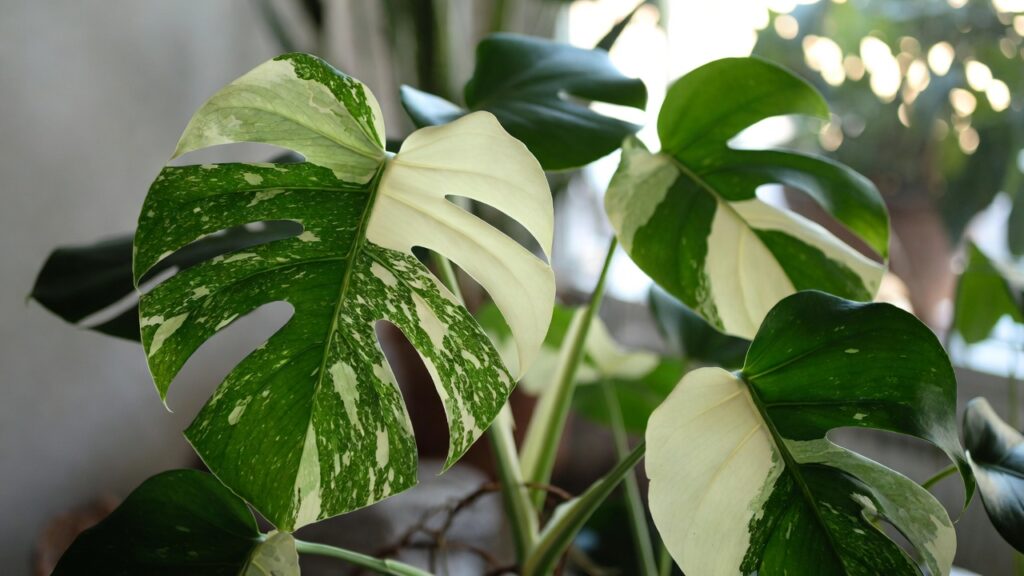
Few indoor plants are as breathtaking — or as unforgiving — as the albo monstera. One day it’s producing dramatic white-splashed leaves that look hand-painted. The next, those same white sections are turning brown, crispy, and lifeless.
If you’ve invested in a variegated Monstera deliciosa ‘Albo Variegata’, you already know: this is not just another houseplant. It’s a living collector’s piece.
The truth? Most albo monstera problems — browning white leaves, slow growth, reversion to green — are completely preventable. But they happen because this plant operates by different biological rules than a regular monstera.
In this comprehensive guide, I’ll show you exactly how to:
- Maintain strong, stable variegation
- Prevent white leaves from browning
- Avoid root rot and nutrient imbalance
- Encourage larger, fenestrated leaves
- Protect your investment long-term
This isn’t surface-level advice. This is the care strategy experienced indoor growers use to keep variegated monstera thriving for years.
What Is an Albo Monstera? (And Why It’s So Special)
The Science Behind Variegation
The albo monstera is a variegated form of Monstera deliciosa, prized for its striking white marbling. But here’s what many plant owners don’t realize:
Albo variegation is a chimeric mutation.
That means:
- Some cells produce chlorophyll (green).
- Some cells do not (white).
White sections lack chlorophyll, which means:
- They cannot photosynthesize.
- They are structurally weaker.
- They are more prone to browning and damage.
This is why your albo monstera needs more light than a regular monstera — yet burns more easily. It’s a delicate balance.
Why Albo Monstera Is More Challenging Than Regular Monstera
Compared to a standard green monstera, the albo:
- Grows slower
- Requires brighter indirect light
- Is more sensitive to overwatering
- Needs higher humidity
- Can revert to green if stressed
This isn’t a beginner-proof plant — but it is manageable with the right system.
Common Misconceptions
Myth 1: More white means a healthier plant.
Actually, leaves that are mostly white weaken the plant over time.
Myth 2: It needs direct sun to maintain variegation.
Direct sun often scorches white tissue.
Myth 3: It behaves like a regular monstera.
It doesn’t. Variegation changes everything.
The #1 Factor in Albo Monstera Success: Proper Lighting
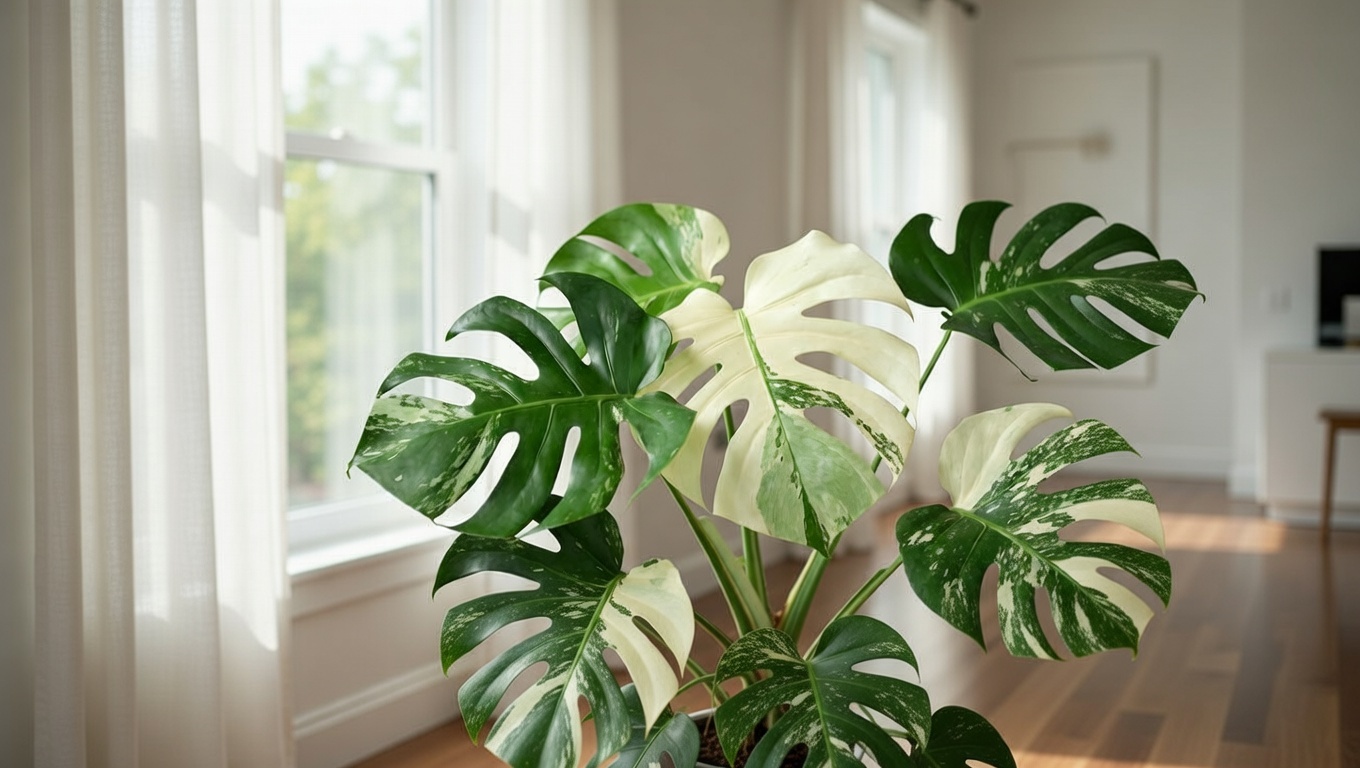
Lighting is the single most important factor in preventing browning and reversion.
Ideal Light Conditions for Strong Variegation
Your albo monstera needs:
- Bright, indirect light
- 6–8 hours of consistent brightness daily
- Protection from harsh midday sun
Best placements:
- 2–4 feet from a south-facing window (with sheer curtain)
- Directly in front of an east-facing window
- Under a full-spectrum grow light (5000–6500K)
Because white sections don’t photosynthesize efficiently, the plant compensates by demanding more light overall.
Signs of Not Enough Light
- Smaller leaves
- Less fenestration (fewer splits)
- Longer gaps between nodes
- Reverting to solid green
Reversion happens because the plant prioritizes survival. Green cells produce energy more efficiently.
Signs of Too Much Light
- Crispy brown edges on white sections
- Bleached-looking patches
- Curling leaves
White tissue burns quickly. If you see damage only on white areas, your light may be too intense.
Watering an Albo Monstera the Right Way
Overwatering kills more variegated monstera than anything else.
Why White Leaves Brown Easily
White sections:
- Lose moisture faster
- Are more sensitive to inconsistent watering
- Cannot buffer stress through photosynthesis
That’s why underwatering and overwatering can both cause browning.
The Correct Watering Strategy
Forget rigid schedules.
Instead:
- Check soil moisture 2–3 inches deep.
- Water only when the top 30–40% of soil is dry.
- Ensure water drains completely.
In most indoor environments, this means:
- Every 7–10 days in spring/summer
- Every 14–21 days in fall/winter
Moisture Meter vs Finger Test
- Finger test works well in chunky soil.
- A moisture meter helps beginners avoid root rot.
The Best Soil Mix for Albo Monstera
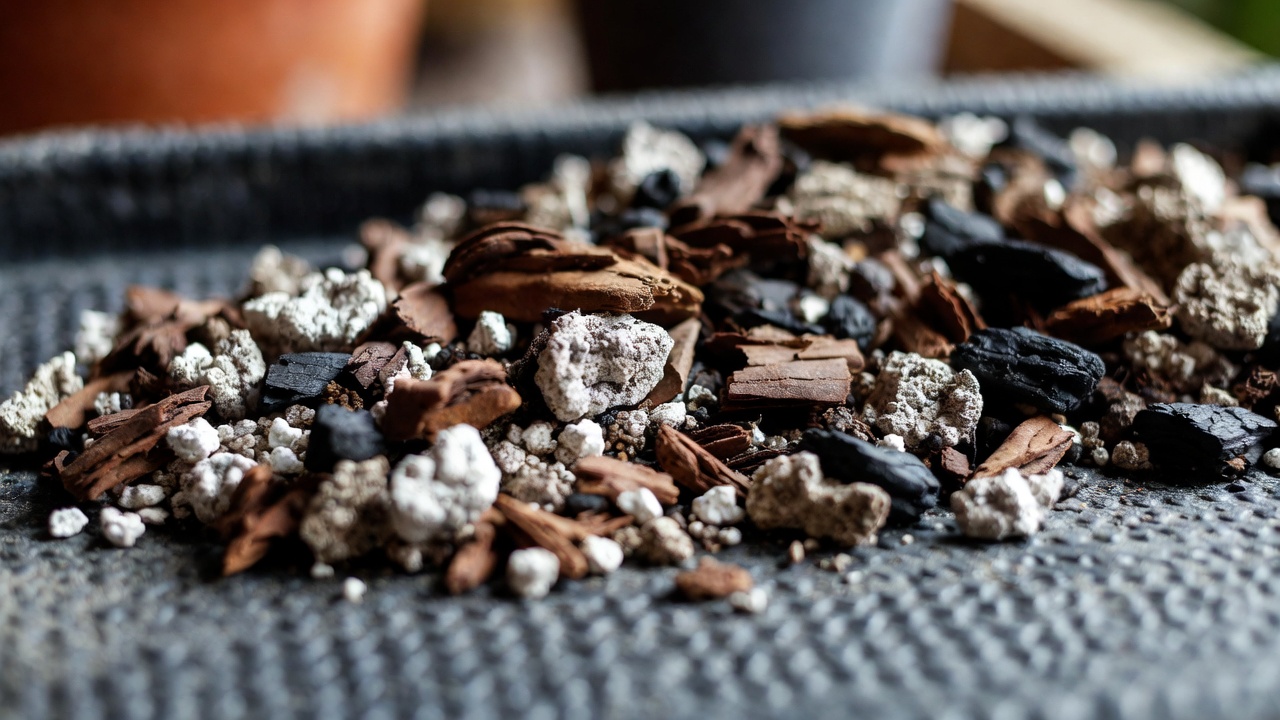
Albo monstera roots need oxygen as much as moisture.
Use a chunky, well-draining aroid mix:
- 40% orchid bark
- 30% perlite
- 20% coco coir or peat moss
- 10% horticultural charcoal
Why this works:
- Prevents root rot
- Improves aeration
- Reduces fungal risk
Avoid dense potting soil. It suffocates roots and leads to browning leaves.
Humidity & Temperature: The Silent Game-Changer
Ideal Humidity Range
Aim for:
- 60–80% humidity
Below 50%, white sections often crisp at the edges.
If your home is dry:
- Use a humidifier
- Group plants together
- Avoid placing near heating vents
Temperature Requirements
Optimal range:
- 65–85°F (18–29°C)
Avoid:
- Drafty windows
- Sudden temperature swings
- Air conditioner blasts
Variegated plants are less forgiving of environmental stress.
How to Prevent White Leaves From Browning
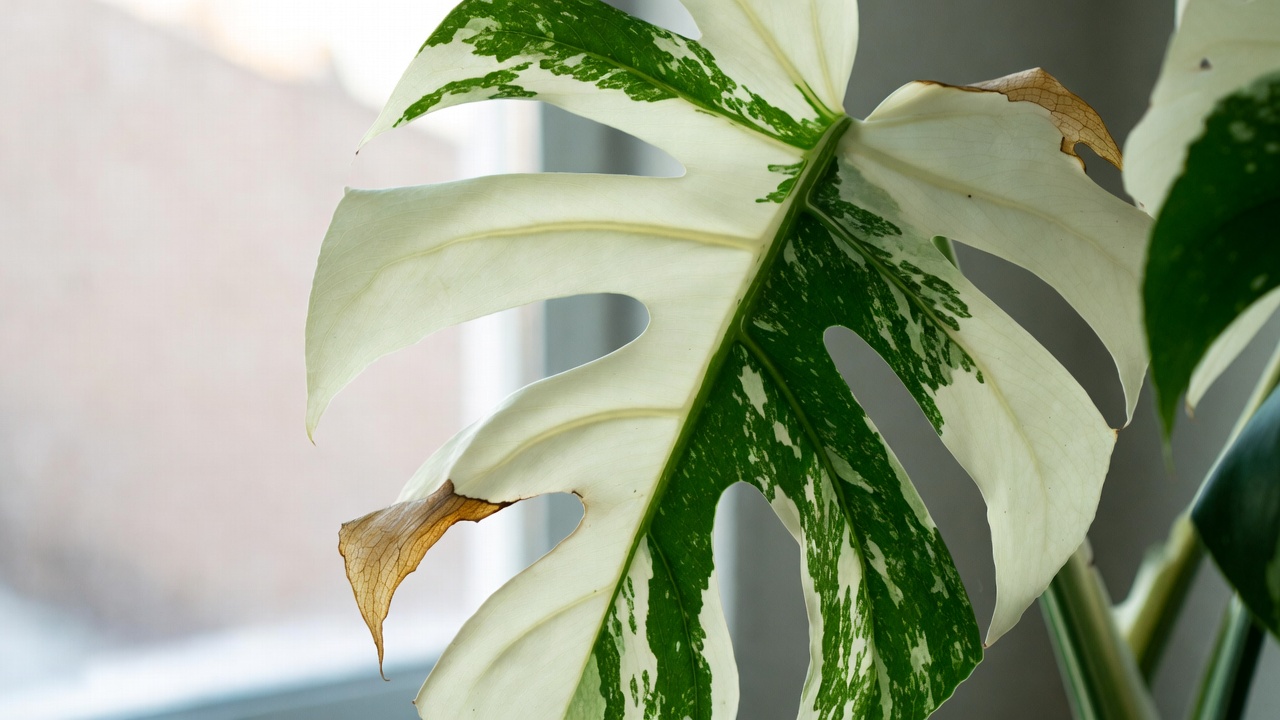
This is the issue most readers search for — and the good news is it’s preventable.
Top Causes of Browning
- Low humidity
- Inconsistent watering
- Salt buildup from fertilizer
- Excess direct sun
- Root damage
Often, it’s a combination.
How to Trim Damaged Sections Properly
- Use sterilized scissors.
- Cut along the natural leaf shape.
- Avoid cutting into green tissue unnecessarily.
Never rip damaged tissue — it increases stress.
Should You Remove Fully White Leaves?
If a leaf is almost entirely white:
- It drains energy.
- It may brown faster.
You can remove it if the plant struggles, but don’t panic-remove every white leaf. Balance matters.
Fertilizing Without Damaging Variegation
Variegated monstera are sensitive to fertilizer burn.
Best Fertilizer Type
Use:
- Balanced liquid fertilizer (10-10-10 or 20-20-20)
- Diluted to half strength
Feed:
- Every 4 weeks during growing season
- Stop in winter
Flush the Soil Periodically
Every 2–3 months:
- Water thoroughly until excess drains.
- This removes salt buildup.
Salt accumulation is a hidden cause of white leaf browning.
Supporting Healthy Growth: Moss Poles, Pruning & Training
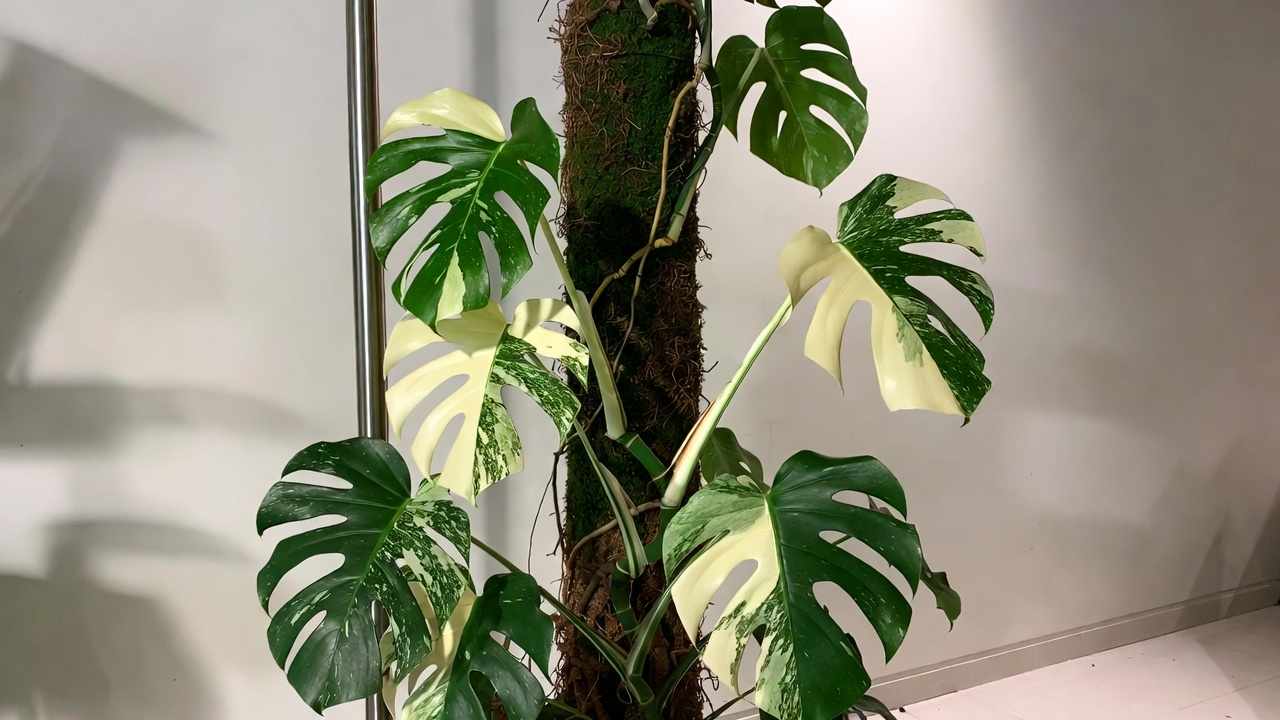
If you want large, dramatic, fenestrated leaves instead of small floppy ones, structural support is not optional — it’s essential.
In nature, Monstera deliciosa climbs trees using aerial roots. Without vertical support indoors, your albo monstera:
- Produces smaller leaves
- Develops longer internodes
- Becomes leggy
- Struggles to mature properly
Why a Moss Pole Changes Everything
A moss pole mimics the plant’s natural climbing environment. When aerial roots attach to moist moss:
- Leaves grow larger
- Fenestration increases
- Growth becomes more stable
- Variegation often appears more balanced
The key: Keep the moss slightly damp — not soaking.
How to Attach Your Plant Properly
- Use soft plant ties or Velcro tape.
- Anchor at the node, not the leaf stem.
- Adjust ties as the plant grows.
Never force the plant upright aggressively — guide it gradually.
Pruning for Balanced Variegation
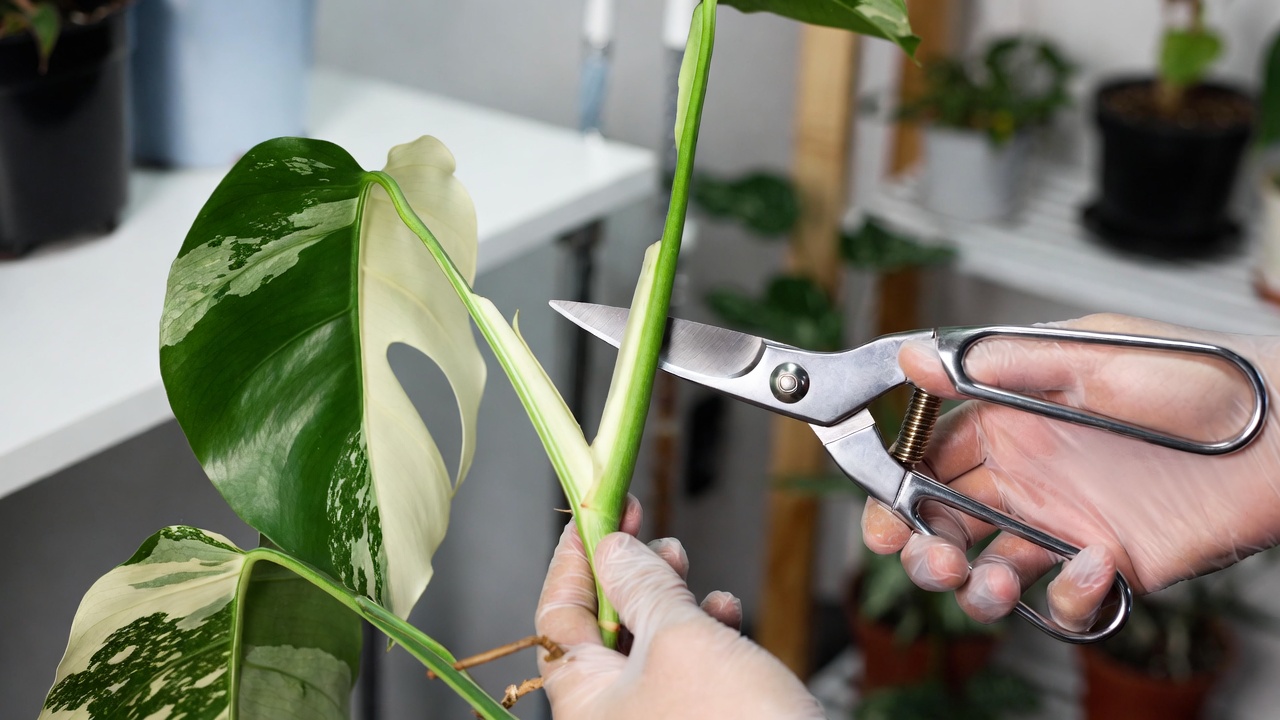
Variegation is unpredictable, but pruning allows you to influence it.
When to Prune
Prune if:
- A stem has fully reverted to green.
- Growth is weak and spindly.
- You want to encourage branching.
How to Prevent Reversion
If a new leaf emerges fully green:
- Locate the last node with strong variegation.
- Cut just above that node.
- Allow new growth to restart from there.
Because albo monstera is a chimera, each node carries genetic potential. Strategic pruning helps maintain marbling.
Propagating Albo Monstera (Without Losing Variegation)
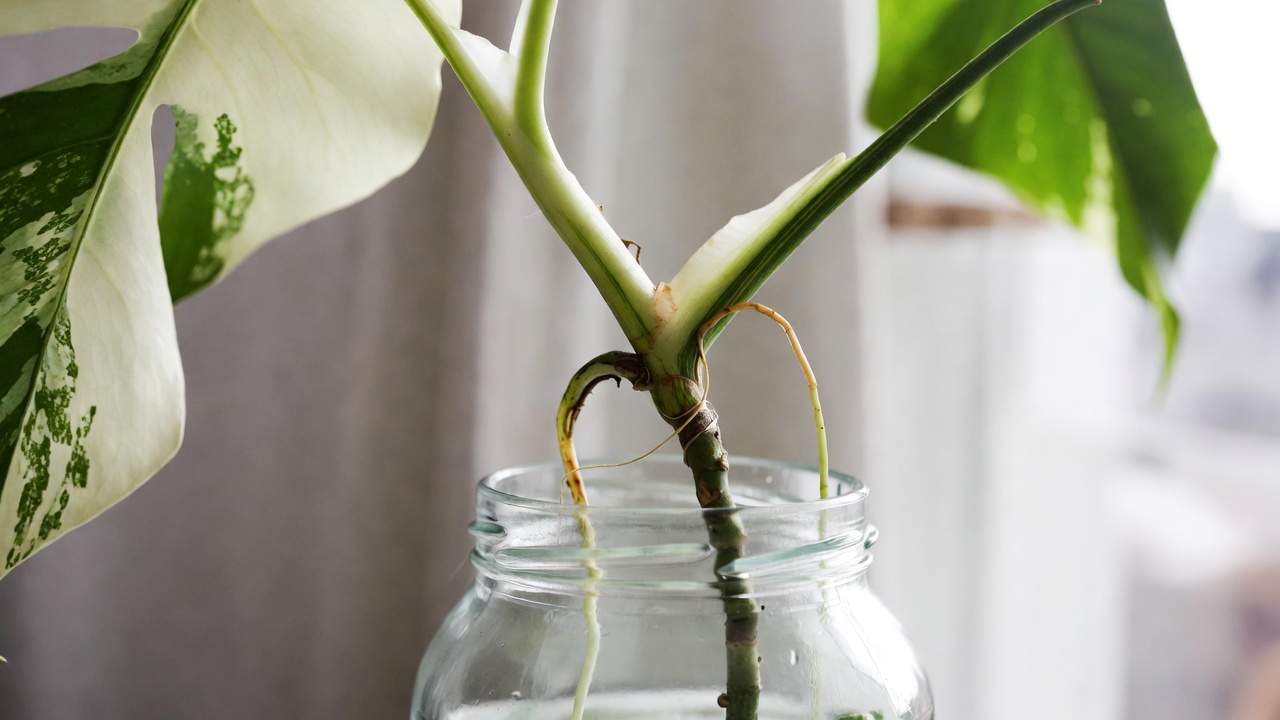
Propagation is one of the most rewarding — and risky — aspects of growing an albo monstera.
Step 1: Choose the Right Cutting
Each cutting must include:
- At least one node
- Visible variegation on the stem
- Ideally an aerial root
Avoid fully green stems — they’re more likely to produce non-variegated growth.
Water vs Moss Propagation
Water Propagation
Pros:
- Easy to monitor root growth
- Beginner-friendly
Cons:
- Roots may struggle when transferred to soil
Moss Propagation
Pros:
- Stronger transition to soil
- Less transplant shock
Cons:
- Requires humidity control
Both methods work — consistency matters more than the medium.
Preventing Reversion in New Cuttings
- Provide bright indirect light immediately.
- Avoid stressing young roots.
- Maintain high humidity (70% ideal during rooting).
Stress increases reversion risk.
Common Problems & Quick Fixes (Advanced Troubleshooting)
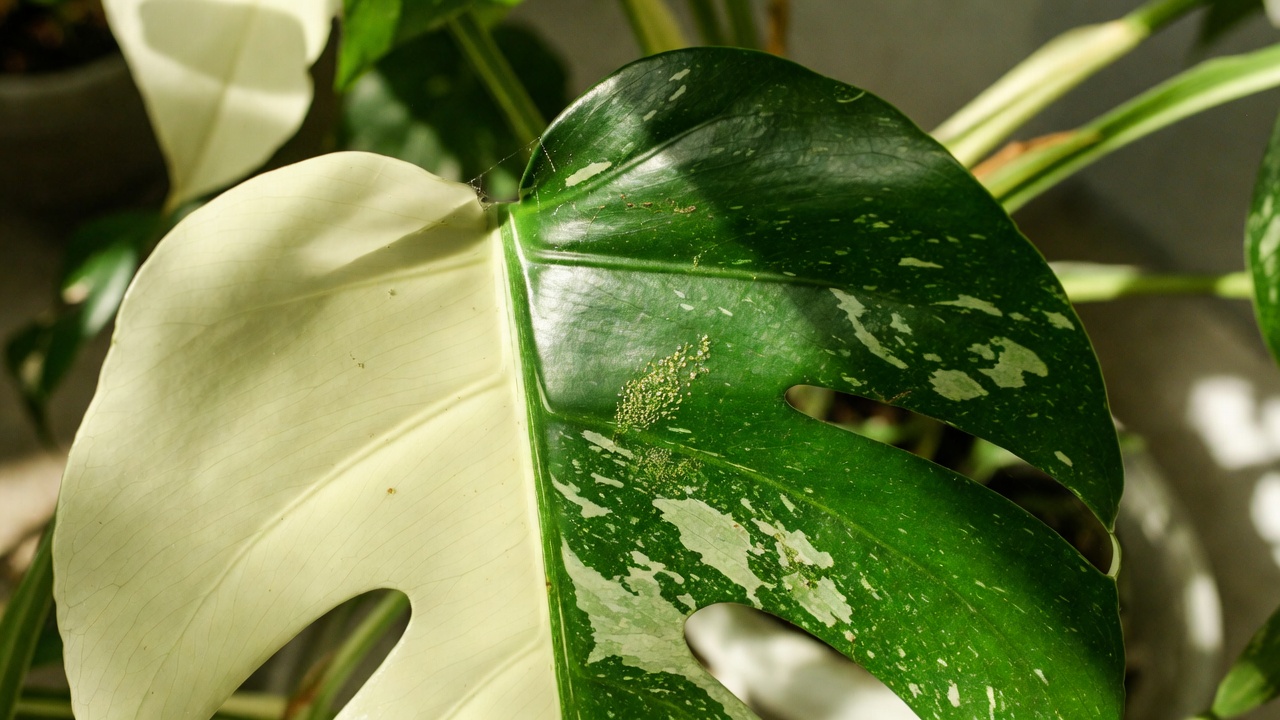
This section addresses the real-life problems indoor growers face.
1. Albo Monstera Reverting to Green
Cause: Insufficient light or genetic instability.
Fix: Increase light and prune back to variegated node.
If multiple nodes revert, reassess environment.
2. Drooping Leaves
Possible causes:
- Overwatering (check for mushy roots)
- Underwatering (soil bone-dry)
- Root-bound plant
Inspect roots before adjusting care blindly.
3. Yellow Leaves
Usually linked to:
- Nutrient imbalance
- Poor drainage
- Excess fertilizer
Flush soil before increasing feeding.
4. Pest Issues
Variegated plants are not more prone to pests — but damage shows more clearly.
Watch for:
- Spider mites
- Thrips
- Mealybugs
Prevention strategy:
- Inspect leaves weekly.
- Wipe foliage regularly.
- Isolate new plants for 2 weeks before introducing them.
Neem oil or insecticidal soap works well if caught early.
Is Albo Monstera Worth the Investment?
Albo monstera can cost significantly more than standard varieties due to its rarity and unstable variegation genetics.
Before buying, consider:
- Your lighting situation
- Your consistency with watering
- Humidity levels in your home
This plant rewards attentive growers.
Avoiding Scams
When purchasing:
- Ask for photos of the exact plant.
- Look for visible variegation on the stem (not just leaves).
- Avoid sellers who only show stock images.
Healthy stems matter more than extreme white leaves.
Expert Care Checklist (Quick Reference)
Save this section.
Light: Bright indirect light, 6–8 hours
Water: When top 30–40% of soil is dry
Humidity: 60–80%
Soil: Chunky, well-draining aroid mix
Fertilizer: Half-strength monthly (spring/summer)
Support: Moss pole for larger leaves
Pruning: Cut back fully green reversion
Consistency > perfection.
Frequently Asked Questions About Albo Monstera
Why is my albo monstera turning brown?
Most common causes:
- Low humidity
- Salt buildup
- Inconsistent watering
- Too much direct sun
White tissue browns first because it lacks chlorophyll.
How fast does albo monstera grow?
Slower than green monstera. Expect moderate growth during spring and summer when conditions are optimal.
Can albo monstera live in low light?
It can survive, but variegation will fade and reversion risk increases. Bright indirect light is essential.
Should I mist my albo monstera?
Occasional misting is fine, but it does not significantly raise humidity long-term. A humidifier is more effective.
Why are new leaves smaller?
Possible causes:
- Insufficient light
- No vertical support
- Root-bound plant
- Nutrient deficiency
Evaluate environment first.
How do I increase variegation?
You can’t force more white genetically, but you can support strong variegation by:
- Providing bright indirect light
- Avoiding stress
- Pruning reverted stems
Remember: more white is not always better for plant health.
Final Thoughts: Protecting Your Albo Monstera Long-Term
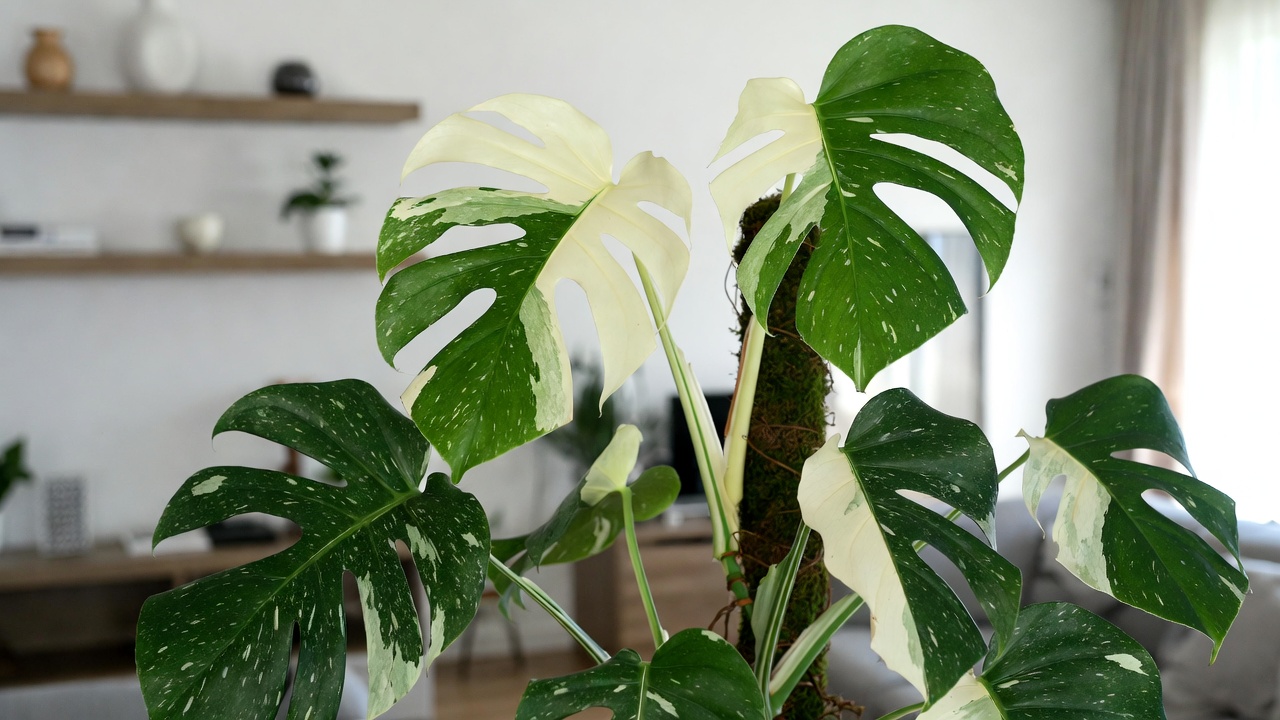
The secret to thriving albo monstera isn’t complicated — it’s consistent environmental control.
If you remember only three things:
- Bright, indirect light is non-negotiable.
- Drainage and soil aeration prevent 80% of problems.
- Stability reduces browning and reversion.
Variegated plants demand attentiveness, but they reward you with living artwork.
With proper lighting, controlled watering, adequate humidity, and strategic pruning, your albo monstera can grow into a stunning indoor focal point — producing large, fenestrated, marbled leaves year after year.
Treat it less like a typical houseplant and more like a botanical investment — and it will thrive accordingly.