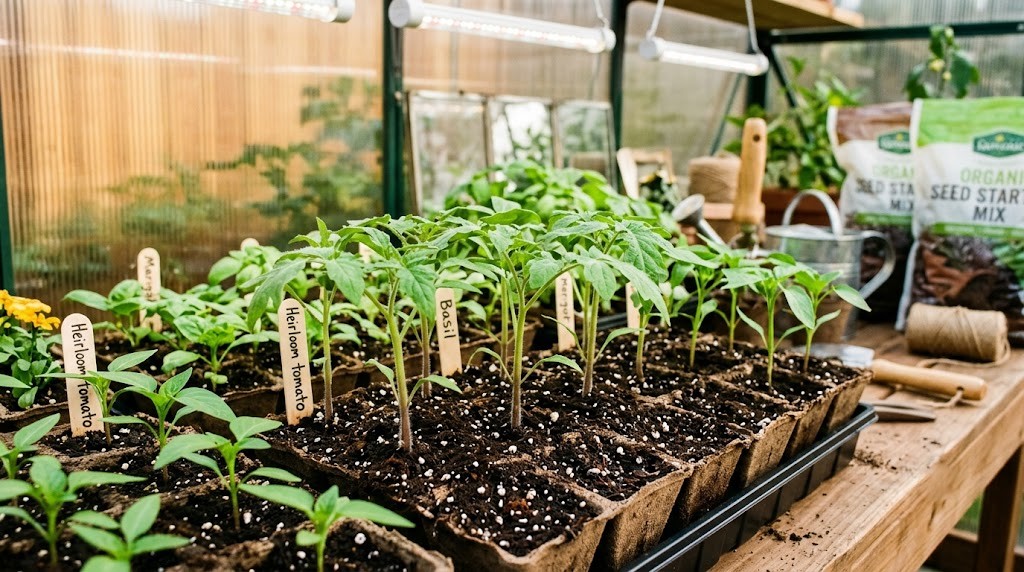
Every spring, millions of home gardeners fall into the exact same heartbreaking trap. You spend weeks picking the perfect heirloom seeds, set up your indoor grow lights, and meticulously plant everything with care. But a few weeks later, your seedlings stall out, turn yellow, or suddenly collapse at the soil line and die. This sudden heartbreak is almost always caused by using heavy, compacted backyard dirt or cheap potting mixes loaded with wood chunks. To give your seeds a fighting chance, you need a sterile, lightweight medium that promotes rapid root development. That is why finding the best 10 seed starting soil options is the single most important step you can take to guarantee a thriving spring harvest.
When you use the wrong medium, your seeds are forced to battle a host of invisible enemies. Standard outdoor soil compacts under indoor watering, acting like wet cement that suffocates tiny, delicate root hairs. Worse, non-sterile mixes often harbor fungal pathogens that cause “damping-off”—a devastating disease that rots seedling stems from the inside out within hours. Specialized seed starting mixes are deliberately engineered without heavy field soil to prevent this. Instead, they utilize fluffy, highly aerated ingredients like coconut coir, peat moss, perlite, and vermiculite to strike the perfect balance between moisture retention and vital oxygen exchange.
To help you cut through the marketing noise and avoid costly gardening mistakes, we put the industry’s top brands through a rigorous evaluation process. We didn’t just look at the brand names; we analyzed the physical traits that make or break a seedling’s life. Our team evaluated each blend based on its water-holding capacity, initial root penetration speed, nutrient balance, and the density of unrefined wood debris. Whether you are a small-scale market farmer looking to build structural soil blocks or a backyard gardener starting a few tomatoes on a kitchen windowsill, this comprehensive guide will help you find the absolute best 10 seed starting soil mix for your specific setup.
Quick-Reference Comparison Guide
To help you narrow down your choices instantly, here is a breakdown of how our top picks compare across key performance categories.
| Product Name | Core Material | Best For |
| Burpee Organic Mix | Coconut Coir | Overall Performance |
| Espoma Organic Starter | Peat Moss & Mycorrhizae | Certified Organic Purity |
| Pro-Mix Premium | Sphagnum Peat Blend | Soil Blocks & Air-Pruning |
| Purple Cow Starter | Activated Compost | Extended Nutrient Delivery |
| Coast of Maine Sprout | Compost & Kelp | Premium Biological Diversity |
| Black Gold Seedling Mix | Peat & Yucca Extract | Easy Re-Wetting & Capillary Action |
| Jiffy-7 Peat Pellets | Compressed Peat | Mess-Free Windowsills |
| Miracle-Gro Starter | Sphagnum Peat Blend | Budget-Conscious Growers |
| DUSPRO Recycle Soil | Aerated Coir Chunks | Overwaterers & Gnat Prevention |
| Back to the Roots Block | Compressed Coir Brick | Minimal Storage Footprint |
Deep-Dive Product Reviews
1. Overall Best Performer: Burpee Organic Seed Starting Mix
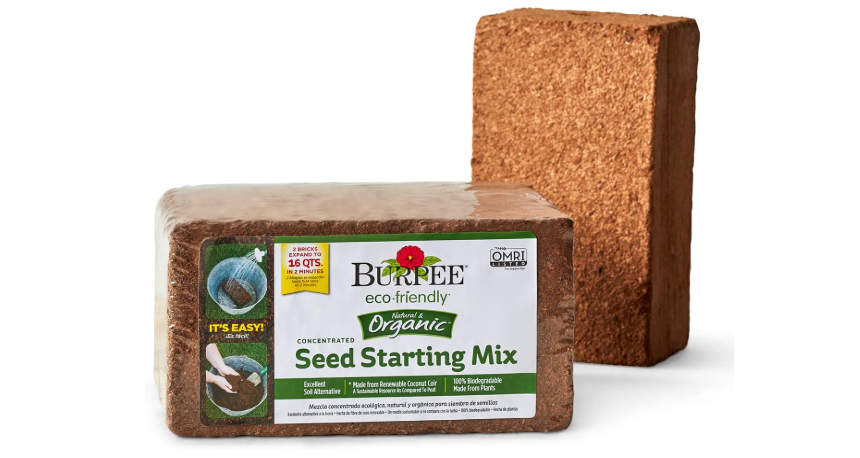
The Burpee Organic Seed Starting Mix is a gold standard for indoor seed propagation, abandoning traditional heavy peat in favor of a sustainable, ultra-fine coconut coir base. This granular texture allows fine roots to spread effortlessly without running into the physical resistance common in cheap, woody retail soil brands. It features a light inclusion of organic plant food to ease seedlings through their first few weeks of active vegetative life.
-
Price Bracket: $12.99
-
Key Features & Benefits: Enriched with OMRI-listed organic plant food; formulated primarily with clean coconut coir; excellent wicking properties that distribute water evenly across the root zone.
-
Pros:
-
Remarkable water-wicking action that naturally avoids pooling or muddy, waterlogged pockets.
-
100% free of large sticks, sharp wood fragments, or uncomposted debris.
-
OMRI certified for strict organic cultivation protocols.
-
-
Cons:
-
The fine, loose fiber profile lacks the internal binder density required for molding structured soil blocks.
-
-
Amazon Ratings & Reviews: Rated 4.6/5 stars. Thousands of users emphasize how quickly their seeds germinated compared to traditional multi-purpose potting soils, noting that the mix stays light and porous even after multiple weeks under heavy grow lights.
-
Why it’s a good choice for: Gardeners seeking the fastest possible root development and uniform tray moisture.
-
Ideal Use Case: Starting vegetable and flower seeds in standard 72-cell plastic starter trays equipped with humidity domes.
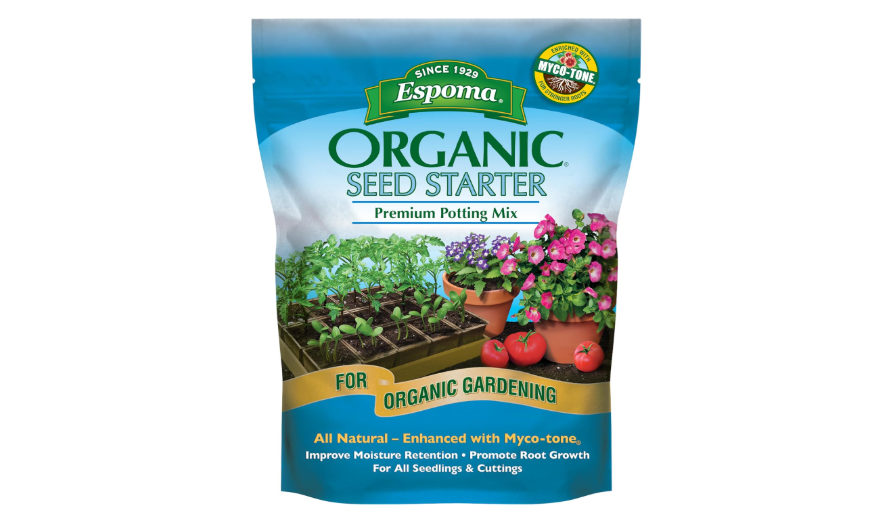
2. Best for Organic Purity: Espoma Organic Premium Seed Starter
Espoma is an industry giant known for pure, unadulterated organic mediums, and their Premium Seed Starter is no exception. Built upon a balanced base of rich Canadian sphagnum peat moss, peat humus, and coarse perlite, this mix is specifically enhanced with Myco-Tone. This proprietary blend of endo- and ecto-mycorrhizae establishes a symbiotic relationship with seedling roots, expanding their surface area to maximize water and nutrient consumption.
-
Price Bracket: $15.40
-
Key Features & Benefits: Infused with active Myco-Tone mycorrhizae; enhanced with natural yucca extract to break surface tension during initial wetting; fully sterile to combat damping-off.
-
Pros:
-
Mycorrhizae inoculation drastically minimizes transplant shock when moving plants out to the garden.
-
Yucca extract enables the mix to absorb bottom-watered moisture quickly rather than repelling it.
-
Extremely lightweight, airy composition.
-
-
Cons:
-
If allowed to dry out completely, the high peat content can become temporarily hydrophobic, requiring warm water to re-saturate.
-
-
Amazon Ratings & Reviews: Rated 4.7/5 stars. Reviewers consistently highlight that this mix arrives clean, bug-free, and smells earthy rather than sour. Users note a profound difference in root mass thickness during transplanting.
-
Why it’s a good choice for: Serious growers who prioritize root architecture and certified organic integrity.
-
Ideal Use Case: Propagating sensitive heirloom tomatoes, eggplants, and hot peppers that require an optimized root foundation.
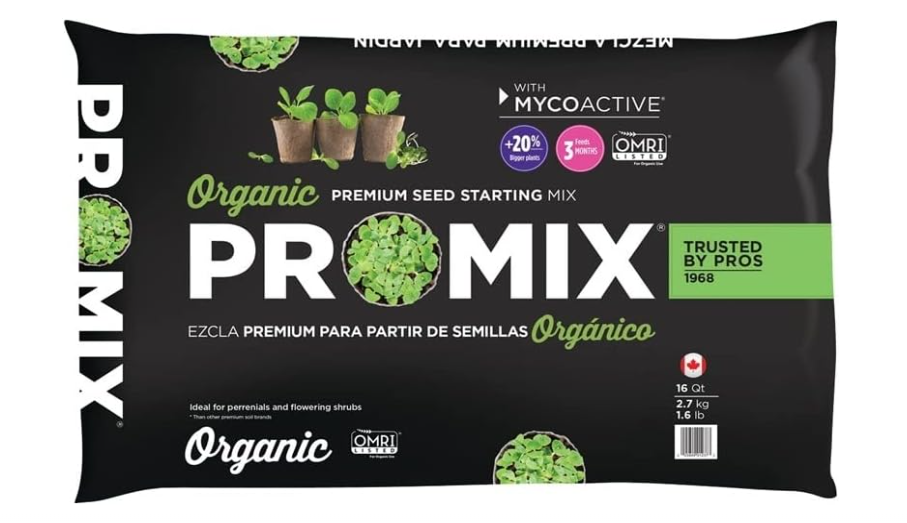
3. Best for Soil Blocks: Pro-Mix Organic Seed Starting Mix
If you are looking to ditch single-use plastics and embrace the eco-friendly world of soil blocking, Pro-Mix Organic Seed Starting Mix is the precise tool for the job. This professional-tier mix utilizes fine-grade Canadian sphagnum peat moss combined with a carefully measured ratio of limestone to stabilize pH levels. It offers a naturally high fiber interlocking structure that holds together tightly when compressed.
-
Price Bracket: $35.65
-
Key Features & Benefits: High-density fibrous binder potential; formulated with organic fertilizer inputs; added professional-grade wetting agents.
-
Pros:
-
Holds perfectly square block shapes when pressed through a metal soil blocker without crumbling apart.
-
Provides excellent long-term water retention, which is essential for blocks exposed to open air.
-
Promotes high natural air-pruning along the block edges.
-
-
Cons:
-
Can trap an excessive volume of water if used in low-drainage, solid plastic bottom flats without care.
-
-
Amazon Ratings & Reviews: Rated 4.5/5 stars. Highly recommended by market farmers and experienced growers who state that while it performs wonderfully in traditional trays, its structural integrity in custom soil blocks is where it truly outclasses the competition.
-
Why it’s a good choice for: Advanced horticulturists seeking to eliminate plastic pots and practice direct root air-pruning.
-
Ideal Use Case: High-density spring production of brassicas, lettuce, and onions using hand-held or stand-up soil blocking machinery.
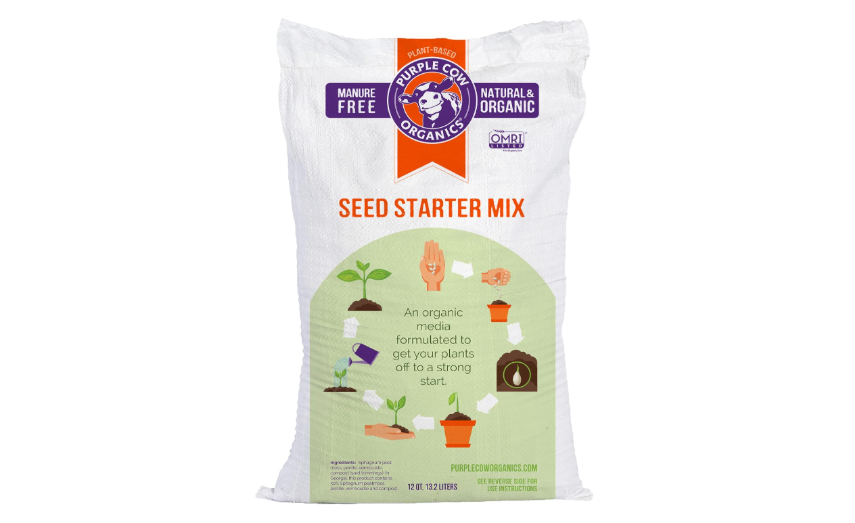
4. Best Compost-Forward Blend: Purple Cow Organics All-Natural Seed Starter
While many seed starting soils are intentionally devoid of nutrients to avoid burning tender roots, Purple Cow Organics takes a smarter approach. They leverage fully cured, premium organic compost to provide a gentle, slow-release nutrient profile that sustains young plants far past the initial germination stage. This means your seedlings won’t stall out or turn pale if you can’t transplant them immediately.
-
Price Bracket: $29.74
-
Key Features & Benefits: Living compost base brimming with beneficial microbes; provides balanced, non-burning nutrition for up to 45 days; 100% natural inputs.
-
Pros:
-
Eliminates the need for early, finicky liquid fertilizing schedules that risk burning young root systems.
-
Seedlings maintain a deep, rich green color and robust stem caliper thickness throughout their indoor stay.
-
Excellent structural density.
-
-
Cons:
-
Visibly and physically heavier than pure coir or peat-only formulations, requiring a lighter touch during initial tray packing.
-
-
Amazon Ratings & Reviews: Treasured by community gardening networks and small growers for turning out exceptionally stocky seedlings. Users frequently comment that their plants grow twice as thick compared to synthetic chemical-infused starting mixes.
-
Why it’s a good choice for: Gardeners who want a low-maintenance setup without managing complex, multi-step liquid fertilizer charts.
-
Ideal Use Case: Long-season indoor starts like celery, perennial flowers, and slow-growing herbs that require weeks of steady nutrition.
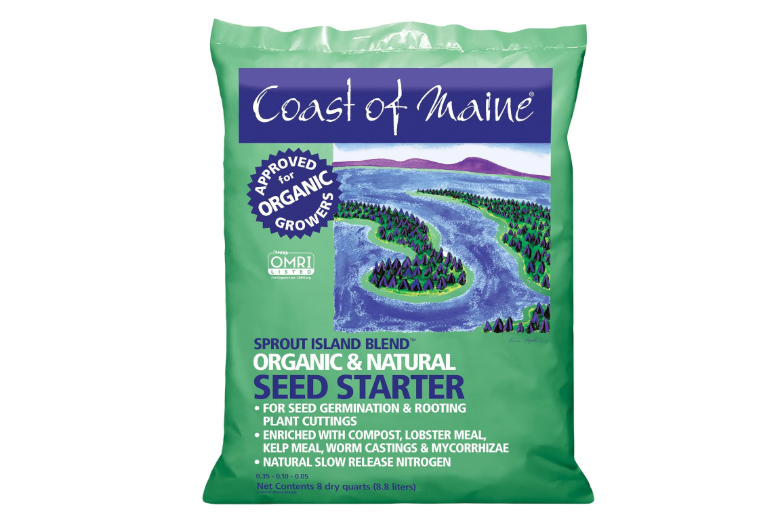
5. Best Premium Artisanal Choice: Coast of Maine Sprout Island Blend
Coast of Maine’s Sprout Island Blend represents the absolute pinnacle of boutique, ocean-inspired soil science. This luxury blend features a base of composted kelp meal, rich worm castings, and fully aged sphagnum peat moss. It is explicitly designed for growers who treat seed starting as a precise art form and demand the highest possible biological vitality straight from the bag.
-
Price Bracket: $15.67
-
Key Features & Benefits: Infused with nutrient-rich marine kelp and active worm castings; rich in natural micronutrients and trace minerals; OMRI listed.
-
Pros:
-
Kelp meal supplies natural growth hormones that stimulate rapid lateral root branching.
-
Worm castings introduce a diverse ecosystem of beneficial microbes that naturally suppress root pathogens.
-
Luxurious, silky texture that is incredibly easy to work with by hand.
-
-
Cons:
-
Higher cost-per-quart ratio, making it less economical for massive, industrial-scale tray filling.
-
-
Amazon Ratings & Reviews: Possesses a dedicated cult-following among specialized growers. Reviews consistently praise the blend for entirely preventing the dreaded “mid-stage yellowing” that often strikes seedlings right before outdoor planting day.
-
Why it’s a good choice for: Collectors of rare seeds, high-value crops, and organic purists who believe in the power of marine biology.
-
Ideal Use Case: Deep-cell planting flats, soil-heavy plugs, or stepping up delicate seedlings into intermediate 4-inch pots.
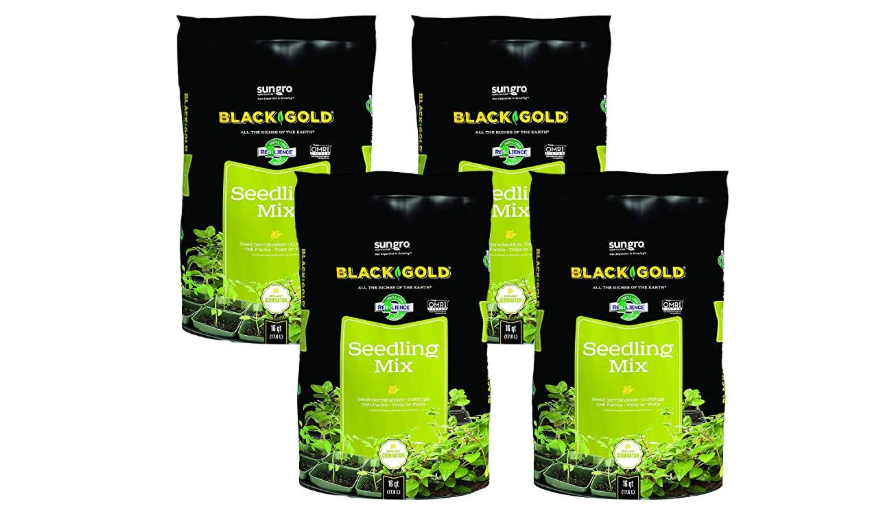
6. Best With Wetting Agent: Black Gold Natural Seedling Mix
The primary frustration with high-quality peat-based seed soils is their inherent resistance to moisture when first opened. Black Gold solves this widespread engineering hurdle by incorporating an premium, organic yucca root wetting agent. This surfactant breaks the surface tension of water, allowing moisture to spread evenly throughout the cell instead of forming dry pockets where seeds can fail to wake up.
-
Price Bracket: $46.05
-
Key Features & Benefits: Formulated with 70–80% fine-sifted Western Canadian sphagnum peat; enhanced with organic yucca extract; fortified with Silicon Dioxide (RESiLIENCE) to combat drought stress.
-
Pros:
-
Absorbs water instantly upon contact, cutting down pre-moistening prep time to seconds.
-
Excellent capillary movement, making it highly responsive to efficient bottom-watering setups.
-
Resists surface crusting and cracking as it ages under warm conditions.
-
-
Cons:
-
Minimal built-in nutrient values require growers to initiate half-strength fertilizing immediately after true leaves emerge.
-
-
Amazon Ratings & Reviews: Widely celebrated for its unmatched performance in bottom-watering trays. Users note that water moves upward through the soil column like magic, leaving the very top layer perfectly moist but never muddy or oversaturated.
-
Why it’s a good choice for: Indoor gardeners who favor bottom-watering or struggle with dry, unevenly hydrated planting trays.
-
Ideal Use Case: Sowing exceptionally tiny, shallow-planted seeds (like petunias, lettuce, or snapdragons) that are easily dislodged by overhead watering.
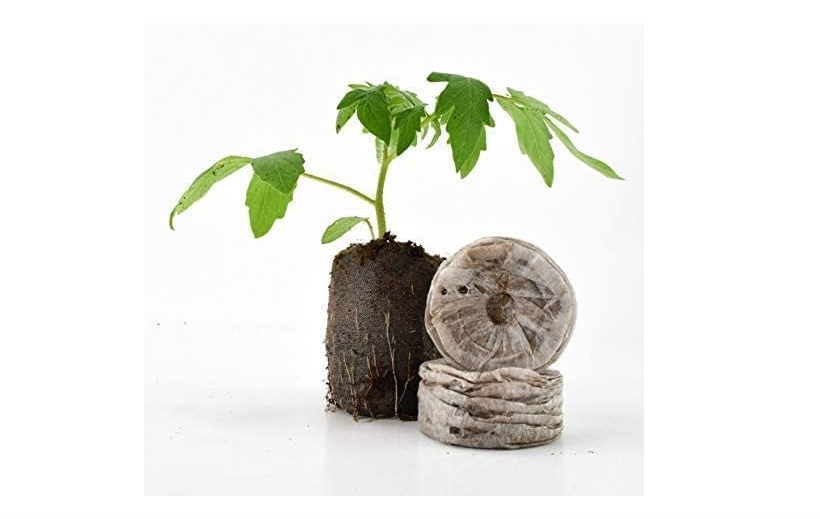
7. Best Low-Mess Alternative: Jiffy-7 Peat Pellets
If you don’t have a garage, a greenhouse, or the patience to handle messy bags of bulk soil, Jiffy-7 Peat Pellets offer the ultimate mess-free solution. These dry, tightly compressed discs are made from premium Canadian sphagnum peat moss wrapped in a biodegradable, fine netting. When you add warm water, they expand vertically within minutes into self-contained, nutrient-rich root plugs that are perfectly sized for a single seed—completely eliminating the need for plastic trays or loose dirt.
-
Price Bracket: $49.95
-
Key Features & Benefits: Enriched with a mild seedling fertilizer; features a built-in biodegradable mesh net that keeps the root ball completely intact; space-saving storage footprint.
-
Pros:
-
Completely eliminates the mess of scooping loose soil over indoor tables and countertops.
-
Reduces transplant shock to absolute zero because you plant the entire mesh plug directly into the ground.
-
An incredibly space-saving option; a box of 100 pellets takes up less room than a book.
-
-
Cons:
-
The outer netting, while biodegradable, degrades slowly in cold, heavy clay soils and may need a slight slit on transplant day.
-
-
Amazon Ratings & Reviews: Rated 4.7/5 stars with over 20,000 reviews. Buyers love the foolproof simplicity, frequently mentioning that they are the cleanest way to start seeds on windowsills or in kitchen grow setups without tracking dirt inside.
-
Why it’s a good choice for: Urban apartment growers, school projects, or gardeners who hate washing and storing plastic cell trays.
-
Ideal Use Case: Window herb gardens, quick flower starts, and small-space indoor vegetable propagation.
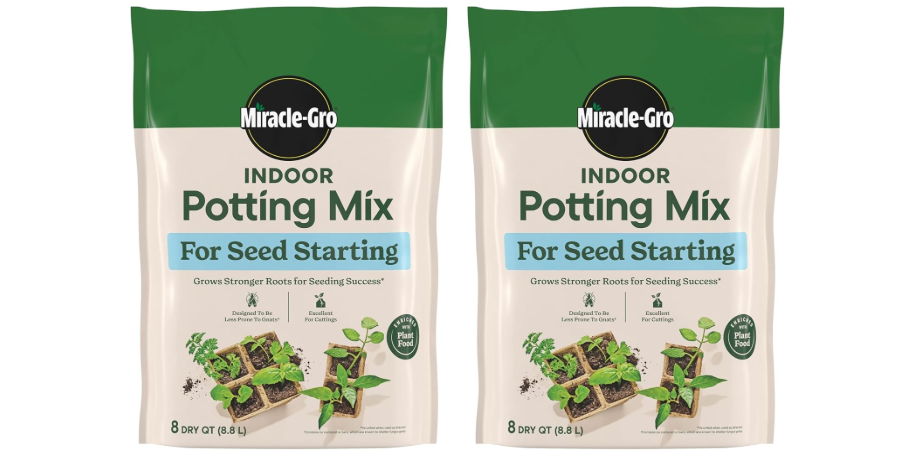
8. Best Multi-Pack Value: Miracle-Gro Seed-Starting Potting Mix
For gardeners tackling massive planting projects on a strict budget, Miracle-Gro Seed-Starting Potting Mix delivers reliable, industrial-grade performance without a steep price tag. Sifted to an ultra-fine texture, this mix is blended with a mild starter dose of Miracle-Gro plant food to encourage steady, early root anchoring and leaf proliferation.
-
Price Bracket: $10.38
-
Key Features & Benefits: Readily available at almost any garden center; pre-mixed with an introductory enrichment formula; designed specifically to accommodate tender, emerging root systems.
-
Pros:
-
One of the most affordable and widely accessible options on the market.
-
Predictable, reliable germination results across a massive spectrum of common garden crops.
-
Lightweight texture that minimizes physical resistance for emerging sprouts.
-
-
Cons:
-
Utilizes a non-organic, synthetic nutrient base, which will not align with strict organic gardening goals.
-
-
Amazon Ratings & Reviews: Supported by tens of thousands of positive reviews from casual, everyday backyard gardeners. Users consistently praise its foolproof nature, noting that it is an ideal choice for beginners who want a reliable product that just works straight out of the bag.
-
Why it’s a good choice for: Casual hobbyists, school groups, and budget-focused growers planting large quantities of standard garden vegetables.
-
Ideal Use Case: Starting reliable rows of summer squash, cucumbers, beans, and marigolds in standard plastic flats.
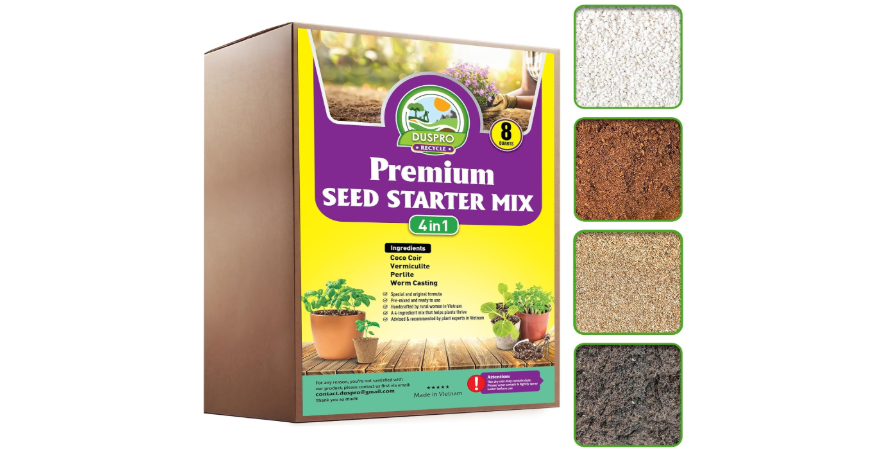
9. Best For Aeration & Drainage: DUSPRO Recycle Seed-Starter Soil
One of the most common ways seedlings die indoors is overwatering, which creates a stagnant, oxygen-depleted environment where roots suffocate and rot. DUSPRO counters this issue with a uniquely chunky, highly porous structure made from recycled coconut coir fibers. This design maintains open gas-exchange channels even when completely saturated with water.
-
Price Bracket: $19.99
-
Key Features & Benefits: Exceptional porosity that resists compaction; crafted from clean, recycled coco coir fractions; naturally low affinity for fungal gnat breeding.
-
Pros:
-
Virtually impossible to overwater, as excess moisture drains away immediately through the coarse structure.
-
The high-aeration texture naturally deters fungus gnats and surface green algae from taking over your trays.
-
Encourages rapid lateral root branching via excellent internal oxygen exposure.
-
-
Cons:
-
Dries out noticeably quicker than dense peat mixes, requiring more frequent monitoring or automated misting systems.
-
-
Amazon Ratings & Reviews: Lauded by indoor growers who live in humid environments or struggle with fungal issues. Users note that their seedling trays stayed completely free of mold, white fuzz, and annoying gnats for the duration of the indoor season.
-
Why it’s a good choice for: Gardeners who tend to love their plants to death with the watering can, or those operating in low-circulation indoor spaces.
-
Ideal Use Case: Indoor grow tents, basement seed-starting racks, or humid greenhouse environments.
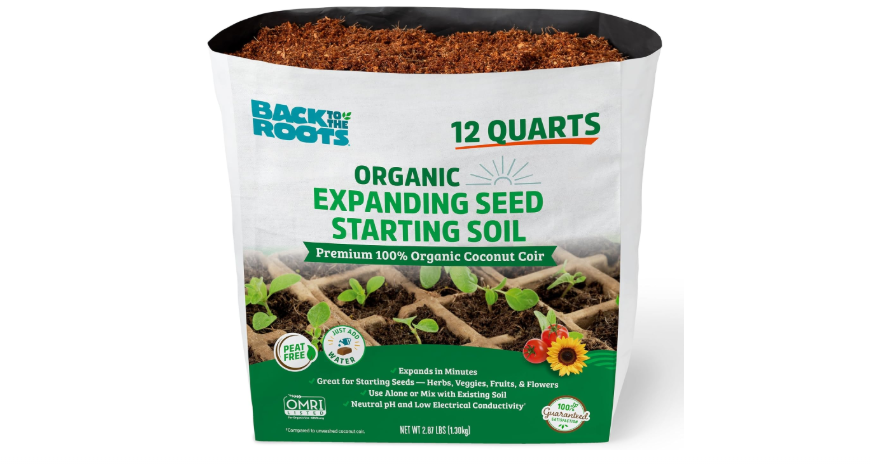
10. Best Compressed Block: Back to the Roots Compressed Organic Seed Starter
For eco-conscious gardeners short on storage space, the Back to the Roots Compressed Organic Seed Starter block is a brilliant piece of design. This lightweight brick consists of highly compressed, 100% peat-free coconut coir. By simply adding warm water directly to the storage bag or a bucket, the brick unfurls within minutes into a full 12 quarts of fluffy, premium, nutrient-enriched seed starting medium.
-
Price Bracket: $9.95
-
Key Features & Benefits: 100% peat-free and sustainably sourced; compact brick form factor expands up to 12 quarts; enriched with organic nutrients for a balanced launch.
-
Pros:
-
An eco-friendly alternative that preserves delicate peat bog wetlands.
-
Extremely lightweight and effortless to transport compared to heavy, wet bags of traditional dirt.
-
Saves immense shelf space in small apartments, garden sheds, or utility closets.
-
-
Cons:
-
Requires a dedicated 10-15 minute hydration window and manual fluffing before you can physically fill your trays.
-
-
Amazon Ratings & Reviews: Highly rated for its incredible space-to-weight ratio and environmental stewardship. Gardeners love that they can order multiple units online without paying steep shipping premiums for heavy, water-logged bags of soil.
-
Why it’s a good choice for: Sustainable growers, urban gardeners, and anyone who wants to skip the physical strain of hauling heavy bags of soil up stairs or across the yard.
-
Ideal Use Case: Small urban balconies, community garden plots, or compact indoor shelving systems.
Comprehensive Buyer’s Guide: How to Choose
Choosing the ideal medium for your seedlings requires looking past colorful packaging and understanding the raw materials inside the bag. Not all seed starting options are created equal, and matching the right ingredients to your specific indoor setup will dramatically impact your success rate.
The Big Battle: Coconut Coir vs. Sphagnum Peat Moss
Most professional and consumer seed starting mixes rely on one of two foundational organic materials to hold water and anchor roots:
-
Sphagnum Peat Moss: Harvested from ancient, bended wetlands, peat moss has been the gold standard of horticulture for decades. It is incredibly lightweight, holds up to twenty times its weight in water, and has a naturally acidic pH that manufacturers buffer using calcitic or dolomitic limestone. However, if peat dries out completely, it becomes highly hydrophobic (water-repellent), causing water to pool on top rather than sinking in.
-
Coconut Coir: A byproduct of the coconut harvesting industry, coir is made from the processed pith of coconut husks. It is a highly sustainable, renewable alternative to peat moss. Coir absorbs water instantly without requiring a wetting agent, maintains a nearly neutral natural pH (5.5 to 6.5), and creates structural air pockets that allow roots to breathe easily. It does, however, typically contain fewer natural nutrients than premium peat blends.
The 5 Quality Field Tests
Before you fill an entire array of 72-cell trays, you can run these simple diagnostic checks right out of the bag to verify the quality of your soil:
-
The Hand Squeeze Test (Moisture Scheck): Grab a handful of dry mix and compress it in your fist. It should feel incredibly soft and fluffy. If it leaves deep indentations like heavy play-dough or contains sharp sticks that poke your skin, the blend is too heavy for delicate seedlings.
-
The Sift Test (Debris Scheck): Spread a cup of the mix across a flat surface. High-quality seed starting medium is sifted down to fractions less than 1/4 inch. If you see large chunks of uncomposted bark, pine needles, or plastic fragments, it will physically block tiny seeds from breaking through the surface.
-
The Float Test (Absorption Speed): Drop a small handful of dry soil into a glass of room-temperature water. A premium mix enhanced with a wetting agent or made of clean coco coir will immediately begin sinking and absorbing water. Low-quality, unbuffered peat will sit on top of the water indefinitely like dust.
-
The Compression Test (Structure Scheck): Squeeze a damp handful of the mix together tightly, then poke the ball with your index finger. It should crumble apart instantly under light pressure. If it stays in a solid, muddy lump, it lacks the perlite or aeration necessary to prevent root suffocation.
-
The Olfactory Test (Sterility Scheck): Take a deep breath of the mix. It should have a completely neutral, clean, or faintly earthy scent. A sour, rotten, or highly chemical ammonia smell indicates anaerobic bacteria or un-composted materials that can kill fragile sprouts.
Ingredients That Matter
When reading the ingredient list on a bag of high-tier soil, keep an eye out for these essential additives:
-
Perlite: These white, popcorn-like spheres are actually puffed volcanic glass. They do not absorb water; instead, their rigid shape creates permanent space within the soil column, preventing compaction and allowing excess water to drain away freely.
-
Vermiculite: A mica-like mineral that expands under intense heat, vermiculite looks like small, shiny golden flakes. Unlike perlite, vermiculite actively holds onto water and vital nutrients, releasing them slowly back to the plant roots as the surrounding soil dries out.
-
Mycorrhizae: These beneficial fungi attach themselves directly to a seedling’s root system, forming an expansive underground network. They unlock tightly bound nutrients in the soil and deliver them straight to the plant in exchange for simple sugars, creating ultra-robust root architecture.
Seed Starting 101: Maximizing Your New Soil
Once you have selected your ideal medium, your success depends entirely on how you manage it. Follow this core protocol used by professional greenhouse growers to optimize your germination rates.
The Wet-First Rule
Never fill your planting trays with bone-dry soil straight from the bag and try to water it afterward. Dry seed starting mixes are incredibly light; if you pour water over them from above, the dry particles will float, shift, and bury your seeds too deep—or wash them away entirely.
Always dump your dry mix into a clean bucket or plastic tote first. Warm water breaks surface tension faster than cold water, so add warm water gradually and massage the mix with your hands until it achieves the consistency of a wrung-out sponge. When you squeeze a handful, it should hold its shape cleanly, and only a drop or two of water should escape between your knuckles. Pack your trays with this pre-moisten medium for perfectly uniform consistency.
Watering Etiquette: The Power of Bottom-Watering
Overhead watering with a traditional watering can is a primary cause of seedling mortality. Strong streams of water can easily snap tender stems, wash away topsoil, and keep the surface of the tray perpetually damp, which invites fungus gnats and surface mold.
Instead, place your cell trays inside a solid outer flat with no drainage holes. Pour an inch of water directly into this bottom tray and let it sit for 15 to 20 minutes. The seed starting soil will draw moisture upward through capillary action, perfectly saturating the root zone while leaving the surface relatively dry. Once the top of the soil looks dark and damp, tip out any remaining water from the bottom tray to ensure the roots never sit in stagnant pools.
The Nutrient Timeline
Most dedicated seed starting soils contain zero or very minimal nutrients because a seed already carries all the energy it needs to germinate and push up its first set of leaves. These initial leaves are called cotyledons (or seed leaves), and they look like simple, smooth green tabs.
You do not need to fertilize your plants while they are living off the seed’s internal energy. However, once the plant pushes out its second set of leaves—its true leaves, which feature the distinct, jagged shape of the adult plant—the seed’s natural reserves are fully exhausted. If your soil mix does not contain built-in compost, this is your cue to begin applying a high-quality, organic liquid fertilizer diluted to half or quarter strength once a week to keep them growing strong.
Final Summary & The “Editor’s Verdict”
Investing in a premium seed starting medium is the single most cost-effective insurance policy you can buy for your spring garden. Rather than wasting money on dead seeds or struggling with weak, spindly plants, matching your gardening style to the right specialized mix guarantees an easy, successful transition out to your backyard plots.
-
If you want a foolproof, highly sustainable, all-around champion that holds moisture perfectly and runs zero risk of harboring large wood chunks, buy Burpee Organic Seed Starting Mix.
-
If you are an organic purist focused on developing massive, resilient root systems that can handle the stress of outdoor transplanting without missing a beat, choose Espoma Organic Premium Seed Starter.
-
If you are ready to eliminate plastic waste entirely and require a heavy, fibrous blend that holds its shape beautifully under pressure, invest in Pro-Mix Organic Seed Starting Mix.