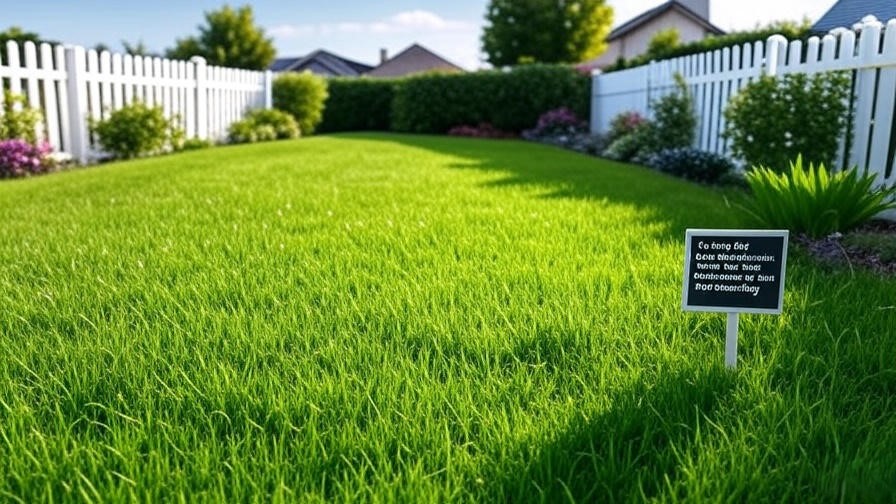
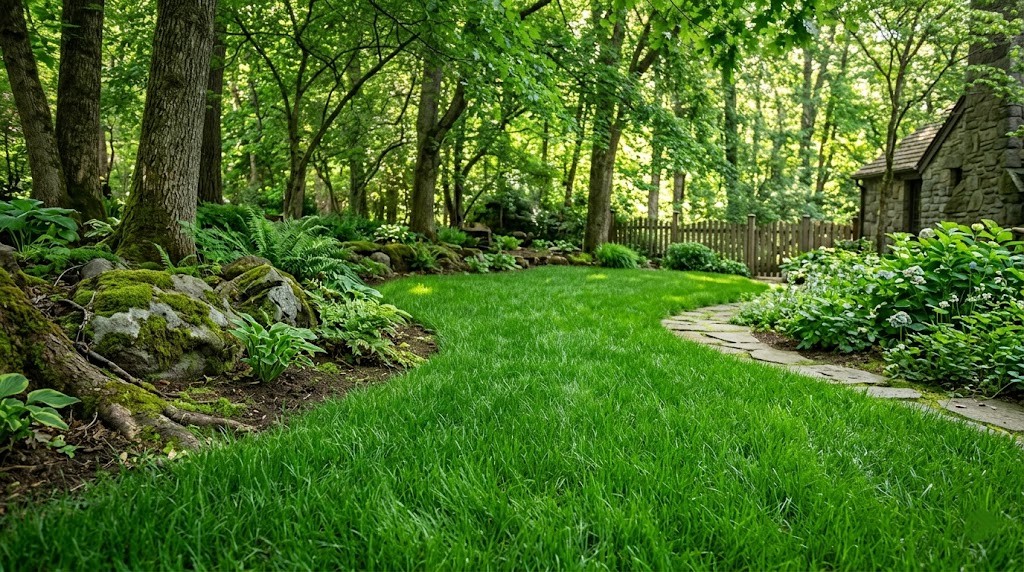
Having a lush, beautiful lawn can feel nearly impossible when you are dealing with towering trees, dense canopy shade, and rocky or nutrient-depleted dirt. If you have been struggling to grow anything under your trees or along the shadowed side of your house, you are not alone. Standard lawn mixes simply aren’t built for low light and depleted ground, which is why finding the best 10 grass seed for shade and poor soil is the ultimate game-changer for restoring your yard.
Shaded yards combined with poor, compacted, or acidic soil present a severe dual challenge for lawn establishment. Popular varieties like Kentucky Bluegrass or Bermuda seed consistently fail under tree canopies or beside tall structures because of extreme light deprivation and intense competition from tree roots for moisture and vital nutrients. Without the right genetics, standard grass quickly yellows, thins out, and leaves you with bare dirt and moss.
The solution lies in specialized grass varieties—such as fine fescues, turf-type tall fescues, and deep-rooting shade and acid-tolerant seed blends. When engineered with natural endophytes and nutrient coatings, these resilient species bypass light restrictions and poor ground conditions to create a thick, vibrant carpet of green.
To help you make an informed buying decision, we have done a deep analysis of current market data, top user reviews, and expert recommendations. Whether you need a low-maintenance eco-lawn, a drought-tolerant blend, or a heavy-duty option for dog and foot traffic, this guide breaks down the top-rated choices on the market.
Quick Verdict Matrix
-
Best Overall: Jonathan Green Black Beauty Dense Shade
-
Best Budget / High Value: Scotts Turf Builder Grass Seed Dense Shade Mix
-
Best for Extremely Deep Shade & Low Fertility: Jonathan Green Black Beauty Shady Nooks
-
Best Water-Saving & Drought-Tolerant: Pennington Smart Seed Dense Shade
-
Best 100% Fine Fescue / Eco-Lawn: Outsidepride Legacy Fine Fescue Lawn Seed
Section 1: The Ultimate Buyer’s Guide – How to Choose Grass Seed for Shade and Poor Soil
Establishing grass where sunlight is scarce and soil quality is low requires selecting the correct biological variety for your specific microclimate. Here is what you need to evaluate before purchasing your seed.
1. Understanding Light Levels (Shade Classification)
-
Dappled Shade (4–6 Hours of Sunlight): Areas receiving sunlight filtered through thin leaf canopies or shifting shadows throughout the day. Turf-type tall fescues, fine fescues, and perennial ryegrass perform exceptionally well here.
-
Partial Shade (3–4 Hours of Direct Sunlight): Areas blocked by houses, fencing, or medium tree cover for half the day. Requires a heavy concentration of Chewings Fescue and Hard Fescue.
-
Dense / Deep Shade (2–3 Hours of Light): Heavy tree cover (such as mature Oaks, Maples, or Pines) or narrow courtyards. Only specialized Creeping Red Fescue, Hard Fescue, and Sheep Fescue can survive long-term under these conditions.
2. Identifying Your Soil Type & Challenges
-
Compacted Clay Soil: Hardpan clay starves roots of oxygen and water penetration. You need deep-rooting varieties, like dwarf turf-type tall fescues, that can bore up to 4 feet into tough soil to fracture it naturally.
-
Sandy & Acidic Soil (pH 4.5–6.0): Acidic soil under pine needles or sandy ground dries out quickly and lacks nutrients. Chewings, Hard, and Sheep Fescues naturally thrive in acidic, low-fertility ground where other grasses starve.
-
Tree Root Competition: Established tree roots draw away almost all topsoil moisture and nitrogen. Fine fescues are ideal because their low water and nutrient demands allow them to coexist without dying of thirst.
3. Key Seed Features to Look For
-
Endophytic Grass Varieties: Endophytes are beneficial, naturally occurring fungi inside grass tissue that repel surface-feeding bugs like chinch bugs, billbugs, and sod webworms without chemicals.
-
Seed Coatings & Inclusions: Water-retaining polymers and starter nutrient coatings safeguard the seed against drying out in poor soil, boosting initial germination rates.
-
Pure Live Seed (PLS) & Low Weed Content: Premium brands state “0.00% Weed Seed” on their label. Cheaper store-bought mixes often contain crop seeds and weed seeds that overtake delicate shade lawns.
Section 2: Quick Comparison Table
| Product Name | Best For | Compatibility |
| Jonathan Green Dense Shade | Overall Top Pick | Clay, dry, infertile soils |
| Scotts Dense Shade Mix | Best Budget / Quick Setup | Medium to poor garden soil |
| Jonathan Green Shady Nooks | Deepest Shade & Trees | Acidic, dry, tree-rooted soil |
| Pennington Smart Seed | Water-Saving & Drought | Poor, dry, nutrient-deficient |
| Outsidepride Legacy Fescue | Eco-Lawn / Low-Mow | Sand, low-fertility, low-pH |
| Eretz ProTurf Tall Fescue | Heavy Foot & Pet Traffic | Compacted clay & rocky soil |
| SeedRanch Creeping Red | Slopes & Bare Patch Fill | Poor, acidic, sandy soils |
| Barenbrug Shade Savant | Fast Germination | Poorly draining or dry soils |
| Outsidepride Sheep Fescue | Zero Fertilizer Needs | Extremely poor, barren soil |
| Water%Less Shade Blend | Shallow & Sandy Soils | Thin, dry, shallow topsoil |
Section 3: In-Depth Product Reviews – Best 10 Grass Seeds for Shade and Poor Soil
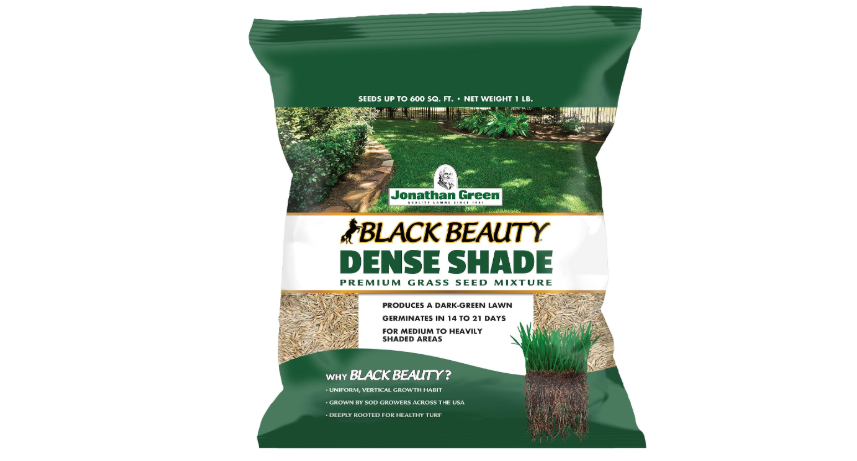
1. Jonathan Green Black Beauty Dense Shade
Jonathan Green Black Beauty Dense Shade is the industry gold standard when you need to grow grass in places sunlight rarely touches. It blends naturally dark-green Black Beauty turf-type tall fescues with Chewings fescue, Hard fescue, and shade-tolerant perennial ryegrass. The defining feature of this mix is the invisible waxy leaf coating that locks in moisture, preventing delicate blades from drying out under hungry tree canopies.
-
Price Range: $13.26
-
Key Features & Benefits:
-
Massive root systems reach up to 4 feet deep into tough clay subsoil.
-
Naturally bred endophytic varieties protect against surface insects.
-
Dark green color integrates smoothly into existing premium lawns.
-
-
Pros:
-
Superior tolerance against both tree root competition and low light.
-
Deep-rooting habit fractures compacted soils over time.
-
-
Cons:
-
Takes 14 to 21 days for full germination.
-
Higher cost per pound compared to standard retail brands.
-
-
Amazon Customer Ratings: 4.5 out of 5 stars (~3,200+ customer reviews). Reviewers consistently highlight its ability to grow thick, lush grass under heavy pine and oak trees where other mixes turned to dirt.
-
Why It’s a Good Choice: It directly solves the dual challenge of poor soil and low light by combining deep taproots with shade-adapted foliage.
-
Ideal Use Case: Homeowners dealing with heavy canopy shade, dense clay soil, and recurring bare patches under trees.
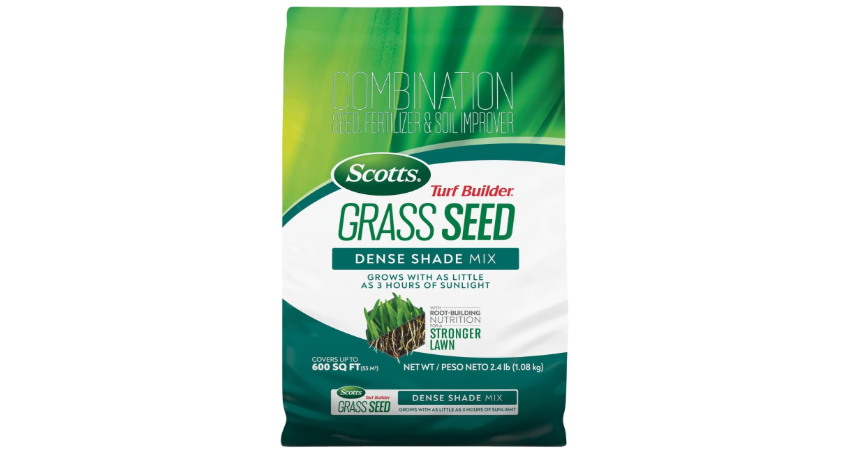
2. Scotts Turf Builder Grass Seed Dense Shade Mix
For homeowners seeking an accessible, all-in-one fix, Scotts Turf Builder Dense Shade Mix provides an easy path to success. Formulated to sprout with as little as 3 hours of direct daily sunlight, this mix includes a combination of fine fescues, tall fescues, and shade-selected Kentucky Bluegrass. It comes pre-treated with Scotts’ Root-Building Nutrition, combining fertilizer, seed, and soil conditioner into a single bag.
-
Price Range: $24.47
-
Key Features & Benefits:
-
Water-absorbing coating absorbs up to twice as much water as uncoated seed.
-
Quick sprouting cycle yields visible green shoots in 5 to 10 days.
-
Built-in soil improver gives seedling roots a head start in depleted earth.
-
-
Pros:
-
Widely available and affordable.
-
Simple application for beginners—reduces the need for separate starter fertilizers.
-
-
Cons:
-
Thick coating weight means fewer raw seeds per bag compared to pure seed mixes.
-
Coating must be kept consistently moist to prevent crusting over.
-
-
Amazon Customer Ratings: 4.3 out of 5 stars (~8,500+ customer reviews). Users love how fast it fills in bare spots along fence lines and shadowed side-yards.
-
Why It’s a Good Choice: The built-in nutrients feed the seedling immediately, overcoming low soil fertility during initial establishment.
-
Ideal Use Case: DIYers wanting a fast, budget-friendly solution for small to medium shady patches along house walls or fences.
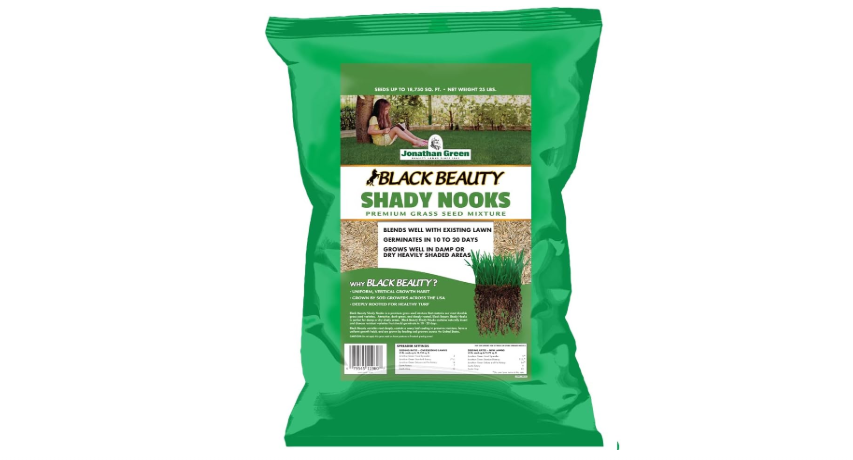
3. Jonathan Green Black Beauty Shady Nooks
When facing extreme shade where almost no direct sunlight penetrates, standard shade mixes will not survive long-term. Jonathan Green Black Beauty Shady Nooks is specifically engineered for up to 90% deep shade conditions. Composed primarily of Hard fescue, Chewings fescue, Creeping Red fescue, and dwarf tall fescue, this specialized blend requires significantly less sunlight and nutrients to carry out photosynthesis.
-
Price Range: $114.87
-
Key Features & Benefits:
-
Thrives right up to the trunk base of mature deciduous and evergreen trees.
-
Low nutrient requirement prevents the grass from starving in infertile soil.
-
Exceptionally resilient in both damp and dry shade microclimates.
-
-
Pros:
-
Unmatched light-deprivation survival rates.
-
Leaves are dark green, soft, and naturally slow-growing.
-
-
Cons:
-
Fine-textured blades are less tolerant of heavy sports or dog traffic.
-
Requires a higher investment per bag.
-
-
Amazon Customer Ratings: 4.6 out of 5 stars (~1,800+ customer reviews). Universally praised as the ultimate solution for heavily wooded lots and deep building shadows.
-
Why It’s a Good Choice: Fine fescues in this mix are biologically adapted to low-fertility, low-light environments, making it ideal for tough shade spots.
-
Ideal Use Case: Yards with dense forest canopies, north-facing walls, or shaded courtyards receiving under 2 hours of direct sun.
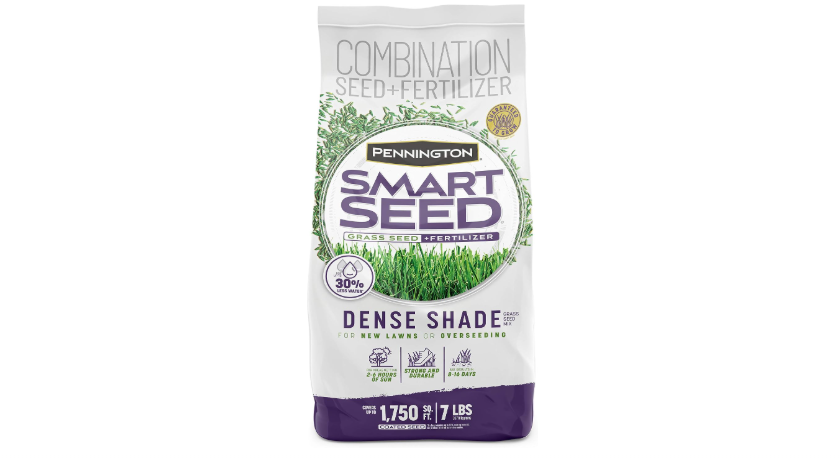
4. Pennington Smart Seed Dense Shade Mix
Tree roots create dry shade by absorbing groundwater before it reaches topsoil. Pennington Smart Seed Dense Shade Mix solves this problem through its specialized breeding and Smart Seed technology. Containing fine fescues and tall fescues, this mix requires up to 30% less water once established compared to standard lawn grasses. The seed is treated with Pennington’s protective coating to guard against fungal diseases common in damp, dark zones.
-
Price Range: $28.47
-
Key Features & Benefits:
-
Pure Live Seed guarantee ensures minimal weed content and higher germination rates.
-
Advanced disease resistance protects against leaf spot and damping-off fungus.
-
Excellent performance in 2 to 6 hours of daily sunlight.
-
-
Pros:
-
Long-term water savings once deep roots establish.
-
Stronger traffic tolerance than standard 100% fine fescue blends.
-
-
Cons:
-
Slow to establish if soil temperatures drop below 55°F.
-
-
Amazon Customer Ratings: 4.3 out of 5 stars (~4,100+ customer reviews). Customers praise its durability during dry summer spells under shade trees.
-
Why It’s a Good Choice: Reduces the watering frequency needed to maintain green grass in dry, root-filled soil.
-
Ideal Use Case: Homeowners living in regions with water restrictions or dry, shaded yards.
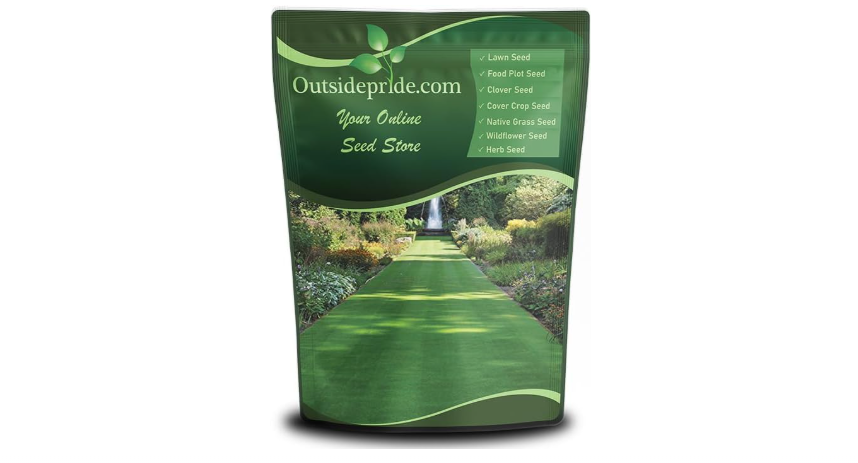
5. Outsidepride Legacy Fine Fescue Lawn Seed Blend
If your yard suffers from low fertility, sandy soil, or high acidity (pH 4.5–6.0), Outsidepride Legacy offers a high-performance, natural solution. This 100% fine fescue blend combines Hard Fescue, Chewings Fescue, and Creeping Red Fescue. It thrives in low-nutrient conditions where aggressive grasses like Kentucky Bluegrass quickly die out. Additionally, it can be left unmowed for a lush, flowing eco-lawn look.
-
Price Range: $69.99
-
Key Features & Benefits:
-
Requires up to 75% less fertilizer and mowing than conventional turfgrasses.
-
Naturally adapted to acidic soils commonly found under pine and oak trees.
-
Produces dense, soft foliage that chokes out shade-tolerant weeds.
-
-
Pros:
-
Low maintenance requirement once established.
-
Thrives in thin, sandy, or unfertile topsoils.
-
-
Cons:
-
Fine, needle-like leaf texture may not match coarse tall fescue lawns.
-
Struggles under extreme high heat combined with full sun in southern regions.
-
-
Amazon Customer Ratings: 4.4 out of 5 stars (~1,200+ customer reviews). Popular among eco-conscious homeowners and lovers of low-input lawns.
-
Why It’s a Good Choice: Fine fescues naturally extract nutrients from poor soil, eliminating the need for frequent synthetic fertilizers.
-
Ideal Use Case: Sandy, acidic, or low-fertility soils where a low-mow, eco-friendly lawn is preferred.
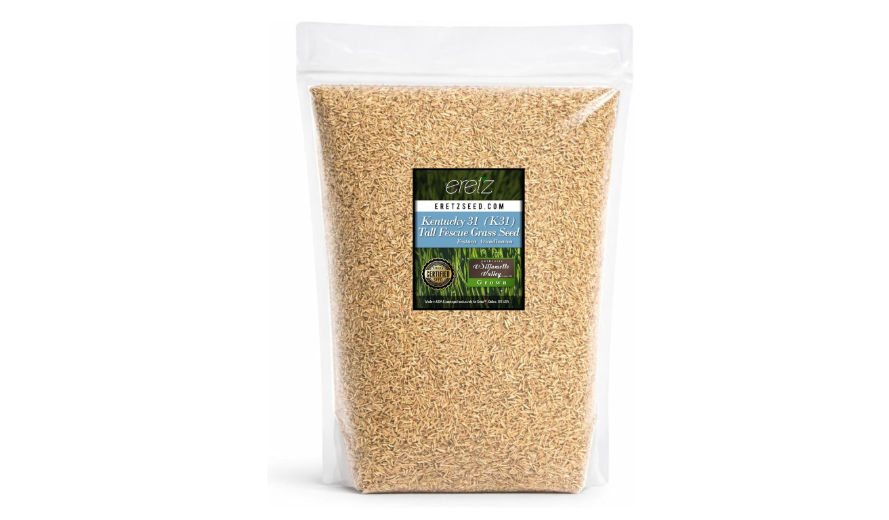
6. Eretz ProTurf / K31 Tall Fescue Grass Seed
When a shaded yard also needs to handle energetic dogs, playing kids, or foot traffic, typical fine fescues can wear down quickly. Eretz ProTurf Tall Fescue provides a rugged, heavy-duty solution. Formulated with high-purity Tall Fescue and K31 turf varieties, this seed builds a resilient canopy that tolerates both partial shade and compacted, rocky, or hardpan clay soils.
-
Price Range: $32.49
-
Key Features & Benefits:
-
High-purity seed with zero filler or chemical coatings, giving you maximum seed count per pound.
-
Deep taproot growth pierces through hard clay subsoils to access trapped moisture.
-
High wear tolerance makes it ideal for yards with heavy foot and pet activity.
-
-
Pros:
-
Stands up to wear and traffic better than 100% fine fescue blends.
-
Performs exceptionally well in tough clay or rocky soils.
-
-
Cons:
-
Coarser leaf texture compared to velvety fine fescues.
-
Needs at least 3 to 4 hours of filtered sunlight per day to maintain density.
-
-
Amazon Customer Ratings: 4.5 out of 5 stars (~2,100+ customer reviews). Reviewers love its durability against dog paws and its ability to grow in tough dirt.
-
Why It’s a Good Choice: Strong roots help it anchor into hard, low-nutrient ground while maintaining density under high foot traffic.
-
Ideal Use Case: Active families with dogs or kids who need a tough lawn in partially shaded, compacted clay yards.
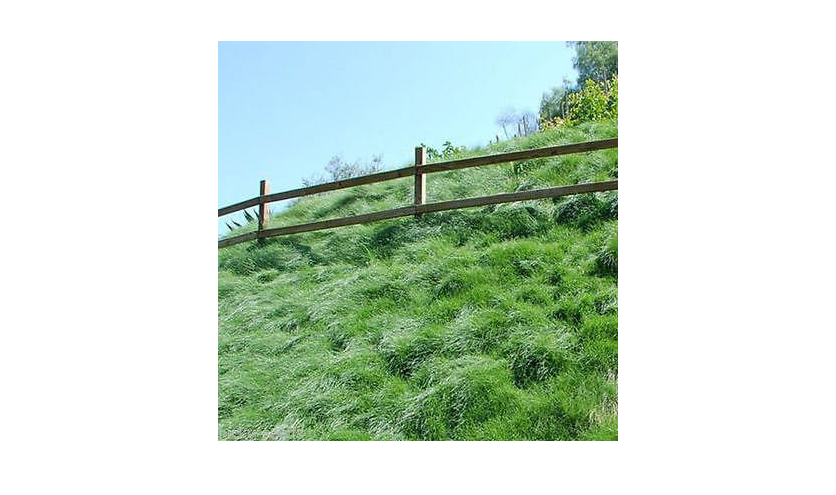
7. SeedRanch Creeping Red Fescue Seed
Creeping Red Fescue (Festuca rubra) is unique among fine fescues because it spreads via underground creeping stems called rhizomes. SeedRanch offers a 100% pure Creeping Red Fescue that slowly knits together to self-repair bare patches in shady areas. It thrives in acidic, sandy, or nutrient-poor soils where other grasses thin out and die.
-
Price Range: $67.77
-
Key Features & Benefits:
-
Underground rhizomatous growth helps the turf repair itself over time.
-
Tolerates low soil pH levels (5.5–6.5) and low fertility.
-
Fine, dark green leaf texture creates a soft carpet under tree canopies.
-
-
Pros:
-
Naturally fills in bare patches without needing constant re-seeding.
-
Excellent for controlling erosion on shady slopes or hillsides.
-
-
Cons:
-
Takes 14 to 21 days to germinate and establishes gradually.
-
Does not perform well in hot, humid full-sun environments.
-
-
Amazon Customer Ratings: 4.3 out of 5 stars (~950+ customer reviews). High marks from homeowners using it to fix patchy shaded slopes and tree lines.
-
Why It’s a Good Choice: Self-knitting rhizomes allow it to slowly cover bare spots in poor soil without heavy fertilizer applications.
-
Ideal Use Case: Shady slopes, hillsides, and woodland yard edges that need a low-maintenance, self-repairing groundcover.
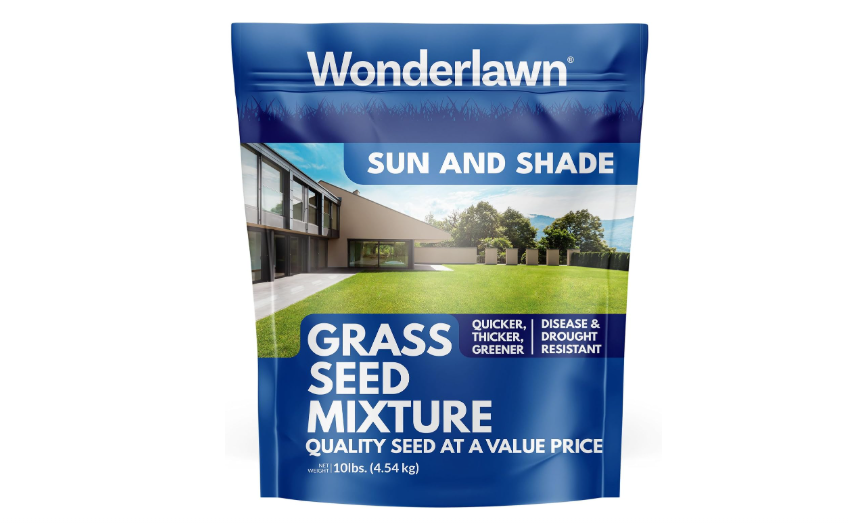
8. Barenbrug Shade Savant / Wonderlawn Mix
Barenbrug is a global leader in turfgrass research, and their Shade Savant mix uses companion grasses to speed up establishment in cool, dark environments. By combining shade-adapted fine fescues with quick-establishing perennial ryegrass, this mix creates a fast green cover that prevents weeds from invading bare, shaded dirt.
-
Price Range: $31.99
-
Key Features & Benefits:
-
Fast-sprouting companion ryegrass germinates in 7 to 10 days to protect slower fescues.
-
Bred for disease resistance against damping-off and shade-loving fungi.
-
Establishes quickly in damp, cool northern shade zones.
-
-
Pros:
-
Rapid initial growth prevents soil erosion and weed invasion.
-
Soft, fine-textured finish blends well with existing cool-season lawns.
-
-
Cons:
-
Needs consistent watering during the initial sprouting phase.
-
-
Amazon Customer Ratings: 4.5 out of 5 stars (~600+ customer reviews). Customers highlight its quick germination in dark, damp spring yards.
-
Why It’s a Good Choice: Quick establishment prevents shade-tolerant weeds from taking over weak topsoil.
-
Ideal Use Case: Northern homeowners looking for fast cover in cool, damp, shaded areas.
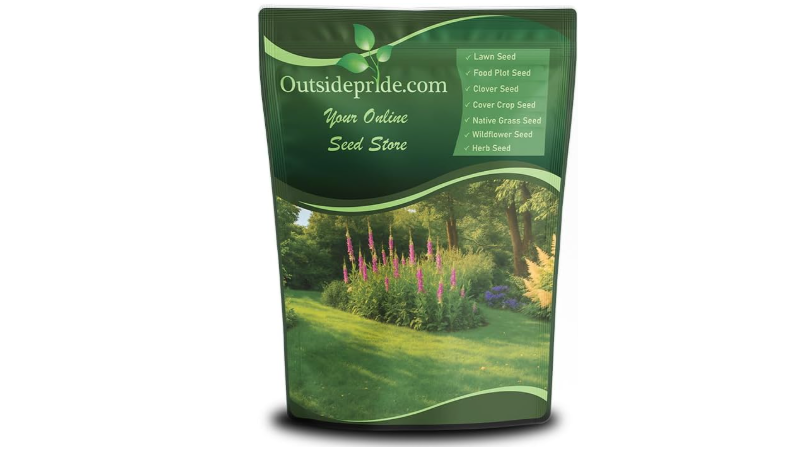
9. Outsidepride Sheep’s Fine Fescue Seed
When soil conditions are at their worst—such as rocky terrain, severe acidity (pH 4.5–6.0), or zero topsoil fertility—Outsidepride Sheep’s Fine Fescue excels. Sheep fescue (Festuca ovina) is a hardy, low-growing bunchgrass that naturally thrives in barren conditions. Enhanced with OptiGrowth nutrient coating, it gives seeds an extra boost during initial establishment.
-
Price Range: $44.99
-
Key Features & Benefits:
-
Tolerates extreme soil acidity and gravelly, sandy terrain.
-
Unique bluish-green foliage adds visual character.
-
Requires little to no synthetic fertilizer once established.
-
-
Pros:
-
Grows in rocky, poor ground where nearly all other varieties fail.
-
Outstanding drought and cold tolerance.
-
-
Cons:
-
Distinct bluish tone may not match a standard bright-green lawn.
-
Grows in clumping tufts rather than a perfectly flat sheet.
-
-
Amazon Customer Ratings: 4.4 out of 5 stars (~500+ customer reviews). Highly rated for rocky slopes, cabin properties, and neglected perimeter zones.
-
Why It’s a Good Choice: Biologically built to survive in barren, low-nutrient soils with minimal human intervention.
-
Ideal Use Case: Rocky, unfertile soil, sandy slopes, and naturalized low-input yard boundaries.
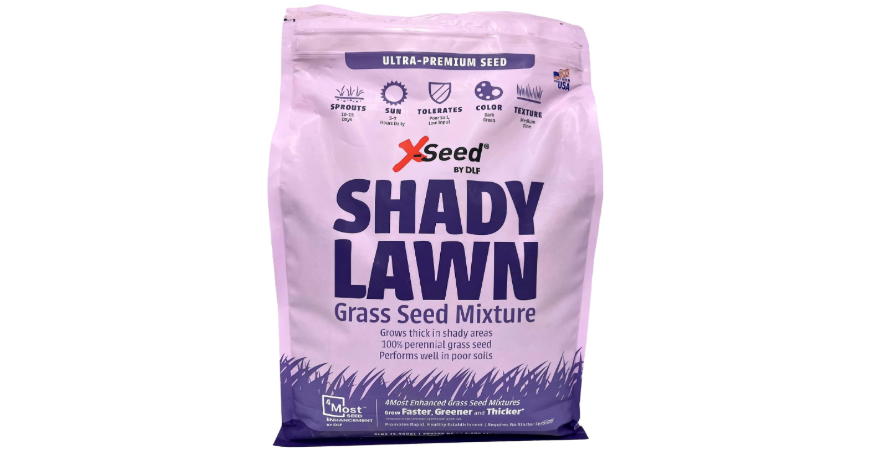
10. Green-Up / Water%Less Shade Seed Mix
Shallow or sandy topsoils under shade trees lose moisture quickly. Green-Up Water%Less Shade Blend combines fine fescues with deep-rooting, drought-adapted varieties to create a resilient lawn that uses up to 50% less water. It grows well in shallow topsoil and dappled light, making it a great low-maintenance choice.
-
Price Range: $24.69
-
Key Features & Benefits:
-
Uses up to 50% less water once fully established.
-
Performs well in thin topsoil over rocky or sandy sublayers.
-
Slow growth rate means less frequent mowing.
-
-
Pros:
-
Stays green during summer dry spells under tree canopies.
-
Ideal for sandy, fast-draining soils.
-
-
Cons:
-
Slower early establishment phase requires careful moisture management.
-
-
Amazon Customer Ratings: 4.2 out of 5 stars (~450+ customer reviews). Praised for keeping its green color in thin, sandy shade spots.
-
Why It’s a Good Choice: Deep roots and low water needs keep it healthy in poor soils that dry out quickly.
-
Ideal Use Case: Shaded yards with thin topsoil, sandy conditions, or irrigation restrictions.
Section 4: Step-by-Step Planting Guide – How to Grow Grass Seed in Shade and Poor Soil
Even the best 10 grass seed for shade and poor soil options require proper planting techniques to establish successfully. Follow these steps for reliable results:
-
Step 1: Clean and Loosen the Soil
-
Clear away fallen leaves, twigs, moss, and pine needles that block air and light.
-
Loosen the top 2 to 3 inches of hard, compacted soil using a metal garden rake, core aerator, or tiller.
-
Spread a 1/2-inch layer of rich organic compost or leaf mold across the area to introduce beneficial organic matter into poor soil.
-
-
Step 2: Balance Soil pH and Apply Starter Fertilizer
-
Test your soil pH using an affordable home kit (aim for a pH between 6.0 and 6.8).
-
If your soil is acidic (below 5.8)—common under pine and oak trees—apply pelletized lawn lime to neutralize the acidity.
-
Apply a specialized starter fertilizer rich in phosphorus (the middle number on the N-P-K ratio) to encourage root development without causing leaf burn.
-
-
Step 3: Spread the Seed Evenly
-
Use a broadcast or drop spreader for large areas, or hand-sow smaller patches.
-
Follow the manufacturer’s recommended seeding rate (typically 3 to 5 lbs per 1,000 sq ft for new lawns).
-
Gently rake the seed into the soil so it is covered by 1/8 to 1/4 inch of dirt. Seed-to-soil contact is essential for germination.
-
-
Step 4: Water Lightly and Consistently
-
Water 2 to 3 times daily for 5 to 10 minutes at a time. The goal is to keep the top inch of soil continuously moist, not waterlogged.
-
Avoid heavy watering that can wash seeds away.
-
Once seedlings reach 2 inches in height, reduce watering frequency to 2 to 3 times per week, watering more deeply to encourage deeper root growth.
-
Conclusion
Transforming a dark, nutrient-depleted yard into a thick, green lawn is completely achievable when you pair the right grass seed genetics with proper soil preparation. Rather than battling persistent shade and depleted soil with standard store-bought seed, investing in specialized fine fescues, deep-rooting tall fescues, and coated shade blends gives your lawn the biological tools it needs to thrive where other turfgrasses fail.
Whether you need the overall resilience of Jonathan Green Black Beauty Dense Shade, the extreme light-deprivation survival of Shady Nooks, or a low-maintenance eco-lawn option like Outsidepride Legacy, selecting the right product for your specific microclimate is the most important step. Paired with a simple prep routine—loosening the dirt, balancing soil pH, and maintaining consistent moisture—you can permanently eliminate bare dirt patches and enjoy a lush, healthy lawn for years to come.