
If you have noticed a massive wave of hype surrounding the enigmatic raz cactus jack flavor in modern vape profiles, craft sodas, and tropical energy drinks, you are far from alone. This ultra-popular taste sensation has taken the consumer market by storm, leaving millions of people asking a very fundamental question: What on earth does a Cactus Jack taste like, and is it a real plant?
The answer is a resounding yes. While the market relies on synthetic flavor labs to replicate this refreshing, tangy-sweet explosion, the true magic belongs to the natural world. Even better for indoor gardeners, the primary botanical origins behind this trend—the striking prickly pear cactus and the exotic jackfruit—can be cultivated successfully right in your own living room.
This comprehensive guide uncovers the flavor profile of this viral trend, breaks down the actual science of its real-world botanical parents, and delivers an expert masterclass on growing these exotic, fruit-bearing specimens as unique indoor plants.
1. Decoding the Flavor: What Exactly is “Raz Cactus Jack”?

To understand the search intent behind this phenomenon, we have to look closely at flavor formulation. In consumer products, the profile is a carefully balanced triad of very real tropical and arid fruits.
The Taste Profile Breakdown
When you sample anything using this signature blend, your palate registers three distinct phases:
-
The Punchy Top Note (Raz): A sharp blast of blue or red raspberry. It provides an immediate citrusy tartness and a high-acid backbone that wakes up the taste buds.
-
The Tropical Body (Jack): A deep, honeyed, almost creamy sweetness. This comes from jackfruit, an ancient tropical fruit that serves as a rich foundational base.
-
The Refreshing Finish (Cactus): A clean, crisp, hydrating exhale. This is the cactus fruit element, which grounds the intense fruit sugars with a mellow, green, and watery finish.
2. Meet the “Cactus Jack” Parent Plants
Before introducing these specimens into an indoor grow room, proper botanical identification is necessary.
The Fruit Bearer: Prickly Pear Cactus (Opuntia ficus-indica)
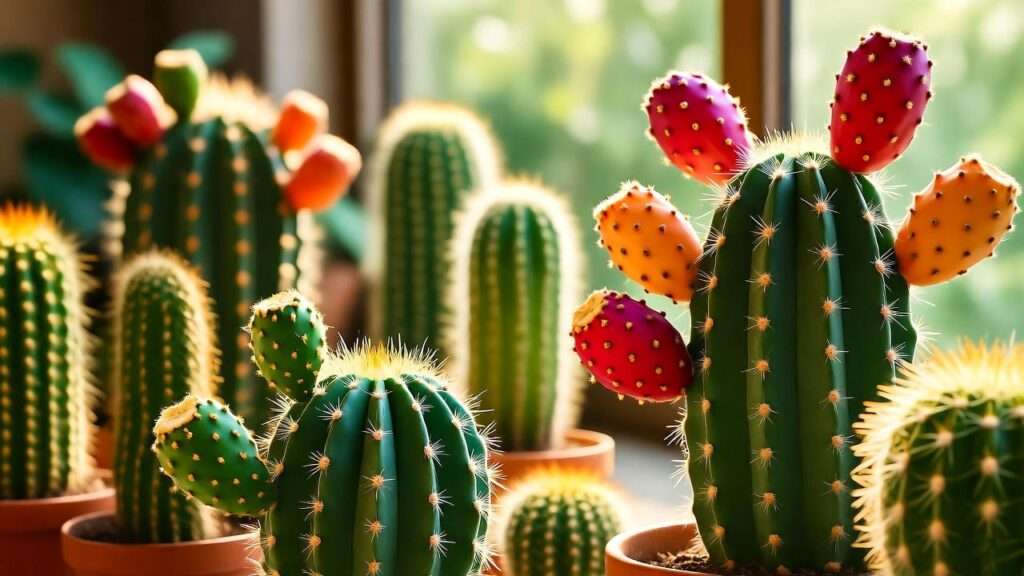
The prickly pear is an iconic succulent characterized by flat, fleshy, paddle-like segments called cladodes. These pads serve as water-storage reservoirs, allowing the plant to withstand severe arid conditions. In late spring, mature indoor pads produce brilliant yellow, orange, or red flowers. Once pollinated, these flowers transform into oval fruits known as tunas. These fruits range in color from neon pink to deep magenta and hold the sweet, water-rich pulp that defines the refreshing side of the Cactus Jack profile.
The Tropical Giant: The Jackfruit Tree (Artocarpus heterophyllus)
In stark contrast to the desert-dwelling cactus, the jackfruit is a magnificent member of the mulberry family native to the rainforests of Southeast Asia. In the wild, a mature tree can produce massive fruits weighing up to 120 pounds, bearing a flavor profile often described as a natural combination of mango, pineapple, banana, and bubblegum. While a full-scale wild tree cannot fit through a standard doorway, specialized dwarf cultivars allow container gardeners to experiment with this tropical marvel indoors.
3. The Expert Guide to Growing Prickly Pear (Opuntia) Indoors
Growing a fruiting cactus indoors requires shifting away from basic houseplant care and embracing specific arid zone dynamics.
Lighting Requirements: Replicating the Desert Sun

The number one reason indoor cacti fail to bloom or fruit is lack of light intensity. Prickly pears require a minimum of 6 hours of direct, unobstructed sunlight daily.
-
Window Placement: A large, unobstructed south- or west-facing window is essential.
-
Supplemental Lighting: Because window glass filters out crucial spectrums, serious growers should utilize full-spectrum LED grow lights. Position the fixture 6 to 12 inches above the top pads, ensuring an output of at least 2,500 to 3,000 lumens. Keep the lights on a strict 14-hour timer during the active spring and summer growing seasons.
The Soil Mix: Structural Integrity and Rapid Drainage
Standard commercial potting soils hold onto moisture far too long, suffocating the delicate root systems of succulents and inducing root rot. An authentic, professional-grade substrate should be mixed using the following ratios:
-
50% Coarse Inorganic Material: Use a combination of horticultural pumice, perlite, and coarse granite grit. This ensures large macro-pores that allow water to flush through in seconds.
-
50% Organic Base: A high-quality, peat-free potting soil or well-composted coco coir to hold minimal nutrients without packing down tight.
The “Soak and Dry” Watering Method
When watering your Opuntia, avoid light, frequent sips. Instead, perform a deep, thorough saturation until water flows freely out of the pot’s bottom drainage holes. Before watering again, the soil mass must become 100% dry all the way to the bottom of the pot. To verify this, insert a wooden chopstick deep into the center of the pot. If it comes out with any dark soil clinging to it, do not water.
4. Cultivating Dwarf Jackfruit Indoors
Bringing the “Jack” component of the trending flavor profile into your home requires an entirely different set of horticultural skills. Because these are naturally large jungle trees, success indoors relies completely on genetic selection and microclimate management.
Managing the Scale of a Jungle Giant
To keep a jackfruit tree happy within the confines of an indoor space, you must start with a grafted dwarf variety. Cultivars such as ‘NS1’, ‘Amber’, or ‘Cochin’ have been specifically bred to maintain a compact canopy and begin producing fruit at a highly manageable height of 4 to 6 feet when restricted to a container. Select a large, heavy clay pot (minimum 10 to 15 gallons) to accommodate their deep taproots.
Atmospheric Demands: High Heat and Steam
Unlike the desert-loving cactus, a dwarf jackfruit tree demands an environment that mimics a warm, steamy rainforest floor.
-
Humidity: Maintain ambient humidity levels above 60%. This can be achieved by placing a dedicated ultrasonic humidifier near the tree.
-
Temperature Stability: Ensure temperatures never drop below 65°F. Keep the plant far away from cold drafts, air conditioning vents, or leaky winter windows, as sudden thermal drops will cause immediate leaf drop.
5. From Pot to Palate: Harvesting and Experiencing the True Flavor
Once your indoor prickly pear has successfully matured and produced deep purple, soft-to-the-touch fruit, you have arrived at the final reward: harvesting the real, organic baseline of the raz cactus jack flavor. However, working with actual cactus fruit requires a strict safety protocol.
Safely Harvesting Indoor Prickly Pear Fruit

The beautiful pink skins of prickly pear fruits are guarded by glochids. These are microscopic, hair-like, barbed spines that are nearly invisible to the naked eye. If touched with bare skin, they detach instantly, causing persistent, painful mechanical irritation.
To safely process your fresh harvest without injury, execute the following precise sequence:
1.Secure the Fruit:Safety First.
6. Troubleshooting Common Indoor Succulent Issues
Cultivating edible, fruit-bearing succulents and tropical trees inside a house presents unique challenges. Keep this diagnostic manual close at hand to ensure your setup continues to thrive.
Why Your Cactus is Stretched and Leggy (Etiolation)
If you notice that new paddle growth on your prickly pear is pale green, unusually thin, and stretching aggressively toward one side, your plant is experiencing etiolation. This is a direct distress signal indicating a severe lack of light energy.
-
The Fix: Prune away the weak, malformed pads using a sanitized blade, as they lack the structural integrity to support future fruit weight. Immediately move the main plant to your sunniest south-facing window.
Preventing and Treating Root Rot
Root rot is the single greatest killer of indoor cacti. It manifests as a yellowing, softening, or wrinkling of the lowest pads, often accompanied by a distinct smell of damp decay from the soil.
-
The Rescue Operation: If the base of the plant has turned brown and squishy, immediate intervention is required. Using a sharp, sterile knife, slice off a healthy, firm upper pad entirely above the rotted zone. Allow the cut edge of the pad to air dry in a well-ventilated room for 4 to 7 days until a thick, dry callus forms over the wound. Insert the callused edge directly into a fresh, bone-dry potting mix. Withhold water entirely for the first three weeks until new, white anchoring roots begin to emerge.
The Secret to Triggering Indoor Blossoms
Many growers maintain perfectly green, healthy indoor cacti for years without ever seeing a single flower or fruit. This is because the plant requires a physiological trigger to break out of its vegetative cycle.
-
The Winter Trick: To initiate spring flower buds, you must mimic a natural outdoor winter desert cycle. From November through February, move your prickly pear to a cooler room in the house where temperatures consistently sit between 50°F and 55°F. During this period, keep the plant under bright light but completely stop watering it. This cold, dry dormancy shocks the succulent into reproductive mode, forcing a massive flush of flower buds when normal warmth and watering resume in early spring.
7. Creative Styling: Designing an Exotic Indoor Arid-Tropical Greenroom
A common challenge for indoor plant collectors is visual integration. How do you seamlessly display a desert cactus that loves low humidity alongside a lush jungle tree that thrives on steam? Designing a cohesive indoor layout requires creating distinct atmospheric microclimates within the same room.
The Arid Window Zone
Position your terracotta-potted prickly pears directly against the window glass of your southern exposure. Terracotta is naturally porous, allowing moisture to evaporate through the pot walls, which keeps the succulent root zones aerated and dry. Grouping cacti together creates a localized zone of lower humidity, as they release very little moisture into the air through transpiration.
The Tropical Oasis Zone
Set your dwarf jackfruit tree 3 to 5 feet back from the same window, or place it near an east-facing window where the light is softer and less intense. Group the jackfruit with other leafy tropicals like ferns or monsteras. By placing an ultrasonic humidifier in the center of this cluster, the dense canopy will trap the water vapor, creating a pocket of high humidity that leaves your nearby desert cacti completely unaffected.
8. Summary: Cultivating Trends on Your Windowsill
Bridging the gap between a modern flavor trend like the raz cactus jack flavor and traditional botany reveals how deeply connected we remain to the natural world. This sweet, tart, and refreshing flavor combination isn’t just a synthetic creation of food science—it is a direct tribute to the incredible biodiversity of our planet’s ecosystems.
By learning to cultivate the rugged, sun-loving prickly pear and the ambitious dwarf jackfruit indoors, you do more than just upgrade your home’s aesthetic. You transform your living space into an interactive botanical showroom. The next time you encounter this viral flavor trend, you won’t just think of a consumer product—you will be able to look across your room at the beautiful, living green foliage thriving right on your windowsill.
9. Comprehensive FAQ Section
Is the Cactus Jack flavor sour or sweet?
The commercial flavor profile is carefully balanced to be both. The jackfruit provides a deep, heavy tropical sweetness, while the raspberry introduces a sharp, bright sourness. The cactus fruit acts as a unifying agent, mellowing out both extremes with a very clean, watery, and refreshing undertone.
Can I safely eat any cactus fruit grown indoors?
While the vast majority of cactus fruits (like those from the Opuntia, Cereus, and Hylocereus genera) are completely non-toxic and safely edible, you must avoid consuming fruits from ornamental holiday cacti (Schlumbergera) or rare desert varieties unless you have verified the exact Latin binomial name of the species. Always double-check your plant identification before tasting.
How long does it take for an indoor Prickly Pear to grow fruit?
If you start your plant from a mature pad cutting, you can generally expect to see your first round of spring flowers and subsequent summer fruit within 2 to 3 years. Cacti grown directly from seed are slow growers and can take anywhere from 5 to 7 years to reach reproductive maturity inside a home.
My indoor cactus pads are turning purple—is it dying?
Not necessarily! If the pad remains firm to the touch, purpling is usually a natural physiological response called anthocyanin accumulation. This occurs when the plant is exposed to very bright light or cool winter temperatures. It acts as a natural “sunscreen” for the cactus and is often a fantastic sign that your lighting setup is strong enough to trigger future spring blooms. However, if the purple areas are soft, mushy, or oozing, that is a sign of rot and requires immediate pruning.
10. Conclusion: Transforming Flavor Trends into Living Botanical Art
The explosive popularity of the raz cactus jack flavor across modern consumer culture is a powerful reminder of how much we subconsciously crave the wild profiles of nature. What started as a trending mystery flavor engineered in a flavor laboratory actually traces its roots right back to the resilience of arid deserts and the lush canopy of tropical rainforests.
For the modern indoor gardener, this trend offers an incredible opportunity to think outside the box. By understanding the unique environmental profiles of both the rugged, sun-loving Prickly Pear (Opuntia) and the vibrant Dwarf Jackfruit tree, you can transform a standard living space into a high-yielding, talking-point botanical display. You don’t need acres of outdoor farmland to enjoy these exotic flavors—you simply need a well-lit windowsill, the correct substrate mix, and a passion for experimenting with unique flora.
Ultimately, cultivate what inspires you. The next time you hear someone talking about this trending flavor profile, you won’t just think of a commercial product line. You will be able to proudly point to the gorgeous, living, fruit-bearing greenery flourishing right inside your home, knowing you have successfully bridged the gap between popular culture and expert horticulture.