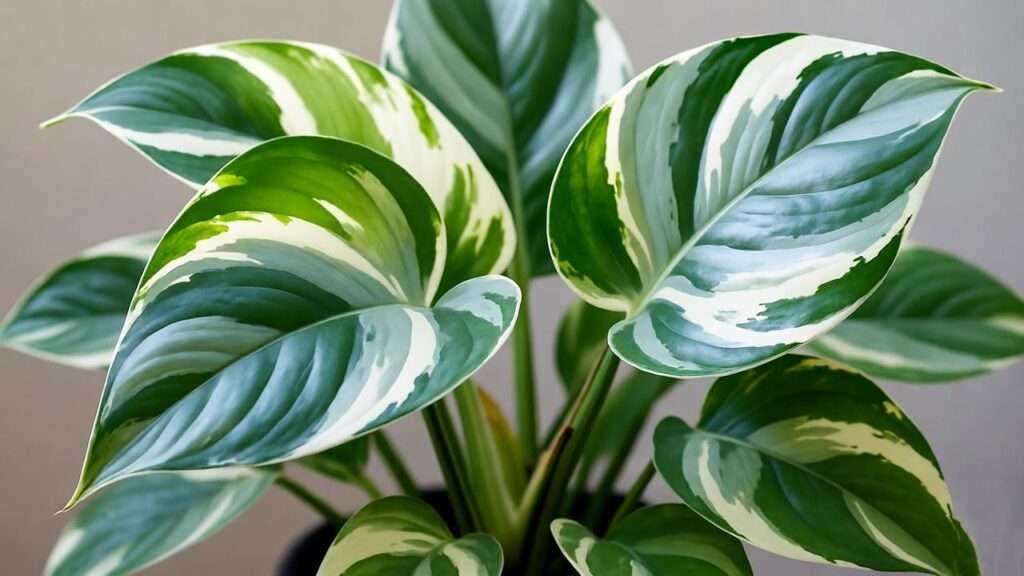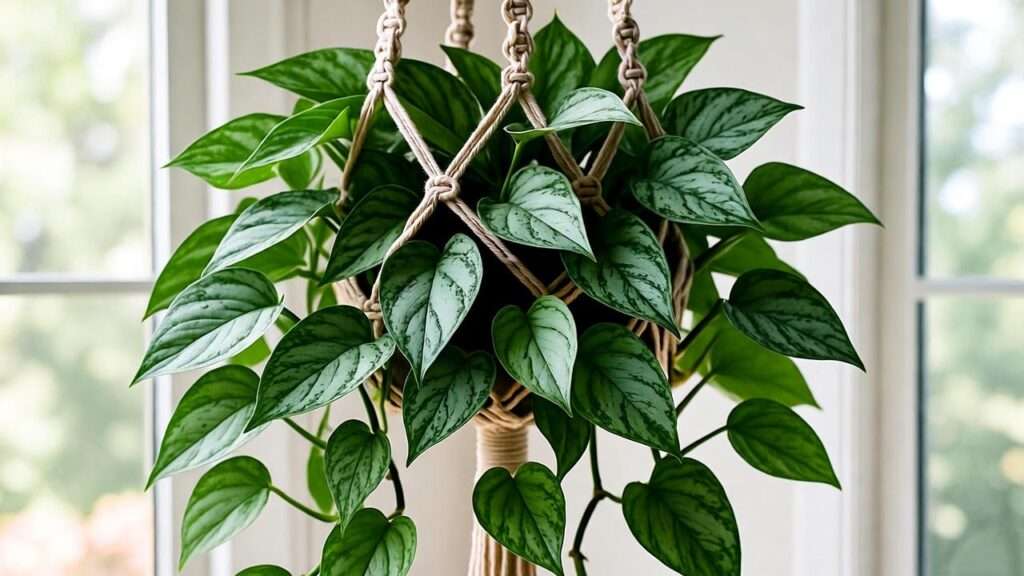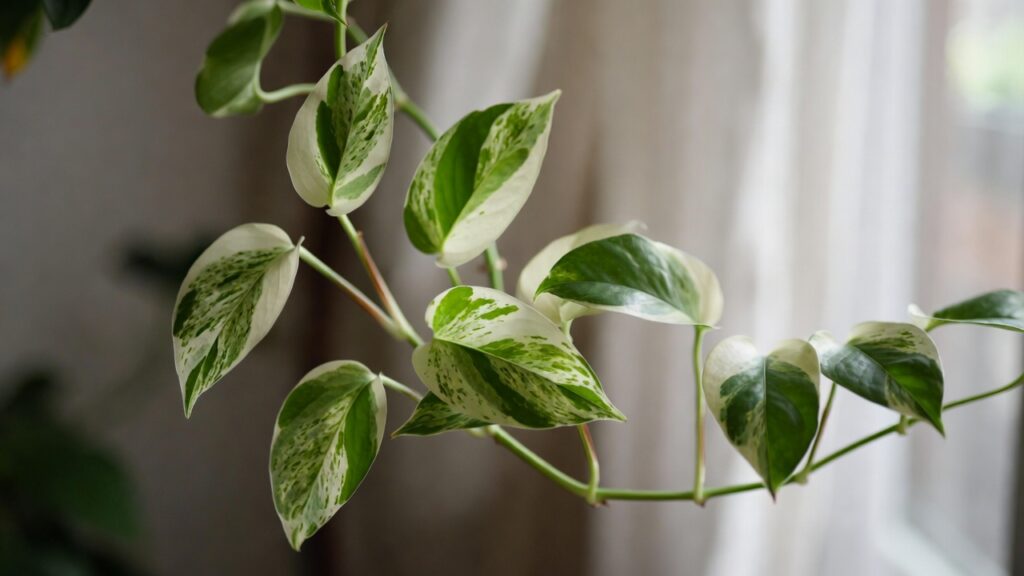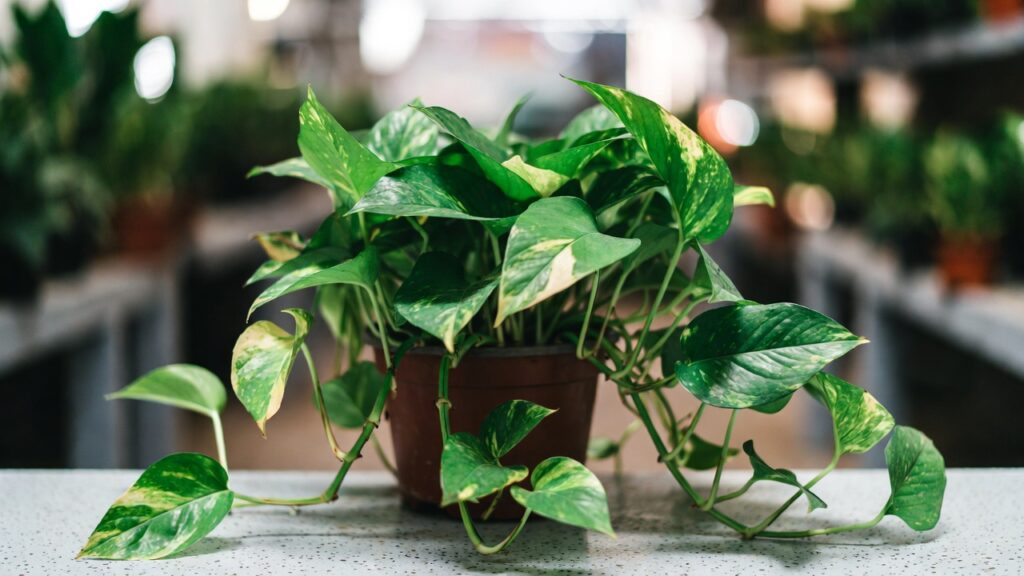
There’s a reason plant lovers stop mid-scroll when they see a perfectly variegated N Joy Pothos cascading from a shelf. Its crisp white-and-green leaves look almost painted — compact, elegant, and undeniably modern. But here’s the truth most care guides won’t tell you: this variety is less forgiving than standard pothos. If your N Joy pothos is turning yellow, losing variegation, or growing painfully slow, it’s not random — it’s environmental.
In this comprehensive guide, I’ll walk you through exactly how to grow a thriving N Joy pothos indoors — based on practical experience, horticultural principles, and real-world troubleshooting. Whether you’re a beginner or a seasoned indoor plant enthusiast, this guide will help you prevent common mistakes and grow a healthy, vibrant plant long-term.
What Is N Joy Pothos?
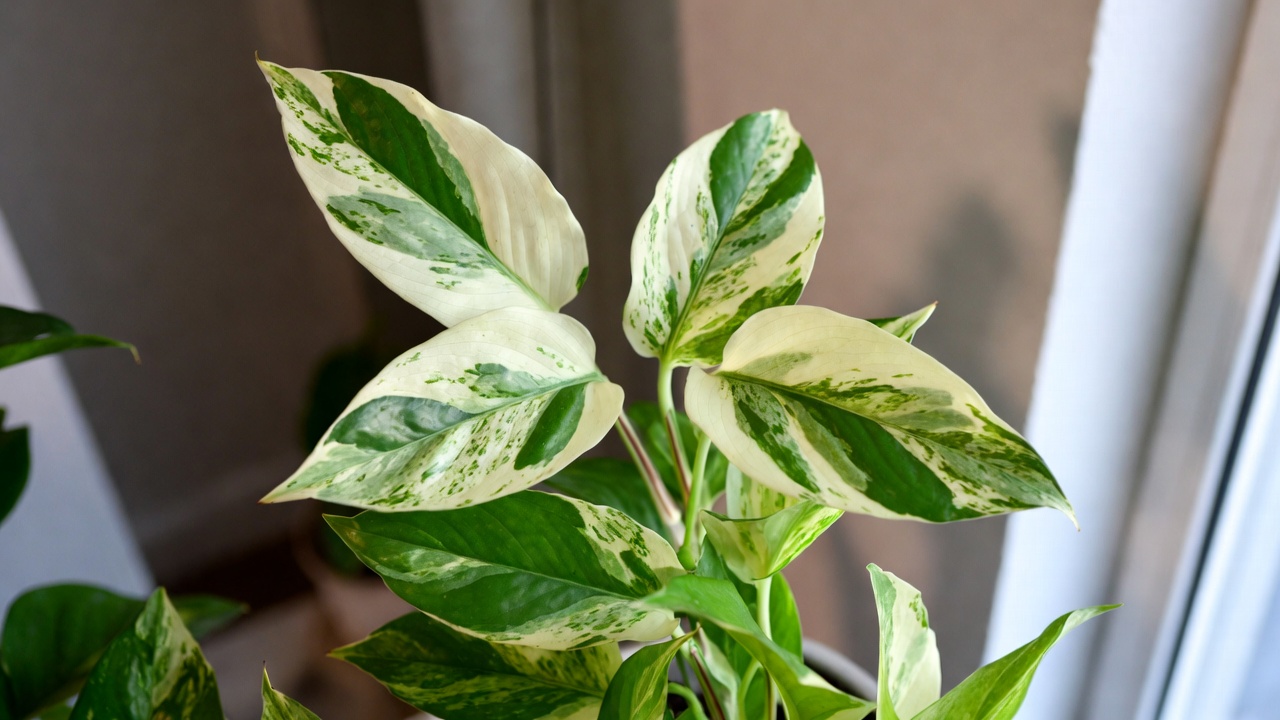
Botanical name: Epipremnum aureum ‘N’Joy’
Plant type: Variegated tropical vine
Growth habit: Compact, trailing or climbing
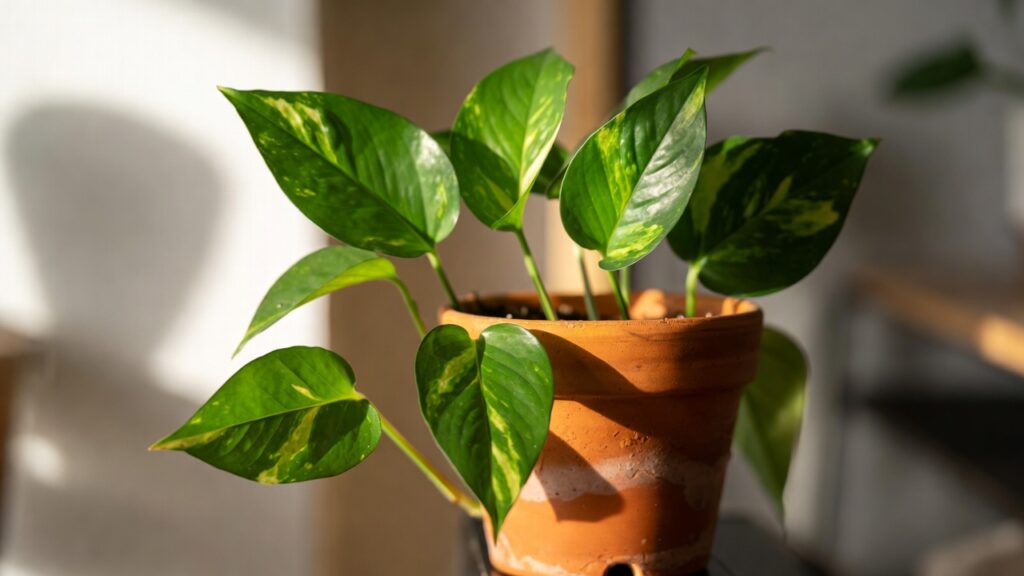
N Joy pothos is a cultivated variety of Epipremnum aureum, the same species as Golden Pothos. However, it differs significantly in appearance and growth behavior.
What Makes N Joy Pothos Unique?
- Crisp, high-contrast white and green variegation
- Smaller, more compact leaves
- Slower growth rate than other pothos
- Bushier, less aggressive trailing habit
Unlike Golden Pothos, N Joy has sharply defined white patches rather than marbled blending. This stunning variegation is the main reason people buy it — but it’s also why care requirements are slightly more specific.
Because white areas lack chlorophyll, the plant has less photosynthetic capacity. That means light, watering, and soil conditions matter more.
N Joy Pothos vs. Pearls and Jade vs. Marble Queen
One of the most common frustrations among buyers is misidentifying their plant. Here’s how they differ:
N Joy Pothos
- Clean white sections with solid green borders
- No speckling in white areas
- Compact growth
Pearls and Jade
- Green speckles within white areas
- Slightly more textured variegation
Marble Queen
- Creamy marbled mix across entire leaf
- Larger leaves
- Faster growth
Correct identification matters because Marble Queen tolerates lower light better, while N Joy requires brighter conditions to maintain its variegation.
Light Requirements for N Joy Pothos (The Most Important Factor)
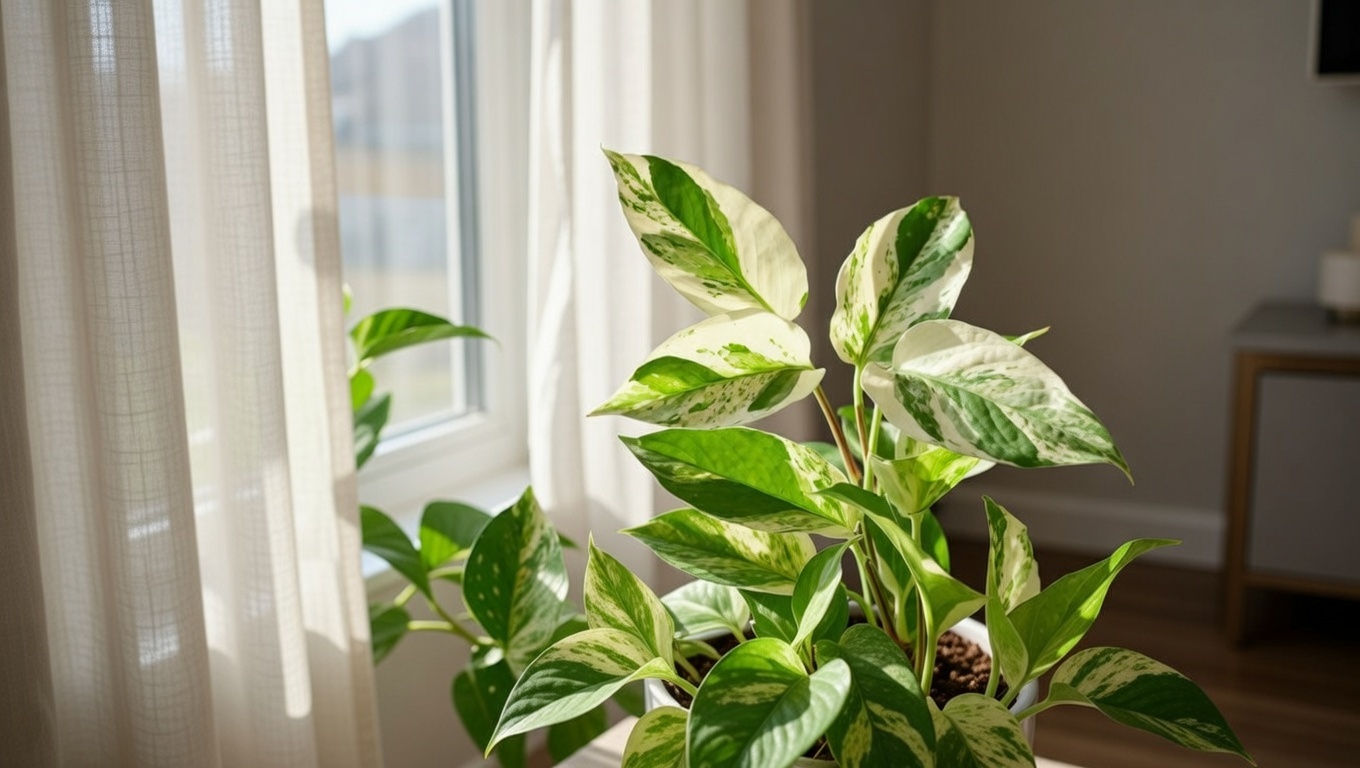
If there’s one factor that determines success with N Joy pothos, it’s light.
How Much Light Does N Joy Pothos Need?
Ideal condition: Bright, indirect light
Think of light bright enough to read comfortably without artificial lighting, but no direct sun hitting the leaves.
Because of its high white variegation:
- It needs more light than standard pothos.
- Low light causes slow growth and reversion (more green leaves).
Best Placement in Your Home
- East-facing window: Excellent (gentle morning sun)
- South-facing window: Good if filtered with sheer curtains
- West-facing window: Acceptable with distance from glass
- North-facing window: Usually insufficient long-term
If natural light is limited, full-spectrum grow lights work very well. Place the plant 12–18 inches under the light for 10–12 hours daily.
Can N Joy Pothos Tolerate Low Light?
Technically, yes. But it won’t thrive.
In low light, you may notice:
- Smaller leaves
- Loss of variegation
- Leggy stems
- Slowed growth
Over time, the plant may revert to mostly green in order to survive.
Can It Handle Direct Sunlight?
Direct afternoon sun will scorch the white portions quickly.
Signs of sunburn:
- Brown, crispy patches
- Bleached areas
- Curling edges
Morning sun for 1–2 hours is usually safe, but strong midday rays should be filtered.
Watering N Joy Pothos Correctly (Avoid Root Rot)
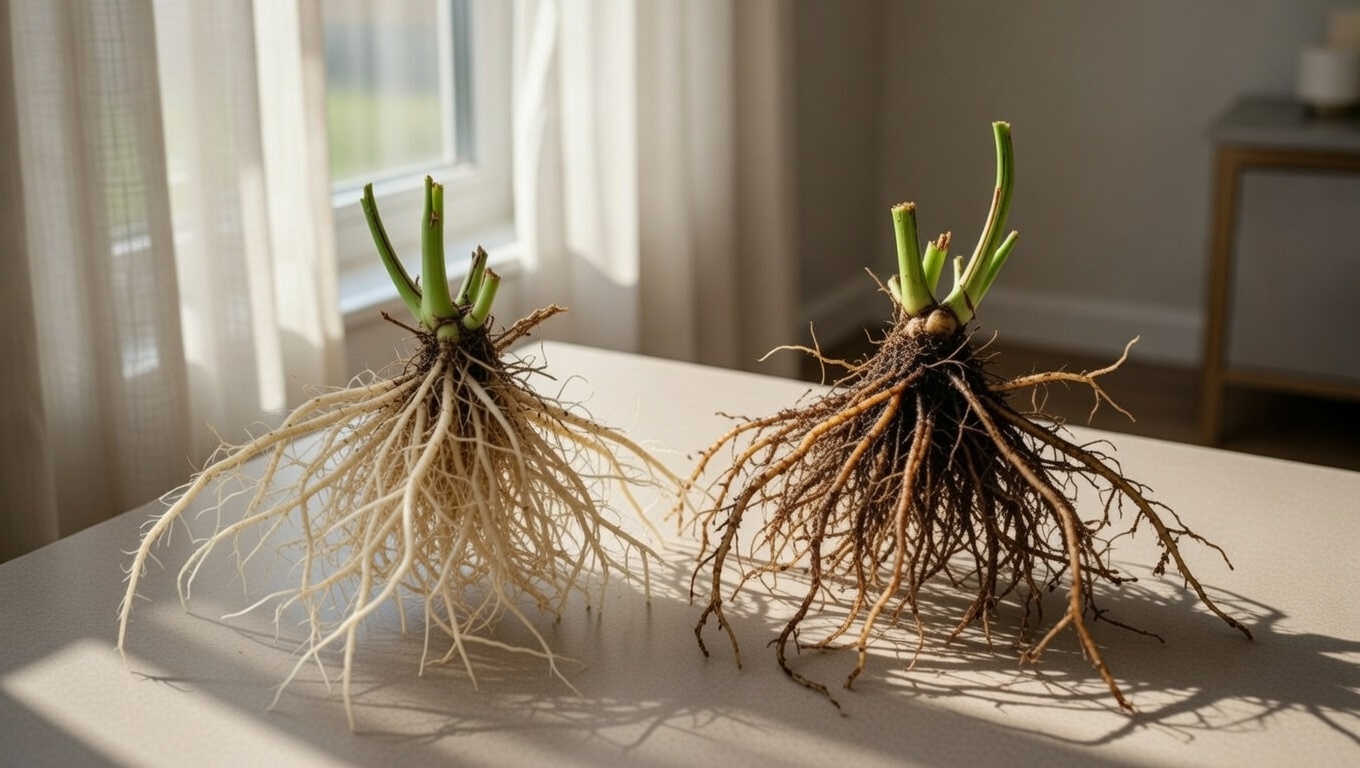
Overwatering is the #1 killer of indoor pothos plants.
How Often Should You Water N Joy Pothos?
Instead of following a schedule, use the soil-drying method:
- Insert your finger 1–2 inches into the soil.
- If dry, water thoroughly.
- If moist, wait a few more days.
On average:
- Spring/Summer: Every 7–10 days
- Fall/Winter: Every 10–14 days
Always adjust based on:
- Pot size
- Light level
- Humidity
- Temperature
Signs of Overwatering
- Yellowing lower leaves
- Mushy stems
- Sour soil smell
- Fungus gnats
- Root rot (brown, slimy roots)
If you suspect root rot:
- Remove plant from pot
- Trim damaged roots
- Repot in fresh, well-draining soil
Signs of Underwatering
- Drooping leaves
- Curling edges
- Crispy tips
- Soil pulling away from pot edges
The good news? Underwatering is easier to fix than overwatering.
Best Type of Water to Use
N Joy pothos is moderately sensitive to chemicals in tap water.
Best options:
- Filtered water
- Rainwater
- Distilled water (occasionally)
If using tap water, let it sit out 24 hours to allow chlorine to dissipate.
Best Soil Mix for N Joy Pothos
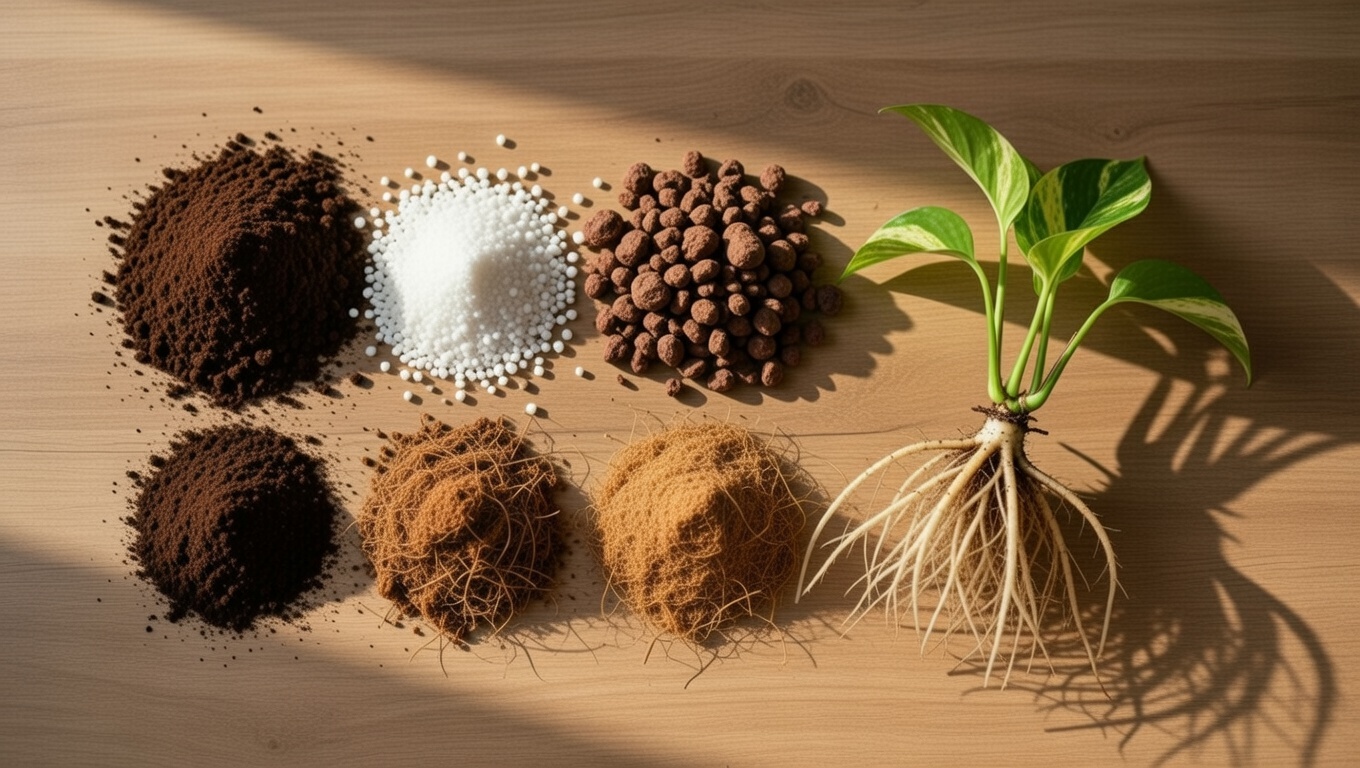
Heavy, compacted soil leads to suffocated roots.
Ideal Soil Characteristics
- Well-draining
- Aerated
- Moisture-retentive but not soggy
Expert DIY Soil Recipe
- 50% high-quality indoor potting mix
- 25% perlite
- 15% orchid bark
- 10% coco coir (optional)
This blend mimics tropical forest floor conditions — airy but nutrient-rich.
Pot Selection Matters
Always use a pot with drainage holes.
Terracotta pots:
- Allow faster drying
- Good for heavy waterers
Plastic pots:
- Retain moisture longer
- Suitable for dry climates
Never let the plant sit in standing water.
Temperature & Humidity Requirements
N Joy pothos originates from tropical regions, so warmth helps it thrive.
Ideal Temperature Range
- 65°F–85°F (18°C–29°C)
- Avoid temperatures below 55°F (13°C)
Cold drafts can cause:
- Leaf blackening
- Growth stall
Does N Joy Pothos Need High Humidity?
It tolerates average indoor humidity (40–60%), but thrives above 50%.
If your home is dry:
- Use a humidifier
- Group plants together
- Place on pebble tray (without roots touching water)
Higher humidity promotes larger leaves and healthier growth.
Fertilizing N Joy Pothos for Healthy Growth
Because it grows slower than other pothos varieties, it doesn’t need heavy feeding.
How Often to Fertilize
- Spring/Summer: Every 4–6 weeks
- Fall/Winter: Pause or reduce significantly
Best Fertilizer Type
Use a balanced liquid fertilizer (e.g., 10-10-10 or 20-20-20) diluted to half strength.
Organic options like worm castings also work well.
Signs of Overfertilization
- Brown leaf tips
- White crust on soil surface
- Leaf burn
Flush soil with distilled water every few months to prevent salt buildup.
How to Propagate N Joy Pothos Successfully
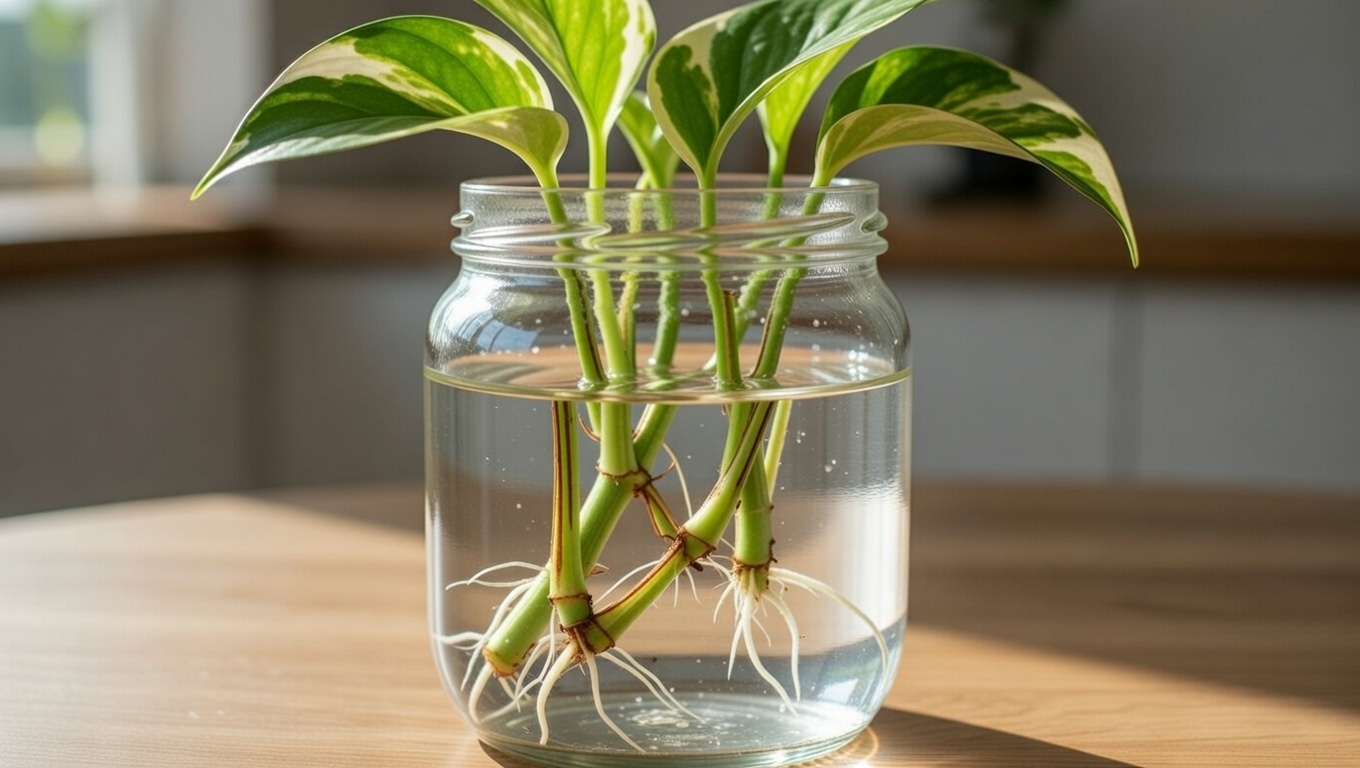
Propagation is one of the most rewarding parts of pothos ownership.
Step-by-Step Stem Cutting Method
- Choose a healthy vine.
- Cut below a node (where leaf meets stem).
- Ensure each cutting has at least one node.
- Remove lower leaf if necessary.
Water vs Soil Propagation
Water propagation:
- Easier to monitor root growth
- Transfer once roots are 1–2 inches long
Soil propagation:
- Stronger root system long-term
- Requires consistent moisture
Roots typically form within 2–4 weeks under bright indirect light.
Common Propagation Mistakes
- Cutting without a node
- Using dull tools
- Placing in low light
- Letting cuttings rot in stagnant water
Common N Joy Pothos Problems (Complete Troubleshooting Guide)
Yellow Leaves
Most common causes:
- Overwatering
- Poor drainage
- Low light
Solution:
- Check roots
- Improve soil aeration
- Increase light exposure
Brown Spots or Crispy Edges
Likely causes:
- Low humidity
- Fertilizer burn
- Sun scorch
Adjust environment accordingly.
Losing Variegation
This happens when the plant isn’t receiving enough light.
Solution:
- Move to brighter indirect light
- Prune fully green leaves to encourage variegated growth
Leggy or Sparse Growth
Usually caused by:
- Insufficient light
- Lack of pruning
Prune regularly to encourage branching.
Pest Issues
Although N Joy pothos is relatively hardy, indoor conditions can sometimes invite pests — especially if the plant is stressed.
Common Pests
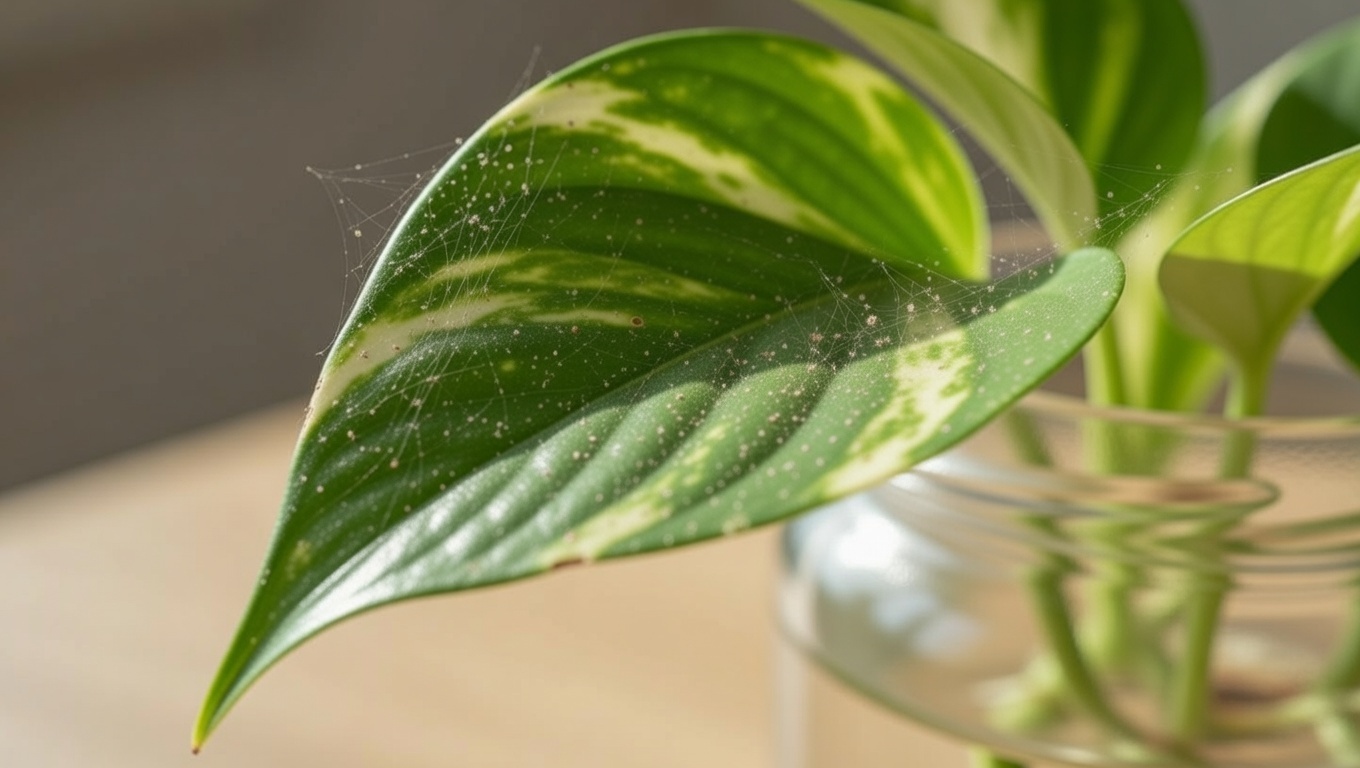
Spider Mites
-
Fine webbing on leaves
-
Tiny speckles or faded patches
-
Thrives in dry air
Mealybugs
-
White cotton-like clusters at leaf joints
-
Sticky residue on leaves
Fungus Gnats
-
Small flying insects around soil
-
Larvae feed on roots in overly moist soil
How to Treat Pest Problems Safely
-
Isolate the plant immediately
-
Rinse leaves under lukewarm water
-
Apply insecticidal soap or neem oil every 7–10 days
-
Improve airflow and humidity balance
Prevention tip: Wipe leaves monthly to remove dust and monitor undersides for early signs.
How to Prune and Shape N Joy Pothos
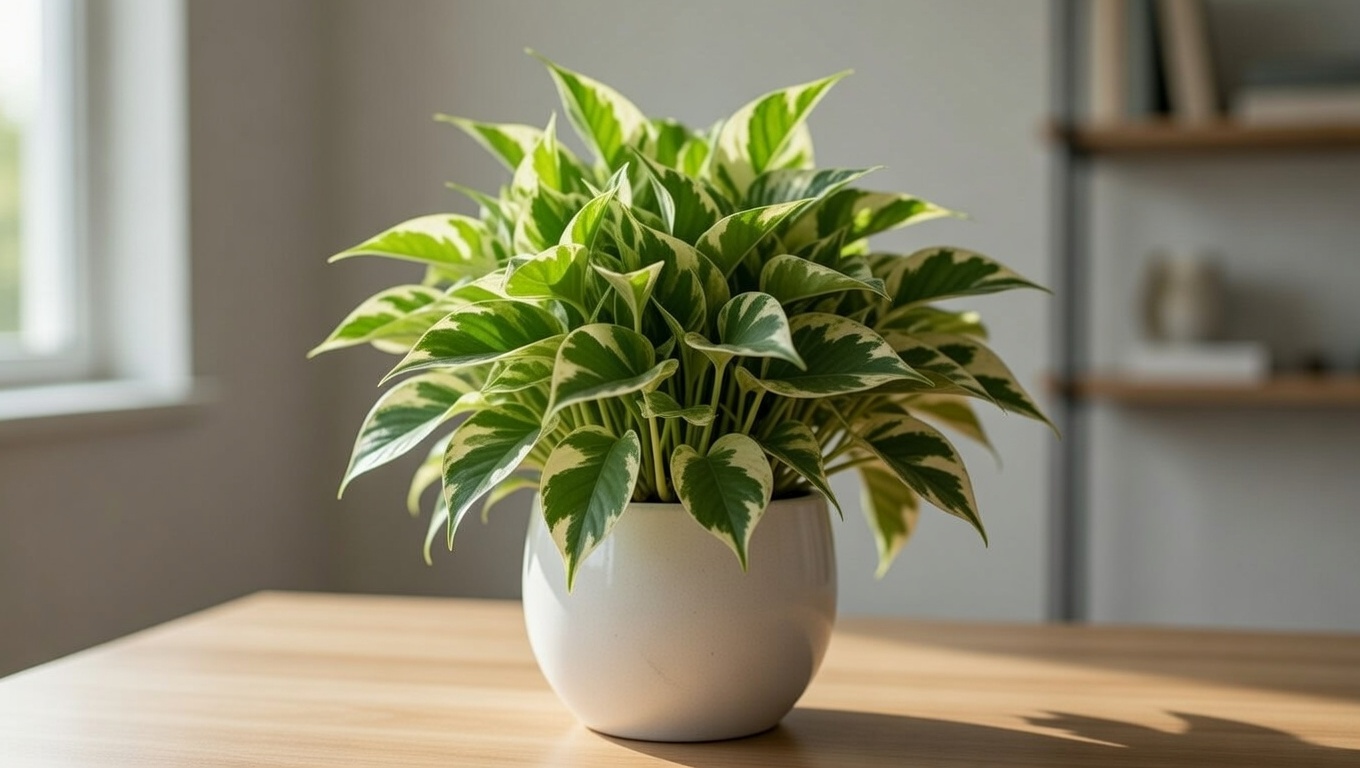
Pruning isn’t just cosmetic — it improves health and encourages fuller growth.
When to Prune
Best time:
-
Spring or early summer (active growth period)
Avoid heavy pruning in winter when growth slows.
How to Encourage Fuller Growth
If your N Joy pothos looks thin:
-
Cut long vines just above a node.
-
New growth will branch from that node.
-
Propagate the cuttings and replant them into the same pot for a bushier look.
Rotating the plant every few weeks also promotes even growth.
Repotting N Joy Pothos (When & How)
N Joy pothos does not require frequent repotting, but being root-bound can limit growth.
Signs It’s Time to Repot
-
Roots growing through drainage holes
-
Water running straight through pot
-
Stunted growth despite good care
-
Roots circling inside the pot
Step-by-Step Repotting Process
-
Choose a pot 1–2 inches larger in diameter.
-
Prepare fresh, well-draining soil mix.
-
Gently loosen root ball.
-
Trim damaged roots if necessary.
-
Repot at same soil depth as before.
-
Water lightly and place in bright indirect light.
Avoid dramatically increasing pot size — excess soil retains too much moisture.
Is N Joy Pothos Toxic to Pets?
Yes.
Like other Epipremnum aureum varieties, N Joy pothos contains calcium oxalate crystals.
If ingested by cats or dogs, it may cause:
-
Mouth irritation
-
Drooling
-
Vomiting
-
Swelling
Always keep out of reach of pets and children. If ingestion occurs, contact a veterinarian immediately.
Styling & Display Ideas for N Joy Pothos Indoors
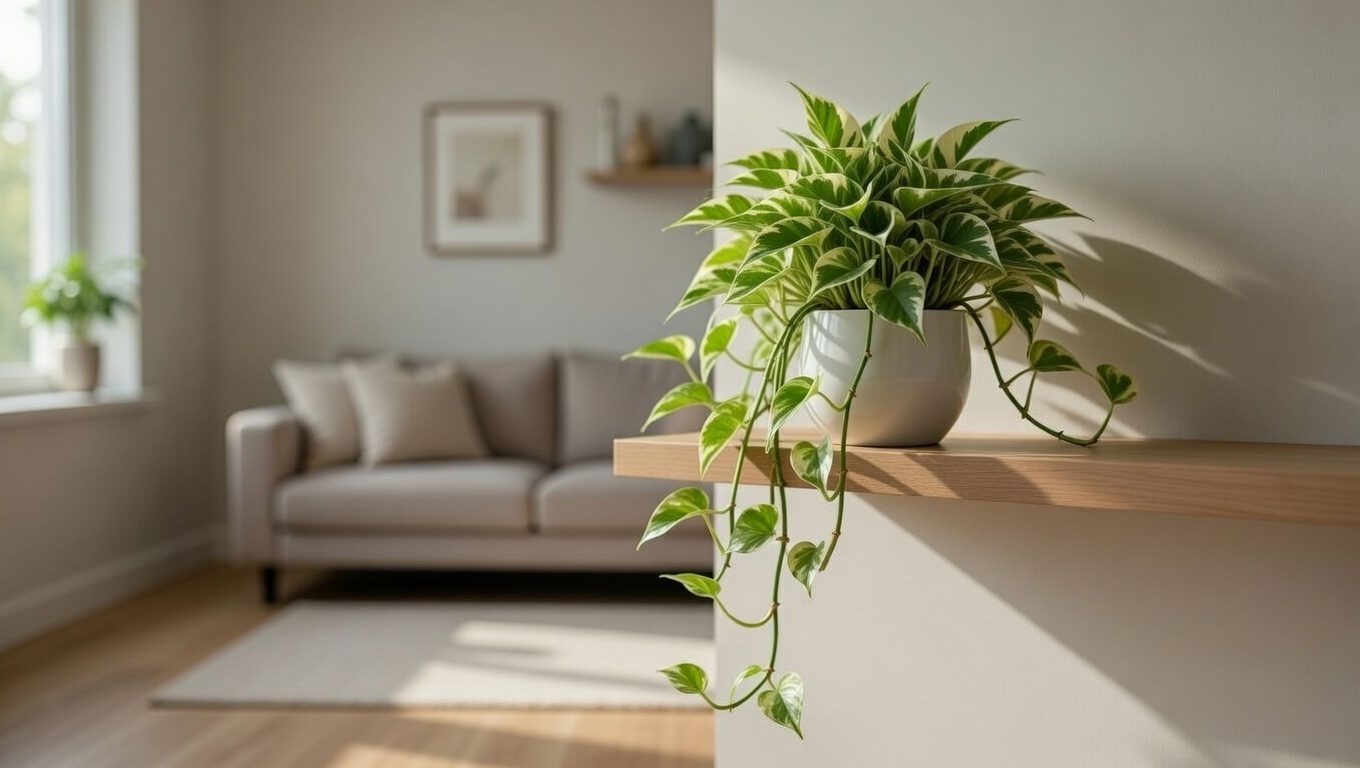
One of the reasons this plant is so popular is its versatility in home décor.
Hanging Basket Displays
Allow vines to cascade naturally. Perfect for:
-
Bright corners
-
Above bookshelves
-
Near east-facing windows
Shelf Cascading Design
Place on floating shelves for a clean, modern aesthetic. Rotate occasionally for even growth.
Desktop & Small Space Styling
Because N Joy pothos has smaller leaves and a compact habit, it works well:
-
On desks
-
In home offices
-
In apartments with limited space
Pairing with Other Indoor Plants
Complement with:
-
Snake plants
-
ZZ plants
-
Philodendrons
-
Calatheas (for contrast in leaf shape)
Variegation adds brightness to darker foliage groupings.
Expert Care Tips for Long-Term Success
After growing multiple variegated pothos varieties indoors, here are practical insights that make a difference:
1. Rotate Regularly
Prevents uneven growth toward light.
2. Clean Leaves Monthly
Dust blocks light absorption.
3. Monitor Variegation
Sudden increase in green leaves often signals insufficient light.
4. Adjust Care Seasonally
Plants need less water and fertilizer in winter.
5. Be Patient with Growth
N Joy pothos grows slower than Golden Pothos — this is normal.
Frequently Asked Questions About N Joy Pothos
How fast does N Joy pothos grow?
Moderate to slow. Under ideal bright light conditions, expect steady but compact growth during spring and summer.
Why is my N Joy pothos reverting to green?
Insufficient light. Move it closer to a bright indirect source and prune fully green leaves.
Can N Joy pothos grow in water permanently?
Yes, but growth may slow over time. If grown hydroponically:
-
Change water weekly
-
Add diluted liquid fertilizer monthly
How do I make my plant bushier?
-
Prune vines regularly
-
Replant propagated cuttings into same pot
-
Provide bright indirect light
Does N Joy pothos climb or trail?
Both. Provide a moss pole for climbing, or allow it to trail naturally.
Climbing often produces slightly larger leaves.
Can it survive in an office with fluorescent lighting?
Possibly, if lighting is bright and consistent for 10+ hours daily. Supplement with a grow light if variegation fades.
Quick Care Summary (Beginner-Friendly Reference)
| Care Factor | Recommendation |
|---|---|
| Light | Bright, indirect light |
| Water | Allow top 1–2 inches to dry |
| Soil | Well-draining, airy mix |
| Humidity | 40–60% (higher preferred) |
| Temperature | 65–85°F (18–29°C) |
| Fertilizer | Every 4–6 weeks (growing season) |
| Growth Rate | Moderate to slow |
| Toxicity | Toxic to pets |
Final Thoughts: Growing a Thriving N Joy Pothos
N Joy pothos may look delicate, but when given the right balance of light, water, and soil, it’s a remarkably resilient and rewarding houseplant.
If you remember only three things:
-
Bright indirect light is essential.
-
Avoid overwatering at all costs.
-
Use well-draining soil.
Master those, and your plant will reward you with stunning, high-contrast variegation and steady growth.
Indoor plants aren’t about perfection — they’re about observation and adjustment. Pay attention to what your N Joy pothos is telling you, and you’ll develop the confidence of an experienced plant parent.