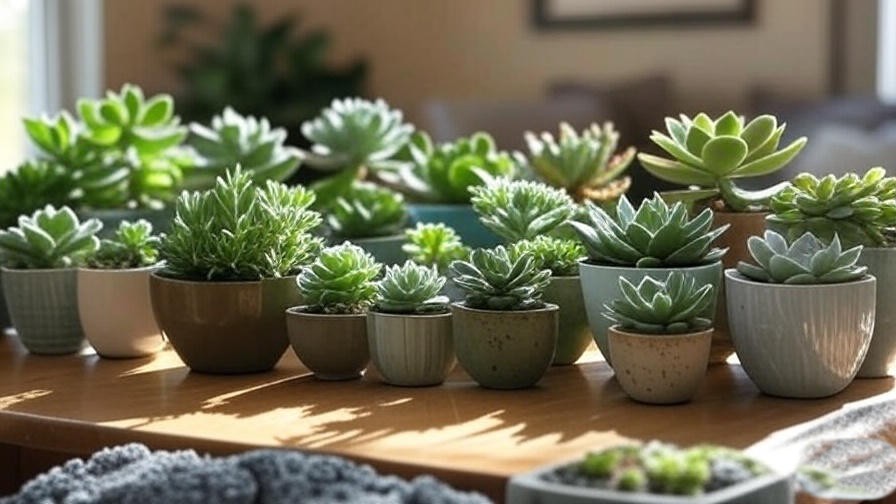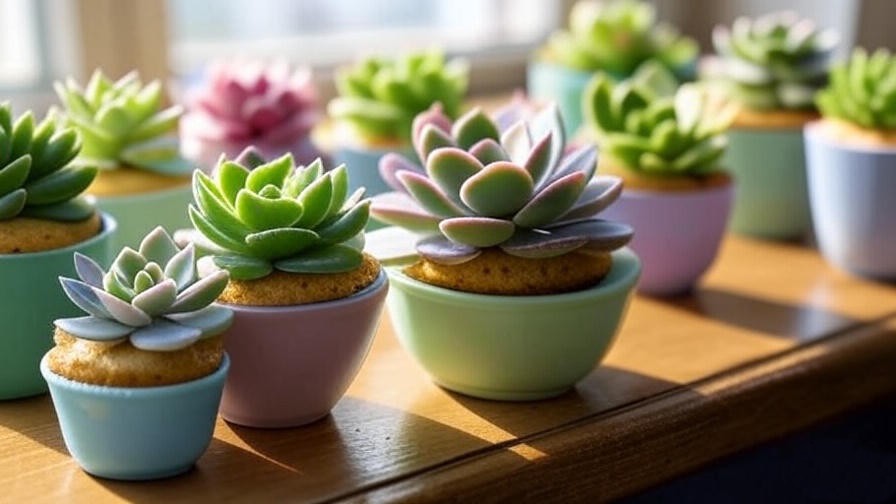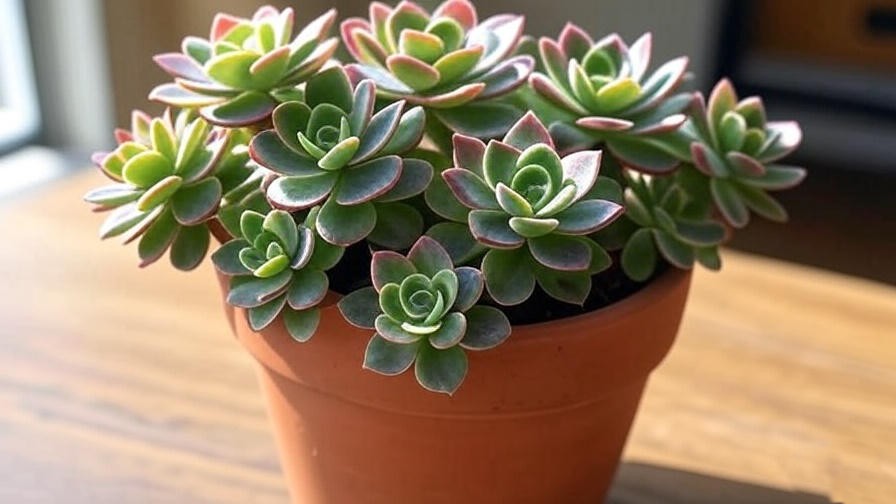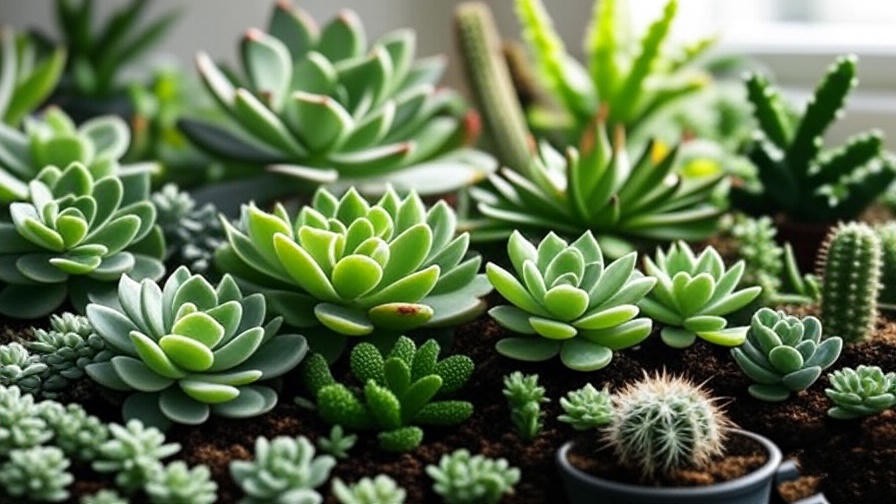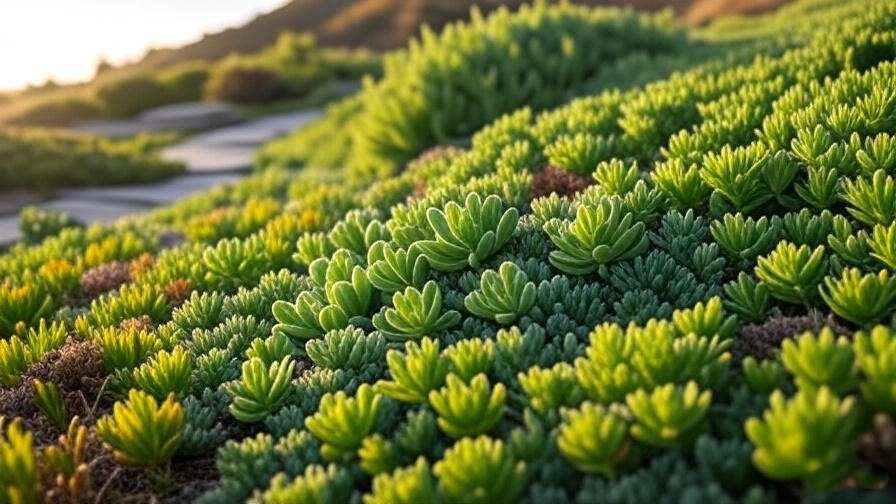
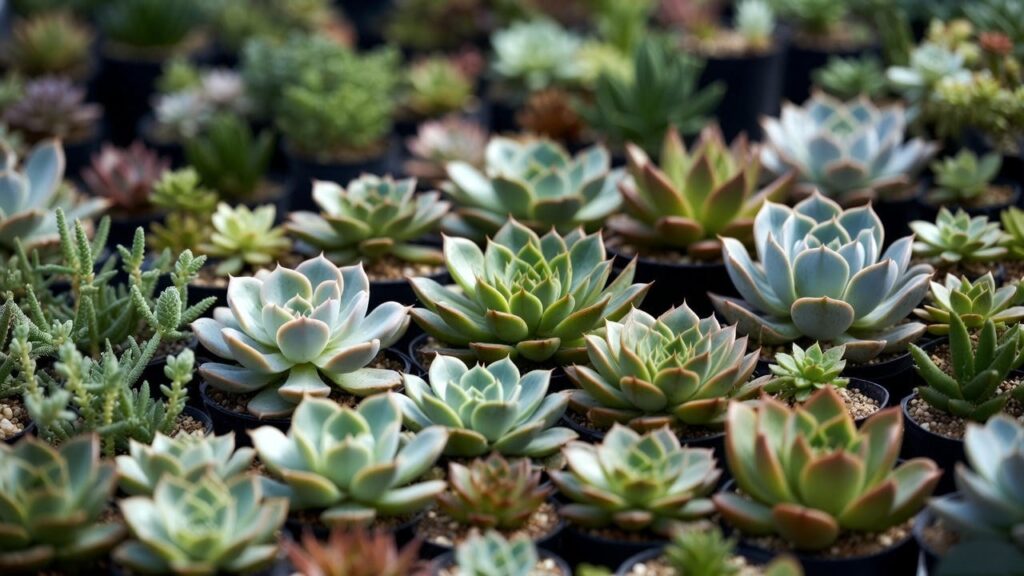
There’s something irresistibly calming about a home filled with living greenery. As modern lifestyles become busier and living spaces smaller, succulent plants arrangements have emerged as one of the most stylish and practical ways to bring nature indoors. With their sculptural forms, rich colors, and minimal maintenance needs, succulents offer the perfect balance of beauty and simplicity — a rare blend that fits seamlessly into contemporary interiors.
Whether you live in a sunlit loft or a compact apartment, these versatile plants can transform any indoor space into a serene, natural sanctuary. In this guide, you’ll discover expert-approved insights on choosing, arranging, and caring for succulent plants — along with creative design ideas that can instantly elevate your home décor naturally.
Why Succulent Plants Arrangements Are Perfect for Indoor Spaces
Low Maintenance, High Impact
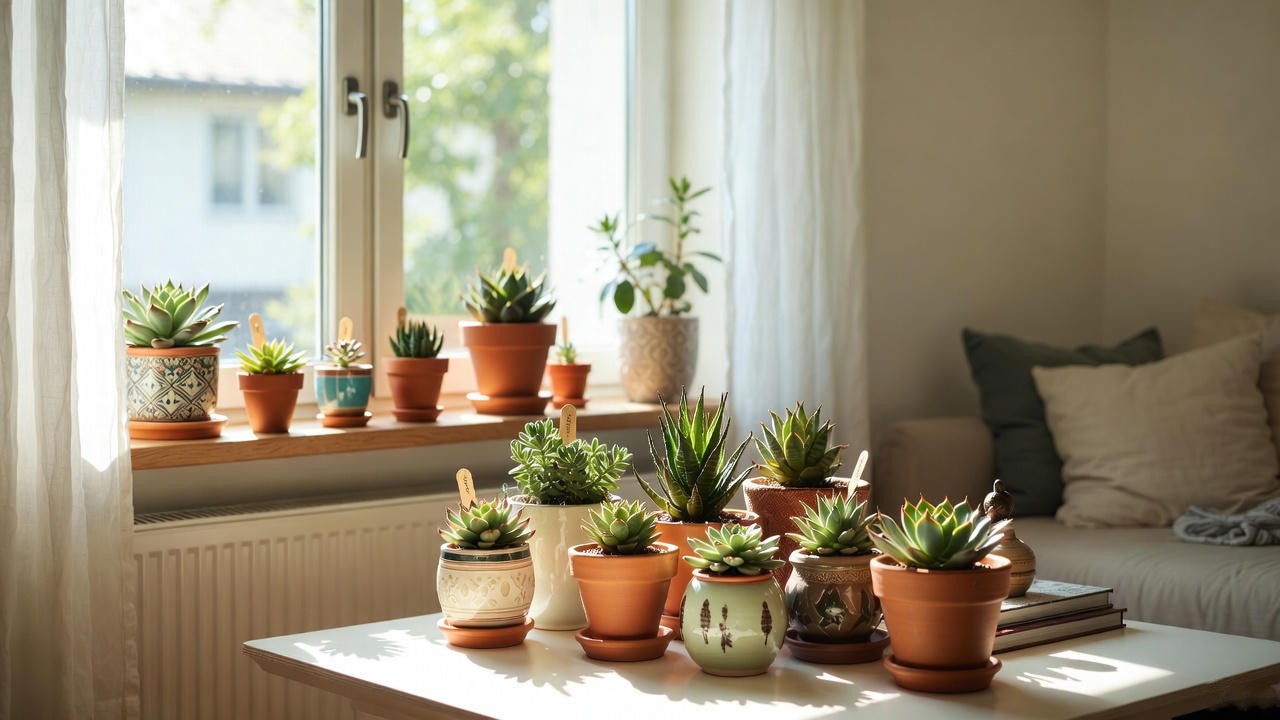
Succulents are the champions of low-effort greenery. Unlike many houseplants that require daily attention, succulents thrive on neglect. Their thick, fleshy leaves are designed to store water, allowing them to flourish even when you forget to water them for weeks. This makes them ideal for busy professionals, frequent travelers, or anyone new to indoor gardening.
Yet despite their resilience, succulents are anything but plain. Their geometric shapes, intricate leaf patterns, and vibrant hues — ranging from jade green to dusty rose — make them living works of art that elevate any room effortlessly.
Ideal for Small or Modern Spaces
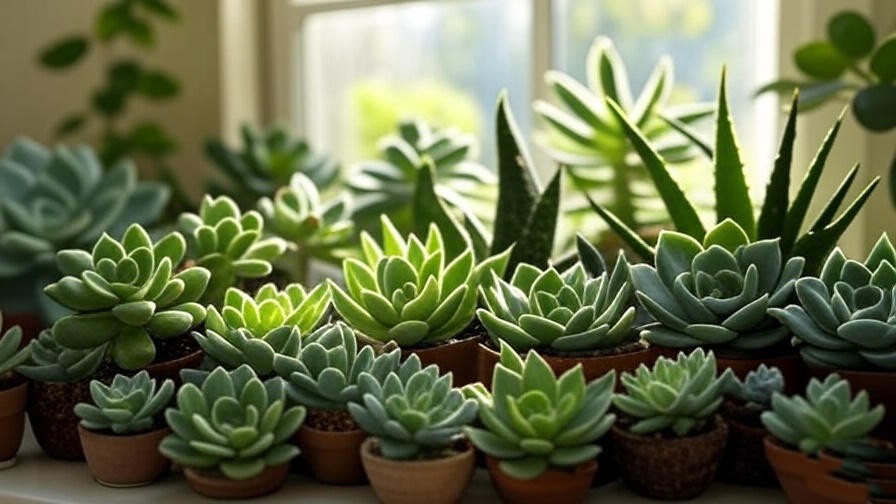
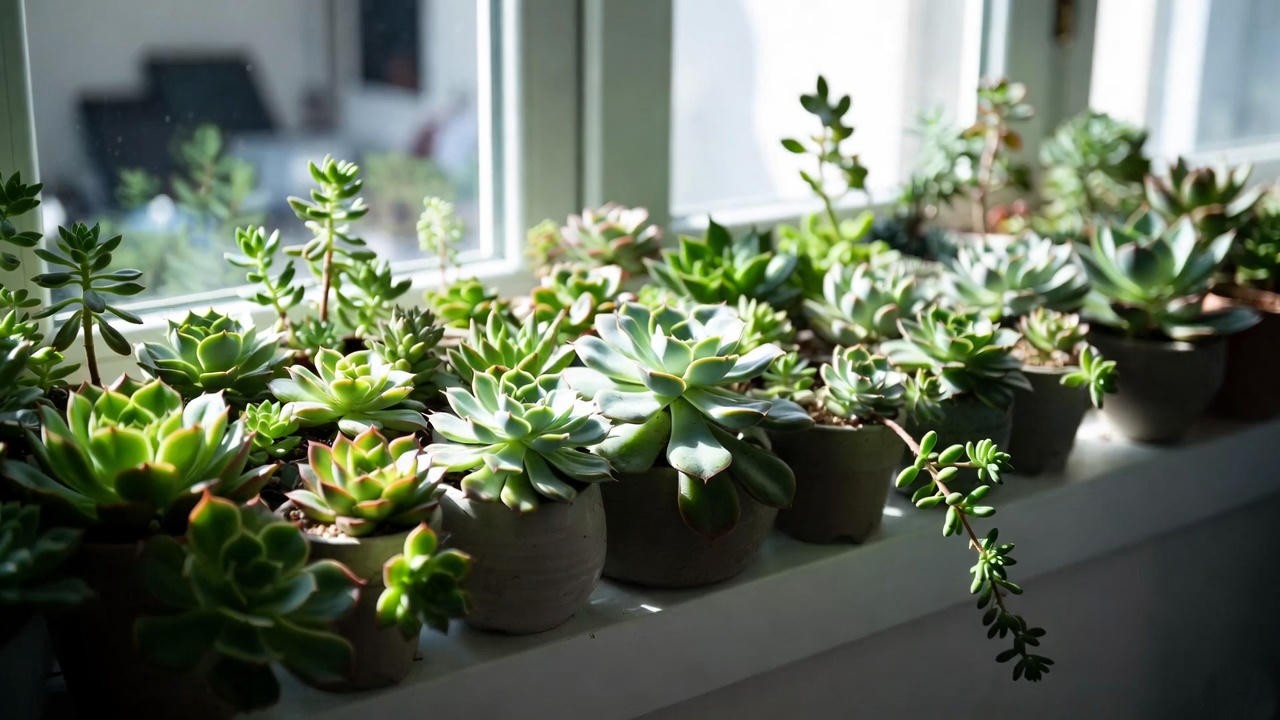
As urban living becomes more compact, succulent arrangements have found their place on windowsills, office desks, and dining tables. They’re lightweight, compact, and endlessly customizable, fitting perfectly into any interior style — from Scandinavian minimalism to bohemian chic.
Long-Lasting Décor That Grows With You
A well-cared-for succulent arrangement can last for years, even decades. Unlike cut flowers or high-maintenance houseplants, succulents continue to evolve, grow, and multiply. Over time, your arrangement develops a unique character — a miniature ecosystem that reflects your care and creativity.
Scientific Backing: A Healthier, Calmer Home
According to NASA’s Clean Air Study, indoor plants — including many succulents — can help remove toxins like formaldehyde and benzene from the air. They also increase humidity and oxygen levels, promoting better concentration and reduced stress. The result? A healthier, calmer living environment — both aesthetically and physically.
Understanding Succulent Varieties for Stunning Arrangements
Top Succulent Types for Indoor Arrangements
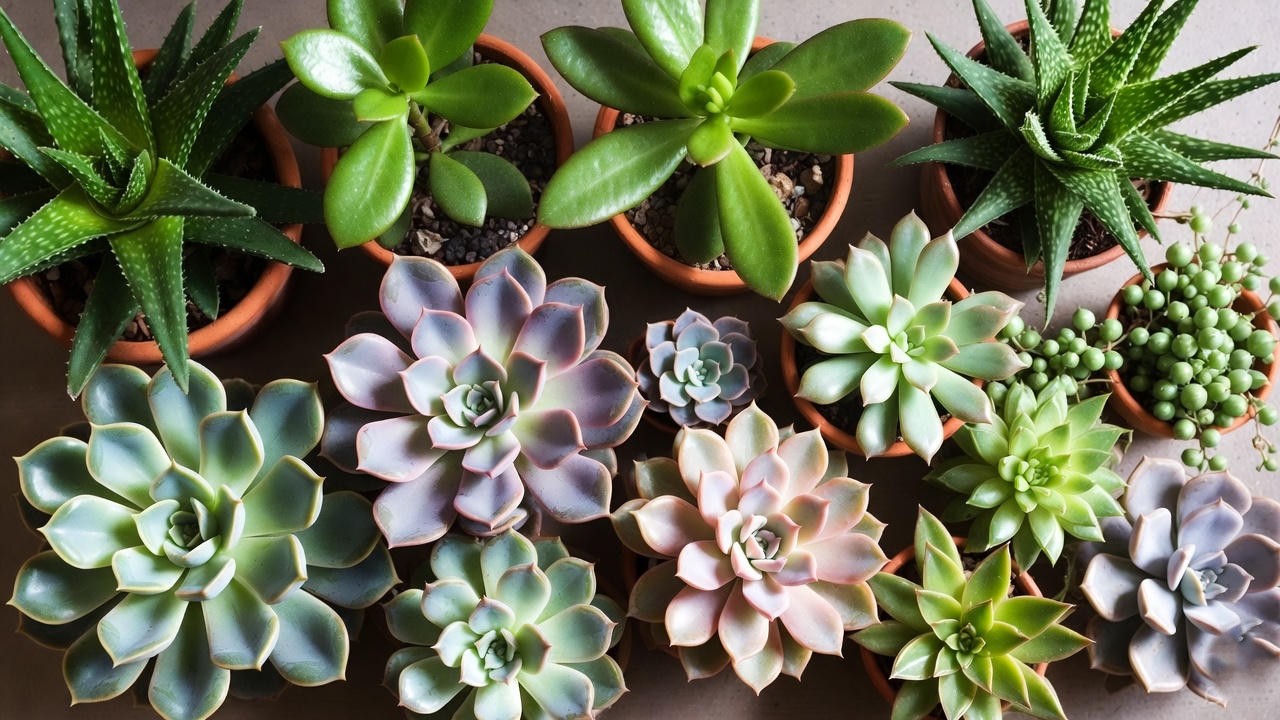
A truly beautiful arrangement begins with choosing the right mix of plants. Some of the most popular succulents for indoor designs include:
-
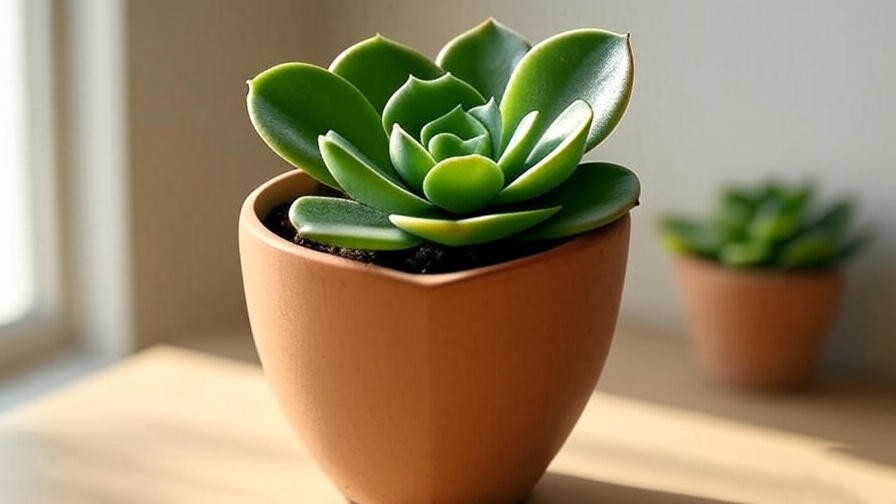
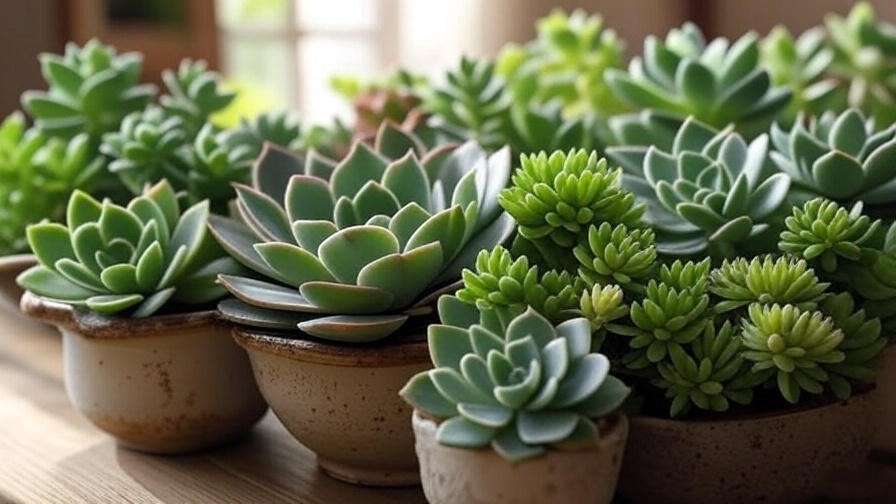
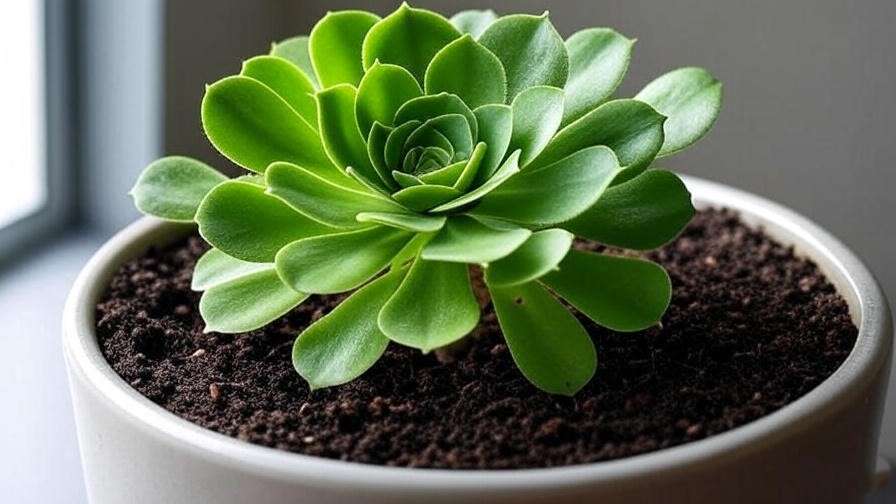
Echeveria: Rosette-shaped succulents with pastel hues — perfect for centerpiece arrangements.
-
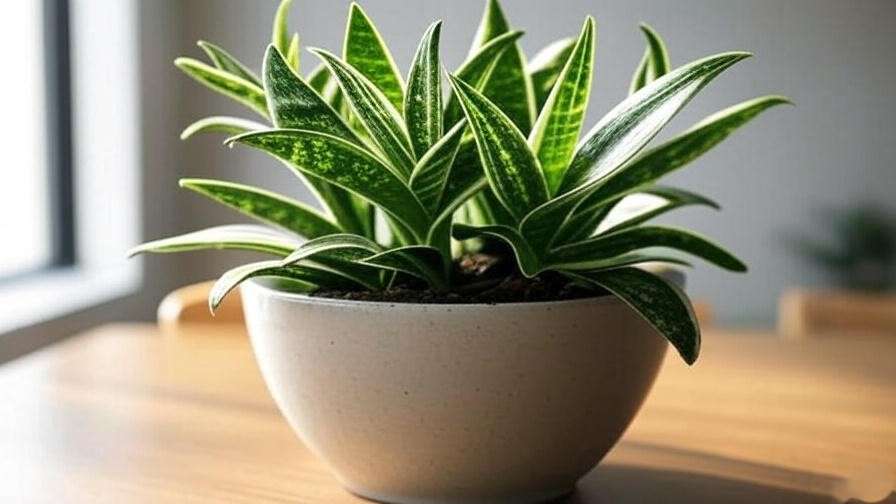
Haworthia: Compact, zebra-striped plants ideal for terrariums and minimalist settings.
-
Jade Plant (Crassula ovata): A symbol of prosperity and longevity; pairs beautifully with stone or ceramic containers.
-
Aloe Vera: Offers medicinal benefits and dramatic vertical growth for balance.
-
Zebra Plant (Haworthiopsis fasciata): Adds strong texture contrast with its white-striped leaves.
-
String of Pearls (Senecio rowleyanus): A trailing succulent that softens edges and adds visual movement.
Choosing Plants by Color, Texture, and Growth Pattern
Great arrangements are like interior design — they rely on balance and contrast. Combine rosette succulents (like Echeveria) with upright varieties (like Aloe) and trailing species (like String of Pearls) for dynamic layering.
You can also play with color temperature — cool greens and silvers evoke calm, while deep purples or reds create drama. The goal is to mimic nature’s asymmetry while maintaining visual harmony.
Expert Tip: Match Plants to Your Indoor Environment
Before buying, assess your lighting conditions. South-facing windows are ideal, while low-light rooms might require hardy species like Gasteria or Sansevieria (Snake Plant). Matching plants to their natural habitat ensures your arrangement thrives long-term.
Planning Your Succulent Arrangement Design
Finding Your Style
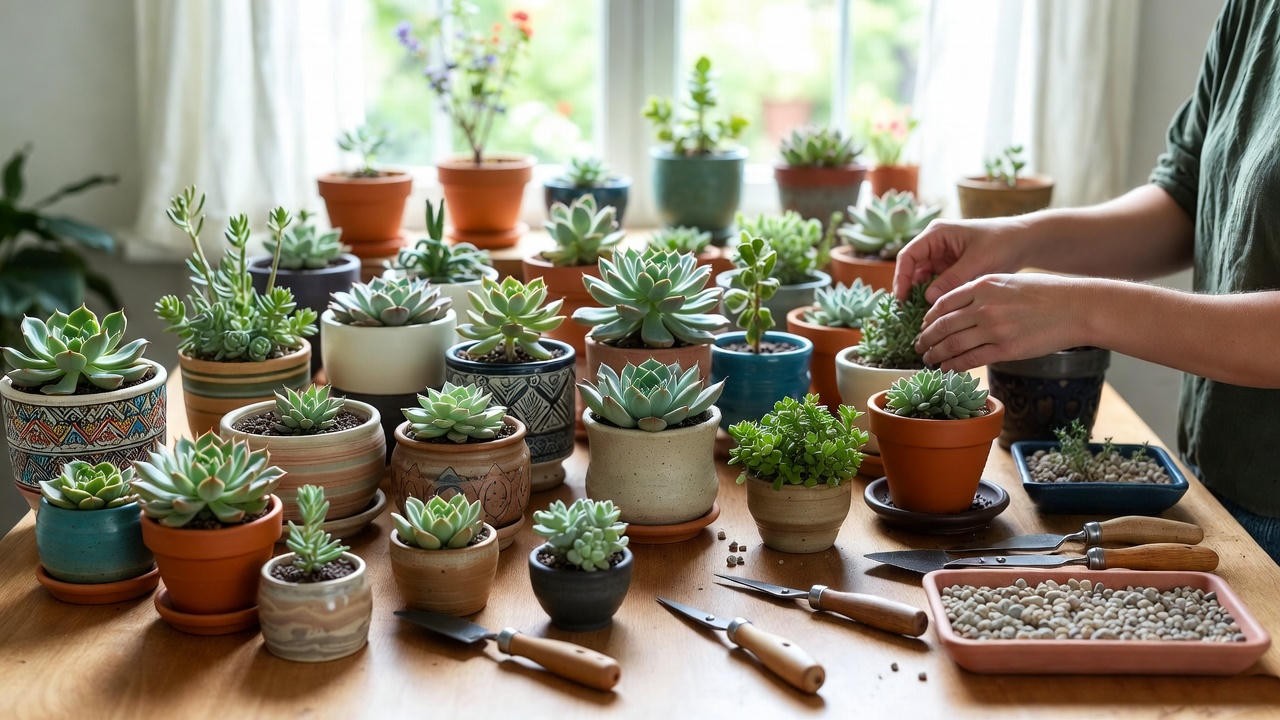
Succulent plants arrangements come in endless styles. Consider these design directions:
-
Modern Minimalist: Sleek monochrome pots, geometric layouts, clean lines.
-
Rustic Chic: Wooden or terracotta planters, mixed textures, earthy tones.
-
Bohemian: Layered arrangements with hanging elements and colorful containers.
-
Zen Garden: Sand or gravel bases, symmetry, and calming green tones.
Your arrangement should complement your home’s existing décor while introducing a fresh, organic touch.
Selecting the Right Containers
The container sets the tone for your entire arrangement.
-
Ceramic pots add sophistication and retain moisture well.
-
Glass terrariums are great for tabletops or offices.
-
Driftwood or stone planters create a natural, earthy vibe.
-
Hanging planters add vertical depth and save space.
Always prioritize drainage — a non-negotiable factor for succulent health. If your pot lacks holes, add a layer of pebbles or charcoal at the base.
Color Coordination and Texture Balance
When designing arrangements, think like an artist. Combine smooth, rounded succulents (like Echeveria) with spiky textures (like Aloe) and trailing varieties for depth. Add visual rhythm through repeating colors or leaf patterns, and use contrasting hues to highlight focal points.
Pro Tip: Use the “Thriller, Filler, Spiller” Technique
-
Thriller: A tall or bold succulent as the visual anchor (e.g., Aloe).
-
Filler: Medium-sized succulents to create body and volume (e.g., Jade Plant).
-
Spiller: Trailing plants that cascade gracefully over the edges (e.g., String of Pearls).
This simple composition method creates professional-looking arrangements every time.
Step-by-Step: How to Create Succulent Plants Arrangements at Home
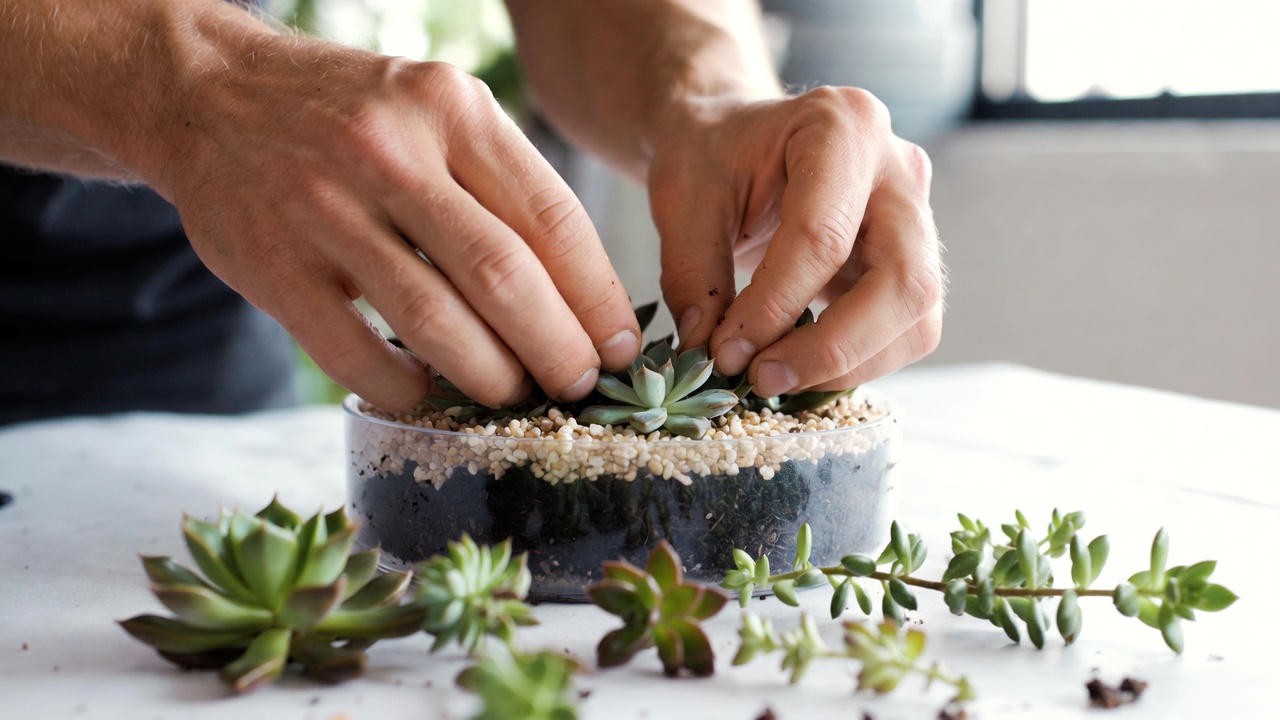
Step 1 – Gather Materials and Tools
Before you begin, assemble everything you’ll need:
-
A container or planter with drainage
-
Succulents of varying sizes and shapes
-
Cactus or succulent potting mix
-
Decorative pebbles or gravel
-
Gardening gloves
-
Small trowel or spoon
-
Activated charcoal (for terrariums)
Step 2 – Prepare the Base Layer for Drainage
Start with a base layer of small stones or gravel to facilitate water flow. Add a thin layer of activated charcoal if you’re using a closed container — this prevents odor and mold buildup.
Step 3 – Fill with Potting Mix
Add high-quality succulent or cactus soil, formulated for fast drainage. Avoid standard garden soil, which retains too much moisture.
Step 4 – Arrange Succulents Artistically
Begin with your thriller plant in the center or back (depending on container shape). Add fillers around it and finish with trailing spillers near the edges. Rotate the pot as you work to ensure symmetry and visual balance from all angles.
Step 5 – Add Decorative Elements
Enhance your arrangement with natural accents — pebbles, moss, seashells, or miniature figurines. These elements not only improve aesthetics but also help retain soil moisture.
Step 6 – Water and Place Strategically
After planting, water lightly and allow the arrangement to settle. Place it in a bright, indirect sunlight spot — like a windowsill or coffee table with filtered light.
Caring for Your Succulent Plants Arrangements
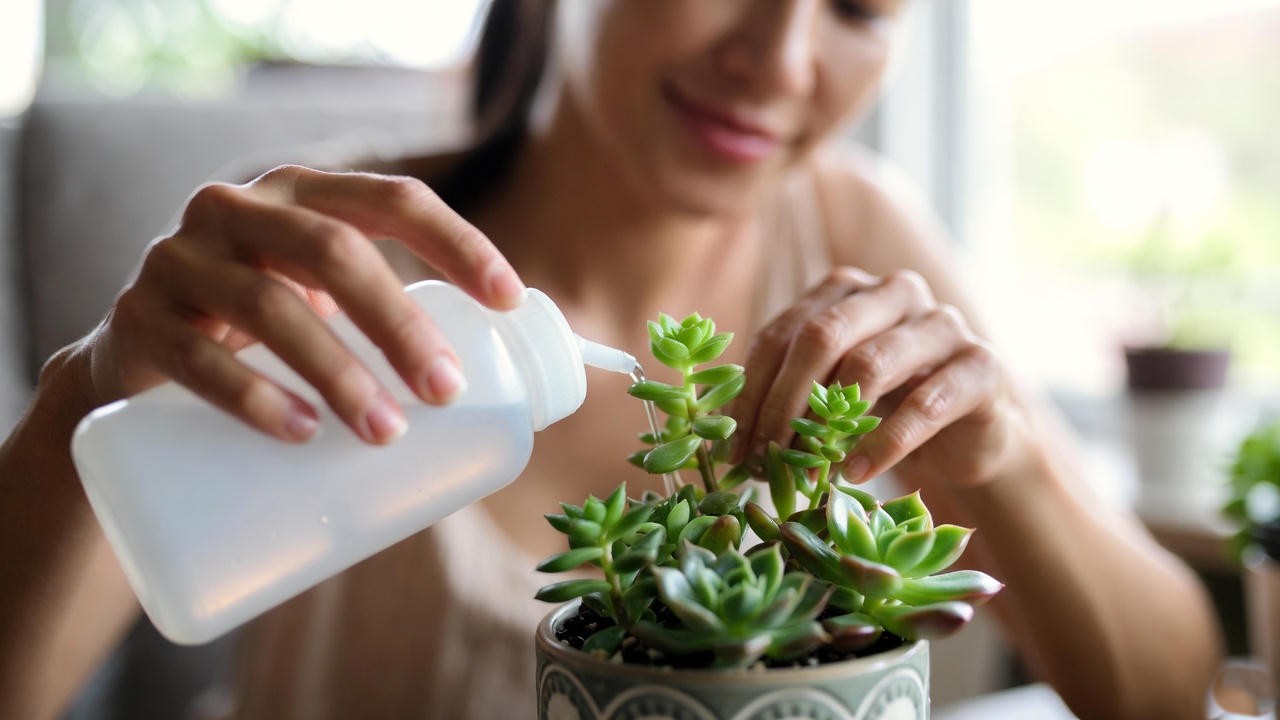
Even though succulents are known for being easygoing, a little care and knowledge go a long way toward keeping them vibrant and healthy.
The Right Watering Schedule (Less Is More)
Overwatering is the most common mistake among new plant owners. Succulents prefer the “soak and dry” method — water thoroughly, then allow the soil to dry out completely before watering again.
-
In summer, watering every 2–3 weeks is usually enough.
-
In winter, reduce frequency to once a month or less.
-
Always check the soil’s dryness by inserting your finger about an inch deep; if it feels dry, it’s time to water.
Expert Tip: Use a squeeze bottle or syringe for precision watering — this prevents water from sitting on leaves, which can cause rot.
Ideal Light and Temperature Conditions
Most succulents love bright, indirect sunlight. A south- or east-facing window is perfect. Too little light leads to stretched, leggy growth; too much direct sun can cause scorching.
-
Light exposure: 4–6 hours of indirect sunlight daily.
-
Temperature: Ideally between 60–80°F (15–27°C). Avoid cold drafts.
If your home lacks sunlight, invest in full-spectrum LED grow lights to replicate natural light conditions.
Fertilizing and Repotting
Succulents don’t need heavy feeding. Use a diluted, balanced fertilizer once during spring and once in mid-summer. Avoid fertilizing in winter, when the plants enter dormancy.
When roots outgrow the pot or soil becomes compacted, repot your arrangement into fresh, well-draining soil. This typically happens every 12–18 months.
Common Problems and How to Fix Them
-
Yellow or Mushy Leaves: Overwatering — allow soil to dry and trim damaged leaves.
-
Shriveled Leaves: Underwatering — increase frequency slightly.
-
Brown Tips or Sunburn: Too much direct light — relocate to a filtered spot.
-
Pests (e.g., mealybugs): Wipe leaves with diluted rubbing alcohol or neem oil.
Creative Ideas and Themes for Succulent Arrangements
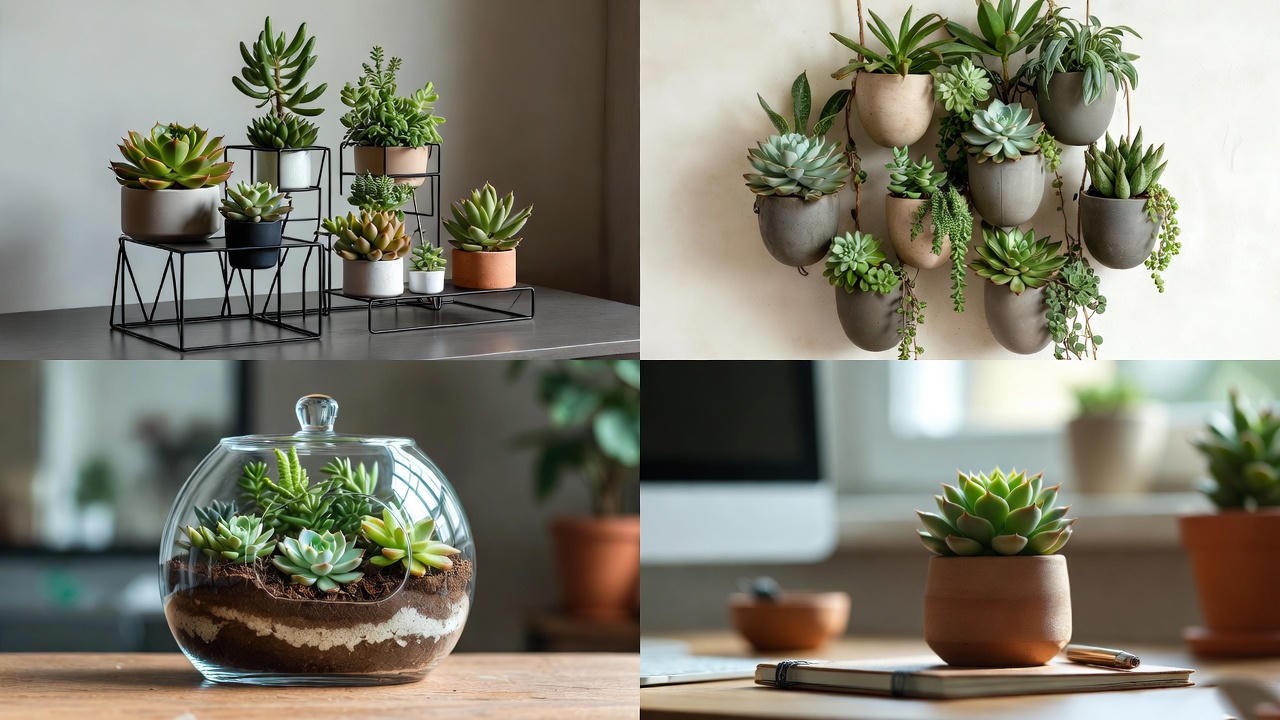
Succulent plants arrangements offer endless opportunities for creativity. Whether you’re styling your living room or adding greenery to your workspace, these ideas can spark inspiration.
Tabletop Centerpieces for Modern Living Rooms
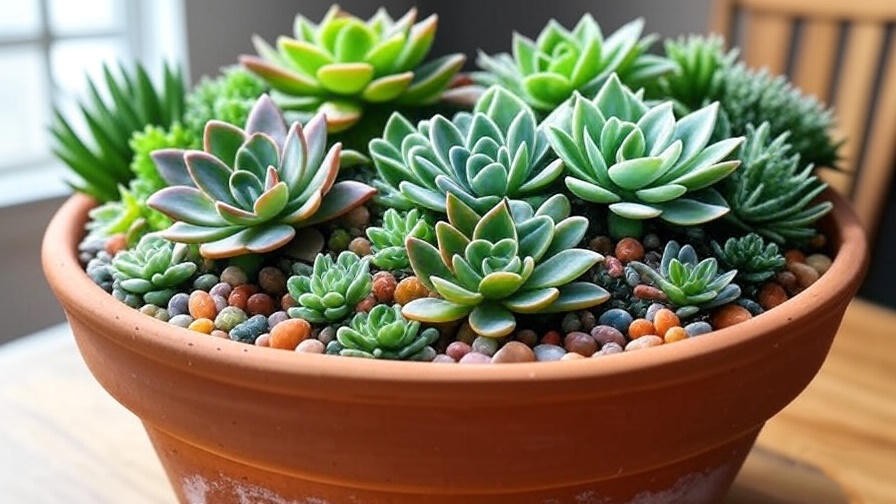
Combine low-growing Echeveria and Sempervivum in a shallow ceramic dish. Add decorative stones for a polished, minimalist aesthetic. These make perfect coffee table or dining centerpieces that stay fresh all year.
Vertical Wall Succulent Gardens
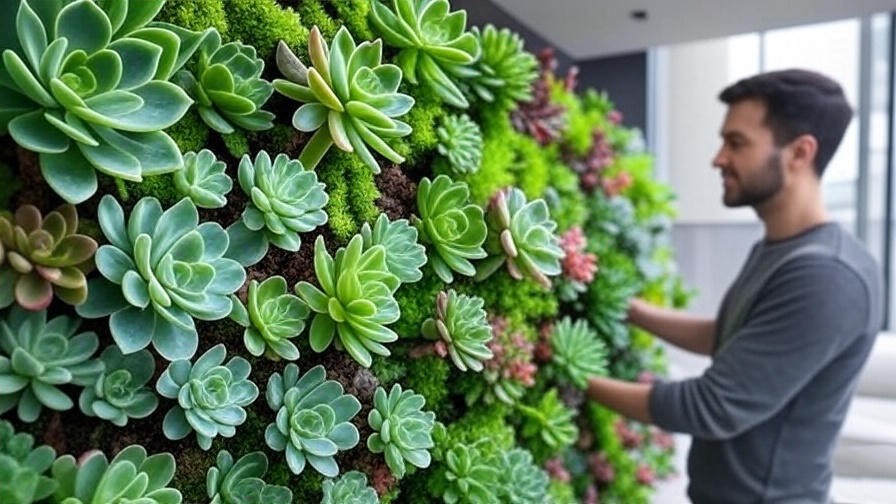
Use wall-mounted frames or shadow boxes to create living art. Combine trailing succulents like String of Pearls with colorful rosettes for texture and depth. Perfect for small apartments or accent walls.
Terrarium-Style Mini Ecosystems
Glass terrariums are both elegant and practical. Layer gravel, charcoal, and cactus soil before arranging tiny succulents like Haworthia or Graptopetalum. Add fairy lights or small crystals for a magical effect.
Festive or Seasonal Arrangements
Design holiday-inspired succulent arrangements:
-
Christmas: Combine red-tipped Echeveria with white stones and pine accents.
-
Spring: Use pastel succulents with bright ceramic pots.
-
Autumn: Add warm hues like orange Kalanchoe and gold gravel.
Office Desk Arrangements for Calm & Focus
Place a small, low-maintenance arrangement near your computer to reduce stress and boost productivity. Studies show indoor greenery improves concentration and creativity — ideal for remote workers.
Sustainable and Eco-Friendly Practices
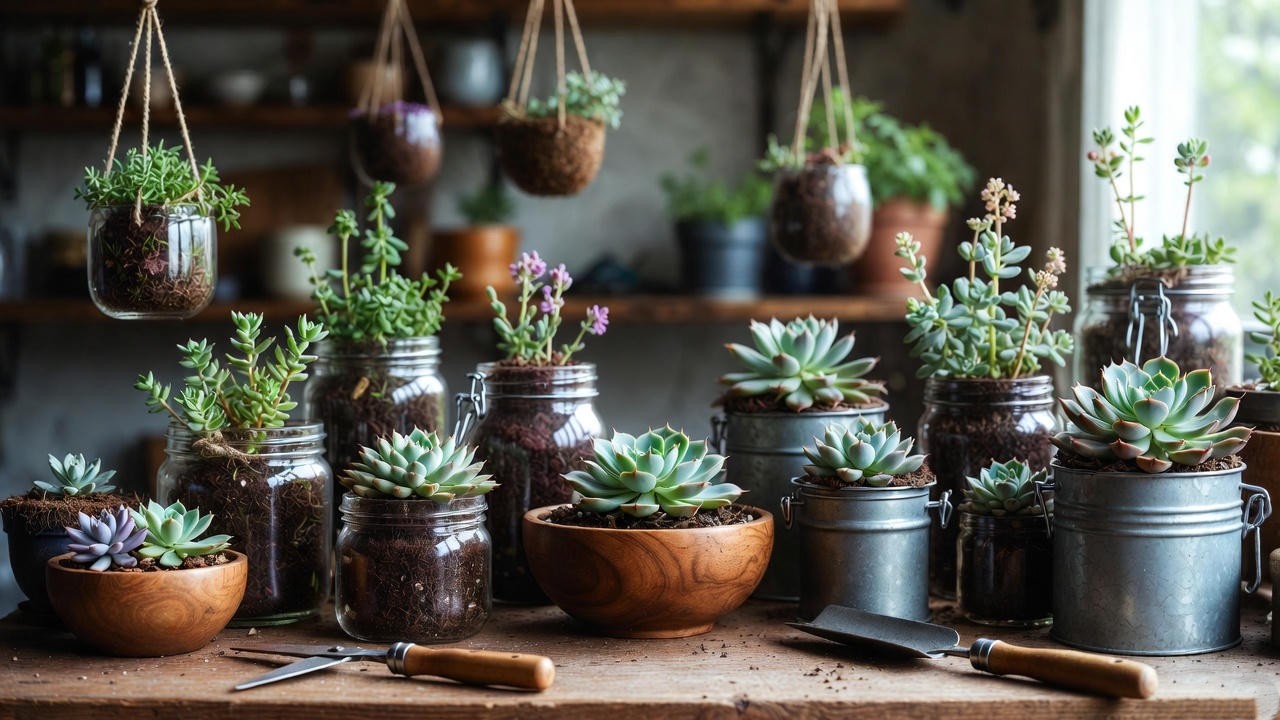
Indoor gardening can be both beautiful and environmentally responsible.
Reusing Containers and Natural Materials
Repurpose old mugs, bowls, or wooden trays as planters. Upcycling reduces waste and adds unique charm to your décor.
Eco-Conscious Potting Mixes
Avoid peat-based soils, which are non-renewable. Instead, use coconut coir, perlite, and coarse sand for sustainability and drainage.
Propagating Succulents to Reduce Waste
One of the best features of succulents is how easily they propagate. Simply snip a healthy leaf or stem, allow it to callus for a few days, and plant it in well-draining soil. Within weeks, roots and new growth appear — a zero-cost, eco-friendly way to expand your indoor garden.
Expert Tips to Make Your Arrangements Last for Years
Rotate for Balanced Growth
Succulents naturally lean toward light. Rotate your pots every two weeks to maintain even, symmetrical growth.
Seasonal Care Checklist
-
Spring: Fertilize lightly and prune dead leaves.
-
Summer: Increase ventilation and monitor watering.
-
Autumn: Reduce watering and prepare for dormancy.
-
Winter: Keep in bright, cool areas away from heaters.
Achieve “Instagram-Worthy” Perfection
-
Wipe leaves gently with a damp cloth for a fresh look.
-
Photograph in natural morning light for vibrant colors.
-
Use matching planters and consistent textures for visual cohesion.
Common Mistakes Beginners Should Avoid
Even the easiest plants can suffer from rookie errors. Avoid these pitfalls to keep your succulent plants arrangements thriving:
-
Overcrowding the Container: Leave space for airflow and root growth.
-
Using the Wrong Soil: Avoid dense potting mixes; they suffocate roots.
-
Neglecting Drainage: Always use containers with holes or a gravel base.
-
Over-Fertilizing: Excess nutrients lead to leaf burn and weak roots.
-
Ignoring Light Variations: Adjust position seasonally for consistent light.
Each mistake is easy to fix — and once corrected, your plants will reward you with stunning, long-lasting beauty.
Best Places to Buy Succulent Plants and Arrangement Supplies
Sourcing quality succulents ensures your arrangement starts strong.
Trusted Online Nurseries
-
The Sill: Offers hand-selected, healthy indoor plants with care guides.
-
Mountain Crest Gardens: Excellent variety and reliable shipping.
-
Leaf & Clay: Specializes in decorative succulents and rare hybrids.
Local Garden Centers
Shopping locally allows you to inspect plant health firsthand. Look for firm leaves, dry soil, and no visible pests. Supporting local growers also minimizes environmental impact from transport.
Eco-Friendly Options
Seek nurseries that use sustainable packaging, organic soil blends, and ethical sourcing practices.
Frequently Asked Questions (FAQs)
1. How long do succulent arrangements last indoors?
With proper care, they can last for 5–10 years or longer, continually growing and propagating.
2. How often should I water my succulent arrangements?
Typically every 2–3 weeks. Always let the soil dry completely between waterings.
3. Can I mix different succulent species in one container?
Yes — as long as they have similar light and water needs. Mixing textures and colors enhances the visual appeal.
4. What’s the best soil mix for indoor succulents?
Use a well-draining cactus mix with sand or perlite to prevent root rot.
5. How do I revive a dying succulent arrangement?
Check for root rot, adjust watering, and provide more light. Remove damaged leaves and repot if needed.
Conclusion: Bring Life and Style into Your Space with Succulent Arrangements
Succulent plants arrangements are more than just decorative pieces — they’re living art forms that blend resilience, sustainability, and design. With a touch of creativity and care, anyone can transform their indoor space into a lush, stress-free haven filled with natural beauty.
Whether you’re a first-time plant parent or an experienced green thumb, succulents reward your attention with endless variety, texture, and charm. Start small, experiment fearlessly, and let your indoor garden reflect your unique personality and style.