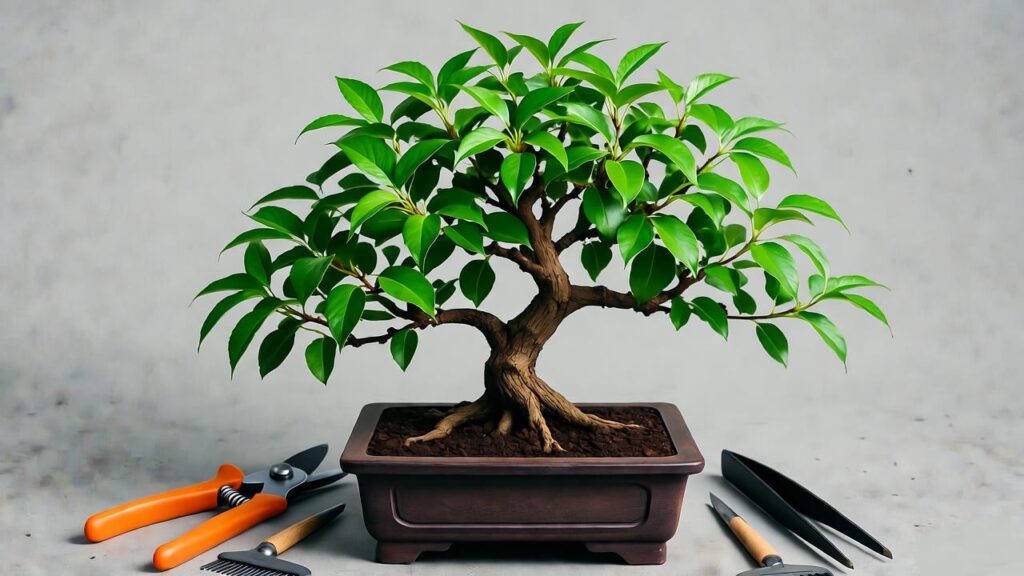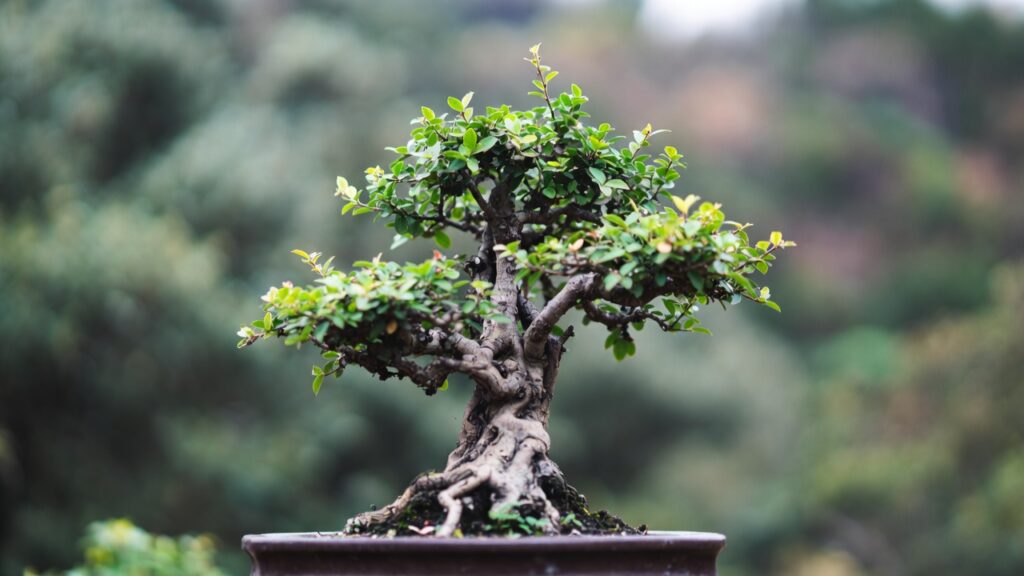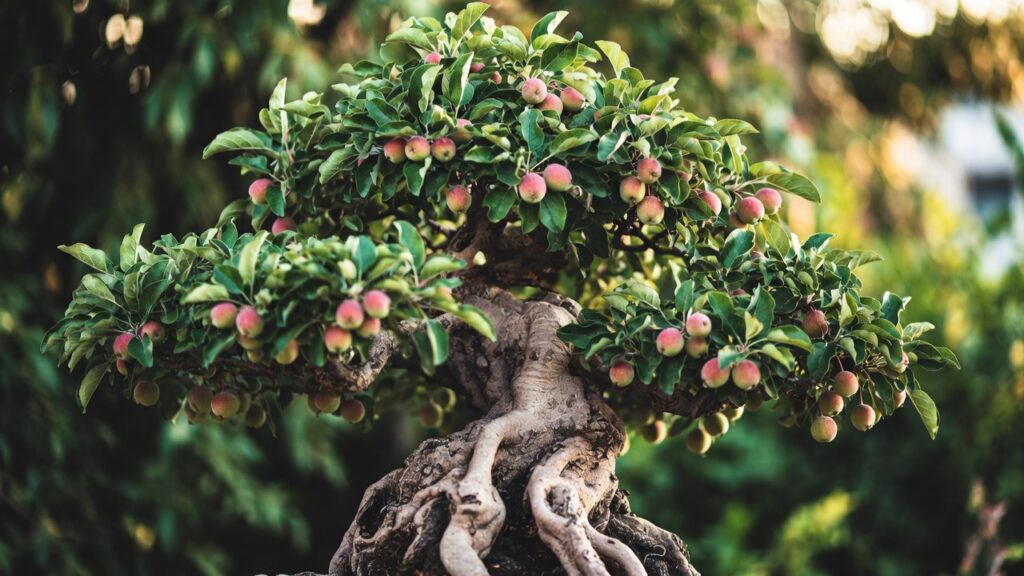

Imagine harvesting real, edible apples from a miniature tree sitting beside your living room window. It sounds impossible — but with the right care, a bonsai apple tree can become one of the most rewarding indoor plants you’ll ever grow. Unlike decorative foliage plants, this tiny tree changes with the seasons: delicate spring blossoms, glossy green summer leaves, and small, vibrant apples that look almost too perfect to be real.
However, many beginners struggle with the same questions:
Can it truly grow indoors? Why isn’t mine fruiting? How do I prune it without ruining the shape?
In this comprehensive guide, I’ll walk you through everything you need to know — from selecting the right variety and creating ideal indoor conditions to pruning techniques and fruit production strategies. This guide is built on practical indoor growing experience, horticultural best practices, and real-world troubleshooting — so you can avoid costly mistakes and grow with confidence.
What Is a Bonsai Apple Tree?
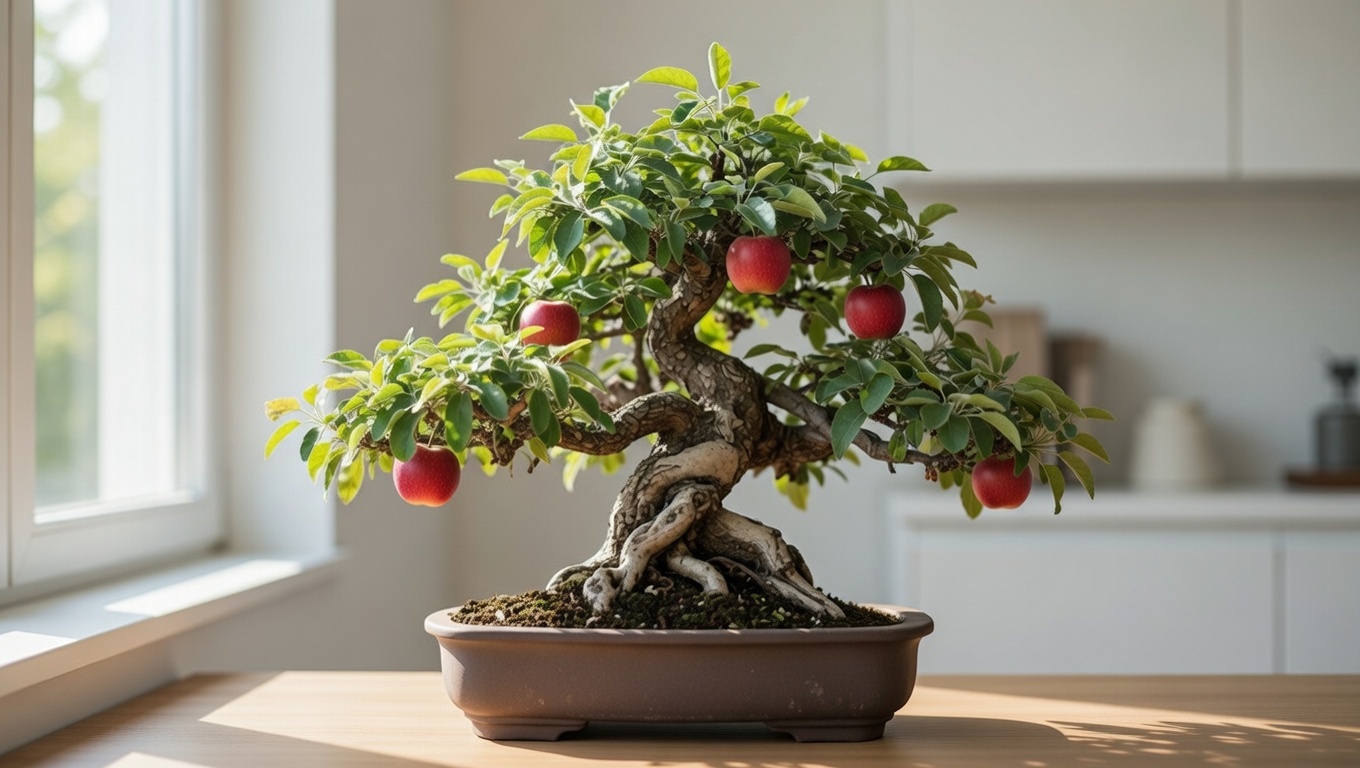
A bonsai apple tree is a miniature apple tree trained using traditional bonsai techniques such as root pruning, branch shaping, and controlled growth. Unlike genetically dwarf trees, bonsai trees are kept small through careful cultivation — not just genetics.
Bonsai vs. Dwarf Apple Trees: Understanding the Difference
Many sellers market dwarf apple trees as bonsai. While dwarf varieties are smaller due to rootstock selection, a true bonsai apple tree is:
- Grown in shallow containers
- Root-pruned regularly
- Structurally shaped for artistic form
- Maintained under strict size control
This distinction matters because care requirements differ. Bonsai trees require more active pruning and root management than standard dwarf patio trees.
Can a Bonsai Apple Tree Really Grow Indoors?
Yes — but with conditions.
Apple trees naturally require:
- Strong light exposure
- Seasonal dormancy
- Adequate airflow
Fully indoor growing year-round is challenging unless you provide supplemental grow lights and simulate winter dormancy. Many successful growers use a hybrid approach:
- Spring & summer: Bright indoor window or balcony
- Fall: Transition period
- Winter: Cool garage, enclosed porch, or refrigerator dormancy method
Understanding this seasonal rhythm is critical for long-term success.
Best Apple Varieties for Bonsai
Some apple cultivars adapt better to container life and small-scale training:
- Self-pollinating varieties (ideal for indoor growers)
- Crabapple varieties (smaller fruit, easier maintenance)
- Disease-resistant cultivars (important for indoor airflow limitations)
Choosing the right variety reduces pest pressure and increases fruit reliability.
Benefits of Growing a Bonsai Apple Tree Indoors
A bonsai apple tree offers far more than aesthetics:
1. Edible Beauty
Unlike many indoor plants, this one produces real fruit.
2. Seasonal Engagement
You’ll observe flowering, fruiting, leaf changes, and dormancy — a full horticultural cycle.
3. Educational Value
Perfect for families teaching plant biology, pollination, and patience.
4. Space-Saving Orchard
Ideal for apartments and small homes.
5. Mental Wellness
Bonsai cultivation is meditative. Pruning and shaping encourage mindfulness and patience.
How to Choose the Right Bonsai Apple Tree (Beginner Buyer’s Guide)
Selecting the right tree determines 50% of your success.
Seeds vs. Nursery-Grown Bonsai
Starting from seed:
- Takes 5–8 years to fruit
- Unpredictable genetics
- Advanced-level commitment
Buying nursery-grown bonsai (recommended for beginners):
- 2–4 years old
- Established trunk structure
- Faster fruit production
- Healthier root system
If your goal is fruit within 1–3 years, always start with a trained young tree.
What to Look for When Buying
Inspect carefully:
- Strong trunk taper (wider base, thinner top)
- Even branch distribution
- No visible pests
- Firm, green leaves
- Healthy surface roots (nebari)
Avoid trees with:
- Mushy soil
- Yellowing leaves
- Black spots or powdery residue
Ideal Age for Beginners
Trees aged 2–4 years offer the best balance between:
- Manageability
- Adaptability
- Faster fruiting potential
Ideal Growing Conditions for an Indoor Bonsai Apple Tree
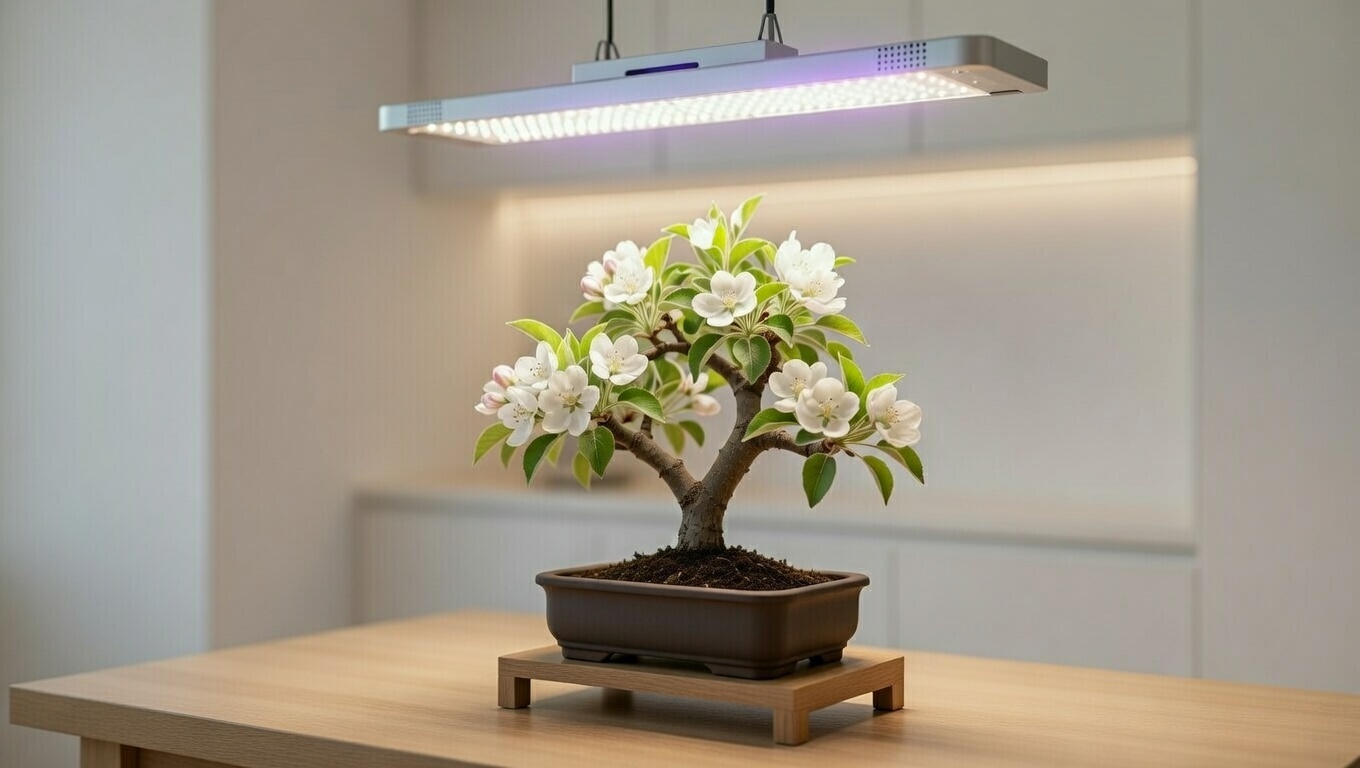
This is where most indoor growers fail — not because bonsai apple trees are difficult, but because apples are sun-loving fruit trees.
Light Requirements (Most Common Failure Point)
Your bonsai apple tree needs:
- 6–8 hours of direct sunlight daily
- South-facing window (ideal)
- Supplemental full-spectrum LED grow light if natural light is insufficient
Signs of insufficient light:
- Leggy growth
- Small leaves
- No flowering
- Weak branch development
If you cannot provide strong light, fruit production will suffer.
Temperature & Seasonal Dormancy
Apple trees require winter dormancy to reset their fruiting cycle.
Optimal ranges:
- Growing season: 60–75°F (15–24°C)
- Dormancy: 35–45°F (1–7°C)
Without dormancy, your tree may:
- Stop flowering
- Grow weakly
- Become stressed over time
Indoor growers often simulate dormancy in:
- Unheated garages
- Basements
- Refrigerators (advanced method)
Humidity Needs
Average home humidity (30–50%) is usually adequate.
However:
- Avoid placing near heating vents
- Use a pebble tray if air is extremely dry
- Ensure airflow to prevent fungal issues
Best Soil Mix for Healthy Roots
Never use regular potting soil.
Use a well-draining bonsai mix:
- Akadama (water retention)
- Pumice (aeration)
- Lava rock (drainage)
Proper drainage prevents root rot — the number one killer of indoor bonsai.
How to Water a Bonsai Apple Tree Correctly
Watering mistakes cause more damage than pruning errors.
How Often Should You Water?
There is no fixed schedule.
Instead:
- Check soil daily
- Water when the top inch feels slightly dry
- Water thoroughly until it drains from the bottom
In summer, you may water daily.
In winter dormancy, watering drastically reduces.
Signs of Overwatering
- Yellow leaves
- Mushy soil
- Foul smell
- Blackened roots
Signs of Underwatering
- Dry, crispy leaves
- Leaf drop
- Hardened soil pulling from pot edges
Consistency is key.
Fertilizing for Healthy Growth & Fruit
A bonsai apple tree in a small container exhausts nutrients quickly.
Best Fertilizers
During growing season:
- Balanced NPK (10-10-10)
Before flowering:
- Slightly higher phosphorus formula
Avoid high nitrogen late in season — it promotes leaves instead of fruit.
Seasonal Fertilizing Schedule
Spring:
- Begin feeding when buds swell
Summer:
- Continue every 2–4 weeks
Fall:
- Gradually reduce
Winter:
- No fertilizer during dormancy
Organic options like fish emulsion or seaweed extract are indoor-safe and gentle.
Pruning & Shaping Your Bonsai Apple Tree (Step-by-Step)
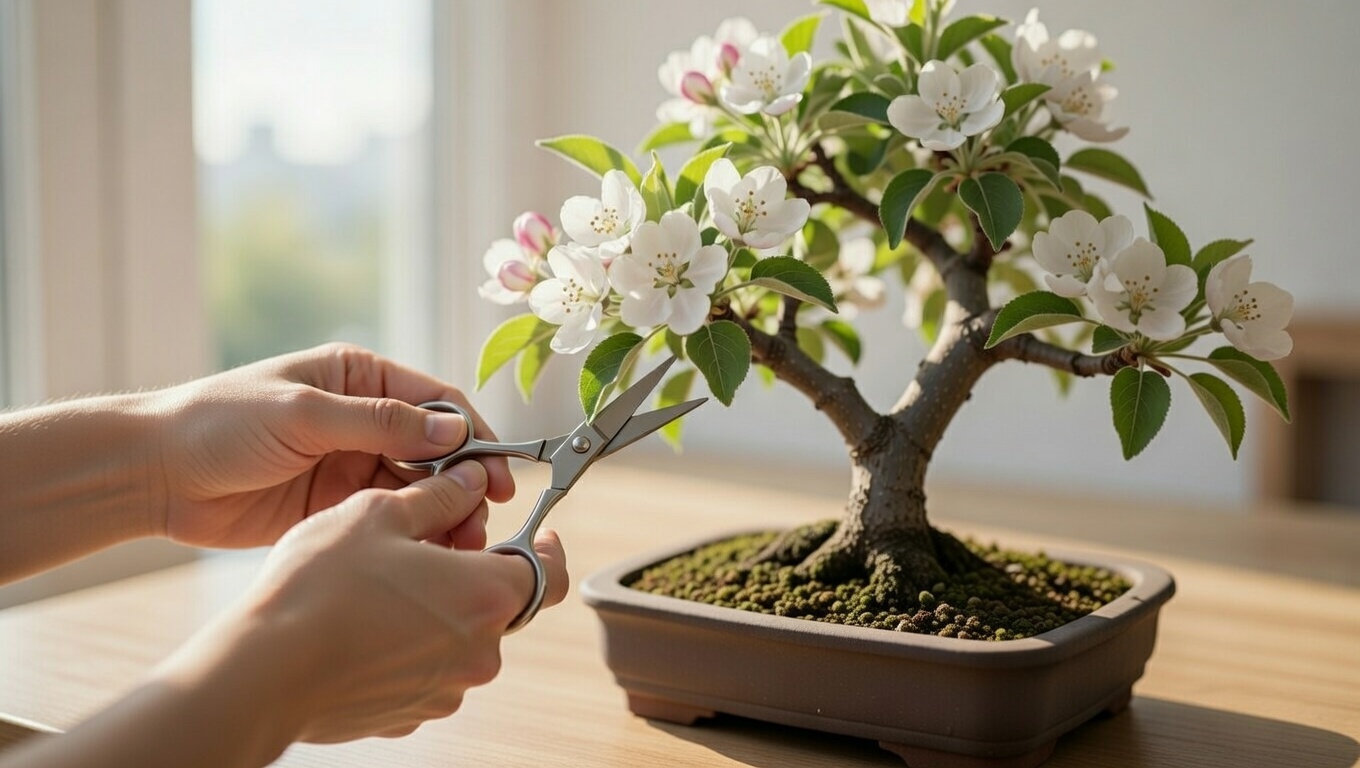
Pruning is where art meets horticulture.
Structural Pruning
Performed during dormancy:
- Remove crossing branches
- Eliminate inward-growing growth
- Maintain triangular silhouette
Never remove more than 30% of growth at once.
Maintenance Pruning
During growing season:
- Pinch new shoots after 5–6 leaves
- Cut back to 2–3 leaves
This keeps your bonsai compact and balanced.
Pruning for Fruit Production
Apple trees produce fruit on spurs (short, stubby branches).
Avoid removing:
- Thick, short fruiting spurs
Over-pruning reduces harvest potential.
Wiring Techniques (Beginner Guidance)
- Wire during dormant season
- Use aluminum bonsai wire
- Check every 2–3 weeks
- Remove before bark scars
Wiring shapes branches but requires monitoring.
How to Encourage Your Bonsai Apple Tree to Produce Fruit
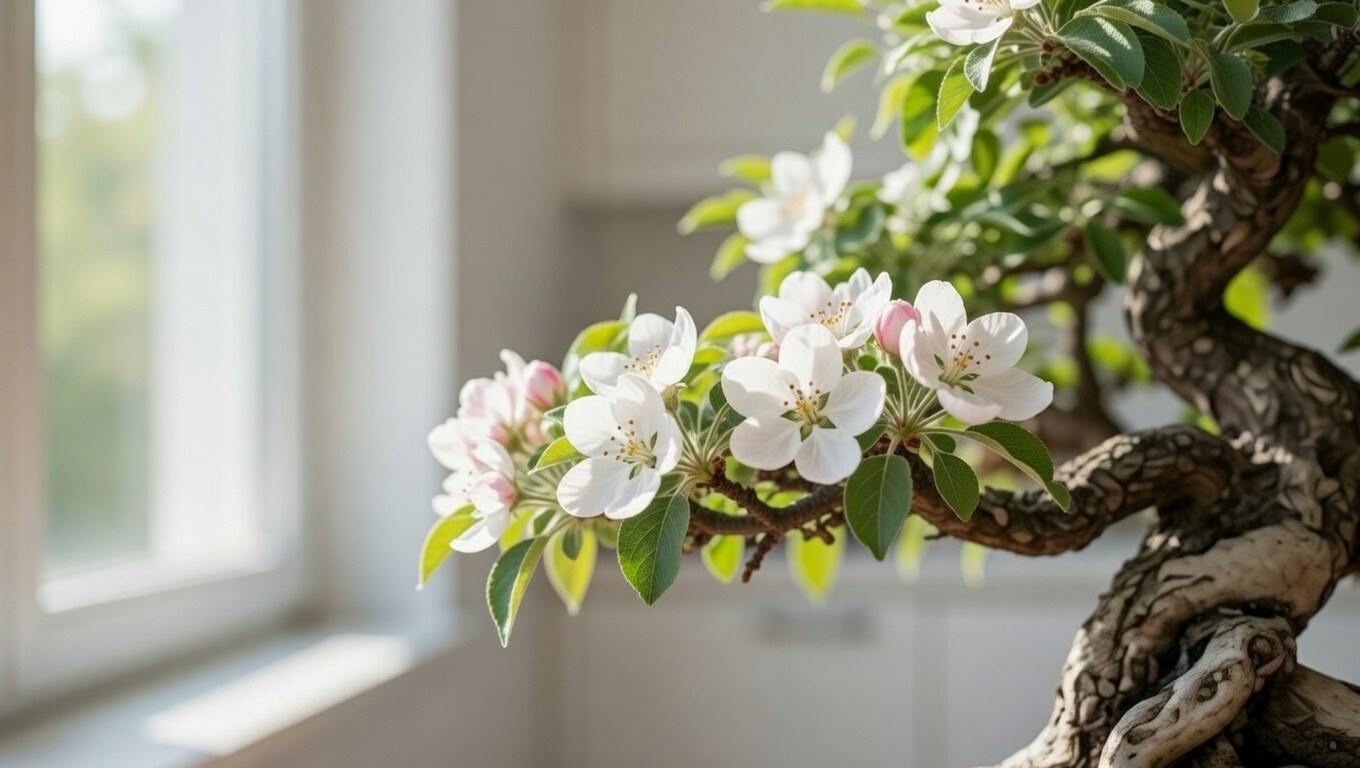
This is what most indoor growers care about most.
Pollination Requirements
Some varieties are self-pollinating. Others need help.
Indoor method:
- Use a soft brush.
- Transfer pollen between flowers.
- Repeat daily during bloom period.
This dramatically improves fruit set indoors.
Fruit Thinning
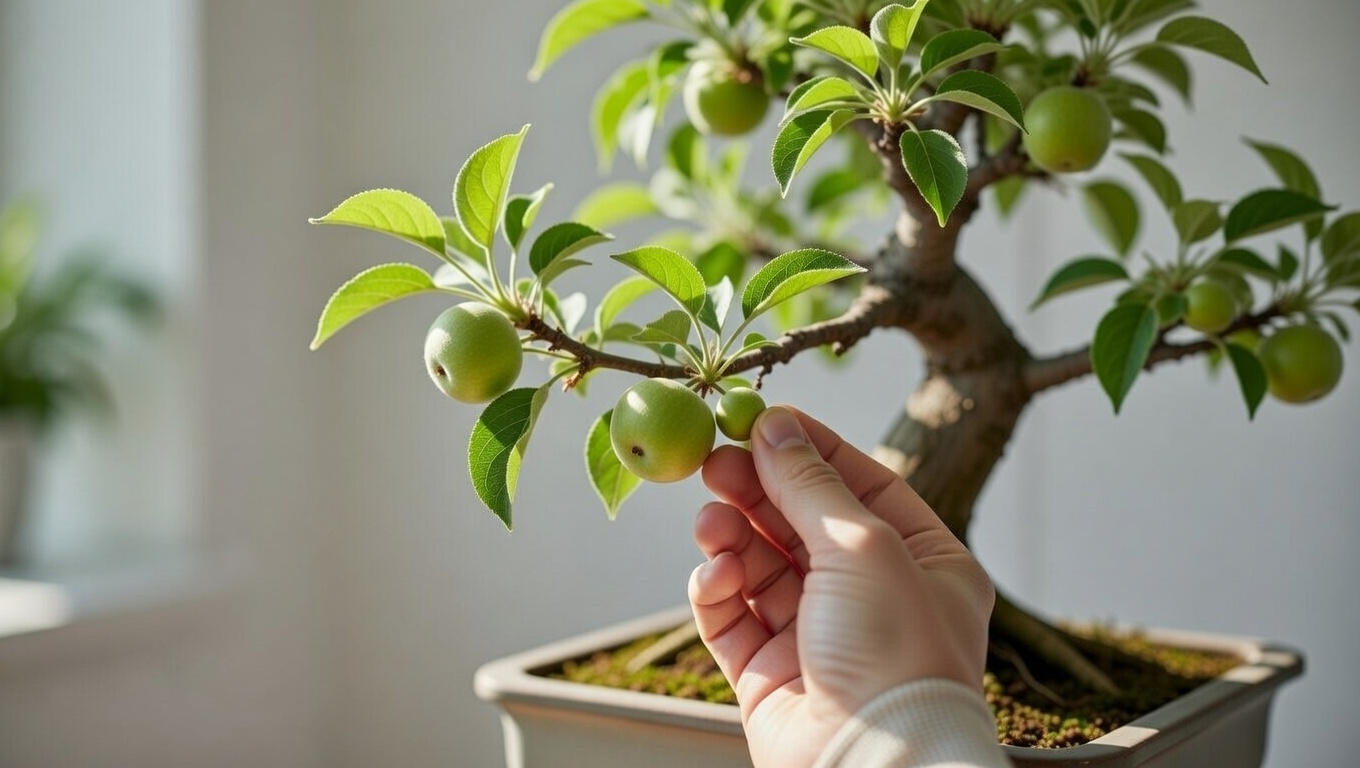
After small apples form:
- Remove excess fruit
- Leave 1 apple per cluster
Why?
Small branches cannot support heavy loads. Thinning improves fruit size and prevents breakage.
Common Reasons Bonsai Apple Trees Don’t Fruit
- Insufficient light
- No winter dormancy
- Excess nitrogen fertilizer
- Tree too young
- Lack of pollination
Diagnose before making changes.
Repotting Your Bonsai Apple Tree
Repotting is one of the most misunderstood — yet most essential — aspects of bonsai apple tree care. Because your tree lives in a shallow container, its roots will eventually fill the pot and restrict nutrient absorption.
Done correctly, repotting revitalizes growth and improves fruit production. Done incorrectly, it can severely stress or even kill the tree.
When to Repot
Most bonsai apple trees need repotting every:
- 2–3 years (young trees)
- 3–4 years (mature trees)
Best time: Late winter or very early spring, just before buds begin to swell.
Signs your tree needs repotting:
- Water runs straight through the pot
- Roots circling the bottom
- Slowed growth
- Soil breaking down into dense mud
Step-by-Step Repotting Process
- Prepare fresh bonsai soil mix (well-draining).
- Gently remove the tree from its container.
- Comb out roots carefully using a root rake.
- Trim back up to one-third of the root mass.
- Remove dead or blackened roots.
- Reposition the tree and refill with fresh soil.
- Water thoroughly.
Aftercare Tips
- Keep in bright indirect light for 1–2 weeks.
- Avoid fertilizing for at least 3–4 weeks.
- Monitor moisture carefully.
Root pruning encourages finer feeder roots — which improve nutrient uptake and overall vigor.
Common Problems and How to Fix Them
Even experienced growers encounter issues. The key is identifying the cause quickly.
Yellow Leaves
Possible causes:
- Overwatering
- Nutrient deficiency
- Poor drainage
- Root stress after repotting
Solution:
- Check soil moisture.
- Ensure drainage holes are clear.
- Apply balanced fertilizer during growing season.
Leaf Drop
Not all leaf drop is bad.
Normal:
- Autumn leaf shedding before dormancy
Concerning:
- Sudden drop during growing season
Likely causes:
- Temperature shock
- Underwatering
- Pest infestation
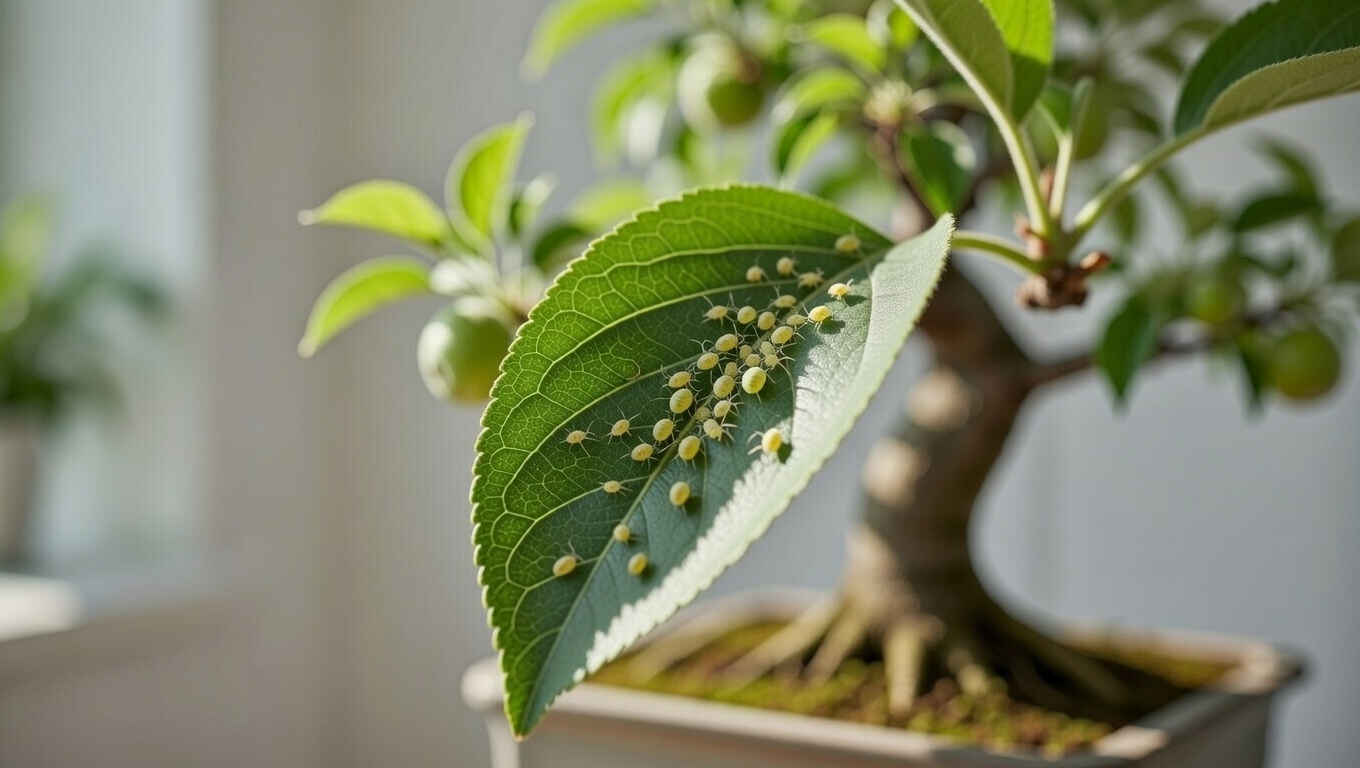
Pests: Aphids, Spider Mites & Scale
Indoor bonsai apple trees are especially vulnerable due to limited airflow.
Watch for:
- Sticky residue (aphids)
- Fine webbing (spider mites)
- Hard bumps on stems (scale)
Treatment:
- Neem oil spray
- Insecticidal soap
- Manual removal with cotton swab and alcohol (for scale)
Always isolate infected plants to prevent spread.
Fungal Diseases
Poor airflow and high humidity can lead to:
- Powdery mildew
- Leaf spot
Prevention:
- Ensure air circulation
- Avoid overhead watering
- Remove infected leaves promptly
Healthy growing conditions are your best defense.
Seasonal Care Calendar for Bonsai Apple Trees
Understanding the seasonal rhythm of your bonsai apple tree dramatically increases success.
Spring (Growth & Flowering)
- Move to brightest location
- Resume fertilizing
- Monitor for buds and blossoms
- Begin pollination process
- Light maintenance pruning
Summer (Fruit Development)
- Maintain consistent watering
- Continue feeding every 2–4 weeks
- Thin fruit
- Watch for pests
- Rotate tree for even light exposure
Fall (Preparation for Dormancy)
- Gradually reduce fertilizer
- Allow natural leaf drop
- Reduce watering frequency
- Transition to cooler environment
Winter (Dormancy Phase)
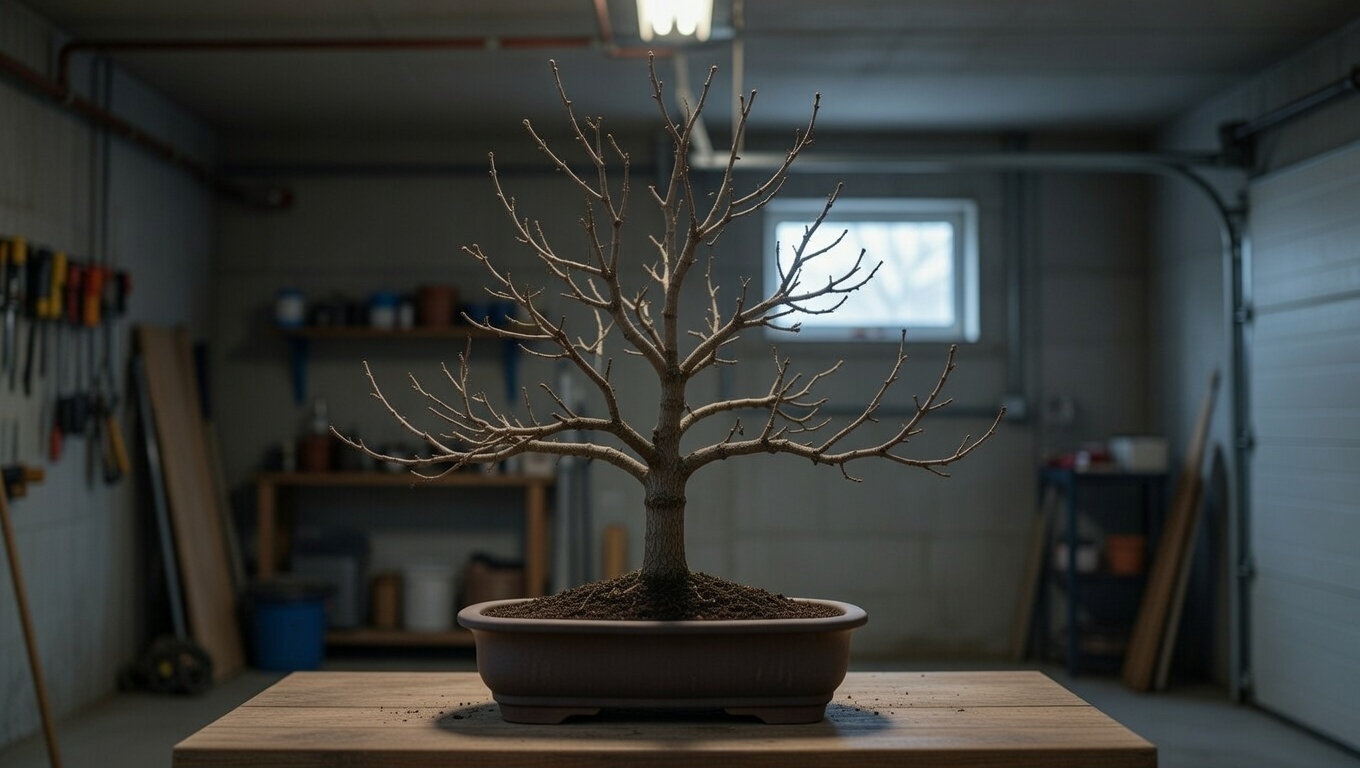
- Maintain 35–45°F (1–7°C)
- Water sparingly
- No fertilizer
- Minimal disturbance
Skipping dormancy is one of the biggest reasons indoor growers fail to get flowers the following year.
Expert Tips for Long-Term Success
After years of cultivating indoor fruiting bonsai, these are the principles that consistently separate thriving trees from struggling ones:
1. Light Is Non-Negotiable
If you fix only one thing — fix light. Strong light equals strong flowering.
2. Avoid Frequent Location Changes
Bonsai apple trees dislike environmental instability.
3. Keep Tools Sterile
Use alcohol to disinfect pruning tools to prevent disease transmission.
4. Track Growth in a Journal
Record:
- Flowering dates
- Fertilizer timing
- Dormancy duration
- Fruit count
This transforms guesswork into strategy.
5. Be Patient
Bonsai cultivation is long-term horticulture. A well-trained bonsai apple tree improves with age.
Frequently Asked Questions (SEO-Optimized)
Can a bonsai apple tree survive year-round indoors?
It can survive indoors during the growing season, but it still requires winter dormancy. A cool environment for 8–12 weeks is essential for long-term fruiting success.
How long does it take for a bonsai apple tree to produce fruit?
Nursery-grown bonsai apple trees typically fruit within 1–3 years. Seed-grown trees may take 5–8 years.
How big do the apples grow?
Fruit size depends on variety and thinning. Many bonsai apple trees produce small to medium apples — especially crabapple varieties.
Do I need two trees for pollination?
Some varieties are self-pollinating. If not, manual hand pollination indoors can replace the need for a second tree.
Why are my flowers falling off?
Common reasons:
- Poor pollination
- Overwatering
- Sudden temperature changes
- Insufficient light
Is a bonsai apple tree good for beginners?
Yes — if beginners understand that:
- Light is critical
- Dormancy is required
- Pruning is ongoing
With proper expectations, it is one of the most rewarding indoor fruiting plants you can grow.
Is a Bonsai Apple Tree Right for You?
A bonsai apple tree is not a passive houseplant. It demands attention, seasonal awareness, and a willingness to learn. But in return, it offers:
- Edible harvests
- Stunning seasonal beauty
- Deep horticultural satisfaction
- A living work of art that evolves yearly
If you can provide strong light, respect dormancy, and commit to thoughtful pruning, you’ll have a miniature apple orchard thriving in your home.
For indoor plant enthusiasts looking to expand beyond foliage into fruit-bearing bonsai, this tree is a powerful next step.
Final Thought
Growing a bonsai apple tree indoors is not about shortcuts — it’s about understanding the natural rhythm of a fruit tree and adapting your indoor environment to support it. When done correctly, the reward is extraordinary: blossoms in spring, fruit in summer, and the quiet elegance of a perfectly shaped miniature tree year after year.
If you’d like, I can now help you:
- Create an SEO meta description
- Write schema-ready FAQ markup
- Suggest internal linking strategies
-
Generate Pinterest or Discover-optimized social captions