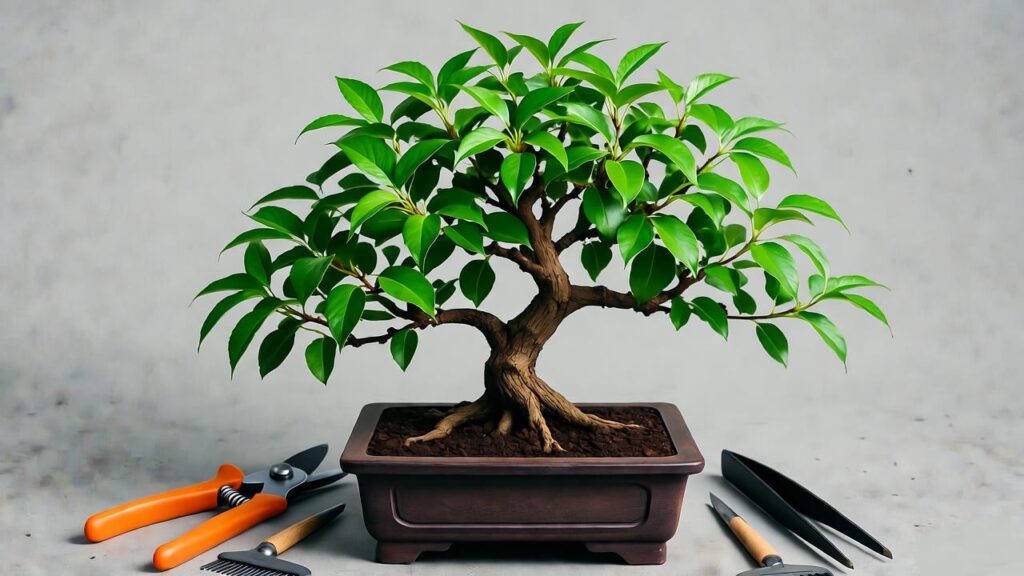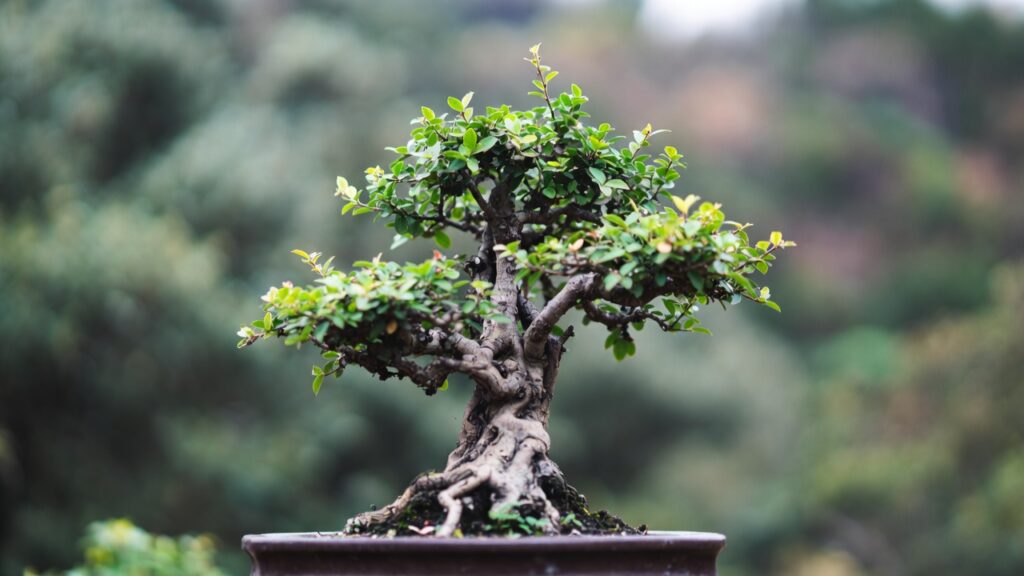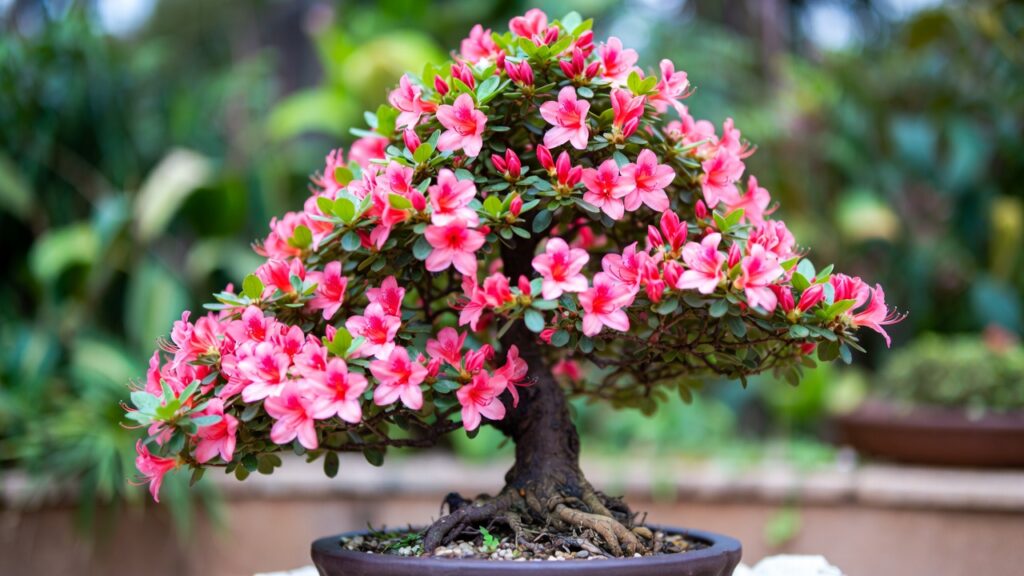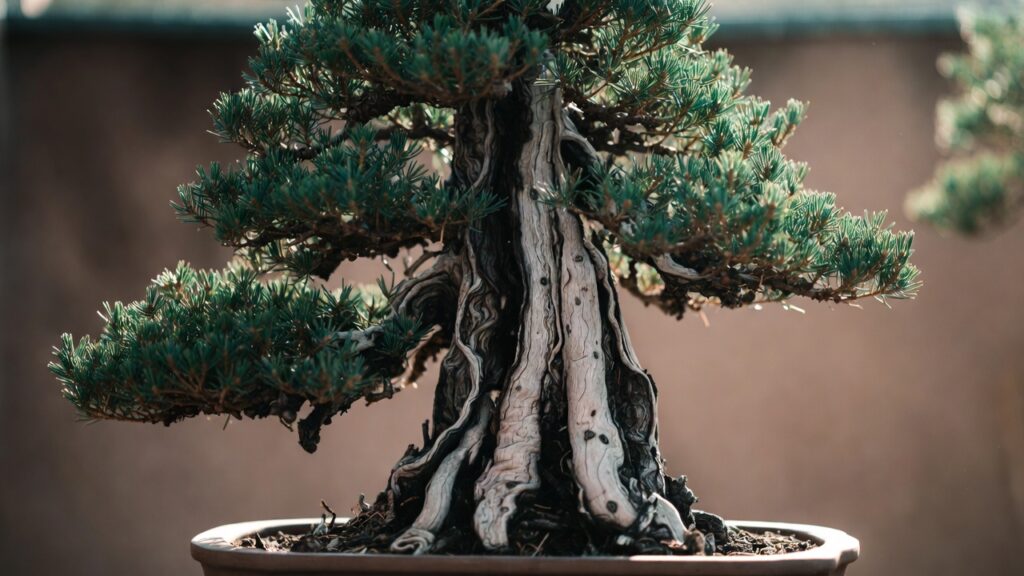
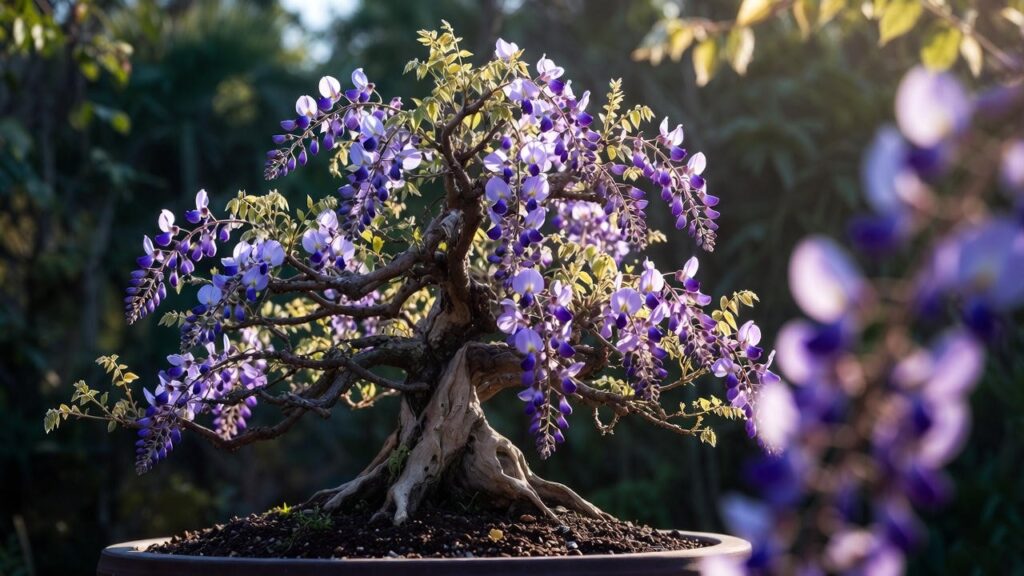
Few plants inspire as much awe as wisteria. Cascading blooms, intoxicating fragrance, and a centuries-old association with patience and mastery make it a dream plant for bonsai enthusiasts. But when that dream shifts indoors, reality often hits hard. Many indoor gardeners attempt a wisteria bonsai indoors, only to end up with vigorous vines, lush leaves—and no flowers.
If you’ve ever wondered why your indoor wisteria bonsai refuses to bloom, you’re not alone. This is one of the most misunderstood and misrepresented topics in indoor plant care and bonsai cultivation.
This guide exists to change that.
Written from the perspective of experienced growers and grounded in horticultural science, this article will show you how to grow, train, and realistically bloom wisteria bonsai indoors, even in limited space. We’ll be honest about the challenges, precise about the requirements, and practical about what actually works—no myths, no shortcuts, and no clickbait promises.
By the end, you’ll know whether indoor wisteria bonsai is right for you—and exactly how to succeed if it is.
Understanding Wisteria Bonsai — What Makes It Unique
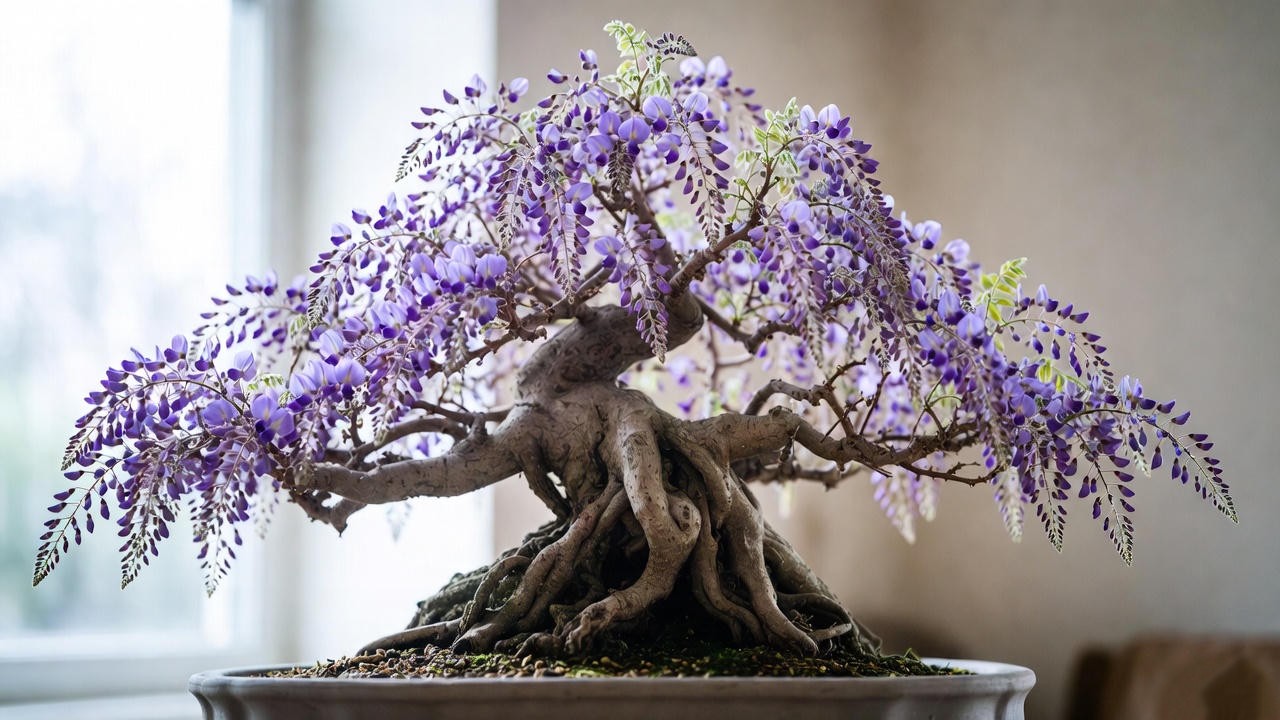
What Is a Wisteria Bonsai?
A wisteria bonsai is not a miniature plant by nature. It is a woody, deciduous, climbing vine trained over many years to resemble a mature tree in miniature form. Unlike ficus or jade plants commonly grown indoors, wisteria is biologically programmed for:
-
Aggressive seasonal growth
-
Cold winter dormancy
-
Flowering triggered by environmental stress and age
This makes it one of the most advanced bonsai species, even when grown outdoors.
When trained as bonsai, wisteria develops:
-
Thick, gnarled trunks
-
Twisting branches
-
Flowering spurs that produce long racemes of blooms
Indoors, replicating the conditions that lead to these features is possible—but only with intention and discipline.
Can Wisteria Really Be Grown Indoors?
Yes—but with critical caveats.
Wisteria is not a true indoor plant. It does not naturally thrive year-round inside a climate-controlled home. Successful indoor cultivation requires one of two approaches:
-
A hybrid indoor–outdoor method, where the plant spends part of the year outside
-
Full indoor cultivation with artificial dormancy, lighting, and temperature control
Many failures occur because growers attempt to treat wisteria like a tropical houseplant. This results in:
-
Excessive leaf growth
-
Weak structure
-
Complete absence of flowers
Understanding wisteria’s biological needs is the foundation of success.
Popular Wisteria Species Suitable for Bonsai
Not all wisteria species perform equally well indoors.
Most suitable species for bonsai (and limited indoor success):
-
Japanese wisteria (Wisteria floribunda)
-
Longer flower clusters
-
Slower, more controllable growth
-
Preferred by bonsai artists
-
-
Chinese wisteria (Wisteria sinensis)
-
Slightly more vigorous
-
Earlier flowering
-
Requires stricter pruning
-
Less suitable:
-
American wisteria (Wisteria frutescens) — less dramatic flowering
-
Seed-grown unknown hybrids — unpredictable bloom timelines
For indoor bonsai, nursery-grown or grafted plants are far more reliable than seed-grown specimens, which may take 7–15 years to flower.
Is Wisteria Bonsai a Good Choice for Indoor Growing?
Pros of Growing Wisteria Bonsai Indoors
Despite its difficulty, wisteria bonsai indoors offers unique advantages:
-
Unmatched aesthetic value when in bloom
-
Ability to enjoy bonsai artistry year-round
-
Controlled environment reduces pest exposure
-
Ideal for experienced indoor plant collectors seeking a challenge
For growers with patience and curiosity, indoor wisteria bonsai can be deeply rewarding.
Cons and Challenges (Expert Perspective)
This is where honesty matters.
Growing wisteria bonsai indoors is challenging because of:
-
Extremely high light requirements
-
Mandatory dormancy period
-
Aggressive growth that demands constant pruning
-
Long time to first bloom
-
Risk of lush foliage without flowers
From professional bonsai experience, light and dormancy account for over 80% of indoor failures.
Who Should (and Shouldn’t) Try Indoor Wisteria Bonsai
Good candidates:
-
Experienced indoor plant growers
-
Bonsai hobbyists with prior pruning and wiring experience
-
Apartment dwellers with balcony or seasonal outdoor access
-
Growers willing to invest in grow lights
Not ideal for:
-
Beginners
-
Low-light homes
-
Growers expecting fast blooms
-
Those unable to simulate winter dormancy
Light Requirements for Indoor Wisteria Bonsai (The #1 Success Factor)
Why Light Determines Everything
If wisteria bonsai doesn’t receive enough light, it will survive—but it will not bloom.
Flower bud formation requires:
-
Intense light exposure
-
Long photoperiods
-
Strong energy reserves
Without sufficient light, the plant prioritizes leaf production over reproduction.
Best Natural Light Conditions Indoors
Minimum requirements:
-
6–8 hours of direct sunlight daily
-
South- or southwest-facing window
-
Unobstructed glass (no heavy curtains or frosted panes)
Even bright indirect light is not enough for consistent flowering.
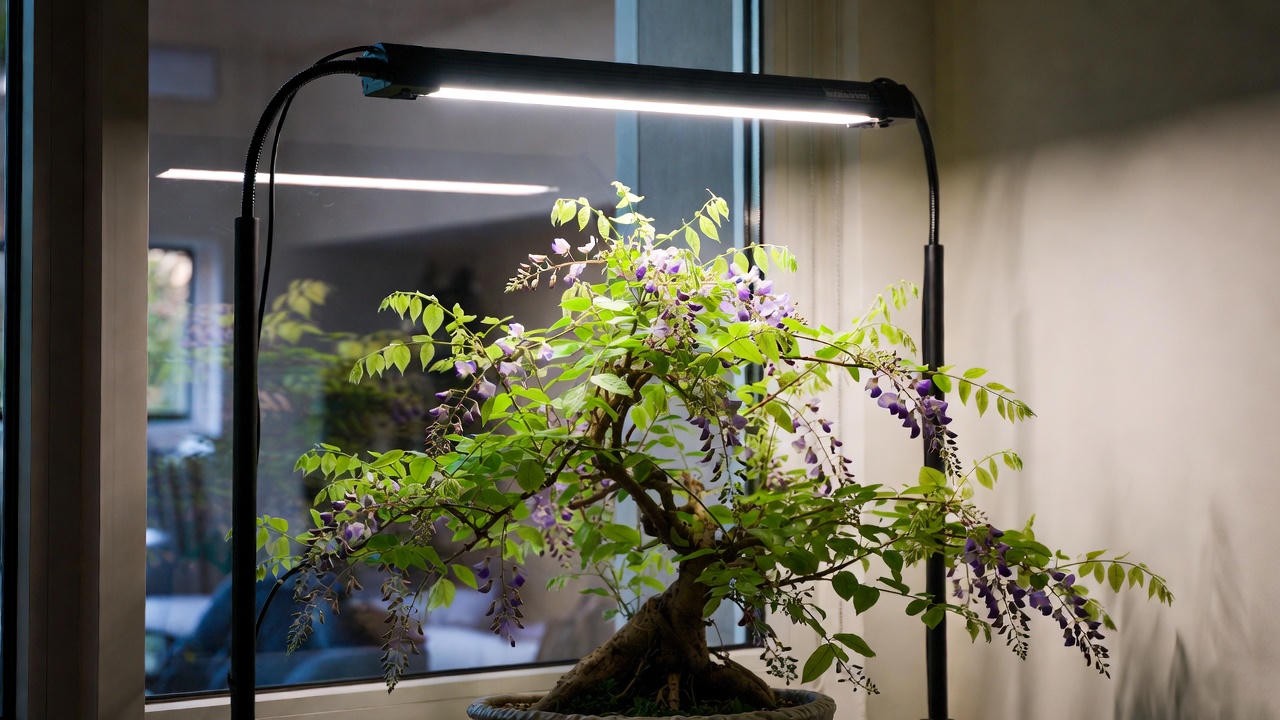
Using Grow Lights for Reliable Results
For most indoor growers, grow lights are essential.
Best setup:
-
Minimum 30–40 watts per square foot
-
Light positioned 12–18 inches above canopy
-
12–14 hours per day during growing season
Professional growers rely on grow lights not as supplements—but as primary light sources.
Temperature, Airflow, and Seasonal Dormancy Indoors
Ideal Temperature Ranges
-
Growing season: 65–80°F (18–27°C)
-
Dormancy: 35–45°F (2–7°C)
Wisteria must experience cold to initiate flower buds.
How to Simulate Winter Dormancy Indoors
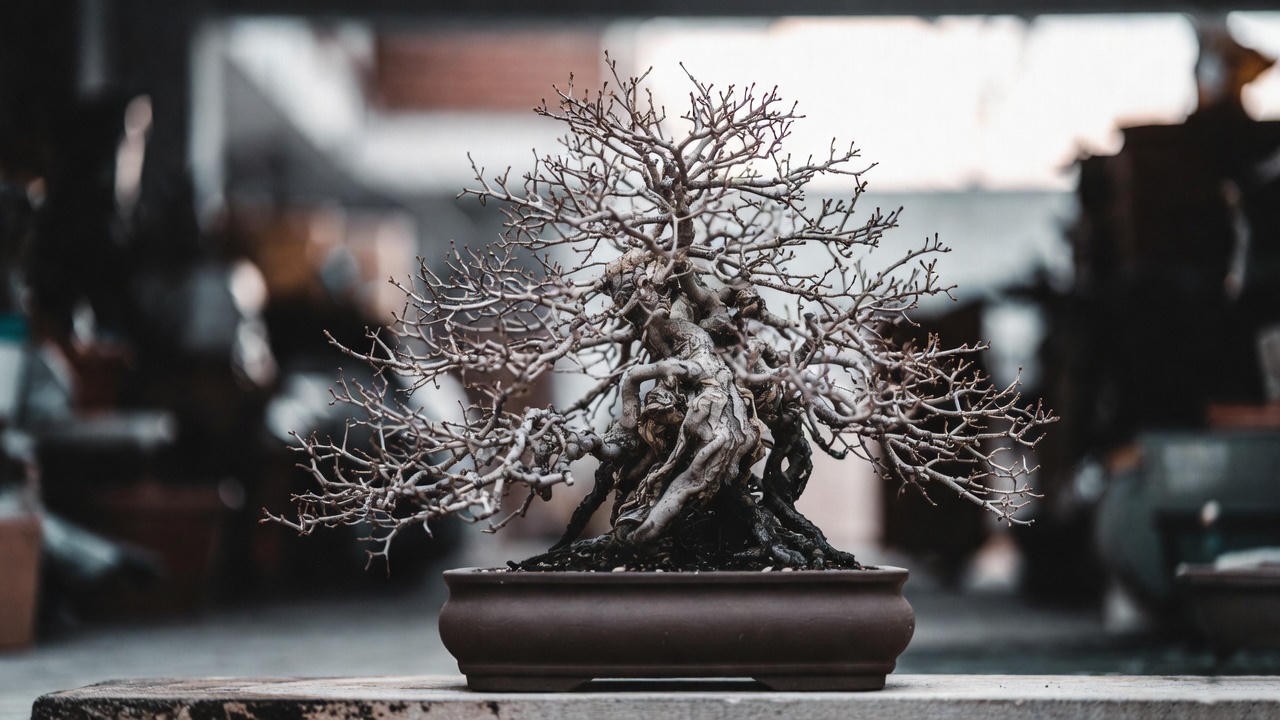
Effective methods include:
-
Unheated garage with window light
-
Cold room or enclosed porch
-
Balcony protected from frost
Dormancy should last 8–12 weeks. During this time:
-
Leaves drop naturally
-
Watering is reduced
-
No fertilization is applied
Skipping dormancy almost guarantees no blooms.
Air Circulation and Humidity
-
Moderate humidity (40–60%)
-
Gentle air circulation prevents fungal issues
-
Avoid sealed, stagnant rooms
Soil, Pots, and Repotting for Indoor Wisteria Bonsai
Best Soil Mix for Wisteria Bonsai
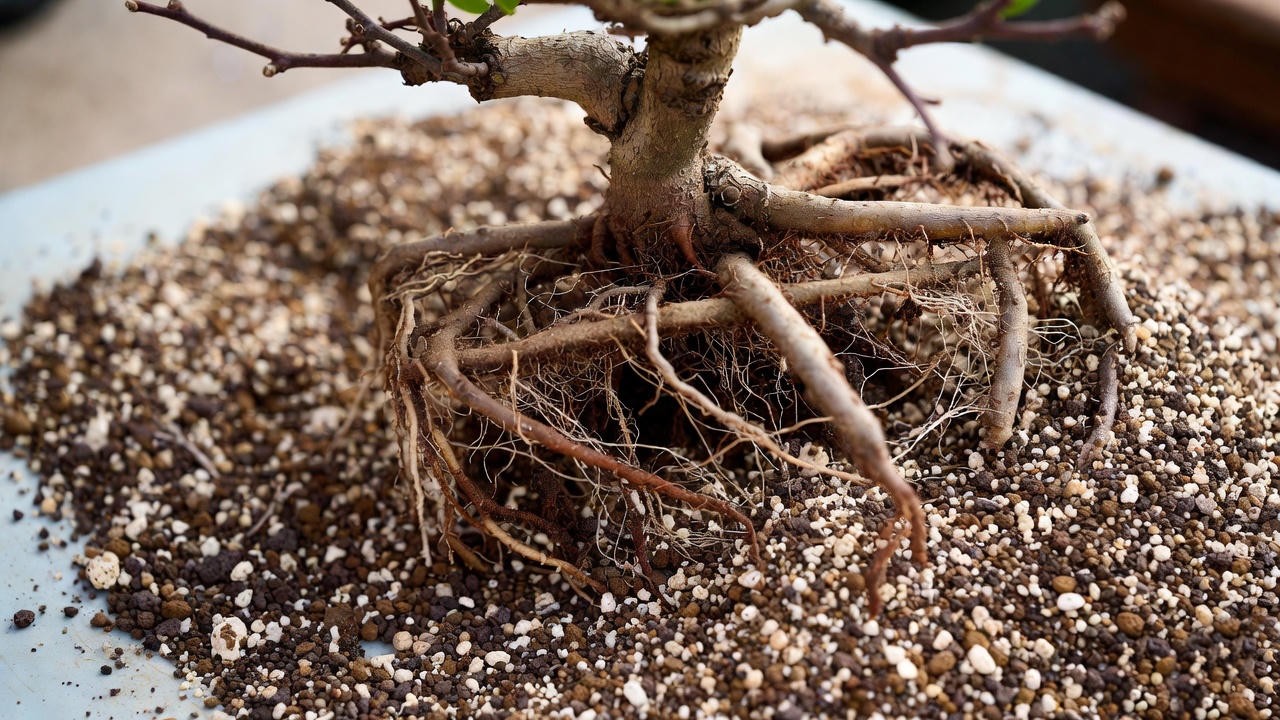
Wisteria requires:
-
Excellent drainage
-
Strong oxygen flow to roots
Recommended mix:
-
Akadama or calcined clay
-
Pumice
-
Lava rock
Organic-heavy soils retain too much moisture indoors and lead to root rot.
Choosing the Right Bonsai Pot
Key considerations:
-
Wide, shallow pot for stability
-
Multiple drainage holes
-
Heavy ceramic to counter vine growth
Pot size directly affects flowering—overly large pots encourage leaf growth instead of blooms.
Repotting Schedule and Root Pruning
-
Repot every 2–3 years
-
Best done in early spring before bud break
-
Aggressive root pruning should be avoided indoors
Watering and Fertilizing for Healthy Growth and Flowers
Proper Watering Techniques Indoors
-
Water thoroughly until runoff
-
Allow topsoil to slightly dry
-
Never let roots sit in standing water
Indoor overwatering is a common cause of decline.
Fertilizer Types and Feeding Schedule
-
Use low-nitrogen fertilizer (e.g., 5-10-10)
-
Feed every 2–3 weeks during growing season
-
Stop fertilizing during dormancy
High nitrogen equals leaves—not flowers.
Common Feeding Mistakes That Prevent Flowering
-
Using lawn or foliage fertilizers
-
Fertilizing year-round
-
Overfeeding young or seed-grown plants
Pruning and Training Wisteria Bonsai Indoors
Structural Pruning vs Maintenance Pruning
-
Structural pruning shapes the tree
-
Maintenance pruning controls growth
Both are essential for indoor success.
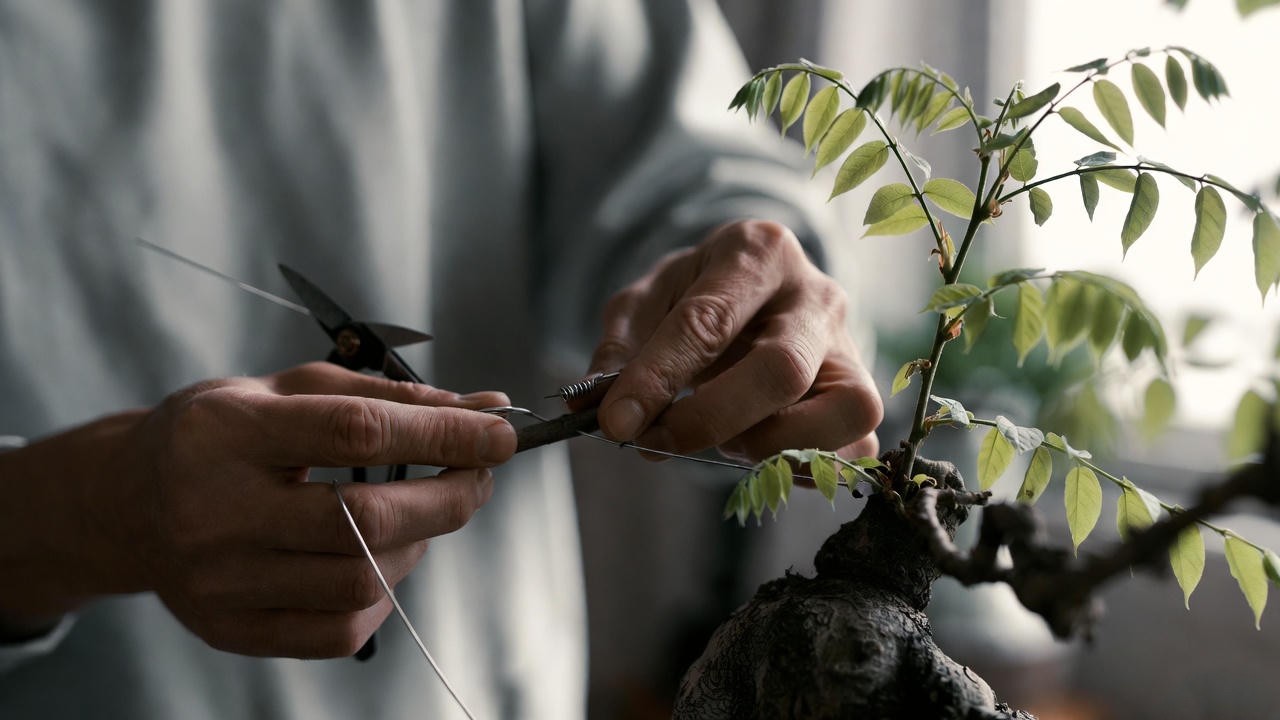
Wiring and Shaping Techniques
-
Use aluminum wire for flexibility
-
Check weekly to prevent wire scars
-
Expect rapid thickening
How Proper Pruning Impacts Bloom Production
Flower buds form on short spurs, not long shoots.
Correct pruning directly determines bloom potential.
How to Get Wisteria Bonsai to Bloom Indoors (Expert Guide)
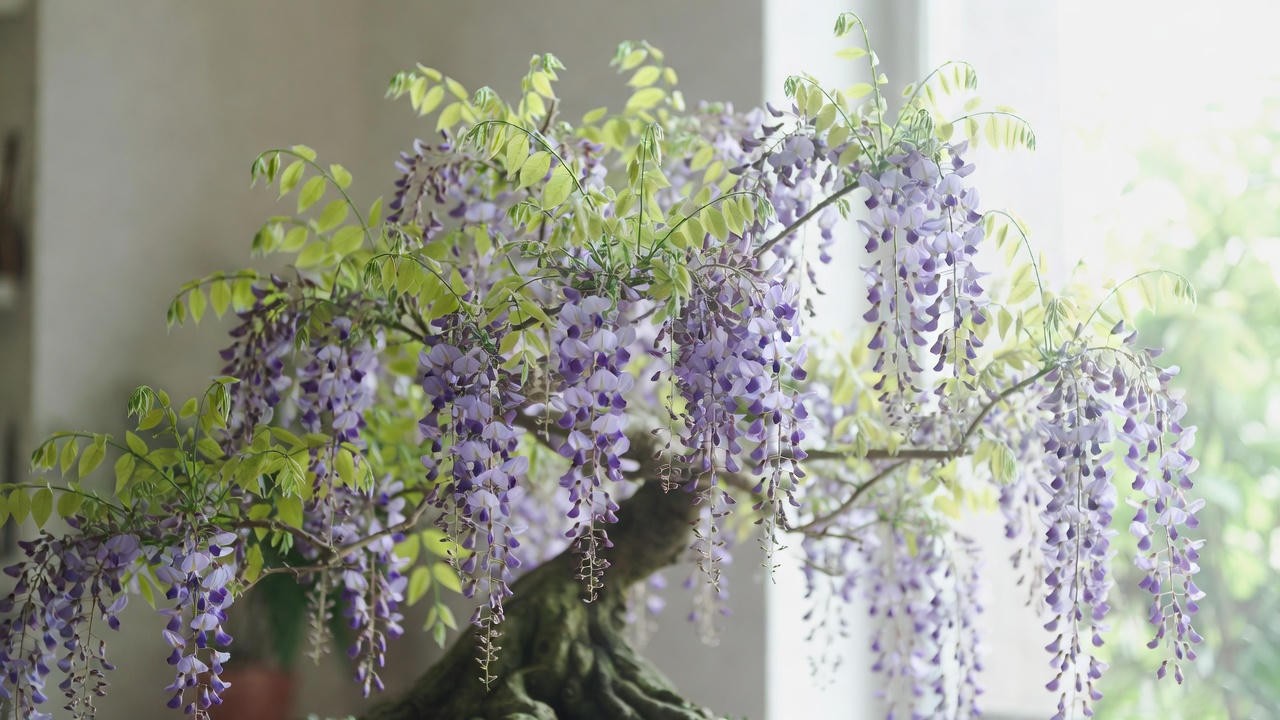
This is the section most indoor growers search for — and where most advice online becomes vague or misleading. Blooming a wisteria bonsai indoors is not about tricks or secret fertilizers. It’s about meeting a strict biological checklist consistently, year after year.
Why Indoor Wisteria Bonsai Often Fails to Flower
From professional bonsai experience and documented grower failures, indoor wisteria bonsai usually doesn’t bloom due to one (or more) of the following:
-
Insufficient light intensity
-
No cold dormancy period
-
Over-fertilization with nitrogen
-
Improper pruning timing
-
Plant immaturity (especially seed-grown trees)
Wisteria prioritizes survival first, structure second, and flowering last. If any core need is unmet, flowering is postponed indefinitely.
Step-by-Step Bloom Optimization Checklist
Use this checklist as a non-negotiable standard, not a suggestion.
1. Light
-
12–14 hours of high-intensity light daily during growth season
-
Direct sunlight or strong full-spectrum grow lights
2. Dormancy
-
8–12 weeks at 35–45°F (2–7°C)
-
Minimal watering
-
No fertilizer
3. Fertilizer
-
Low nitrogen (N)
-
Higher phosphorus (P) and potassium (K)
-
Feed only during active growth
4. Pruning
-
Summer pruning to control long runners
-
Late winter pruning to encourage spur formation
5. Pot Control
-
Avoid oversized pots
-
Slight root restriction promotes flowering
Skipping even one step can delay blooms by years.
How Long It Takes for a Wisteria Bonsai to Bloom
This is where many growers feel misled.
-
Grafted or nursery-grown plants: 2–4 years
-
Seed-grown plants: 7–15 years (sometimes longer)
Indoor cultivation may extend these timelines. Patience is not optional — it’s fundamental.
Common Problems and Solutions (Indoor Troubleshooting)
Yellowing Leaves
Possible causes:
-
Overwatering
-
Poor drainage
-
Nutrient imbalance
Solutions:
-
Improve airflow
-
Check soil drainage
-
Use balanced micronutrient fertilizer sparingly
Excessive Leaf Growth with No Flowers
This is the most common complaint.
Causes:
-
Too much nitrogen
-
Lack of dormancy
-
Insufficient light
Fix:
-
Switch to bloom-focused fertilizer
-
Enforce cold dormancy
-
Increase light intensity immediately
Pests and Diseases Indoors
Common indoor pests include:
-
Aphids
-
Spider mites
-
Scale insects
Safe treatment options:
-
Neem oil (light applications)
-
Insecticidal soap
-
Manual removal
Avoid harsh chemical pesticides indoors whenever possible.
Indoor vs Outdoor Care — A Balanced Approach
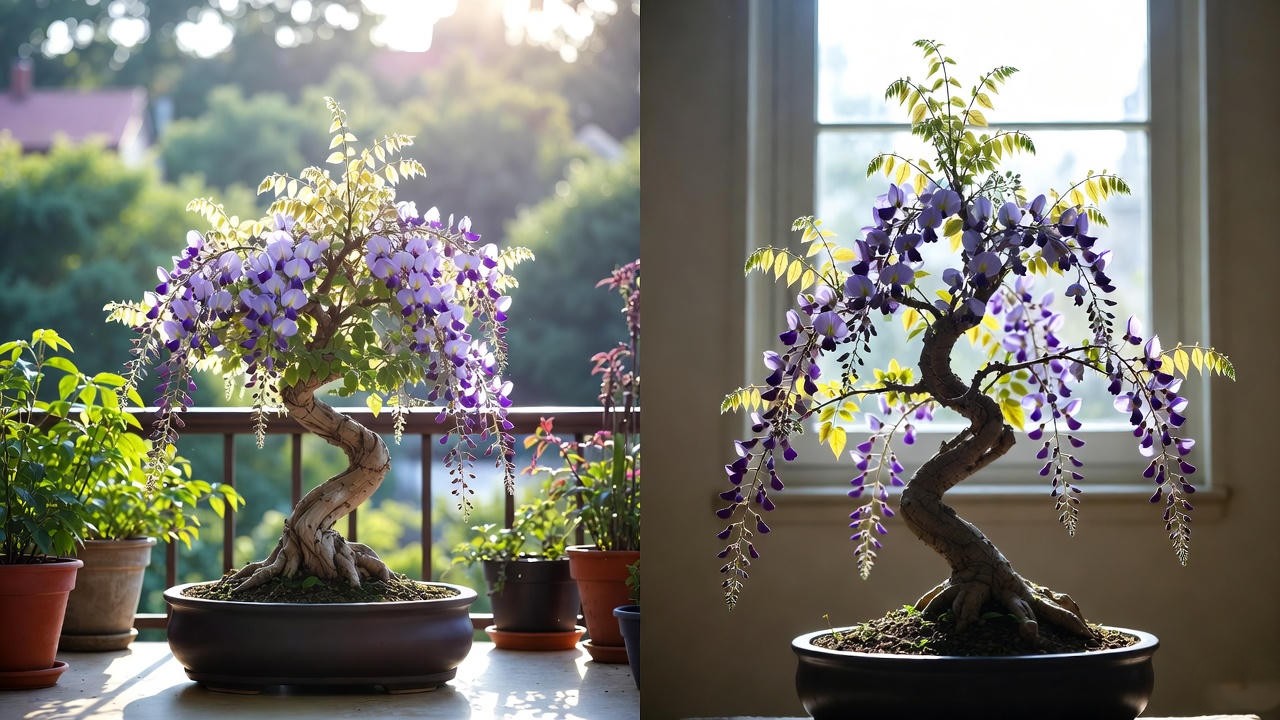
Seasonal Outdoor Placement for Better Results
The most successful indoor wisteria bonsai growers use a hybrid approach:
-
Outdoors in spring, summer, and fall
-
Indoors only for protection or display
Outdoor exposure provides:
-
Natural light intensity
-
Proper temperature fluctuation
-
Stronger trunk development
Balcony and Patio Solutions for Apartment Growers
Even limited outdoor access helps.
-
Use a balcony during growing season
-
Protect from extreme wind
-
Bring indoors only when temperatures drop below tolerance
This approach dramatically increases bloom reliability.
Why a Hybrid Approach Produces the Best Blooms
Professional bonsai consensus is clear:
Wisteria performs best when it experiences real seasons.
Indoor-only cultivation is possible, but hybrid care dramatically improves:
-
Flowering frequency
-
Overall vigor
-
Long-term health
Expert Tips from Bonsai Growers (Real-World Insights)
-
“If it doesn’t get cold, it doesn’t bloom.”
-
“Light solves more problems than fertilizer.”
-
“Wisteria teaches patience — not shortcuts.”
Experienced growers agree that wisteria bonsai indoors should be treated as a long-term project, not an instant-gratification plant.
Frequently Asked Questions About Wisteria Bonsai Indoors
Can wisteria bonsai live indoors year-round?
Yes, but it requires artificial dormancy, high-intensity lighting, and precise care.
How big does an indoor wisteria bonsai get?
With proper pruning, it can remain compact, but unmanaged growth can become aggressive quickly.
Is wisteria bonsai toxic indoors?
Yes. All parts of wisteria are toxic if ingested. Keep away from pets and children.
How often does wisteria bonsai bloom?
Typically once per year, usually in spring, after proper dormancy.
Can I grow wisteria bonsai from seed indoors?
Yes, but flowering may take a decade or longer. Grafted plants are strongly recommended.
Conclusion: Is Growing Wisteria Bonsai Indoors Worth It?
Growing wisteria bonsai indoors is not easy — and that’s exactly why it’s so rewarding. This is a plant that demands understanding, discipline, and respect for natural cycles. When its needs are met, the reward is one of the most breathtaking bonsai displays possible in limited space.
If you’re willing to commit to:
-
High light
-
Cold dormancy
-
Long-term care
Then wisteria bonsai indoors can become not just a plant, but a living masterpiece.
Patience, precision, and persistence are the real fertilizers here.