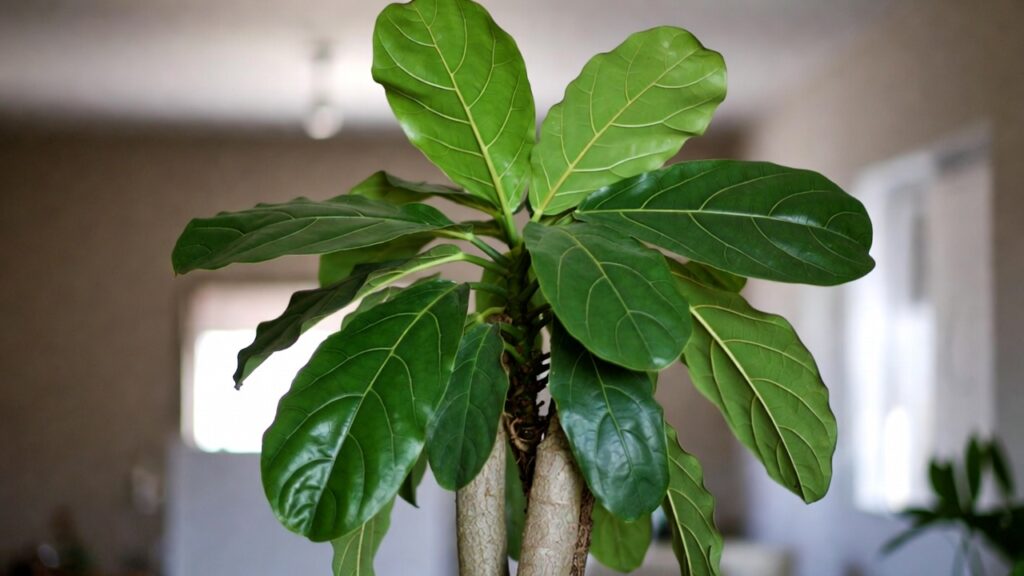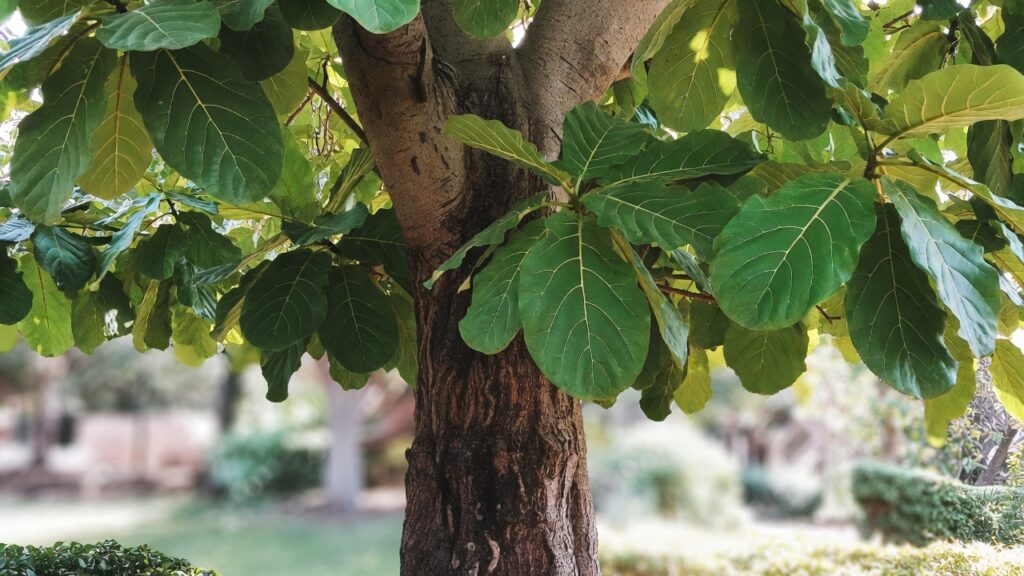
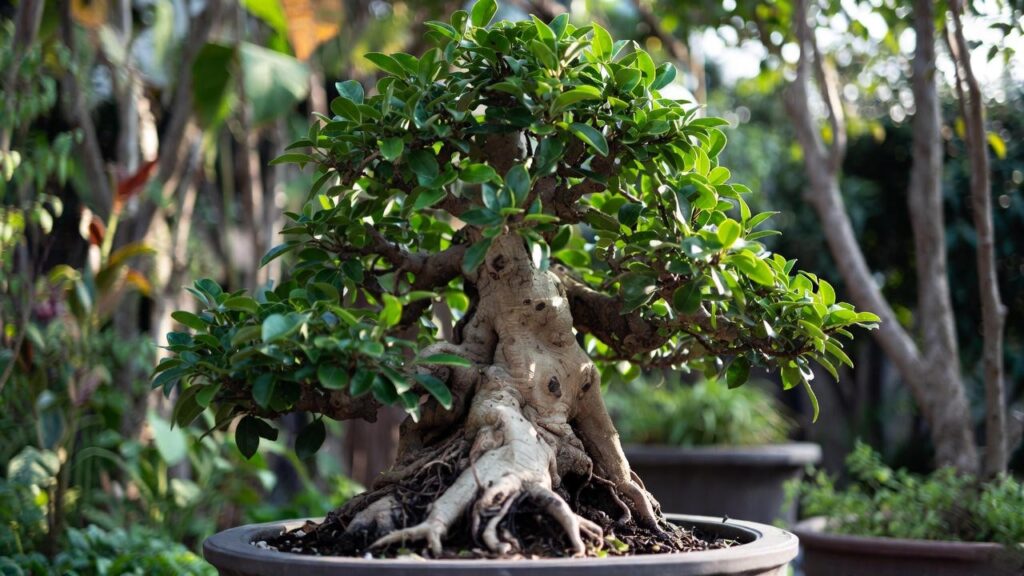
Few indoor plants are as visually striking — or as misunderstood — as a ficus bonsai. At first glance, it looks elegant, resilient, and perfectly suited for life indoors. Yet for many plant owners, that initial excitement quickly turns into frustration: yellowing leaves, sudden leaf drop, weak growth, or a bonsai that simply never thrives.
If that sounds familiar, you’re not alone.
The truth is, ficus bonsai care indoors follows a very different set of rules than regular houseplants. When those rules aren’t understood, even experienced indoor gardeners can struggle. The good news? Once you understand why ficus bonsai behave the way they do indoors, caring for them becomes surprisingly straightforward — and deeply rewarding.
This in-depth guide is written from real-world indoor bonsai experience, not theory alone. You’ll learn exactly how to create the right environment, avoid the most common mistakes, prune and shape confidently, and prevent leaf drop before it starts. Whether you’re a beginner or an indoor plant enthusiast ready to level up, this guide will give you everything you need to grow a healthy, long-lived ficus bonsai indoors.
What Is a Ficus Bonsai? (Understanding the Plant Before You Grow It)
Before diving into care routines, it’s essential to understand what a ficus bonsai actually is — and what it isn’t. A ficus bonsai is not a genetically dwarfed plant. It’s a full-sized ficus tree that has been carefully trained, pruned, and maintained in a shallow container to mimic the shape and scale of a mature tree. This distinction explains many of the challenges people face indoors.
What Makes Ficus Ideal for Indoor Bonsai
Among bonsai species, ficus stands out as one of the most forgiving and adaptable — especially indoors.
Key traits that make ficus suitable for indoor environments include:
-
Strong tolerance for pruning and shaping
-
Ability to grow in stable indoor temperatures
-
Thick leaves that reduce moisture loss
-
Rapid recovery from stress compared to many other bonsai species
Unlike temperate bonsai trees that require cold dormancy, ficus originates from tropical and subtropical regions. This allows it to grow year-round indoors when given sufficient light.
Popular Types of Ficus Bonsai for Indoors
While care principles are similar, knowing which ficus you own helps fine-tune your approach.
-
Ginseng ficus (Ficus microcarpa)
Known for thick, exposed roots and compact leaves. Extremely popular for beginners. -
Ficus retusa
Often confused with microcarpa. Has glossy leaves and strong branching structure. -
Ficus benjamina
Graceful, weeping growth habit but more sensitive to environmental changes.
Each variety responds slightly differently to light, pruning, and stress — but all follow the same foundational indoor care rules outlined in this guide.
Is Ficus Bonsai Truly an Indoor Plant?
This is one of the most searched — and misunderstood — questions about ficus bonsai.
The short answer: Yes, ficus bonsai can live indoors long-term — if conditions are right.
The long answer matters more.
Ficus bonsai are tropical trees, not true houseplants. Indoors, they rely entirely on you to replicate the light, warmth, humidity, and stability they’d experience in nature.
Indoor vs Outdoor Reality
-
Indoors:
-
Stable temperatures
-
Limited natural light
-
Lower humidity
-
No seasonal dormancy
-
-
Outdoors (warm months only):
-
Stronger light
-
Natural airflow
-
Faster growth
-
Many experienced growers move ficus bonsai outdoors during warm months and bring them inside before temperatures drop below 55°F (13°C). However, this is optional — not required — for success.
What matters most is consistency. Frequent moves between locations are one of the biggest triggers for leaf drop.
Ideal Indoor Conditions for Healthy Ficus Bonsai Growth
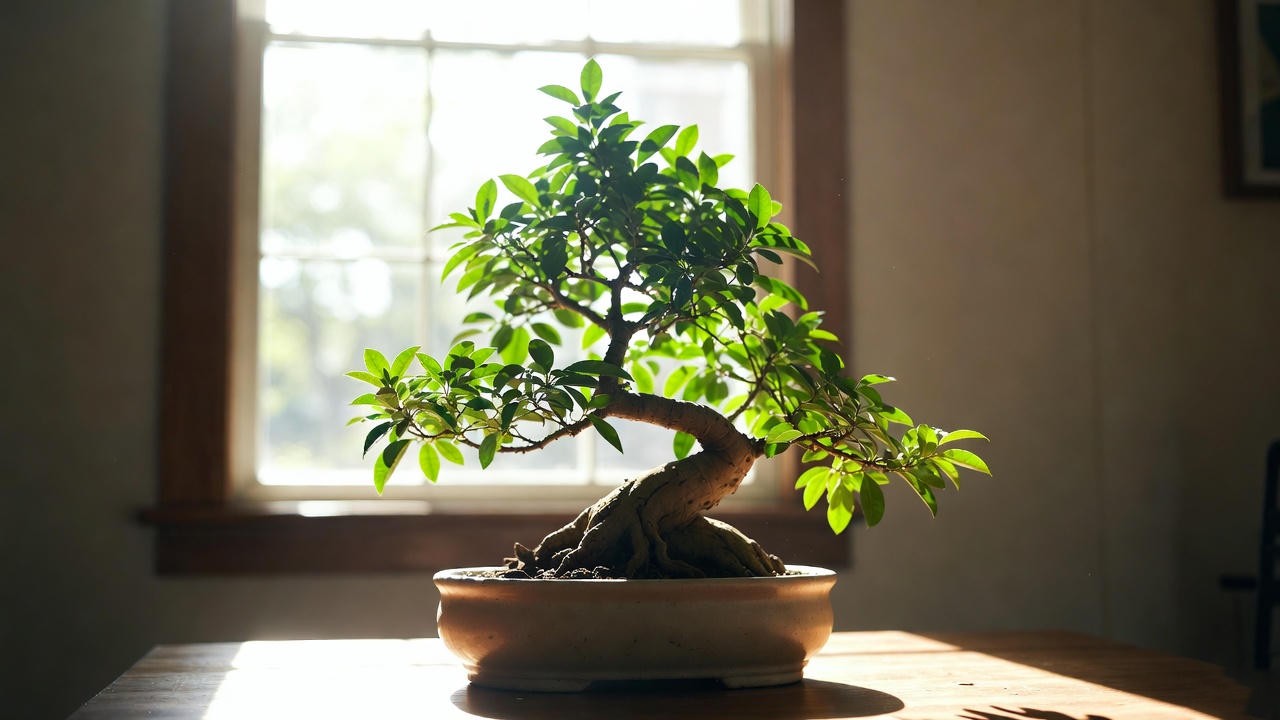
Creating the right environment is the foundation of successful ficus bonsai care indoors. No amount of pruning or fertilizing can compensate for poor growing conditions.
Light Requirements
If ficus bonsai fail indoors, insufficient light is usually the reason.
-
South-facing windows provide the strongest natural light
-
East- or west-facing windows can work with longer exposure
-
North-facing windows are usually insufficient without grow lights
Your ficus bonsai should receive bright, indirect light for at least 6–8 hours daily. Direct midday sun through glass can scorch leaves, while dim corners cause weak growth and leaf drop.
Using Grow Lights Indoors
For apartments or low-light homes, grow lights are not optional — they’re essential.
-
Position 8–12 inches above the canopy
-
Run for 10–14 hours daily
Grow lights often make the difference between survival and thriving.
Temperature and Humidity Needs
Ficus bonsai prefer:
-
Temperatures between 65–85°F (18–29°C)
-
No exposure to cold drafts or heat vents
Indoor humidity is often overlooked but critically important.
Signs of Low Humidity
-
Crispy leaf edges
-
Slow growth
-
Increased leaf drop
Simple solutions include:
-
Humidity trays
-
Grouping plants together
-
Room humidifiers
Misting alone provides only temporary relief and should not be relied upon.
Air Circulation and Placement Tips
Good airflow prevents fungal issues and pest infestations, but avoid placing ficus bonsai directly in front of fans or vents.
Avoid placing your ficus bonsai:
-
Near heaters or air conditioners
-
In dark hallways or bathrooms
-
On frequently moved surfaces
Once you find a good spot, leave it there. Stability equals health.
Watering Ficus Bonsai Indoors (Avoiding Overwatering & Root Rot)
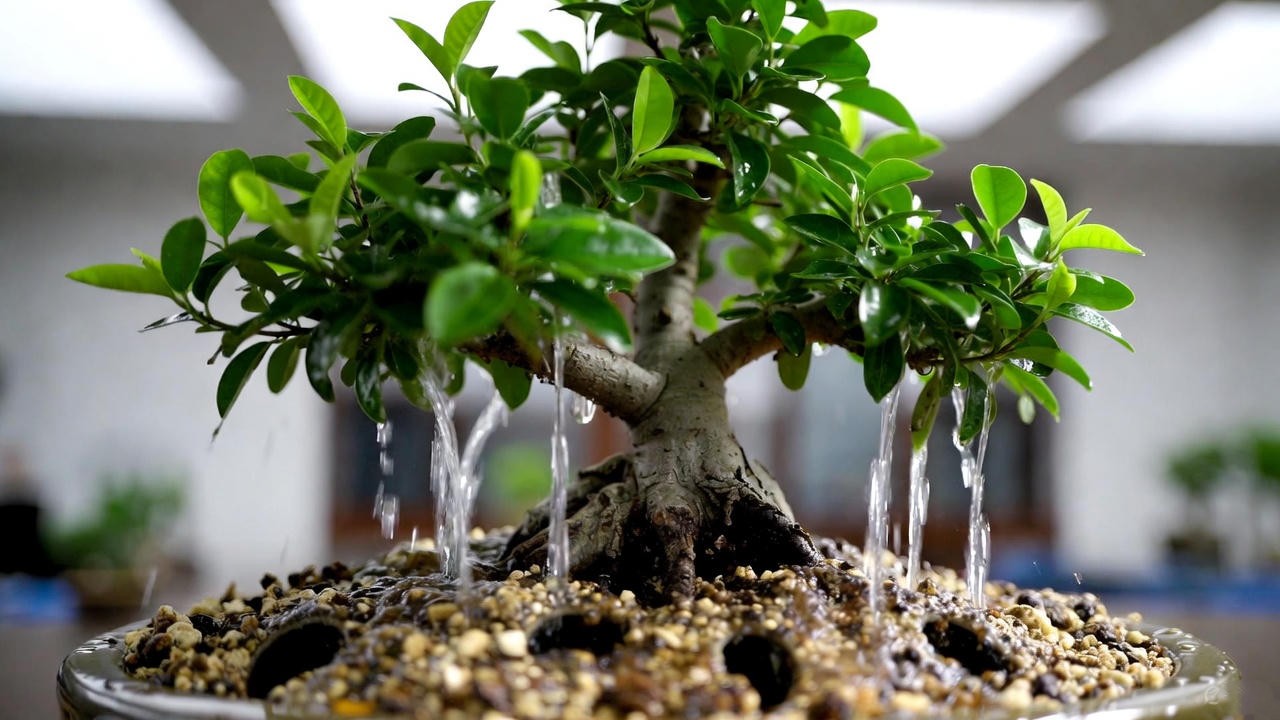
Improper watering is the most common cause of indoor ficus bonsai problems — especially root rot and leaf drop.
There is no universal watering schedule.
Instead, water based on:
-
Soil moisture
-
Pot size
-
Light levels
-
Seasonal growth
Rule of thumb:
Water when the top ½–1 inch of soil feels slightly dry.
In bright light, this may be every 2–3 days. In winter or low light, it may be once a week or less.
Proper Watering Technique
-
Water thoroughly until water drains from the bottom
-
Never let the pot sit in standing water
-
Ensure the pot has proper drainage holes
Shallow bonsai pots dry differently than deep houseplant containers — frequent checks are essential.
Signs of Overwatering vs Underwatering
Overwatering signs:
-
Yellow leaves that fall suddenly
-
Mushy roots
-
Sour-smelling soil
Underwatering signs:
-
Dry, brittle leaves
-
Wilting despite moist air
-
Soil pulling away from pot edges
Correct diagnosis matters — treating the wrong issue often makes things worse.
Best Soil and Potting Mix for Indoor Ficus Bonsai
Regular houseplant soil is one of the fastest ways to kill a bonsai.
Why Regular Potting Soil Doesn’t Work
Standard potting mixes:
-
Retain too much water
-
Compress over time
-
Suffocate fine bonsai roots
Bonsai soil must drain quickly while retaining enough moisture for consistent hydration.
Ideal Bonsai Soil Components
A quality ficus bonsai mix typically includes:
-
Inorganic particles for drainage
-
Organic material for moisture retention
-
Consistent particle size for airflow
Pre-mixed bonsai soils are recommended for beginners to avoid imbalance.
When and How to Repot a Ficus Bonsai Indoors
-
Repot every 2–3 years
-
Best done in late spring or early summer
-
Avoid heavy pruning and repotting at the same time
Repotting refreshes soil, prevents root binding, and restores vigor.
Pruning and Shaping Ficus Bonsai Indoors
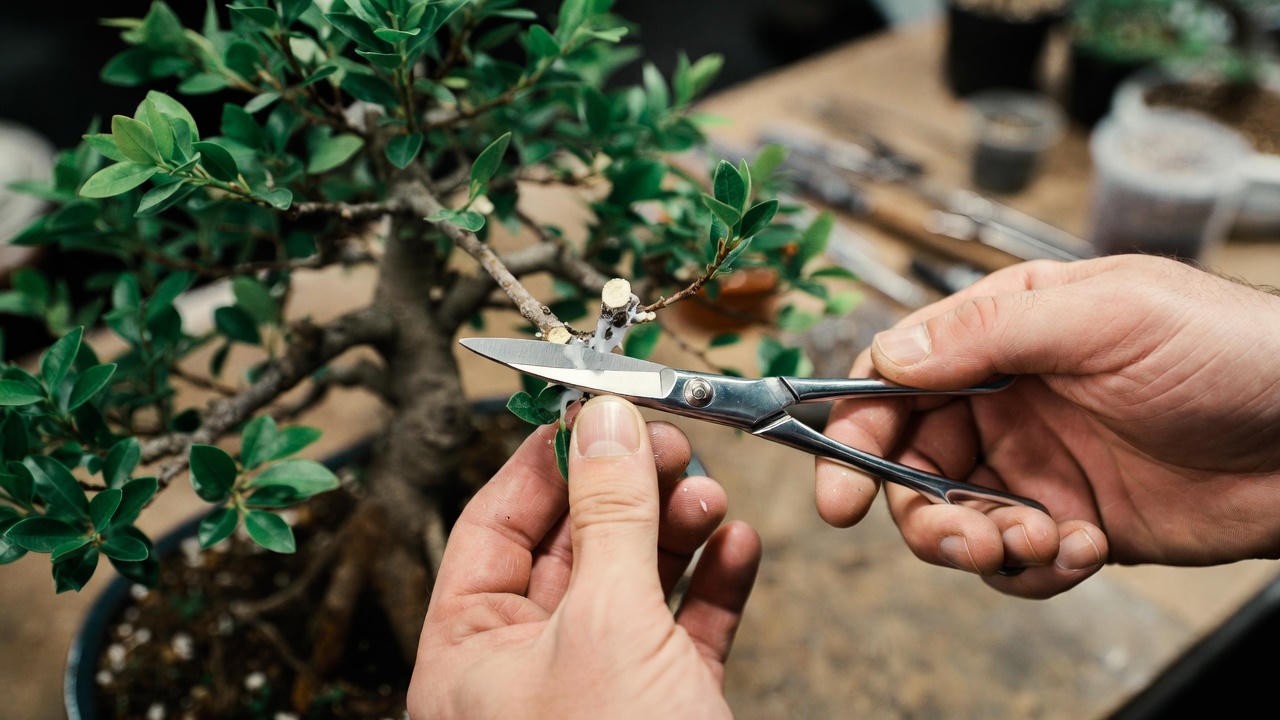
Pruning is not just about aesthetics — it’s essential for maintaining health, balance, and compact growth in an indoor ficus bonsai. Because indoor light is weaker than outdoor sun, controlled pruning helps the tree direct energy efficiently and prevents leggy, weak growth.
Without pruning, ficus bonsai will:
-
Produce long internodes (gaps between leaves)
-
Grow disproportionately toward light sources
-
Lose the miniature tree appearance bonsai are known for
Regular pruning encourages:
-
Smaller leaves
-
Dense branching
-
Balanced energy distribution
Indoor ficus bonsai respond exceptionally well to pruning, making them ideal for beginners learning bonsai techniques.
How to Prune Ficus Bonsai Safely Indoors
There are two main types of pruning you’ll perform:
1. Maintenance (Leaf and Shoot) Pruning
-
Trim back new shoots once they develop 6–8 leaves
-
Cut back to 2–3 leaves to maintain shape
-
Can be done year-round in stable indoor conditions
2. Structural Branch Pruning
-
Used to remove unwanted or crossing branches
-
Best done during active growth (spring to early summer)
-
Always use sharp, sterilized tools
Expert tip: Ficus release a milky sap when cut. This is normal. Simply dab with a paper towel and allow it to dry.
Wiring Ficus Bonsai Indoors
Wiring allows you to shape branches gently over time.
-
Use aluminum bonsai wire
-
Wrap loosely to avoid scarring
-
Check weekly — ficus branches thicken quickly
Wiring is optional but useful for refining structure. Many indoor growers rely primarily on pruning instead.
Fertilizing Ficus Bonsai for Steady Indoor Growth
Indoor ficus bonsai rely entirely on you for nutrients. Without proper fertilization, growth becomes weak, leaves shrink, and overall health declines.
Because ficus bonsai don’t experience true dormancy indoors:
-
Fertilize lightly year-round
-
Reduce frequency during winter if growth slows
A safe baseline:
-
Every 2 weeks during active growth
-
Every 4–6 weeks in winter
Best Fertilizer Types for Ficus Bonsai
-
Balanced liquid fertilizers (e.g., 10-10-10 or 20-20-20 diluted)
-
Organic liquid feeds for steady nutrient release
Avoid heavy feeding schedules designed for outdoor bonsai.
Signs of Over-Fertilization
Too much fertilizer causes:
-
Burnt leaf tips
-
Salt buildup on soil surface
-
Root damage
If in doubt, feed less, not more. Underfeeding is easier to correct than overfeeding.
Why Is My Ficus Bonsai Dropping Leaves? (Complete Troubleshooting Guide)

Leaf drop is the #1 reason people believe their ficus bonsai is dying. In reality, leaf drop is usually a stress response, not a death sentence.
Ficus bonsai dislike change.
Common triggers include:
-
Moving the plant to a new location
-
Sudden changes in light intensity
-
Temperature fluctuations
Important: Once leaf drop starts, do not keep moving the tree. Stability is key to recovery.
Light, Water, and Temperature Causes
Use this quick diagnosis checklist:
-
Sudden yellow leaf drop → Overwatering or low light
-
Green leaves dropping → Environmental shock
-
Gradual leaf thinning → Insufficient light
-
Curling leaves → Underwatering or low humidity
Correct the cause, then give the tree time. Recovery often takes weeks, not days.
Pests and Diseases That Cause Leaf Drop
Indoor ficus bonsai can attract:
-
Spider mites
-
Scale insects
-
Mealybugs
Inspect leaf undersides and branch joints regularly.
Treatment options:
-
Insecticidal soap
-
Neem oil (used sparingly indoors)
-
Manual removal with alcohol-dipped cotton swabs
Early detection makes treatment far easier.
Common Indoor Ficus Bonsai Problems and Solutions
Yellowing Leaves
-
Most often caused by overwatering
-
Improve drainage and reduce watering frequency
Leggy Growth
-
Insufficient light
-
Move closer to window or add grow lights
Small Leaves or Weak Branches
-
Lack of nutrients or light
-
Adjust fertilization and lighting
Root-Bound Bonsai
-
Growth stalls despite good care
-
Repot into fresh bonsai soil
Beginner Mistakes to Avoid with Indoor Ficus Bonsai
Experience shows that most problems come from too much care, not too little.
Avoid these common mistakes:
-
Watering on a fixed schedule
-
Moving the tree frequently
-
Over-pruning stressed plants
-
Treating ficus like a typical houseplant
Patience and observation matter more than constant intervention.
Long-Term Care Tips for a Thriving Indoor Ficus Bonsai
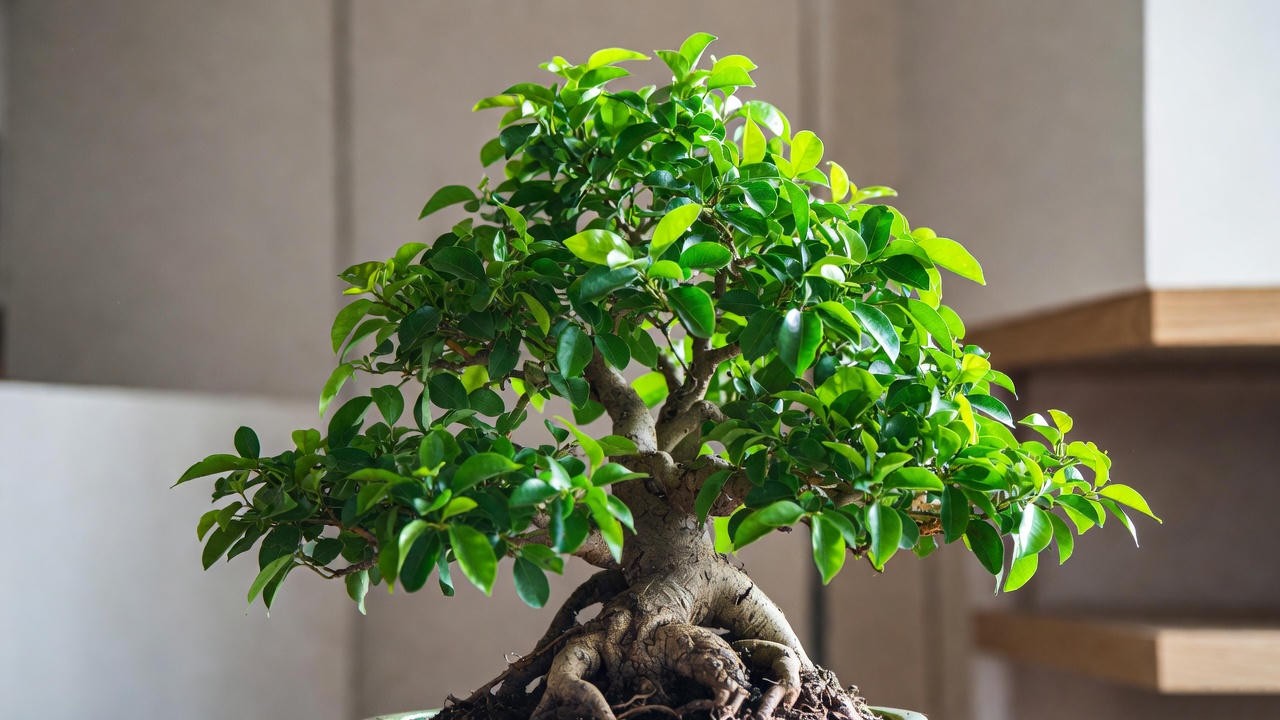
A well-cared-for ficus bonsai can live decades indoors.
Key long-term principles:
-
Keep placement consistent
-
Adjust care seasonally
-
Prune regularly but moderately
-
Repot on schedule
With time, your ficus bonsai becomes more resilient — and more beautiful.
Frequently Asked Questions About Ficus Bonsai Care Indoors
Can ficus bonsai survive in low light?
They can survive short-term but will not thrive. Supplementary grow lights are strongly recommended.
How long does it take a ficus bonsai to recover from leaf drop?
Typically 3–8 weeks once conditions are corrected.
Should I mist my ficus bonsai indoors?
Misting helps briefly but does not replace proper humidity.
Can I keep my ficus bonsai in an office or bedroom?
Yes — as long as light levels are sufficient and temperatures are stable.
Conclusion: Growing a Healthy Ficus Bonsai Indoors Is Easier Than You Think
Caring for a ficus bonsai indoors isn’t about perfection — it’s about understanding the plant’s needs and responding consistently. When given proper light, thoughtful watering, stable placement, and regular pruning, ficus bonsai reward you with year-round beauty and remarkable resilience.
For indoor plant lovers ready to go beyond basic houseplants, few experiences are as satisfying as watching a ficus bonsai thrive under your care.