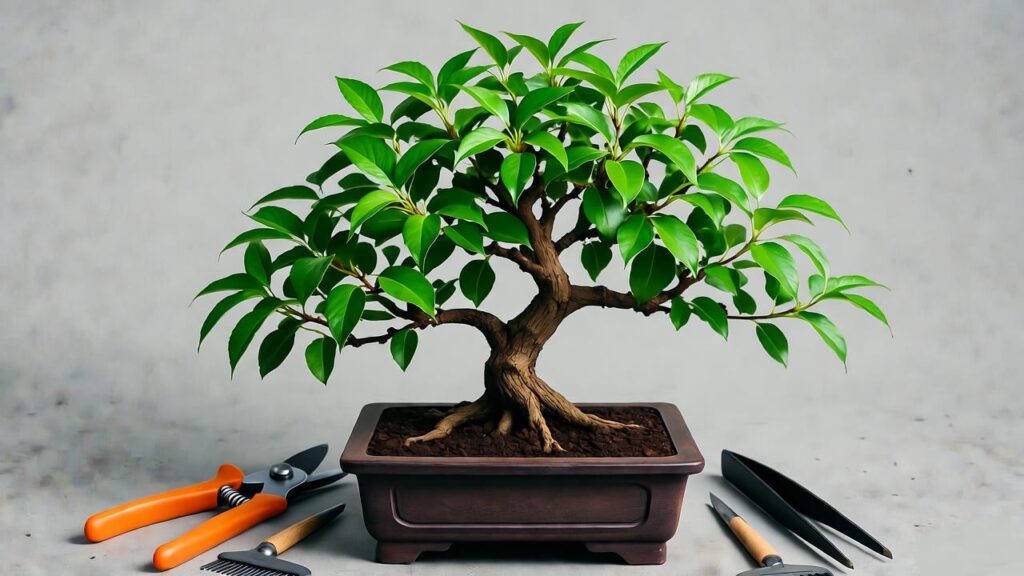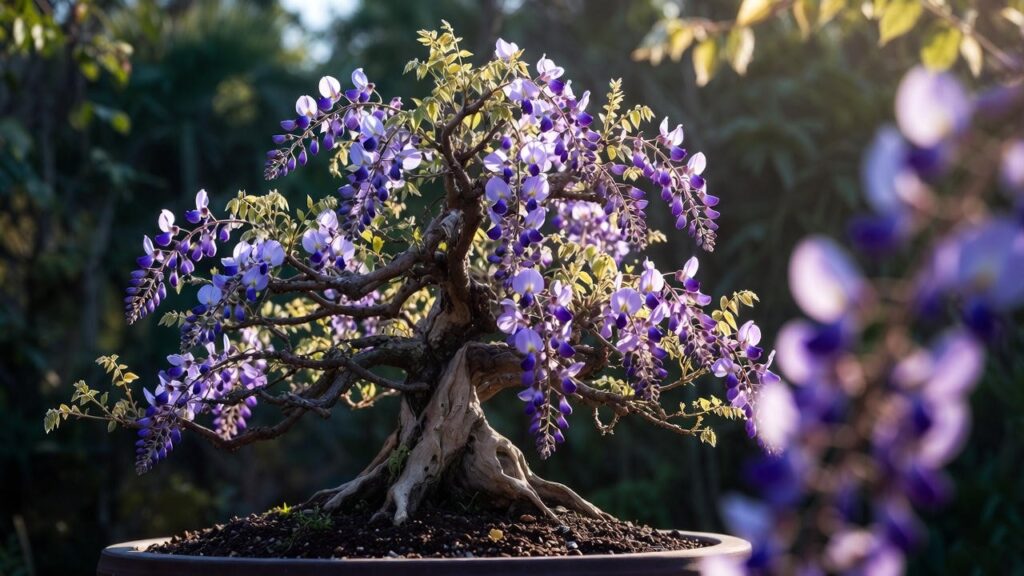
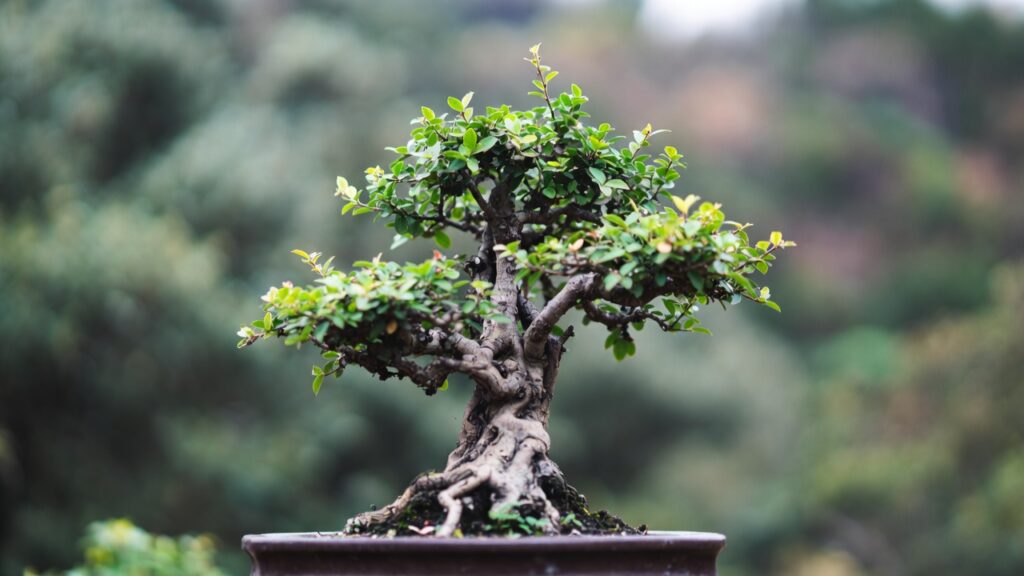
Your bonsai looked perfect when you brought it home — compact, elegant, almost timeless. Then a few weeks later, the leaves started yellowing. Growth slowed. Maybe branches dried out.
If you’re struggling with bonsai in a pot, you’re not alone. Most beginners assume bonsai care is similar to caring for regular indoor plants. It isn’t. Growing a bonsai in a pot is a specialized horticultural practice that depends on precise balance: the right container depth, proper drainage, a fast-draining soil mix, careful watering, and species-appropriate light.
After years of working with indoor plants and container-grown trees, one thing is clear: the pot system determines 70% of your bonsai’s success. This guide will walk you through everything — from choosing the correct bonsai container to soil composition, watering techniques, repotting, fertilization, and long-term maintenance — so your tree doesn’t just survive indoors, but thrives.
Let’s build your foundation the right way.
What Does “Bonsai in a Pot” Really Mean?
Before we discuss care, we need to clarify something important: bonsai is not a species. It’s a cultivation technique.
The Philosophy Behind Bonsai
The word bonsai literally means “planted in a container.” The goal is to grow a tree that mimics the proportions and appearance of a mature tree in nature — but in miniature form.
This requires:
- Root restriction
- Structural pruning
- Controlled nutrient intake
- Careful water management
- Proportional container selection
Unlike typical houseplants that grow freely in deeper pots, bonsai are intentionally grown in shallow containers to limit root expansion and control size. The pot is not decorative — it is a functional part of the tree’s life system.
Why Bonsai in a Pot Is Different from Regular Houseplants
If you treat a bonsai like a pothos or snake plant, it will decline quickly. Here’s why:
- Bonsai pots are shallow and drain rapidly.
- Root systems are pruned regularly.
- Soil contains little to no organic peat.
- Watering must be precise — not scheduled blindly.
- Nutrients deplete faster in limited soil volume.
In short, bonsai care is precision gardening.
Can Bonsai Truly Thrive Indoors?
Yes — but only certain species.
Tropical and subtropical bonsai varieties adapt well to indoor conditions if given adequate light and airflow. Temperate species (like junipers) require outdoor seasonal cycles and typically fail indoors.
Understanding this distinction prevents one of the most common beginner mistakes.
Choosing the Right Pot for Bonsai in a Pot (Your First Critical Decision)
The container is not just aesthetic. It directly impacts:
- Root oxygenation
- Moisture retention
- Stability
- Growth rate
- Overall tree health
Ideal Pot Depth and Width
A reliable guideline used by experienced growers:
- Pot depth ≈ trunk diameter at soil level
- Pot length ≈ two-thirds the height of the tree
For example, if your bonsai trunk is 1 inch thick, the pot depth should be around 1 inch to 1.5 inches.
Too deep? The roots grow aggressively and ruin proportions.
Too shallow without proper soil? Roots dry out too quickly.
Balance is everything.
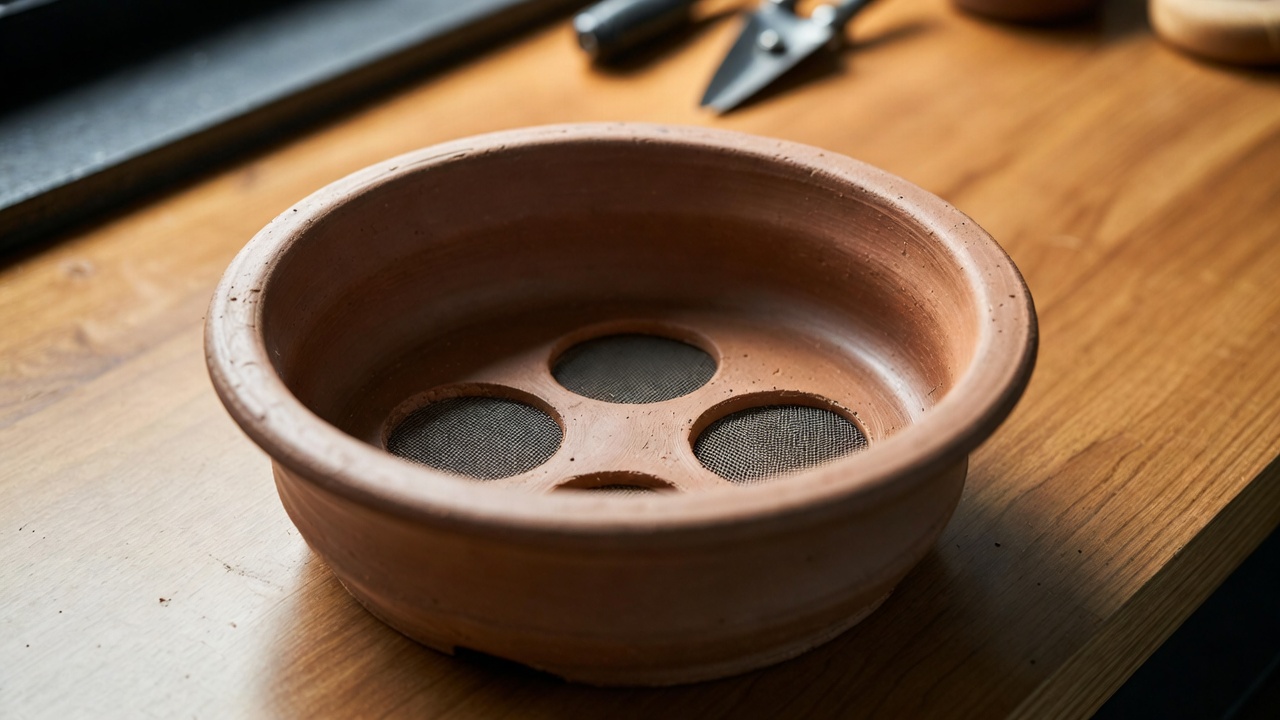
Drainage Requirements (Non-Negotiable)
Every bonsai pot must have:
- At least one large drainage hole
- Mesh covering the hole (to prevent soil loss)
- Optional tie-down wire holes for stability
Poor drainage is the fastest route to root rot.
Because bonsai soil is granular and fast-draining, water must exit freely. If water pools, oxygen is displaced — and roots suffocate.
Pot Material Comparison
Ceramic (Unglazed)
- Breathable
- Traditional
- Ideal for most bonsai
Glazed Ceramic
- Retains slightly more moisture
- Often used for flowering or tropical bonsai
Plastic Training Pots
- Lightweight
- Budget-friendly
- Good for early development stages
For beginners growing bonsai indoors, unglazed ceramic pots often offer the best moisture balance.
Matching Pot Style to Tree Style
Pot shape should complement the tree:
- Rectangular: Formal upright
- Oval: Informal upright
- Round: Feminine or delicate styles
- Cascade pots: Deep, tall containers for cascading designs
Aesthetics matter — but function always comes first.
Best Soil for Bonsai in a Pot (The #1 Success Factor)
If there is one place beginners fail, it’s soil.
Why Regular Potting Soil Doesn’t Work
Standard indoor plant soil contains peat or compost that:
- Compacts over time
- Retains too much water
- Limits oxygen flow
- Encourages fungal growth
In shallow bonsai containers, this is dangerous.
What Proper Bonsai Soil Looks Like
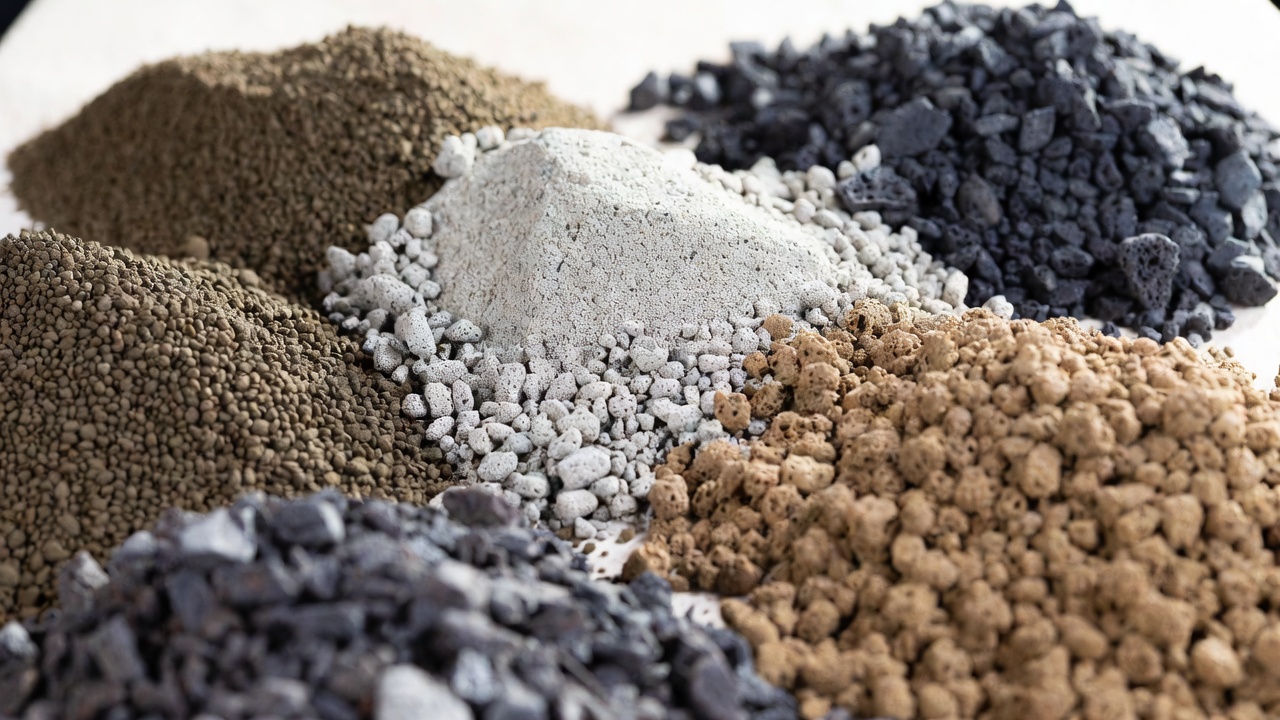
Bonsai soil is granular, inorganic, and well-draining.
Traditional components include:
- Akadama – Clay granules that retain water while maintaining structure
- Pumice – Improves drainage and root aeration
- Lava rock – Adds structure and prevents compaction
For indoor tropical bonsai, some growers add a small percentage of organic material — but it should never dominate the mix.
Beginner-Friendly DIY Mix
If you can’t access traditional Japanese substrates, use:
- 1 part pumice
- 1 part lava rock
- 1 part coarse bonsai soil substitute (like baked clay granules)
The key principles:
- Particles should be uniform
- No fine dust
- Water should drain within seconds
How Soil Influences Watering Frequency
Fast-draining soil means you may water more often — but that’s intentional.
Bonsai soil encourages:
- Frequent oxygen exchange
- Strong feeder root development
- Healthy root pruning cycles
Healthy roots = healthy foliage.
How to Plant and Repot Bonsai in a Pot
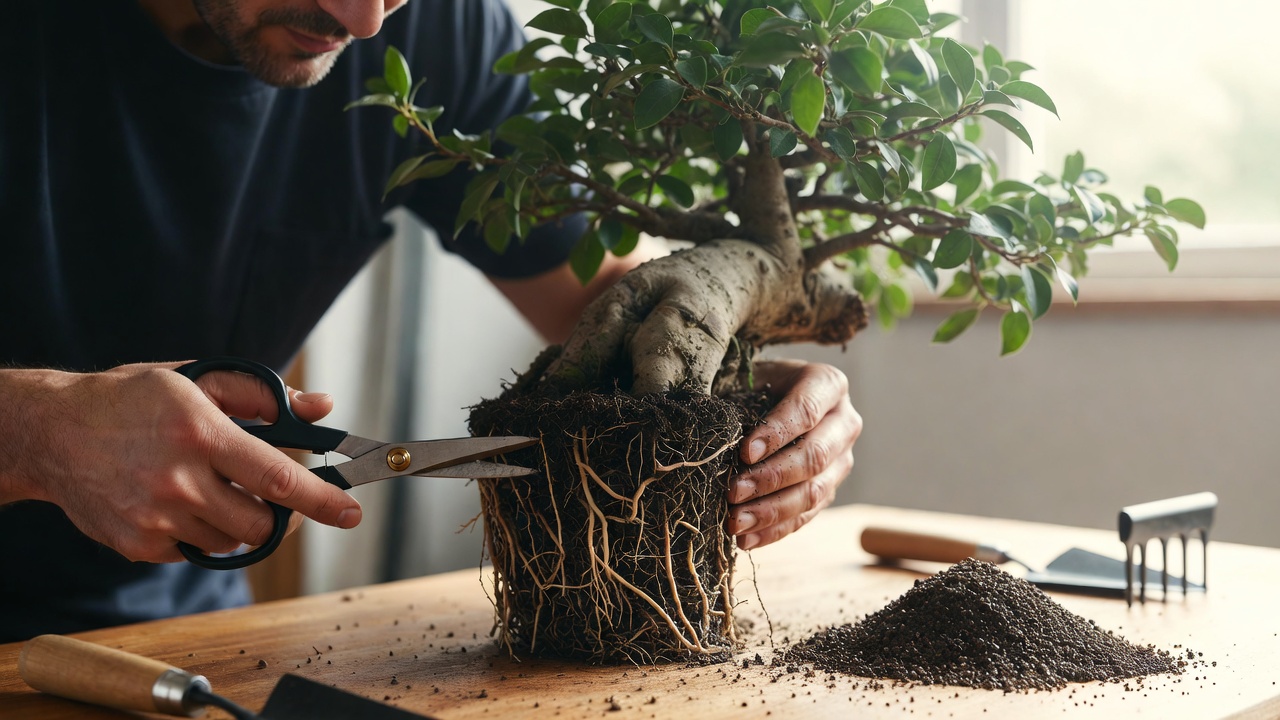
Repotting is essential because bonsai roots are actively managed.
When to Repot
- Young bonsai: every 1–2 years
- Mature bonsai: every 3–5 years
- Tropical indoor bonsai: late spring or early summer
Signs it’s time:
- Roots circling the pot
- Water drains unusually slowly
- Stunted growth
Step-by-Step Repotting Process
- Prepare new pot with mesh over drainage holes
- Remove tree carefully from old pot
- Gently rake out old soil with a root hook
- Prune up to 25–30% of roots (never more for beginners)
- Add fresh soil base layer
- Position tree properly
- Backfill with soil, eliminating air pockets
- Water thoroughly until runoff is clear
Aftercare Is Crucial
After repotting:
- Keep out of direct harsh sun for 2 weeks
- Do not fertilize immediately
- Maintain consistent moisture
Repotting stress is normal — recovery takes time.
Watering Bonsai in a Pot (Precision Over Schedule)
The most common question:
“How often should I water?”
The honest answer: When the soil needs it.
The Correct Watering Method
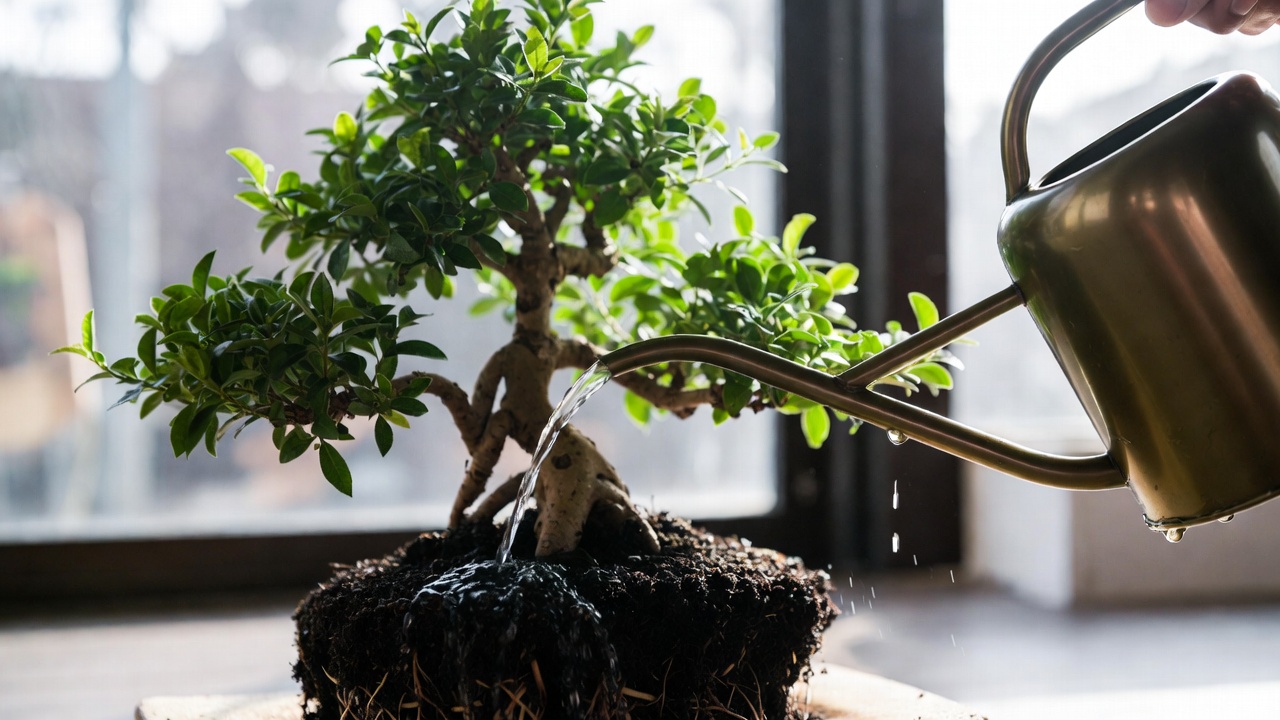
Use the soak-and-drain method:
- Water thoroughly until water flows from drainage holes
- Wait until top layer begins to dry
- Repeat
Never rely solely on misting. Misting does not hydrate roots.
Signs of Overwatering
- Yellowing leaves
- Mushy roots
- Soil staying wet for days
Signs of Underwatering
- Dry, brittle leaves
- Soil pulling away from edges
- Lightweight pot
The goal is consistent moisture — never soggy, never bone-dry.
Light Requirements for Indoor Bonsai
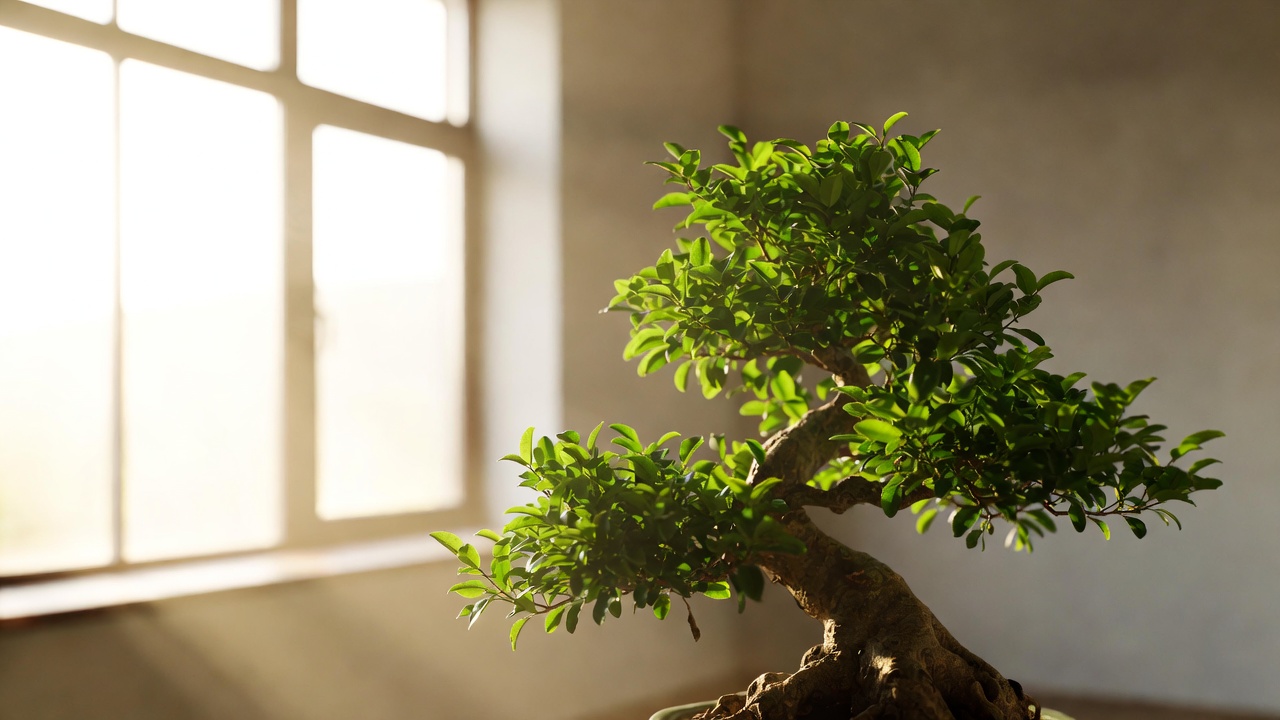
Light is often underestimated in indoor bonsai care.
Most tropical bonsai need:
- Bright, indirect light
- 6–8 hours daily minimum
- South- or east-facing window placement
If natural light is insufficient, a full-spectrum grow light dramatically improves health and compact growth.
Weak light results in:
- Leggy growth
- Larger leaves
- Weak branches
Compact foliage requires strong light.
Fertilizing Bonsai in a Pot
Because bonsai live in limited soil, nutrients deplete quickly.
Why Feeding Matters
Restricted roots mean:
- Limited nutrient storage
- Higher dependence on regular fertilization
Organic vs Synthetic Fertilizers
Organic
- Slow release
- Improves soil biology
Synthetic (Balanced 10-10-10 or similar)
- Immediate availability
- Easy to measure
For indoor bonsai, diluted liquid fertilizer every 2–4 weeks during active growth works well.
Never fertilize dry soil. Always water first.
Pruning & Shaping While Growing Bonsai in a Pot
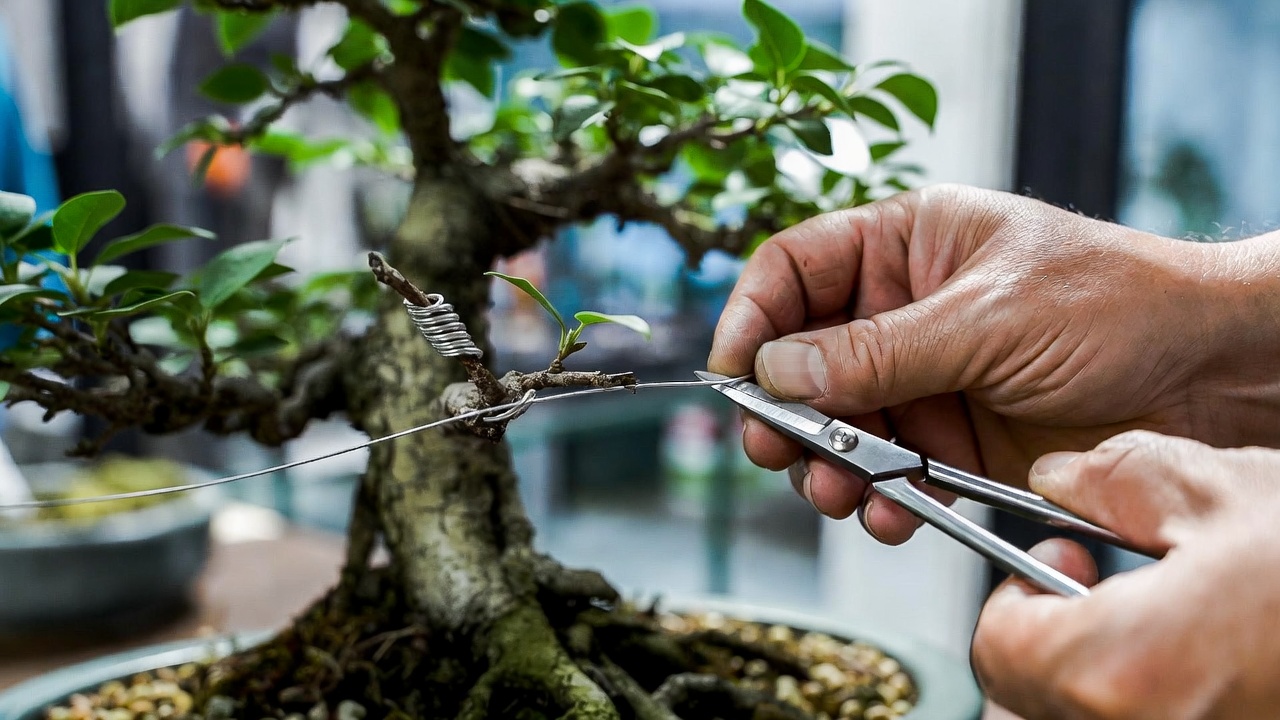
Pruning maintains size and enhances form.
Structural vs Maintenance Pruning
- Structural pruning shapes major branches
- Maintenance pruning controls leaf size and density
Root Pruning Basics
Root pruning:
- Encourages fine feeder roots
- Maintains pot proportion
- Prevents root binding
Done during repotting only.
Wiring for Shape Control
Aluminum bonsai wire gently guides branch direction.
Remove before wire scars bark.
Patience is critical — bonsai development takes years.
Common Problems When Growing Bonsai in a Pot (And How to Fix Them)
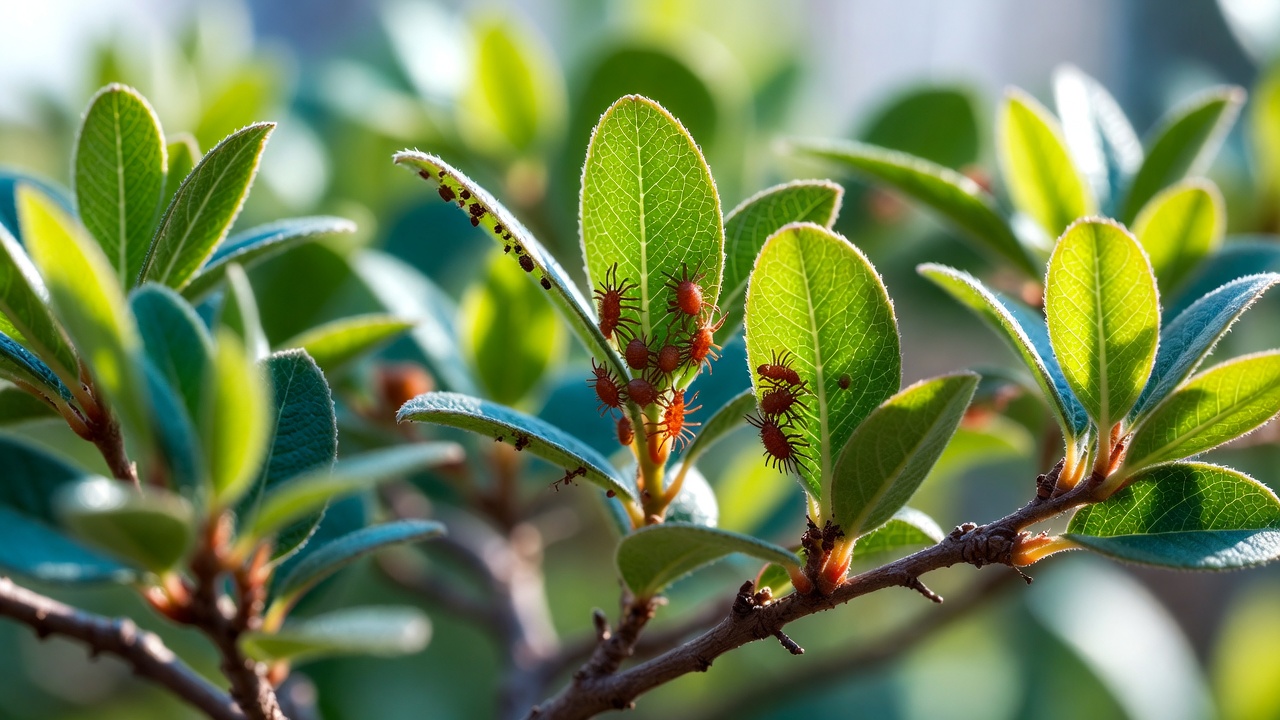
Even experienced growers occasionally face setbacks. The difference between failure and success is early diagnosis. Because bonsai in a pot live in a restricted root environment, problems escalate faster than with typical indoor plants.
Here’s how to identify and correct the most common issues.
1. Root Rot
Symptoms:
- Persistent yellowing leaves
- Foul smell from soil
- Mushy, dark roots
- Slow or halted growth
Cause:
Overwatering combined with poor drainage or compacted soil.
Solution:
- Remove tree from pot immediately
- Trim affected roots with sterile scissors
- Repot into fresh, well-draining bonsai soil
- Adjust watering practices
Prevention is simple: always use fast-draining substrate and ensure drainage holes remain unobstructed.
2. Sudden Leaf Drop
Leaf drop is alarming but not always fatal.
Common Causes:
- Light change (moving locations)
- Temperature shock
- Overwatering or underwatering
- Low humidity
Fix:
- Stabilize environment
- Avoid frequent relocation
- Increase light exposure gradually
- Maintain consistent watering
Tropical bonsai like ficus often shed leaves when adapting to new indoor conditions — but they typically rebound within weeks.
3. Pest Infestations
Indoor bonsai are vulnerable to:
- Spider mites
- Scale insects
- Aphids
- Fungus gnats
Warning Signs:
- Sticky residue
- Webbing
- Tiny moving dots on leaves
- Leaf discoloration
Treatment:
- Isolate affected plant
- Rinse foliage thoroughly
- Apply insecticidal soap or neem oil
- Improve airflow and light
Healthy bonsai with proper light and airflow are far less prone to pests.
4. Stunted Growth
If your bonsai hasn’t grown in months:
Check:
- Light intensity
- Root congestion
- Fertilizer routine
- Soil compaction
Often, repotting into fresh substrate resolves stagnation.
Best Beginner-Friendly Species for Bonsai in a Pot Indoors
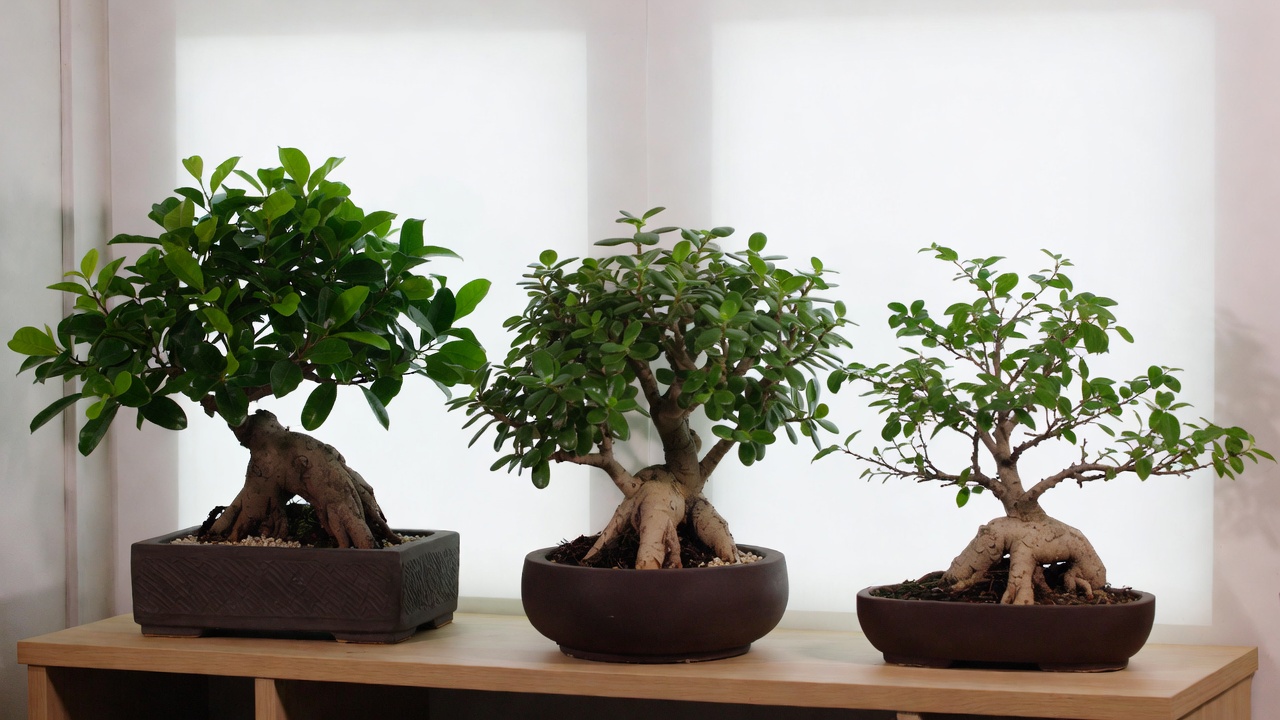
Species selection dramatically affects success rates. Not all bonsai trees are suitable for indoor life.
1. Ficus Bonsai (Ficus retusa / Ficus microcarpa)
One of the most forgiving indoor bonsai species.
Why it’s ideal:
- Tolerates low humidity
- Adapts to indoor light better than most
- Recovers well from pruning
Perfect for beginners learning watering and shaping techniques.
2. Chinese Elm (Indoor-Capable Varieties)
Some cultivars adapt indoors if given strong light.
Benefits:
- Attractive bark
- Classic bonsai look
- Responsive to pruning
However, they perform best with seasonal outdoor exposure if possible.
3. Juniper (Why It’s Often Misunderstood)
Juniper bonsai are commonly sold to beginners — but they are outdoor trees.
Indoors, they decline slowly due to lack of winter dormancy. If you have a balcony or garden, they thrive outside year-round (with protection in extreme cold).
Avoid keeping juniper strictly indoors long-term.
4. Jade (Portulacaria afra) as a Bonsai Alternative
Technically a succulent, but highly popular for bonsai styling.
Advantages:
- Excellent drought tolerance
- Easy propagation
- Ideal for dry indoor environments
For absolute beginners, jade bonsai can be a stress-free entry point.
Seasonal Care Calendar for Bonsai in a Pot
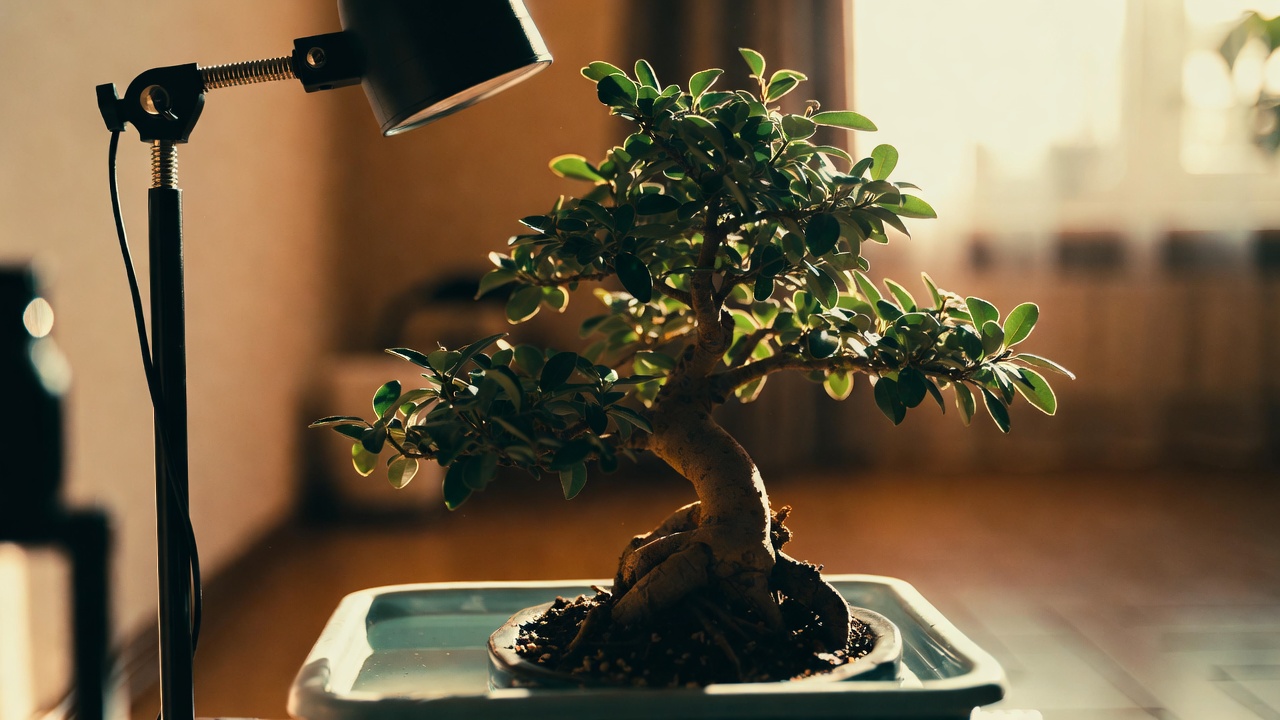
Even indoor bonsai respond to seasonal changes in light and temperature.
Spring
- Begin fertilizing regularly
- Repot tropical species if needed
- Increase watering frequency
- Resume structural pruning
Spring is the primary growth season.
Summer
- Monitor soil moisture closely
- Protect from intense afternoon sun through glass
- Increase humidity if AC is running
- Continue feeding every 2–4 weeks
Growth is strongest during this period.
Fall
- Gradually reduce fertilization
- Slow pruning frequency
- Monitor decreasing daylight
Growth begins to taper.
Winter
- Reduce watering slightly
- Stop fertilizing
- Supplement with grow lights if necessary
- Protect from cold drafts
Indoor heating systems often reduce humidity — consider using a humidity tray.
Advanced Expert Tips for Thriving Bonsai Indoors
Once you master the basics, refinement elevates your bonsai from healthy to exceptional.
Use a Humidity Tray (Correctly)
A shallow tray filled with water and pebbles increases local humidity — but it should never allow the pot to sit directly in water.
Prioritize Air Circulation
Stagnant indoor air encourages pests and fungal issues. Gentle airflow (not cold drafts) strengthens foliage.
Rotate the Tree Weekly
Indoor light is directional. Rotating prevents lopsided growth and maintains symmetry.
Avoid Beginner Shortcuts
Do not:
- Use regular garden soil
- Skip drainage mesh
- Fertilize immediately after repotting
- Keep temperate trees indoors year-round
Precision and patience define successful bonsai cultivation.
Frequently Asked Questions About Bonsai in a Pot
How long can a bonsai live in a pot?
With proper care, bonsai can live decades — even centuries. Longevity depends on species selection, repotting cycles, and consistent maintenance.
Can I grow bonsai in any shallow container?
No. The container must have adequate drainage holes. Decorative bowls without drainage are unsuitable.
Why is my bonsai dying after repotting?
Likely causes:
- Excessive root pruning
- Fertilizing too soon
- Direct sun exposure immediately after repotting
Allow recovery time.
Should I mist my bonsai daily?
Misting increases temporary humidity but does not replace proper watering. Focus on soil hydration first.
Can I use regular houseplant fertilizer?
Yes — but dilute to half strength and apply during active growth only.
Final Thoughts: Mastering Bonsai in a Pot Is About Balance
Growing bonsai in a pot is both horticulture and art. The shallow container restricts roots — but it also creates harmony, proportion, and intentional design.
Success comes from understanding:
- Proper container depth
- Fast-draining soil composition
- Precise watering habits
- Adequate indoor light
- Seasonal adjustments
- Regular pruning and feeding
Most failures stem from treating bonsai like ordinary houseplants. They are not. They are living sculptures that require thoughtful, consistent care.
If you focus on building a strong root system in the right pot with the correct soil, everything else becomes easier. Healthy roots lead to vibrant foliage, compact growth, and long-term resilience.
Start simple. Choose a beginner-friendly species. Invest in proper soil. Learn your tree’s signals. Over time, you’ll develop intuition — and that’s when bonsai truly becomes rewarding.
Your bonsai in a pot isn’t just decoration. It’s a living ecosystem in miniature form — and with the right knowledge, it can thrive indoors for years to come.