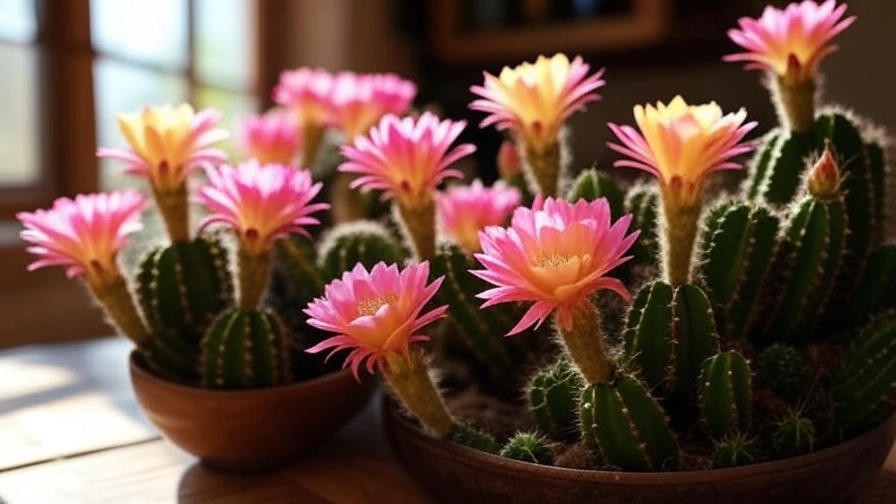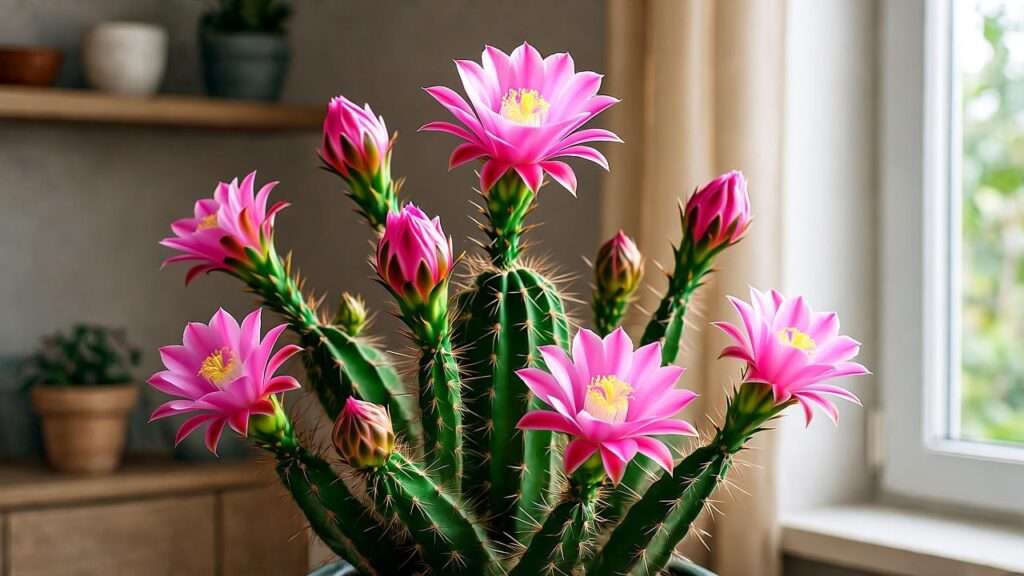

While the vast majority of your indoor plant collection prepares to slip into a deep winter dormancy, one tropical rebel is actively gearing up for a spectacular, vibrant explosion of color. The Thanksgiving cactus (Schlumbergera truncata) is a true winter-blooming showstopper, flashing brilliant shades of neon pink, fiery orange, snow white, and deep crimson just as the outdoor landscape turns gray.
However, hunting for a high-quality thanksgiving cactus for sale online or at local nurseries can feel like a high-stakes gamble. Because these plants are heavily marketed right before the holidays, mass-production growers often rush them to big-box shelves in subpar soil, packed too tightly in freezing transit trucks. The result? Thousands of plant parents bring home a specimen that looks beautiful on day one, only to watch it drop every single one of its flower buds within 48 hours due to environmental shock, root rot, or hidden pest damage.
As experienced horticulturists who have spent decades tracking down, cultivating, and propagating holiday cacti, we know exactly what differentiates a fragile, low-grade plant from a robust, multi-generational heirloom. In this comprehensive, skyscraper-level buying guide, we will walk you through the absolute best digital and brick-and-mortar sources, expose the industry tricks to avoiding mislabeled plants, and provide an expert, step-by-step physical inspection checklist so you can buy with total confidence.
Quick Summary: The Thanksgiving Cactus Buyer’s Cheat Sheet

To find a premium plant, you must first understand its biological identity. Despite its common name, Schlumbergera truncata is entirely distinct from the classic desert cacti most people picture. It is not an arid, sand-dwelling organism that thrives on neglect and searing heat.
The Amazonian Origin Story
The Thanksgiving cactus is an epiphytic and sometimes lithophytic cactus native to the coastal mountains of southeastern Brazil, particularly the shaded, humid rainforests of Rio de Janeiro. In their native habitat, these plants grow anchored to the branches of moss-covered trees or nestled tightly within rocky crevices. They survive on a diet of dappled sunlight, high atmospheric humidity, and frequent, fast-draining rainfall that washes over their roots without ever leaving them waterlogged.
When searching for a Thanksgiving cactus for sale, keeping this jungle heritage in mind is crucial. It tells you immediately that the plant should never be sitting in dense, heavy, regular potting soil, and it explains why the plant’s tissues are highly sensitive to extreme drafts and bone-dry air.
H3: Thanksgiving vs. Christmas vs. Easter Cactus (The Confusion Matrix)
The holiday plant industry is notorious for mislabeling species. It is incredibly common to walk into a retail store and see a plant labeled a “Christmas Cactus” when it is botanically a Schlumbergera truncata (Thanksgiving Cactus). Before you hand over your money, look closely at the flattened leaf-like stem segments, which are technically called cladodes.
Holiday Cactus Identification Guide
To make it much easier for your readers to tell these holiday varieties apart at a glance, replacing the text diagram with a clean side-by-side comparison table provides a highly professional, scannable format.
| Feature | Thanksgiving Cactus (S. truncata) | Christmas Cactus (S. x buckleyi) | Easter Cactus (R. gaertneri) |
| Segment Margins | Sharply pointed, saw-toothed, or claw-like projections | Smooth, gently rounded, or scalloped edges | Flat, smooth edges with tiny bristles at the tips |
| Bloom Timing | Late fall (October–November) | Early winter (December–January) | Spring (March–May) |
| Flower Growth | Horizontal; extends straight out from segment tips | Pendulous; cascades gracefully downward | Flared; upright starburst shapes |
| Pollen Anthers | Purplish-brown or yellow | Pure white | Yellow |
-
Thanksgiving Cactus (Schlumbergera truncata): The margins of the segments feature highly distinct, pointed, tooth-like projections. They look almost like miniature crab claws or serrated saws. The anthers (the pollen-bearing structures) are purplish-yellow, and the flowers grow horizontally, extending straight out from the tips.
-
Christmas Cactus (Schlumbergera x buckleyi): The margins of the segments are smooth, rounded, and scalloped, completely lacking sharp teeth. The flowers hang gracefully downward like cascading chandeliers, and the pollen-bearing anthers are pure white.
-
Easter Cactus (Rhipsalidopsis gaertneri): The segments are entirely flat with tiny, brownish bristles at the very tips, blooming much later in the spring with star-shaped, flared blossoms rather than tubular, layered petals.
Why this matters to the buyer: The Thanksgiving cactus naturally blooms roughly 4 to 6 weeks earlier than the true Christmas cactus. If you are shopping in October or November for early holiday color, Schlumbergera truncata is the exact botanical variety you want to look for.
Top Digital and Local Sources: Where to Find a Thanksgiving Cactus for Sale
The venue where you buy your houseplant dictates the baseline care it received during its most critical growth phases. Let’s break down the primary sources available to modern collectors, evaluating the pros, cons, and risk levels of each.
1. Specialized Online Succulent Nurseries (Best for Rare Varieties)
If you want a specific, verified cultivar rather than a generic color mix, dedicated online succulent nurseries are your gold standard. Establishments like Mountain Crest Gardens, Planet Desert, and other specialized family-owned nurseries treat these plants as botanical specimens rather than holiday inventory.
-
The Pros: Excellent quality control; plants are grown under strict greenhouse conditions; varieties are cleanly cataloged by their correct botanical names; shipping packaging is engineered to minimize soil spillage and segment breakage.
-
The Cons: You will pay a premium for specialized shipping; availability can sell out rapidly by early October as collectors jump on the inventory.
2. Artisan Marketplace Communities (Best for Heirloom Cuttings)
Platforms like Etsy and specialized plant groups on eBay have revolutionized houseplant collecting. Here, you are often buying directly from small-scale growers, hobbyists, and long-time horticulturists who root cuttings from their personal, decades-old mother plants.
-
The Pros: The absolute best way to source rare, hard-to-find cultivars, such as the elusive true yellow-blooming “Limelight Dancer,” the striking bicolor “Samba Brazil,” or highly unique variegated sports. You can often chat directly with the grower to ask about their specific mother plant’s lineage.
-
The Cons: Shipping and quality vary wildly by seller. You must lean heavily on customer reviews, looking closely for feedback regarding how well the seller insulates packages against severe weather.
3. Local Independent Garden Centers (Best for Physical Control)
Visiting a local, high-end independent nursery or botanical boutique during October and November is one of the most rewarding ways to hunt for a Thanksgiving cactus.
-
The Pros: Zero shipping stress for the plant. You get to physically touch the foliage, inspect the root systems, count the buds, and ensure that the plant does not experience a massive thermal shock on its ride home. Local nurseries also tend to buy from higher-quality regional wholesale growers rather than industrial mass-producers.
-
The Cons: Stock is highly seasonal. If you walk in during July, you likely won’t find a single one; by mid-December, the remaining stock may already be spent and finished blooming.
4. Big-Box Retailers and Grocery Stores (Best for Budget Hunters)
Home Depot, Lowe’s, IKEA, and local grocery chains flood their entryways with mass-produced Schlumbergera selections starting right around late October.
-
The Pros: The price point is unbeatable. You can easily pick up beautiful, fully packed 4-inch or 6-inch pots for a fraction of the cost of an online nursery.
-
The Cons: High biological risk. These plants are frequently subjected to severe retail neglect. They are often drowned by automated watering systems, left to sit in stagnant standing water inside decorative plastic foil wrappers (a fast track to root rot), or exposed to chilly blasts of wind every time the automatic store doors slide open.
The In-Person Buyer’s Checklist: How to Inspect a Plant at the Nursery
If you choose to purchase your plant locally, do not simply grab the first pot with the biggest, prettiest flower. Use this professional botanical inspection protocol to ensure you are buying a long-term survivor.
The Segment Secret: Texture and Color
Do not just look at the plant; look closely at individual cladodes. Slide your fingers gently along the lower and mid-tier segments.
-
Healthy Sign: They should feel thick, stiff, plump, and leathery. The color should be a bright, uniform, healthy green.
-
Warning Sign: Avoid any plant where the segments look puckered, wrinkled, paper-thin, or feel limp like wilted lettuce. While this can sometimes mean the plant is simply thirsty, in a retail environment, it more often signifies that the roots have already rotted away from overwatering, leaving the plant completely unable to take up moisture. Additionally, steer clear of plants with a deep reddish-purple cast across all segments; this indicates severe light or thermal stress.
The Bud Count Calculation
It is incredibly tempting to buy the plant that is currently putting on the biggest floral show. Resist this temptation.
The Nursery Gold Rule: Open Blooms vs. Tight Buds
When browsing plants at the store, keep this simple rule of thumb in mind to get the most value for your money:
-
[AVOID THIS] Fully Blown Open Flowers: Plants displaying wide-open blossoms may look stunning on the shelf, but they are highly susceptible to shipping and environmental shock. They will often drop their blooms within 48 hours of entering your home.
-
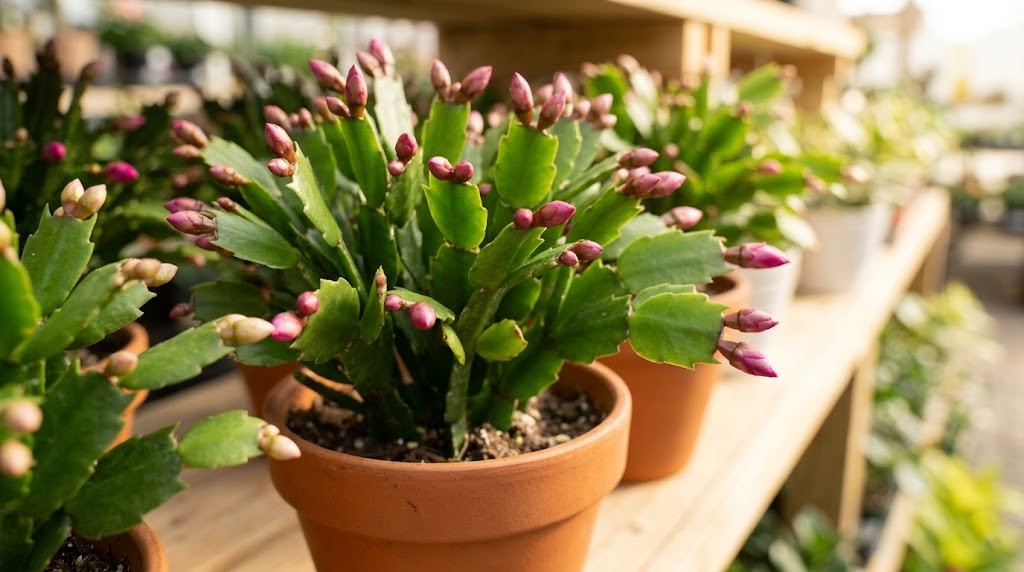
[BUY THIS] Tight, Plump, Unopened Buds: Choosing a specimen with closed buds ensures that the plant handles the stress of moving first. It will then safely adjust to your indoor microclimate and bloom beautifully at home.
When a Thanksgiving cactus is in full bloom, any sudden change in its environment—such as a shift in humidity, a drop in temperature during the car ride home, or a change in light angles—triggers a hormonal response that causes the plant to sever the connection to its blooms.
Instead, look for a specimen that is loaded with tight, plump, completely unopened buds that are just beginning to show a hint of color at the tips of the segments. This plant will do its moving while its buds are locked down, allowing it to burst into full flower after it adapts to the unique microclimate of your living room.
The Root and Stem Joint Inspection
Gently push aside the cascading segments and peer down at the soil line where the main stems emerge from the potting medium.
-
Check for Stability: Give the base of the plant a incredibly gentle wiggle. A healthy, well-rooted Thanksgiving cactus should feel firmly anchored in its pot. If the plant wobbles loosely, shifts as an entire detached unit, or feels top-heavy and unstable, the root system is likely compromised or non-existent.
-
Examine the Base: The very bottom segments of an older, mature plant may undergo a natural process called corking, turning brown, tough, and bark-like. This is perfectly normal and structurally beneficial. However, if the base looks dark, slimy, mushy, or black, reject the plant immediately—it is infected with black root rot (Pythium or Phytophthora).
The Pest Alert
Because holiday cacti grow in dense, overlapping, cascading clusters, they provide the ultimate hiding spots for insidious indoor plant pests. Pull back the segments and look closely at the joints where two cladodes connect.
-
Mealybugs: Look for tiny, white, cottony tufts tucked deep into the joints or around the base of the flower buds.
-
Spider Mites: Check the undersides of the segments for ultra-fine, dusty webbing and tiny, slow-moving red or brown specks.
-
Fungus Gnats: Give the pot a gentle tap. If a cloud of tiny, black, mosquito-like insects flies up from the soil surface, the potting medium is waterlogged and decaying—a prime breeding ground for root-destroying larvae.
The Mail-Order Survival Guide: Shipping Risks to Guard Against

If the rare variety you crave is only available online, ordering through the mail is highly effective—provided you take specific precautions to insulate your investment against the transit gauntlet.
The Temperature Threshold
Because Schlumbergera truncata is a tropical rainforest native, its cellular walls cannot handle freezing temperatures. If winter transit routes drop below 40°F (4°C), the water inside the plant’s plump segments can freeze, expand, rupture the cells, and turn your beautiful new cactus into a black, mushy mess within days.
-
The Fix: Always check the weather forecast for both your location and the shipping origin before ordering. If freezing weather is present anywhere along the path, ensure your chosen seller offers 72-hour specialized uniheat packs. These shipping warmers emit steady, low-level heat inside the insulated box to maintain a safe micro-environment during transit. If a seller does not offer heat packs during November or December, take your business elsewhere.
Bare-Root vs. Potted Shipping
Online sellers generally ship plants in one of two configurations:
-
Potted Shipping: The plant stays inside its plastic nursery pot with the soil intact, wrapped securely in paper or plastic wrap. This minimizes root disturbance but increases the overall weight of the package, raising shipping costs. It also carries a minor risk of the heavy pot shifting during transit and snapping off delicate cascading branches.
-
Bare-Root Shipping: The seller gently removes the plant from its pot, washes away the bulk of the soil, wraps the root ball in moist moss or paper towels, and secures the entire plant in protective batting. This is an incredibly safe way to ship holiday cacti because the lack of heavy soil prevents structural crushing. Schlumbergera handles bare-root transit remarkably well, provided you are prepared to pot it up immediately upon arrival.
The Unboxing Protocol
The moment your mail-order Thanksgiving cactus arrives, do not simply unpack it and sit it directly on a sunny windowsill. It has been trapped in pitch-black darkness for several days, and sudden, intense exposure to ambient conditions can shock its system.
-
Unbox in Dim Light: Open the package in a gently lit room away from harsh, direct sunlight.
-
Inspect and Trim: Check for any segments that may have snapped off during transit. If you find clean breaks, do not throw them away! Set those broken pieces aside on a dry counter for two days to callous; you can easily root them in a small pot of perlite to create entirely new, free starter plants.
-
Hydrate Moderately: If the plant was shipped bare-root, pot it into a loose, airy mix immediately. If it arrived potted and the soil feels bone-dry, give it a thorough, gentle drink of lukewarm water. Avoid cold water, which can shock the roots.
-
Acclimate Slowly: Keep the plant in a position with moderate, indirect light for the first 3 to 5 days, gradually moving it to its permanent location over the course of a week.
What Determines the Price? Factors Impacting the Cost
When browsing a Thanksgiving cactus for sale, you will notice a surprisingly wide range of price points. Understanding what factors drive these valuations ensures you don’t overpay for basic stock or pass up a genuine bargain on a rare specimen.
Pot Size and Maturity
The most predictable pricing variable is the sheer age and physical size of the specimen.
-
Starter Plugs (2-inch pots): Typically priced between $4 and $8. These are small, unbranched cuttings that have recently struck roots. They rarely feature buds in their first season and require patience, but they are an incredibly economical way to build a diverse collection of rare cultivars.
-
Standard Retail Size (4-inch to 6-inch pots): Ranging from $12 to $25. These are the sweet spot for seasonal buyers. They are fully branched, mature enough to put on a substantial floral show, and fit perfectly onto windowsills, mantels, and desks.
-
Mature Specimen Baskets (8-inch to 10+ inch hanging pots): Pricing starts around $35 and can exceed $75+. These are older, heavily branched, cascading specimens that have been grown in professional greenhouses for three or more years. They feature woody, established trunks and can produce hundreds of blooms simultaneously.
Color Rarity and Cultivar Demand
Standard, mass-produced Thanksgiving cacti typically bloom in traditional shades of hot pink, classic magenta, or bright red. Because wholesale operations grow these by the millions, they are highly affordable.
Here is how you can present that pricing information in a clean, highly professional, and natural text format that flows perfectly within your article:
The Cost Breakdown by Color and Rarity
When budgeting for your new holiday houseplant, expect the pricing to scale based directly on how common or rare the flower color is:
-
Standard Colors ($10 to $20): This budget-friendly tier covers the mass-produced, classic favorites. It includes vibrant Hot Pink, deep Magenta, and festive Bright Red. Because wholesale nurseries grow these by the millions for the holiday rush, they are highly accessible and affordable.
-
Premium Colors ($25 to $45+): This collector’s tier includes varieties that are harder to propagate, slower-growing, or in high design demand. Expect to pay a premium for crisp Pure White, warm Apricot, hard-to-find Golden Yellow (like the “Christmas Flame” cultivar), and highly unique Variegated foliage specimens.
However, if you stumble upon a verified, boutique cultivar, the price scales up due to the limited nature of the propagation material:
-
True Whites (e.g., “White Christmas” or “Avalanche”): These require pristine greenhouse conditions to ensure the blooms stay completely snowy white without developing a pink blush (which happens when temperatures drop too low during bud formation).
-
Apricots and Peaches (e.g., “Aspen” or “Peach Parfait”): These gorgeous, warm-toned pastel varieties are highly coveted by interior designers and plant collectors alike, commanding premium prices online.
-
True Yellows (e.g., “Christmas Flame” or “Limelight Dancer”): Yellow is an incredibly elusive color in the Schlumbergera world. True yellow cultivars grow slightly slower and are highly sought after, meaning you will routinely see small starter pots fetching double the price of a standard red variety.
Post-Purchase Care: Preventing Immediate Bud Drop
You have successfully navigated the market, ran your physical checks, and brought home a spectacular, bud-heavy Thanksgiving cactus. Now comes the ultimate test: keeping those delicate buds attached to the plant so they can bloom successfully.
The 48-Hour Acclimation Window
When you introduce your plant to your home, it experiences an immediate atmospheric shift. Greenhouses are kept intensely humid, uniformly warm, and evenly lit. Your home, by comparison, features lower ambient humidity, directional window light, and localized temperature swings from heating vents or doors. To minimize bud drop during this vulnerable transition, implement the following rules immediately:
-
Pick a Spot and Stay Put: Find a permanent home for your plant and do not move it. Constantly shifting a holiday cactus around to show it off to guests alters the direction of the light hitting the buds, which signals the plant to drop them.
-
Avoid Thermal Shock: Ensure the plant is positioned far away from cold drafts, front doors, single-pane windows, and blasting heat registers or radiators. Sudden shifts of even 5 degrees can trigger mass bud abortion.
Lighting Requirements for Blooming Success
To sustain the massive amount of energy required to push open dozens of tubular blossoms, your Thanksgiving cactus needs high-quality light.
-
The Sweet Spot: Place the plant in a location that receives bright, abundant, indirect light. An East-facing window that provides soft morning sun is absolute perfection.
-
What to Avoid: Keep it out of intense, scorching, unshaded West or South-facing windows during the middle of the day. Harsh, direct afternoon sunlight will scorch the tender green segments, turning them yellow-white and causing the unopened flowers to dry up and shrivel.
Watering Rules: Overcoming the “Desert Myth”
Watering your new plant correctly is the single most important factor in its long-term survival. Remember: this is a tropical rainforest native, not an arid desert dweller.
-
The Soak and Dry Method: Do not water on a rigid calendar schedule. Instead, push your index finger two inches deep into the potting medium. If the top 1 to 2 inches of soil feels completely dry to the touch, it is time to water. Take the plant to the sink and pour lukewarm water over the soil until it runs freely out of the drainage holes at the bottom of the pot. Let all excess water drain away completely before returning the plant to its decorative saucer or cover pot.
-
The Stagnant Water Danger: Never, under any circumstances, allow your Thanksgiving cactus to sit in a pool of standing water inside a decorative tray or plastic holiday foil wrapper. Stagnant water deprives the roots of oxygen, causing them to drown, rot, and liquefy. This cuts off all hydration to the top of the plant, causing severe wilting that cannot be cured by adding more water.
Frequently Asked Questions (FAQ)
Why did my Thanksgiving cactus drop all its buds right after I bought it?
Bud drop is almost always caused by environmental shock. The most common culprits include sudden changes in light orientation, ambient humidity drops, exposure to chilly drafts during transport, or allowing the soil to dry out completely down to the bottom of the pot while the plant is actively blooming.
Is the Thanksgiving cactus safe for households with cats and dogs?
Yes! Unlike many other popular holiday plants—such as Poinsettias, Holly, and Mistletoe, which are notably toxic to domestic animals—the Thanksgiving cactus (Schlumbergera truncata) is completely non-toxic to both dogs and cats. While eating large amounts of the fibrous segments can still cause minor gastrointestinal upset, you do not have to worry about severe poisoning.
Can I grow a Thanksgiving cactus from unrooted cuttings bought online?
Absolutely. Buying unrooted cladode segments online is an incredibly budget-friendly way to source rare colors. To root them successfully, let the raw cut ends air-dry for 48 hours to form a firm callus. Then, insert the bottom segment about half an inch deep into a damp, highly aerated mix of 50% potting soil and 50% perlite or coarse pumice. Keep the medium lightly damp and place it in bright, indirect light; roots will reliably establish within 3 to 4 weeks.
How long can a Thanksgiving cactus live?
With proper care, a Thanksgiving cactus is incredibly long-lived, routinely surviving for 30, 50, or even 100+ years. Because of their immense lifespan and robust nature, these plants are famous for becoming beloved family heirlooms, passed down carefully from generation to generation as a living holiday tradition.
Conclusion and Next Steps
Finding a healthy, vibrant thanksgiving cactus for sale is more than just a seasonal impulse purchase—it is an investment in a living, blooming companion that can celebrate the holidays with your family for decades to come. By bypassing the neglected, waterlogged displays at mass retail stores, choosing specialized growers, selecting specimens packed with tight, unopened buds, and providing an airy, fast-draining potting environment, you ensure your winter home is filled with brilliant color for years to come.
Have you spotted a gorgeous color variety on your plant hunts this season? Are you trying to identify a mystery holiday cactus you recently acquired? Leave a comment below, share your favorite cultivation tips, or ask a question—our horticultural community loves to talk shop!