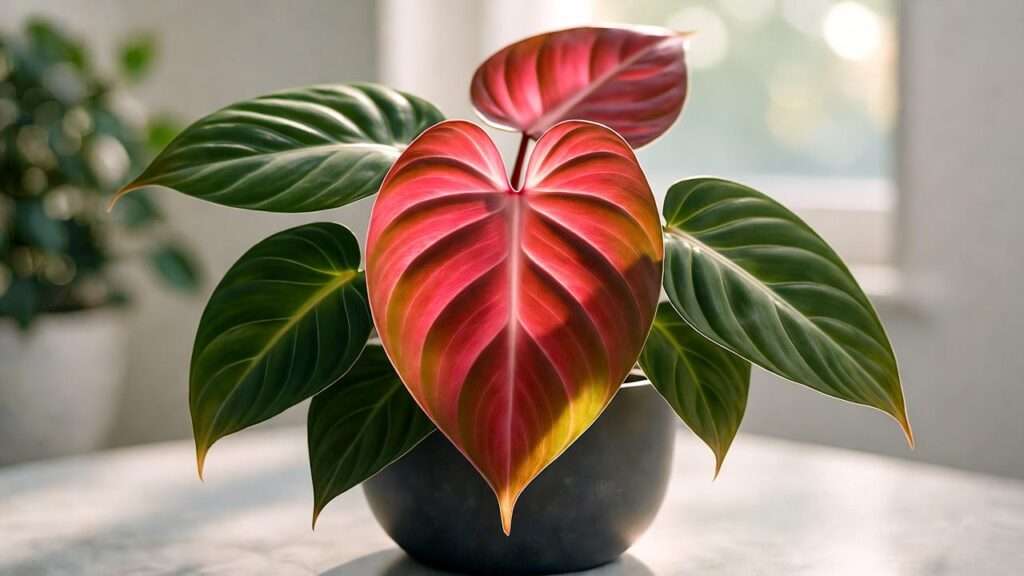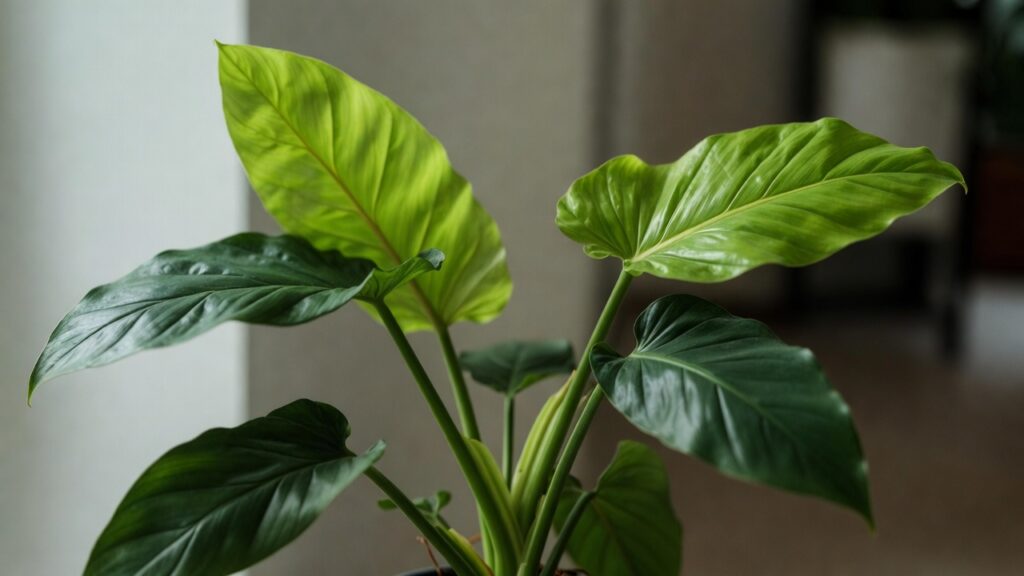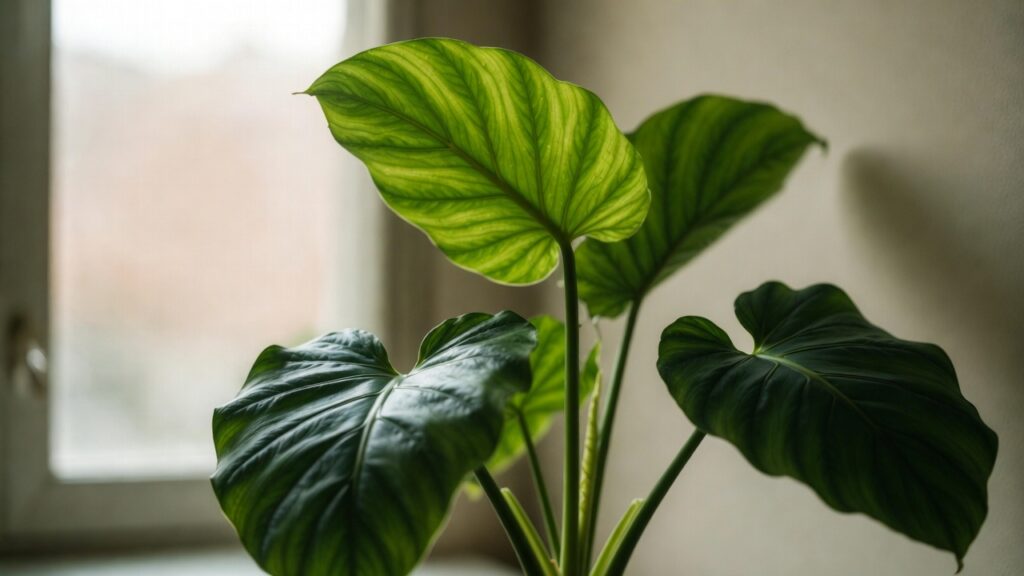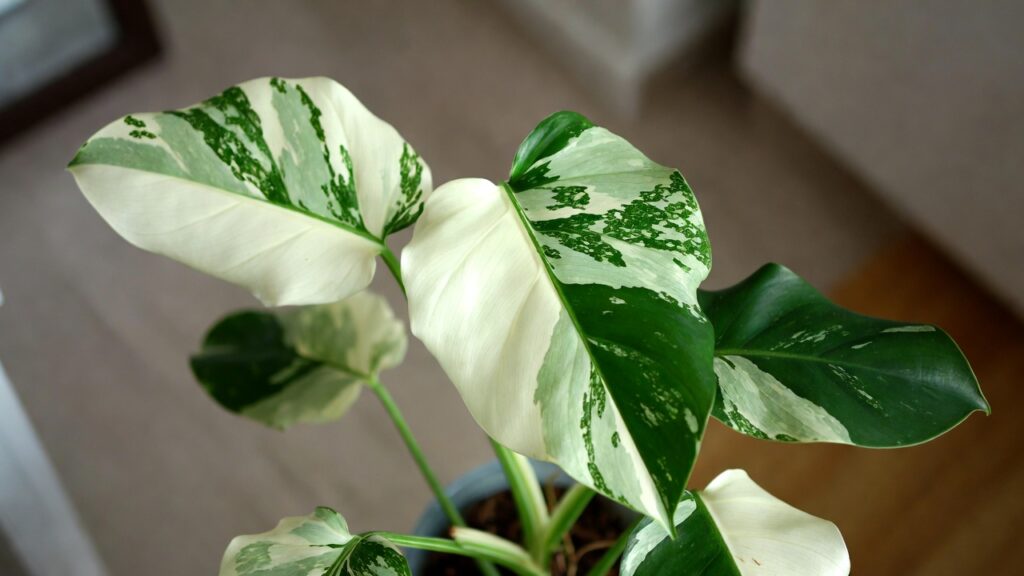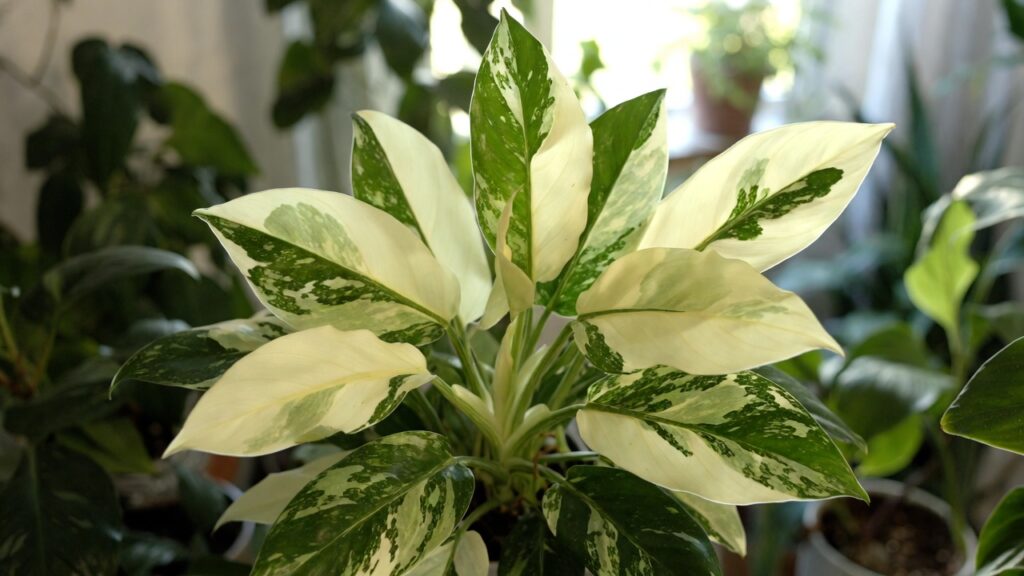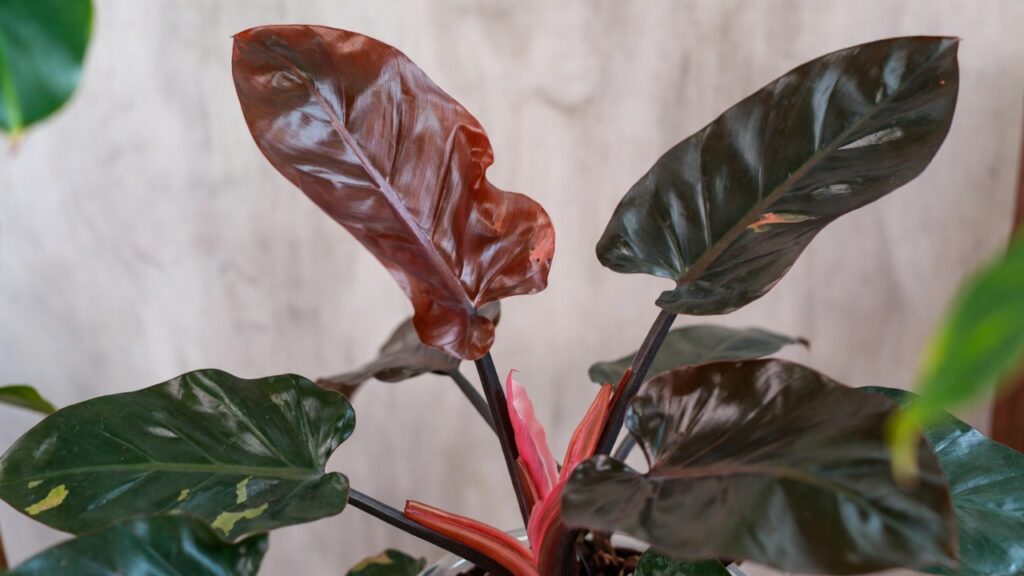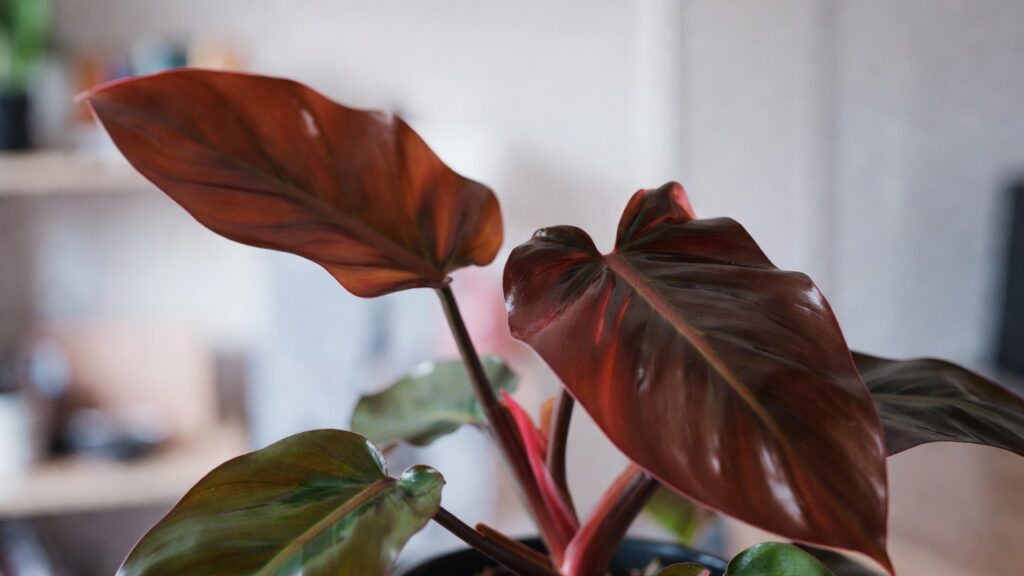
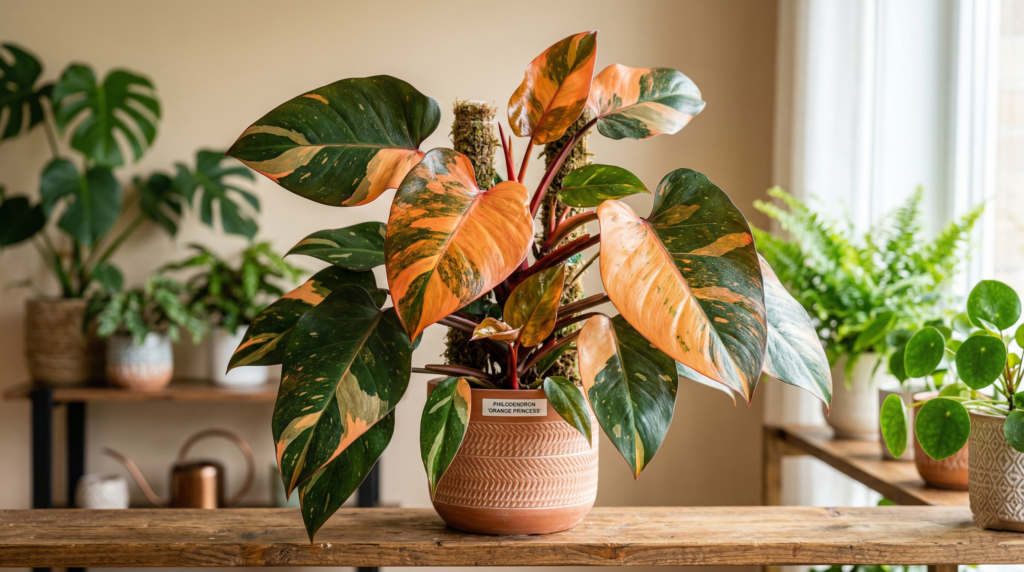
Few houseplants can stop you in your tracks quite like the orange princess philodendron. With its glowing, coppery-orange new leaves that gradually mature into deep green, this plant feels almost unreal—like something designed rather than grown. But here’s the catch: many plant owners quickly realize that keeping those vibrant colors and healthy growth isn’t as easy as it looks.
If your plant’s orange hues are fading, growth seems slow, or leaves are developing issues, you’re not alone.
This complete care guide is designed to solve those exact problems. Drawing from real-world indoor plant experience and proven horticultural practices, you’ll learn:
- How to maintain vibrant orange coloration
- The exact conditions your plant needs to thrive indoors
- How to diagnose and fix common problems quickly
Whether you’re a beginner or a collector, this guide will help you grow a thriving, eye-catching plant with confidence.
What Is an Orange Princess Philodendron?
Origin and Botanical Background
The Orange Princess Philodendron is a cultivated hybrid within the Araceae family, known for its ornamental foliage. Unlike some trailing philodendrons, this variety typically has a self-heading growth habit, meaning it grows upright rather than vining extensively.
It’s bred specifically for its striking color transitions, making it a favorite among indoor plant enthusiasts and collectors.
What Makes It Unique?
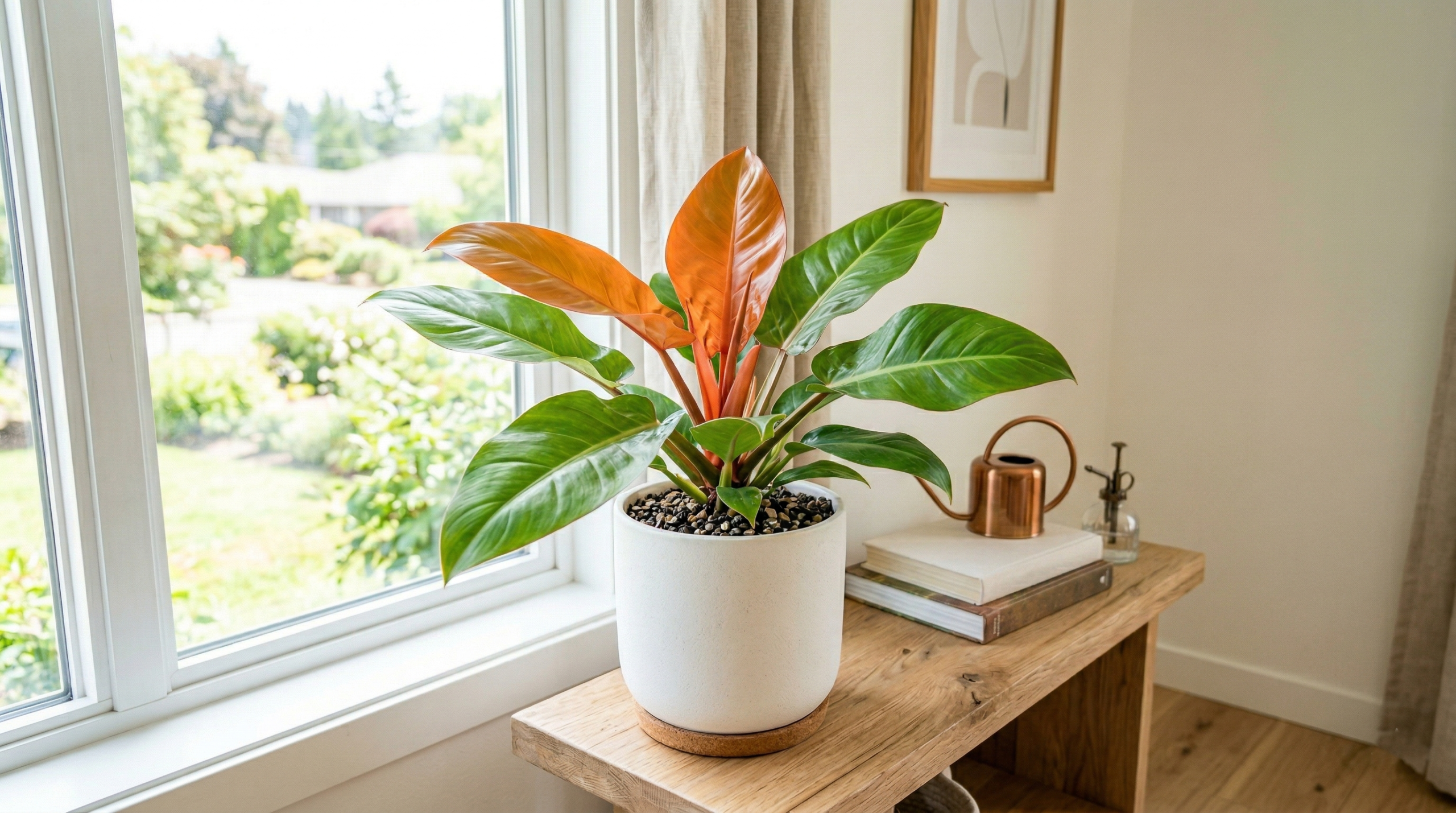
What sets this plant apart is its color-changing foliage:
- New leaves emerge in shades of bright orange or copper
- Gradually transition into lime green
- Mature into a rich, glossy dark green
This dynamic transformation gives the plant year-round visual interest—something rare even among premium houseplants.
Is It Rare or Expensive?
While more available than before, the Orange Princess is still considered a semi-rare houseplant. Prices can vary depending on size, maturity, and region.
- Small plants: moderately priced
- Mature specimens: significantly higher value
Its demand is driven by aesthetics and social media popularity, but also by how rewarding it is when properly cared for.
Orange Princess Philodendron Care Requirements (At a Glance)
Here’s a quick overview before we dive deeper:
- Light: Bright, indirect light
- Water: Moderate; allow top soil to dry
- Humidity: High (60%+)
- Soil: Well-draining, airy mix
- Temperature: 18–30°C (65–86°F)
- Fertilizer: Balanced, diluted monthly
Light Requirements for Vibrant Orange Color
Ideal Light Conditions
Light is the single most important factor in maintaining the signature orange color.
Your plant thrives in bright, indirect sunlight. This mimics its natural tropical environment, where it grows under filtered canopy light.
Why this matters:
The orange pigmentation in new leaves depends on proper light exposure. Without it, new growth may appear dull or pale.
Signs of Too Little or Too Much Light
Too little light:
- Faded or muted orange tones
- Slower growth
- Smaller leaves
Too much light:
- Leaf scorch or brown patches
- Washed-out colors
- Curling edges
Best Placement Indoors
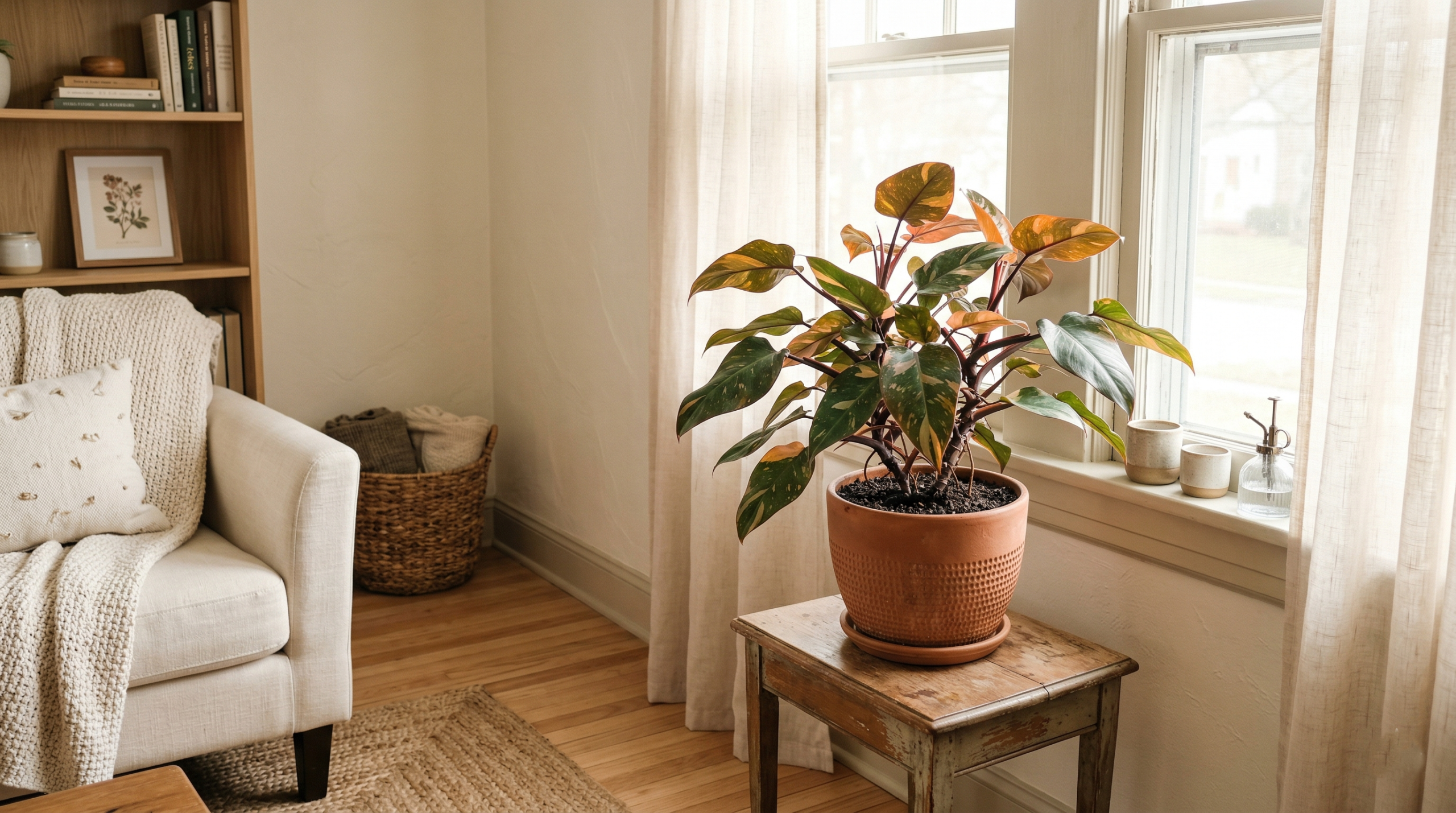
- Near an east-facing window for gentle morning sun
- A few feet away from a south or west window with sheer curtains
Watering Guide: Avoid Overwatering & Root Rot
How Often to Water
The golden rule:
Water only when the top 1–2 inches of soil feel dry.
This usually means:
- Once every 7–10 days in warm months
- Less frequently in winter
Signs of Overwatering
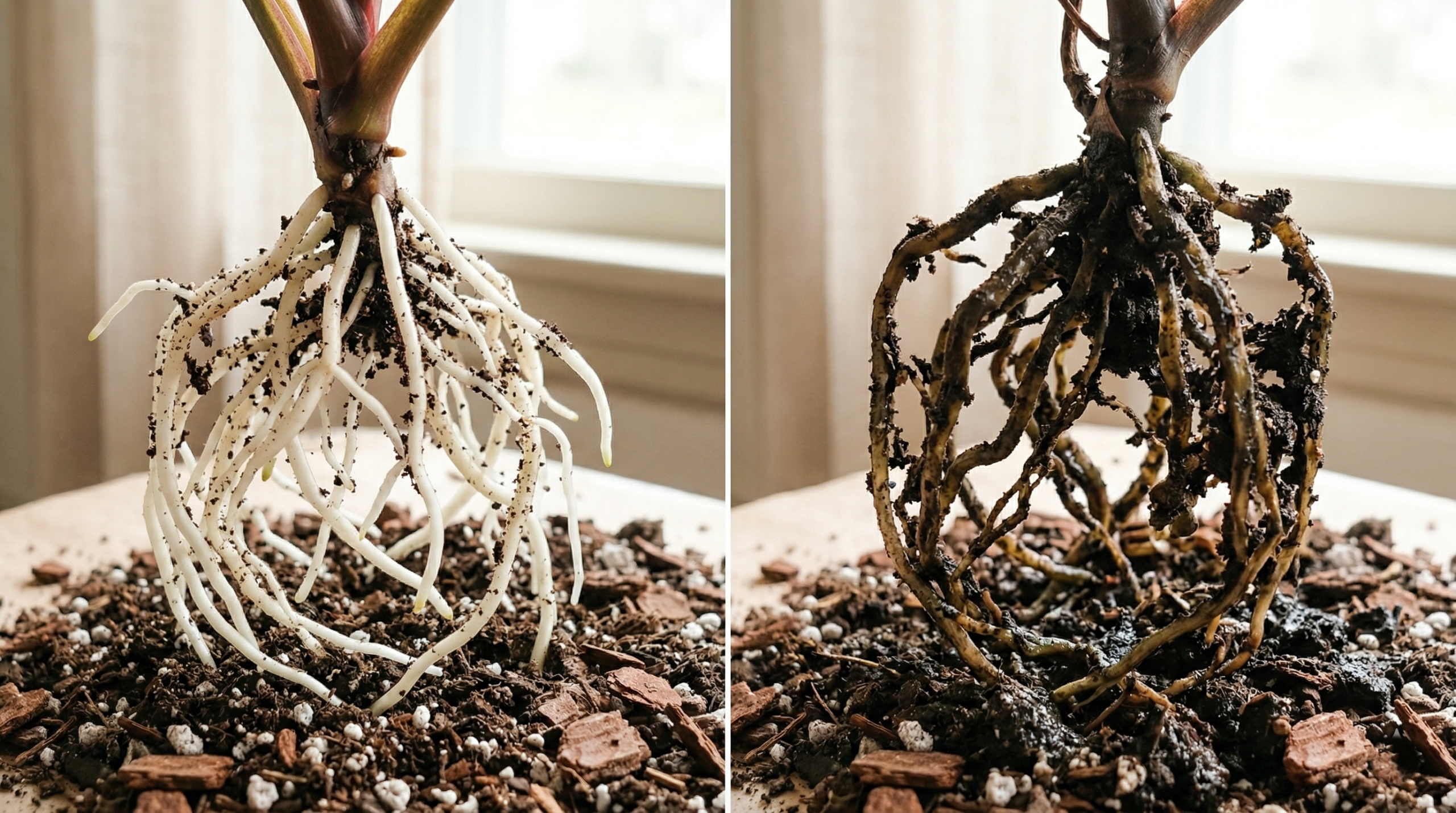
Overwatering is one of the most common mistakes.
Watch for:
- Yellowing leaves
- Mushy stems
- Persistent wet soil
- Root rot (foul smell, black roots)
Signs of Underwatering
- Drooping or curling leaves
- Dry, compacted soil
- Slower growth
Best Soil Mix for Healthy Growth
Ideal Soil Composition
The Orange Princess requires a well-draining, airy soil mix that allows roots to breathe.
A good mix includes:
- Peat or coco coir (moisture retention)
- Perlite (drainage)
- Orchid bark (aeration)
DIY Soil Recipe
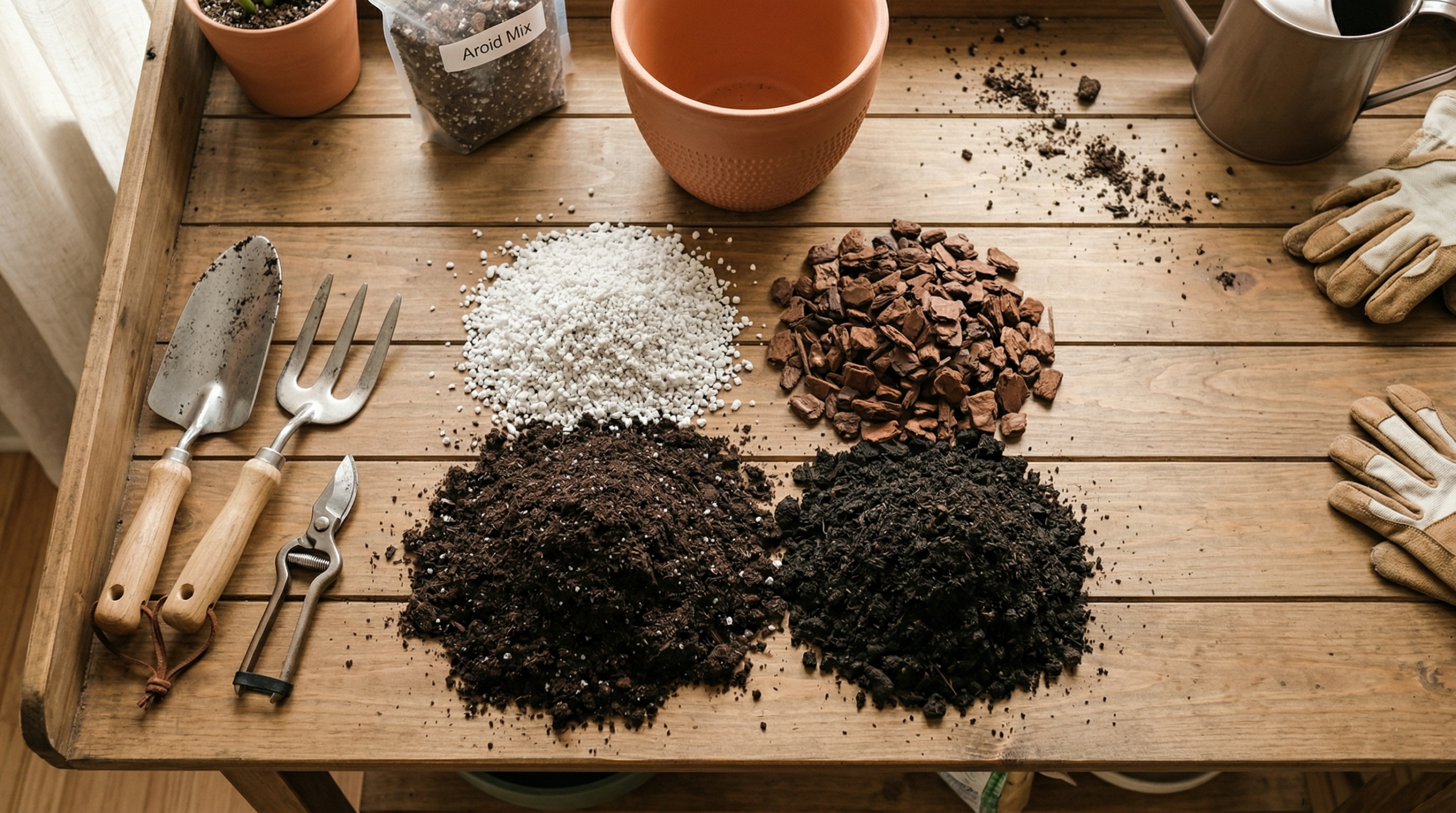
For best results, try this mix:
- 40% potting soil
- 30% perlite
- 20% orchid bark
- 10% compost or worm castings
When and How to Repot
Repot every 1–2 years or when:
- Roots grow out of drainage holes
- Growth slows despite proper care
Always choose a pot with drainage holes to prevent water buildup.
Humidity and Temperature Needs
Ideal Humidity Levels
This tropical plant thrives in high humidity (60% or higher).
Low humidity can cause:
- Brown leaf edges
- Slower growth
- Reduced vibrancy
How to Increase Humidity Indoors
- Use a humidifier (most effective)
- Place plants on a pebble tray with water
- Group plants together
Temperature Range
- Ideal: 18–30°C (65–86°F)
- Avoid cold drafts, air conditioners, and sudden temperature drops
Fertilizing for Growth and Color Enhancement
Best Fertilizer Types
Use a balanced liquid fertilizer (e.g., 10-10-10 or 20-20-20) diluted to half strength.
Feeding Schedule
- Every 4–6 weeks during the growing season (spring and summer)
- Reduce or stop feeding in winter
Common Fertilizing Mistakes
- Overfertilizing → leaf burn
- Ignoring salt buildup → root damage
How to Maintain the Orange Color (Key Section)
Why Leaves Turn Less Orange
If your plant isn’t producing vibrant orange leaves, the issue is usually one of these:
- Insufficient light
- Nutrient imbalance
- Natural leaf aging
Proven Tips to Enhance Color
- Increase bright, indirect light exposure
- Maintain a consistent feeding routine
- Rotate the plant weekly for even growth
- Keep humidity levels stable
What to Expect: Realistic Color Changes
Even under perfect care:
- Not all leaves will be intensely orange
- The color is temporary and part of the growth cycle
Understanding this prevents unnecessary stress and over-adjustment.
Common Problems and How to Fix Them
Yellow Leaves
Causes:
- Overwatering
- Poor drainage
Solution:
- Let soil dry out
- Improve drainage
Brown Tips or Edges
Causes:
- Low humidity
- Fertilizer salt buildup
Solution:
- Increase humidity
- Flush soil regularly
Pests (Spider Mites, Mealybugs, Aphids)
Signs:
- Sticky residue
- Tiny moving insects
- Webbing
Treatment:
- Neem oil spray
- Insecticidal soap
- Regular leaf cleaning
Slow or Stunted Growth
Possible reasons:
- Low light
- Root-bound plant
- Nutrient deficiency
Propagation Guide (Step-by-Step)
Best Propagation Method
The most reliable method is stem cuttings with nodes.
Propagation in Water vs Soil
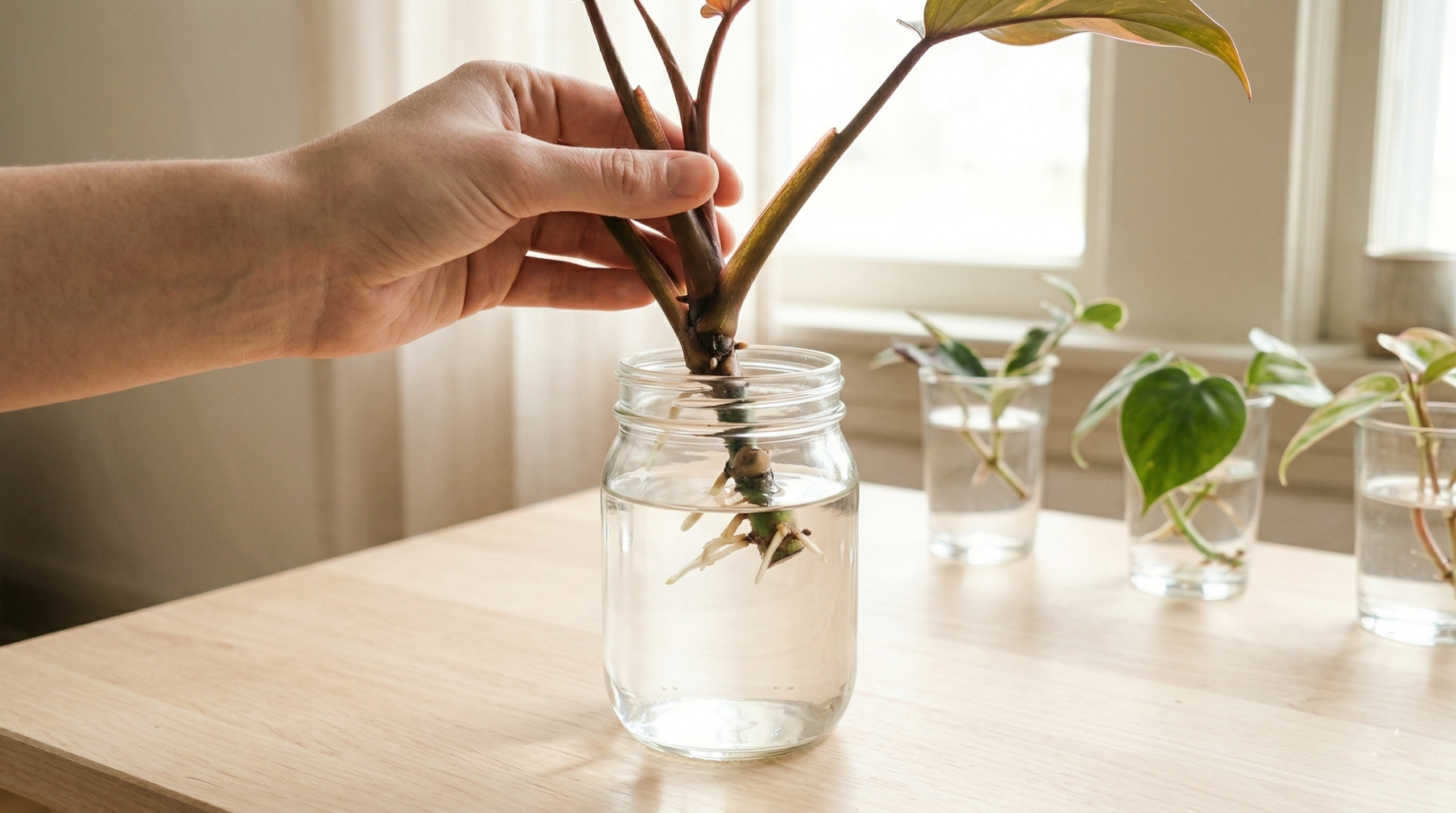
Water propagation:
- Easy to monitor root growth
- Requires transfer later
Soil propagation:
- Faster adaptation
- Less transplant shock
Timeline and Expectations
- Roots develop in 2–4 weeks
- New growth appears after 4–8 weeks
Styling and Display Ideas for Indoor Spaces
- Use decorative ceramic pots for contrast
- Add a moss pole for vertical growth
- Place in well-lit corners as a statement plant
Is Orange Princess Philodendron Beginner-Friendly?
Pros:
- Visually rewarding
- Adaptable to indoor conditions
Challenges:
- Requires proper lighting
- Sensitive to overwatering
Verdict:
Beginner-friendly with basic plant care knowledge.
Expert Tips for Thriving Plants
- Always prioritize light over watering frequency
- Avoid drastic changes in environment
- Observe your plant weekly—it tells you what it needs
Frequently Asked Questions (FAQ)
Why is my Orange Princess Philodendron losing its color?
Usually due to insufficient light or natural aging.
How fast does it grow?
Moderate growth under optimal conditions.
Can it grow in low light?
It can survive, but color and growth will suffer.
Is it toxic to pets?
Yes, like most philodendrons, it is toxic if ingested.
How do I make it bushier?
Prune regularly and provide adequate light.
Should I mist the leaves?
Occasionally, but a humidifier is more effective.
Final Thoughts
The orange princess philodendron is more than just a houseplant—it’s a living piece of art. While it may seem demanding at first, the truth is that with the right balance of light, water, and care, it becomes a highly rewarding addition to your indoor garden.
Consistency is the real secret.
Pay attention to your plant, respond to its signals, and you’ll be rewarded with stunning foliage that evolves beautifully over time.