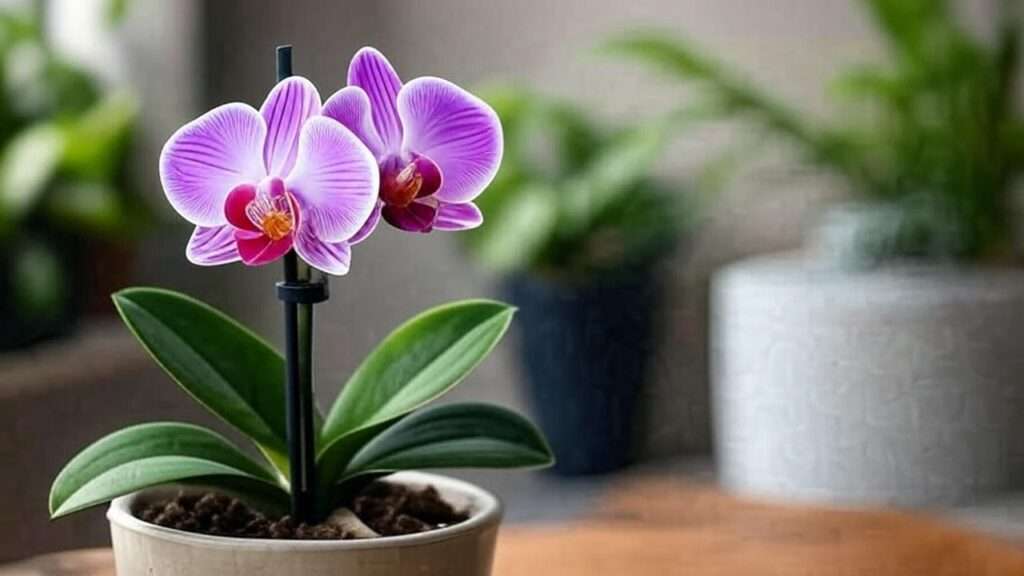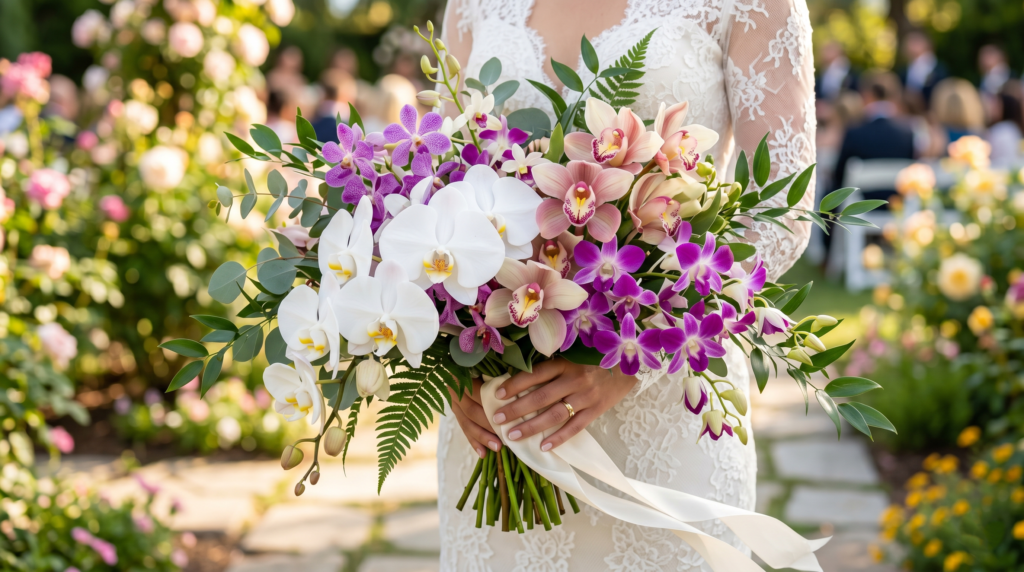

Few indoor plants capture attention the way orchids do. Their exotic shapes, long-lasting flowers, and vibrant colors instantly elevate any living space. Among all orchid varieties, orchid purple plants stand out as some of the most elegant and visually striking flowering houseplants you can grow indoors.
From soft lavender shades to deep royal violet tones, purple orchids bring a sense of luxury, calm, and natural beauty to homes, offices, and indoor gardens. Yet many plant lovers hesitate to grow orchids because they believe these plants are difficult to maintain.
The truth is very different.
With the right knowledge about light, watering, humidity, and orchid care, purple orchids are surprisingly manageable—even for beginners. Once you understand their natural growing habits, these stunning plants can bloom year after year, filling your home with vibrant flowers that last for months.
In this comprehensive guide, you’ll learn:
-
The most beautiful purple orchid varieties for indoor growing
-
How to provide the perfect light, water, and humidity conditions
-
Expert tips to encourage orchids to bloom again
-
Common orchid problems and how to fix them
-
Practical strategies to keep your orchid purple plant thriving for years
Whether you’re a beginner or an experienced indoor gardener, this guide will help you grow healthier, more vibrant purple orchids with confidence.
What Is an Orchid Purple Plant?
Understanding Purple Orchids
The term orchid purple typically refers to orchids that naturally produce purple, violet, lavender, or deep magenta flowers. These orchids belong to the Orchidaceae family, one of the largest plant families in the world with over 25,000 species.
Purple orchids are especially popular among indoor plant enthusiasts because they combine:
-
Exotic beauty
-
Long flowering cycles
-
Compact indoor-friendly growth
-
A wide range of purple shades
Many popular houseplant orchids—including Phalaenopsis, Dendrobium, and Cattleya—offer stunning purple varieties.
Unlike many flowering plants that bloom for only a few weeks, orchids can produce flowers that last 6 to 12 weeks or longer, making them one of the most rewarding indoor plants.
What Purple Orchids Symbolize
Purple orchids have deep symbolic meaning across many cultures.
They are commonly associated with:
-
Royalty and luxury
-
Admiration and respect
-
Elegance and beauty
-
Success and achievement
Because of this symbolism, purple orchids are often given as gifts for celebrations, promotions, or special occasions. Their rich color makes them a favorite for home décor and interior design as well.
Why Purple Orchids Are Popular Indoor Plants
Purple orchids have become one of the most beloved indoor flowering plants for several reasons.
Long-Lasting Blooms
Unlike many flowering houseplants, orchids can bloom for several months, making them highly decorative.
Exotic Appearance
Their intricate flower shapes and vibrant purple tones give orchids a tropical, luxurious aesthetic.
Compact Growth
Many orchid varieties grow well in small containers, making them perfect for:
-
apartments
-
desks
-
office spaces
-
windowsills
Relatively Low Maintenance
Once you understand their needs, orchids require less frequent watering than many houseplants, making them surprisingly easy to maintain.
Most Beautiful Orchid Purple Varieties for Indoor Growing

Choosing the right orchid variety is one of the most important steps for success. Some orchids are much easier to grow indoors than others.
Below are some of the most beautiful and beginner-friendly purple orchids.
Phalaenopsis Purple Orchid (Moth Orchid)

The Phalaenopsis orchid is by far the most popular indoor orchid variety.
Key characteristics:
-
Broad, elegant flowers
-
Long bloom cycles
-
Beginner-friendly care
-
Thrives in typical indoor conditions
Purple Phalaenopsis orchids range from soft lavender to deep plum colors.
Why it’s ideal for beginners:
-
Tolerates indoor lighting conditions
-
Requires watering only once a week
-
Can bloom multiple times per year
For most indoor gardeners, this is the best orchid purple plant to start with.
Dendrobium Purple Orchids
Dendrobium orchids are known for their tall, graceful stems filled with multiple blossoms.
Features include:
-
Clusters of smaller flowers
-
Upright cane-like stems
-
Vibrant purple shades
These orchids prefer slightly brighter light than Phalaenopsis but still grow well indoors.
They create a dramatic display when several stems bloom simultaneously.
Cattleya Purple Orchids
Cattleya orchids are famous for their large, fragrant flowers.
In fact, they are sometimes called the “queen of orchids.”
Characteristics:
-
Large showy blooms
-
Strong sweet fragrance
-
Rich purple and violet colors
These orchids require a bit more light but reward growers with spectacular flowers.
Vanda Purple Orchids
Vanda orchids produce some of the most intensely colored purple flowers.
They feature:
-
Vibrant purple or blue-purple tones
-
Unique root systems
-
Bright tropical appearance
However, Vandas require:
-
higher humidity
-
brighter light
-
more attentive care
They are best suited for experienced indoor plant growers.
Mini Purple Orchid Varieties
Mini orchids have become extremely popular in recent years.
These compact orchids are ideal for:
-
small apartments
-
desks and office spaces
-
decorative plant displays
Mini purple orchids offer all the beauty of full-sized orchids but take up much less space.
They are also often easier to maintain.
Ideal Growing Conditions for Purple Orchids Indoors
To grow a healthy orchid purple plant, it’s important to replicate the conditions orchids experience in nature.
Most orchids grow in tropical forests where they receive:
-
filtered sunlight
-
warm temperatures
-
high humidity
-
good air circulation
Let’s look at how to recreate these conditions indoors.
Light Requirements

Light is the most important factor for orchid health and flowering.
Purple orchids prefer bright, indirect light.
The best locations include:
-
east-facing windows
-
north-facing windows
-
bright rooms with filtered sunlight
Avoid placing orchids in direct midday sun, which can burn the leaves.
Signs Your Orchid Needs More Light
-
Dark green leaves
-
No flowering for long periods
-
Slow growth
Signs of Too Much Light
-
Yellowing leaves
-
Sunburn spots
-
Dry or scorched edges
A good rule of thumb is that orchid leaves should appear light to medium green.
Temperature Needs
Most indoor orchids prefer temperatures similar to those comfortable for humans.
Ideal range:
-
18–27°C (65–80°F) during the day
-
Slightly cooler at night
A small nighttime temperature drop actually helps trigger blooming.
Avoid placing orchids near:
-
heating vents
-
air conditioners
-
cold drafts
Humidity Levels
Orchids thrive in moderate to high humidity levels.
Ideal humidity:
50% to 70%
If your home air is dry, try these methods:
Humidity Tray
Place the orchid pot on a tray filled with pebbles and water.
Plant Grouping
Grouping plants together increases local humidity.
Room Humidifier
A small humidifier works especially well during winter months.
Best Potting Mix for Purple Orchids

Unlike many houseplants, orchids should never be planted in regular soil.
Instead, they require special orchid potting mixes that provide airflow to their roots.
Common orchid mixes include:
-
orchid bark
-
sphagnum moss
-
charcoal
-
coconut husk chips
These materials allow roots to breathe and drain properly, preventing rot.
How to Water Purple Orchids Correctly
Watering mistakes are the most common reason orchids fail.
Fortunately, proper watering is simple once you understand a few key principles.
The Right Watering Schedule
Most orchids need watering every 7 to 10 days.
However, this depends on:
-
room temperature
-
humidity
-
potting medium
-
pot size
Always allow the potting mix to dry slightly between waterings.
How to Tell When Your Orchid Needs Water
The best way to determine watering time is by checking the roots.
Orchid roots change color depending on moisture.
-
Green roots = hydrated
-
Silvery or gray roots = thirsty
You can also gently feel the potting mix to check moisture levels.
Best Watering Method
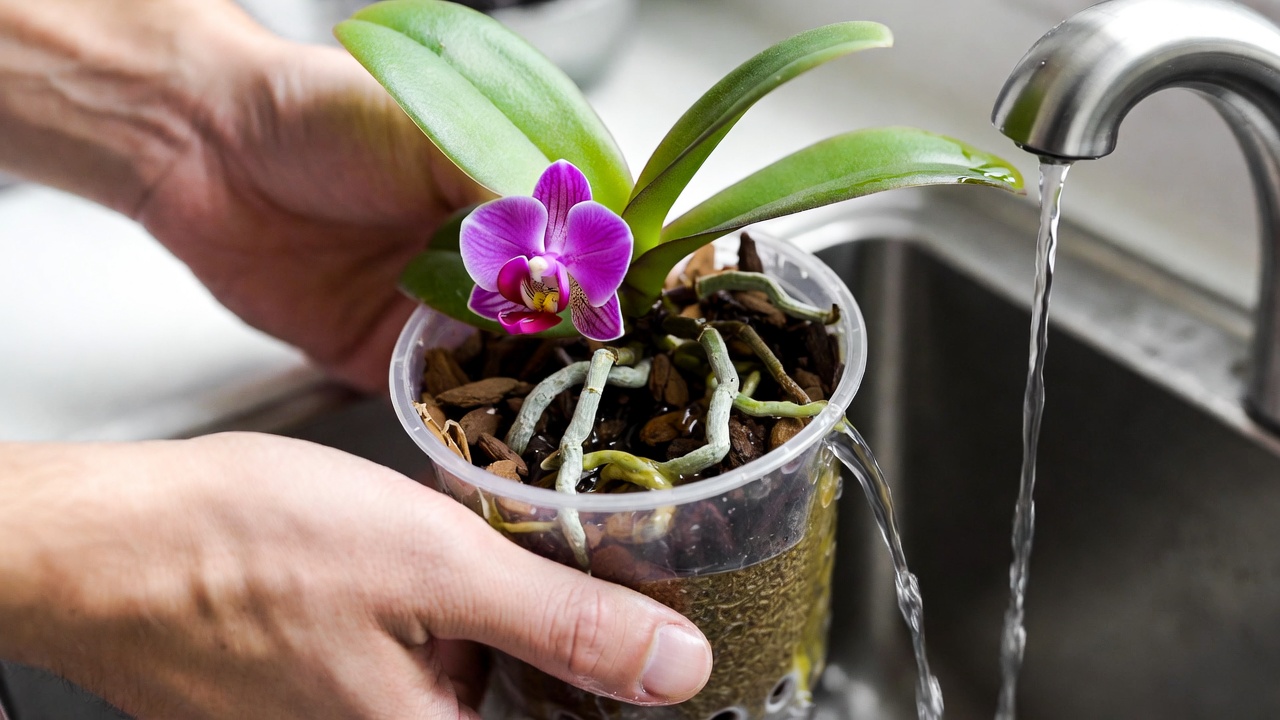
The most effective watering method is the soak-and-drain technique.
Steps:
-
Place the orchid pot under lukewarm running water.
-
Allow water to soak the roots for 20–30 seconds.
-
Let excess water drain completely.
Never allow water to sit in the crown (center) of the plant, as this can cause rot.
Common Watering Mistakes
Many orchid problems come from incorrect watering.
Avoid these common errors:
-
Overwatering
-
Using ice cubes
-
Poor drainage
-
Leaving water trapped in the crown
Proper drainage and moderate watering will keep orchids healthy.
Fertilizing Purple Orchids for Healthy Growth
Although orchids grow slowly, they still benefit from regular feeding.
Proper fertilization encourages:
-
stronger roots
-
healthier leaves
-
more frequent blooming
Best Fertilizer for Orchids
Use a balanced orchid fertilizer, typically labeled:
20-20-20
These fertilizers contain equal amounts of nitrogen, phosphorus, and potassium.
Special orchid fertilizers also contain micronutrients that support flower development.
Fertilizing Schedule
Most experts recommend fertilizing orchids every 2 to 4 weeks during active growth.
Reduce feeding during dormancy periods when the plant is not actively growing.
The “Weakly Weekly” Method
Many orchid growers follow the popular “weakly weekly” fertilizing method.
This involves applying a very diluted fertilizer solution once per week.
This technique mimics how orchids receive small nutrient amounts in nature.
How to Make Purple Orchids Bloom Again
One of the most common questions indoor gardeners ask is: “Why isn’t my orchid blooming anymore?”
Many people assume their orchid is dying after the flowers fall. In reality, orchids simply enter a resting phase before producing another round of blooms.
With the right care, most orchid purple varieties can bloom again every year, and sometimes even multiple times per year.
Understanding Orchid Bloom Cycles
Orchid blooming cycles vary depending on the species, but most indoor orchids follow a similar pattern:
-
Active growth phase – leaves and roots develop.
-
Flower spike formation – the plant prepares to bloom.
-
Blooming period – flowers open and last for weeks or months.
-
Rest phase – the plant recovers before blooming again.
For example, Phalaenopsis orchids often bloom once or twice per year, with flowers lasting 2–3 months.
During the resting stage, it’s important to continue providing proper care so the plant can gather energy for the next flowering cycle.
Light and Temperature Triggers
Light is the most important factor for encouraging orchids to bloom again.
If your orchid is producing healthy leaves but no flowers, it may not be receiving enough light.
Try moving the plant to a brighter location with indirect sunlight.
A small temperature drop at night can also trigger flowering.
Ideal temperature difference:
-
Day: 22–27°C (72–80°F)
-
Night: 16–18°C (60–65°F)
This temperature change signals to the orchid that it’s time to produce a flower spike.
Pruning the Flower Spike
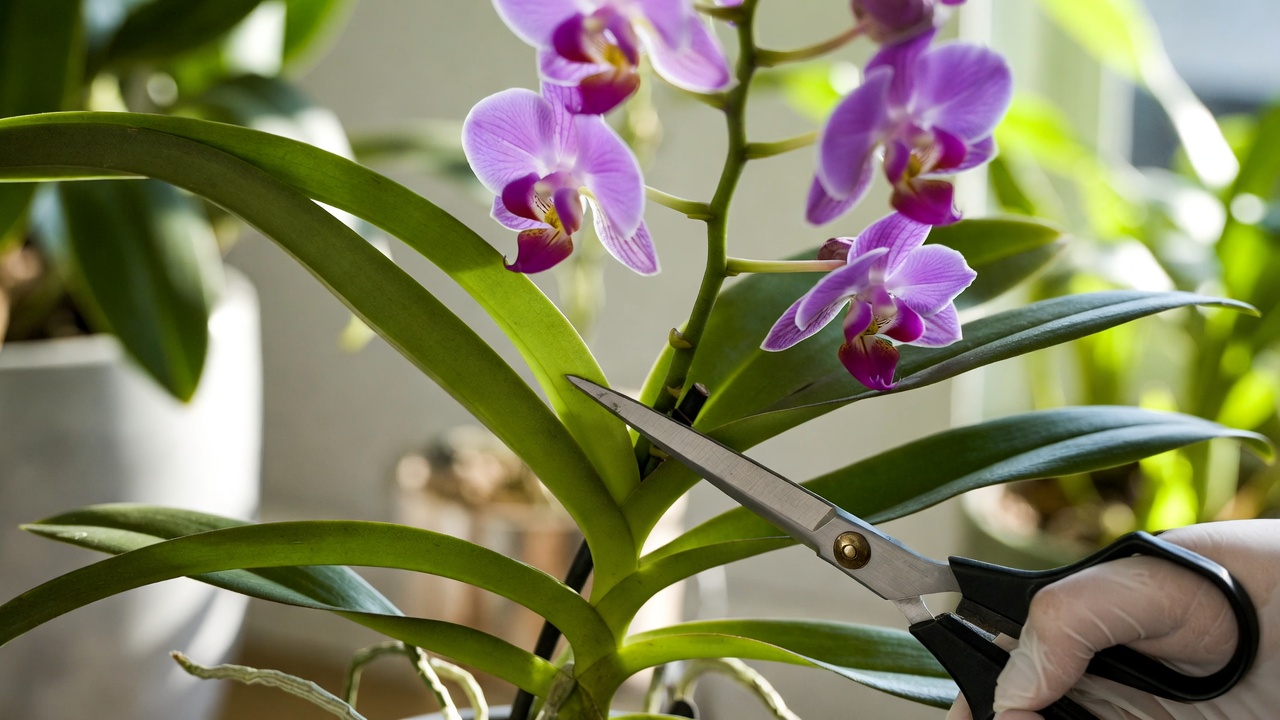
After your orchid finishes blooming, the flower spike may begin to dry.
For Phalaenopsis orchids, there are two options:
Option 1: Trim Above a Node
If the spike is still green, cut it just above a node (small bump).
Sometimes a new flower branch will grow from that node.
Option 2: Remove the Spike Completely
If the spike has turned brown or dry, cut it at the base.
This allows the plant to focus its energy on root and leaf growth.
Always use clean, sterilized scissors to prevent infection.
Post-Bloom Orchid Care
After blooming, orchids enter a recovery stage.
During this time:
-
Continue regular watering
-
Provide bright indirect light
-
Fertilize lightly
-
Maintain humidity levels
With proper care, most orchids will begin producing a new flower spike within several months.
Patience is key—orchids reward attentive growers with spectacular blooms.
Common Problems With Purple Orchids (And How to Fix Them)
Even experienced plant growers sometimes encounter orchid problems. The good news is that most issues are easy to identify and correct.
Yellow Leaves
Yellow leaves are one of the most common orchid concerns.
Possible causes include:
Natural Aging
Older leaves naturally turn yellow and drop off over time.
This is normal and nothing to worry about.
Overwatering
Excess water can suffocate orchid roots, leading to yellowing leaves.
Solution:
-
Reduce watering frequency
-
Ensure the pot drains properly
Too Much Sunlight
Direct sunlight can cause leaf damage and yellowing.
Move the plant to filtered or indirect light.
Orchid Bud Drop
Bud drop occurs when orchid buds fall off before opening.
Common causes include:
-
sudden temperature changes
-
low humidity
-
moving the plant frequently
-
drafts from air conditioners or heaters
Solution:
Keep orchids in a stable environment with consistent temperature and humidity.
Root Rot
Root rot is one of the most serious orchid problems.
Symptoms include:
-
soft, mushy roots
-
foul odor
-
yellow or wilted leaves
Root rot typically results from overwatering or poor drainage.
How to Fix Root Rot
-
Remove the orchid from the pot.
-
Trim away damaged roots.
-
Repot in fresh orchid bark.
-
Reduce watering frequency.
Healthy orchid roots should appear firm and green or silver.
Orchid Not Blooming
If your orchid refuses to bloom, it may be missing one of these essential conditions:
-
insufficient light
-
incorrect temperature
-
lack of nutrients
-
immature plant
Improving light exposure and feeding schedule often resolves this issue.
Styling Purple Orchids in Your Indoor Space
Beyond their beauty, purple orchids are incredibly versatile decorative plants.
They can transform ordinary spaces into elegant indoor environments.
Best Places to Display Purple Orchids
Purple orchids thrive in bright areas with indirect light.
Ideal locations include:
Living Rooms
A blooming orchid makes a beautiful centerpiece on coffee tables or shelves.
Office Desks
Orchids add a calming natural element to workspaces.
Kitchen Counters
Bright kitchens with windows are excellent orchid locations.
Bedroom Windowsills
A purple orchid can create a relaxing and luxurious atmosphere.
Purple Orchids in Home Decor

Interior designers frequently use orchids because they complement many design styles.
Purple orchids work especially well with:
-
modern interiors
-
minimalist homes
-
luxury décor
-
Scandinavian design styles
A single orchid in a decorative ceramic pot can instantly elevate the room.
Pairing Purple Orchids With Other Indoor Plants
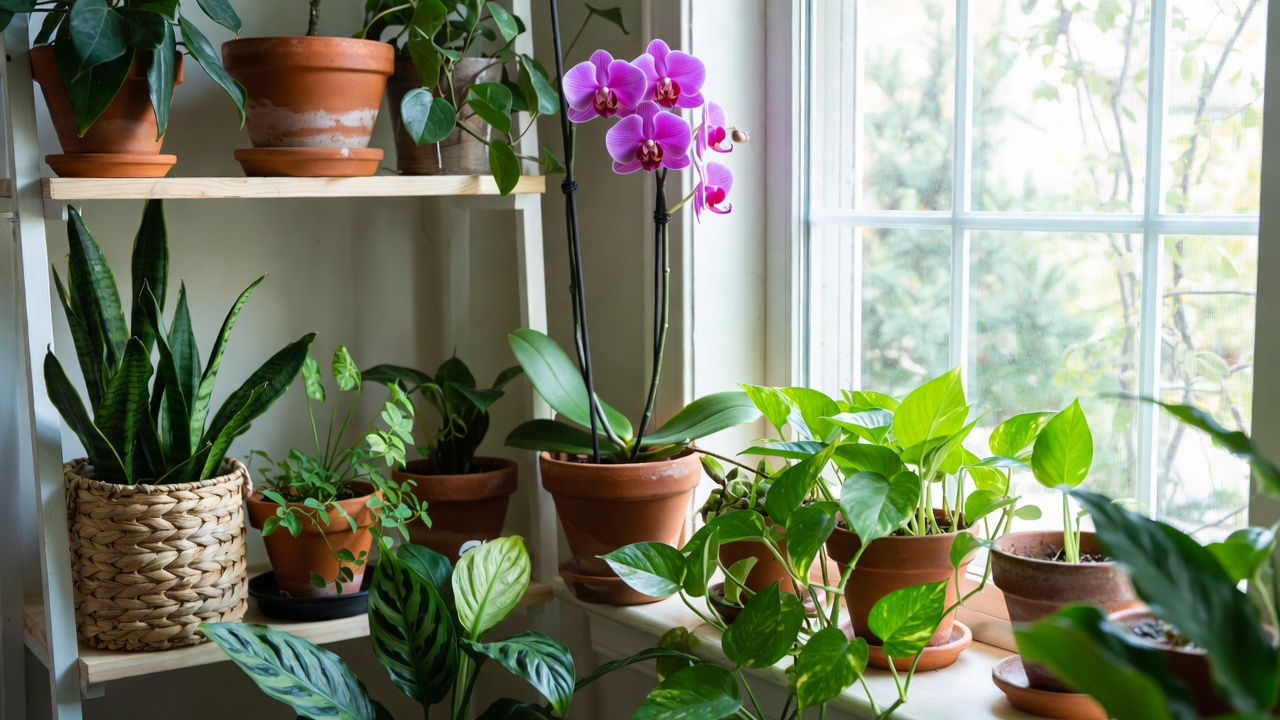
Purple orchids pair beautifully with other popular houseplants.
Consider combining them with:
Snake Plants
Their upright leaves contrast nicely with orchid flowers.
Peace Lilies
Both plants thrive in similar indoor conditions.
Pothos
Trailing vines create a layered plant display.
Combining different plant textures makes your indoor garden feel more dynamic.
Expert Tips for Growing Healthier Purple Orchids
Experienced orchid growers follow a few simple habits that dramatically improve plant health.
Here are some expert strategies to help your orchid thrive.
Rotate the Plant Weekly
Rotating your orchid helps ensure even light exposure, preventing lopsided growth.
Clean the Leaves
Dust can block sunlight from reaching the leaves.
Wipe leaves gently with a soft damp cloth every few weeks.
Repot Every 1–2 Years
Orchid potting mixes eventually break down and retain too much moisture.
Repotting keeps the root system healthy and improves airflow.
Use Transparent Orchid Pots
Clear pots allow you to monitor root health and moisture levels easily.
You can quickly see when roots turn silver and need watering.
Monitor Root Health Regularly
Healthy roots should look:
-
green when wet
-
silvery when dry
-
firm and plump
Healthy roots are the foundation of a thriving orchid.
Beginner Mistakes to Avoid With Purple Orchids
Many orchid failures come from a few common mistakes.
Avoiding these errors will dramatically improve your success.
Overwatering
The number one orchid killer is too much water.
Remember: orchids prefer slightly dry conditions.
Using Regular Potting Soil
Standard potting soil suffocates orchid roots.
Always use a special orchid potting mix.
Keeping Orchids in Low Light
Insufficient light prevents flowering.
Orchids need bright indirect light to bloom.
Ignoring Humidity Needs
Dry indoor air can slow orchid growth.
Maintain humidity levels around 50–70%.
Cutting Flower Spikes Too Early
Some orchids rebloom from existing spikes.
Always check if the spike is still green before cutting.
Frequently Asked Questions About Orchid Purple Plants
Are purple orchids natural or dyed?
Many orchids naturally produce purple flowers. However, some deep-blue or unusual colors may be artificially dyed.
Natural purple orchids typically display lavender, violet, or magenta shades.
How long do purple orchids bloom?
Most orchids bloom for 6–12 weeks, depending on the variety and growing conditions.
With proper care, they can bloom again every year.
Do purple orchids need direct sunlight?
No. Orchids prefer bright indirect light.
Direct sun can burn their leaves.
How often should purple orchids be watered?
Most indoor orchids require watering once every 7–10 days.
Always check root color before watering.
Can purple orchids grow in low light?
They can survive in low light, but they are unlikely to bloom without sufficient brightness.
Indirect sunlight is essential for flowering.
Final Thoughts on Growing Purple Orchids Indoors
Purple orchids are among the most elegant and rewarding plants you can grow indoors. Their vibrant flowers, graceful stems, and long bloom cycles make them a favorite for plant lovers around the world.
While orchids have a reputation for being difficult, they are actually quite manageable when you understand their basic needs.
By providing:
-
bright indirect light
-
moderate watering
-
proper humidity
-
good airflow
your orchid purple plant can thrive and bloom beautifully for many years.
With patience and consistent care, these stunning plants will reward you with spectacular blossoms that transform your indoor space into a vibrant, living display of nature.