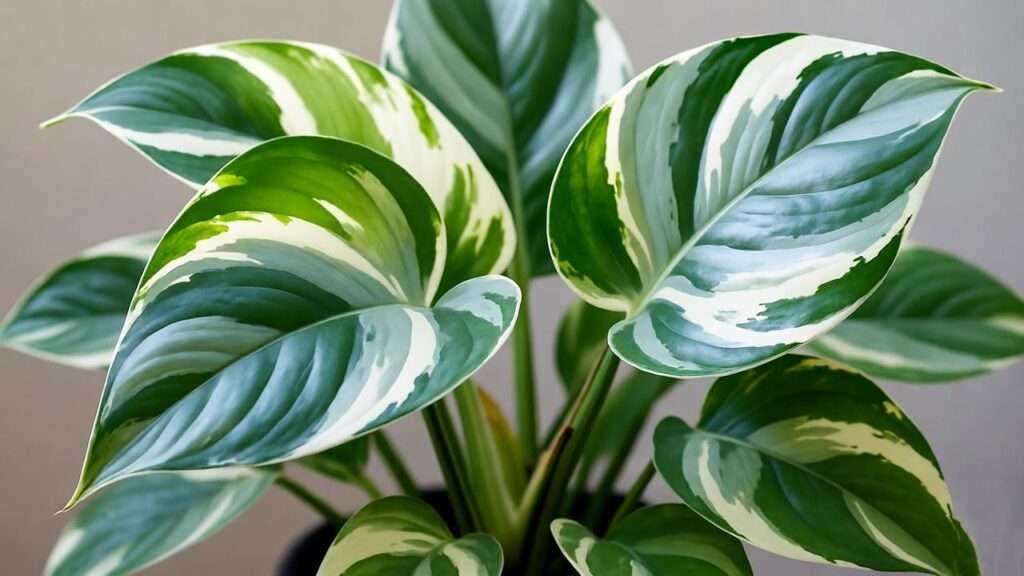

Imagine walking into a room and being greeted by cascading vines adorned with leaves that look almost painted in creamy white and lush green swirls—like fresh snow dusted over emerald foliage. That’s the magic of white pothos, one of the most eye-catching variegated houseplants you can grow indoors. Also known as Marble Queen pothos (and closely related to varieties like Snow Queen or N’Joy), this beauty transforms ordinary spaces into vibrant, airy havens while purifying the air and requiring surprisingly little fuss.
But here’s the catch many beginners face: you bring home that gorgeous plant full of promise, only to watch the striking white variegation fade to mostly green, leaves yellow and drop, or growth slow to a crawl. The good news? These issues are almost always preventable with the right knowledge. White pothos (Epipremnum aureum cultivars with high white/cream variegation) demands a bit more attention to light and care than its solid-green cousins, but once you master the basics, it becomes one of the most rewarding trailing houseplants.
In this comprehensive guide, I’ll draw from years of hands-on experience growing dozens of pothos varieties in various home environments—from low-light apartments to bright sunrooms—to help you keep your white pothos thriving with maximum variegation, healthy growth, and minimal stress. Whether you’re a complete beginner or looking to level up your indoor jungle, you’ll learn exactly how to provide the ideal conditions, troubleshoot common problems, propagate new plants easily, and style this stunner in your home. Let’s dive in and turn your white pothos into the showpiece it was meant to be.
What Is White Pothos? Understanding This Variegated Beauty
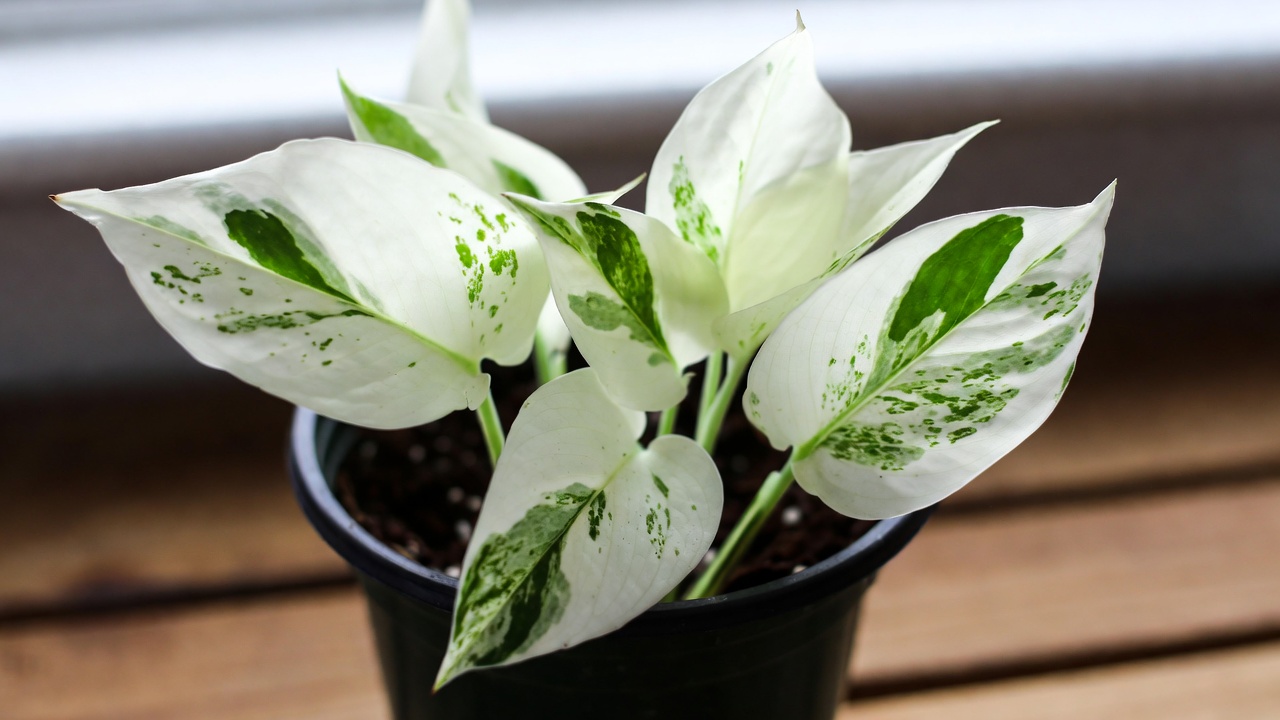
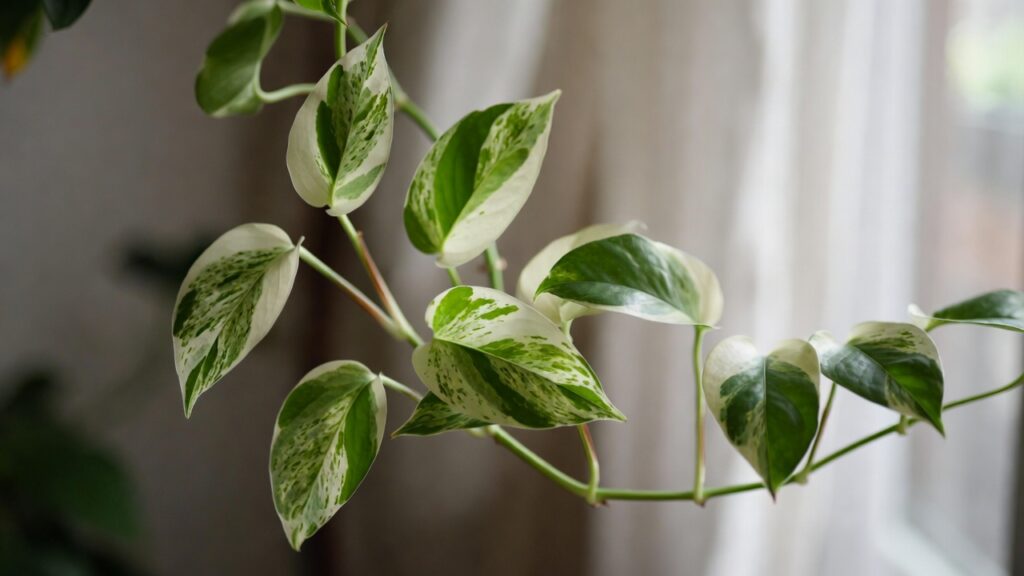
White pothos isn’t a single botanical species but a common name for highly variegated cultivars of Epipremnum aureum (Devil’s Ivy or pothos). These plants feature dramatic patches or swirls of white, cream, or pale yellow against deep green, creating a marbled or “snowy” effect that’s far more pronounced than the subtle yellow speckles of classic Golden Pothos.
The Science Behind the White Variegation
The white areas on these leaves lack chlorophyll—the green pigment essential for photosynthesis. This chimeral variegation (where plant tissues have genetically different cell layers) makes the plant visually stunning but also more demanding. The green portions must work harder to produce energy, so insufficient light causes the plant to prioritize chlorophyll production, leading to “reversion” where new leaves emerge mostly or entirely green. Providing bright, indirect light is the single most important factor for preserving and even enhancing that coveted white patterning.
Popular White Pothos Varieties

Several cultivars fall under the “white pothos” umbrella, each with slightly different looks and care nuances:
- Marble Queen Pothos: The classic and most widely available. Features bold swirls of creamy white and green, with mature leaves often showing 50% or more white. Growth is moderate, and variegation stabilizes well with good light.
- Snow Queen (or Super White) Pothos: Even more dramatic, with leaves that can appear almost entirely white or icy in high light. It’s essentially a highly variegated Marble Queen form—brighter but slower-growing and more prone to reversion if light dips.
- N’Joy Pothos: Smaller, heart-shaped leaves with crisp white and green patches. More compact growth makes it ideal for shelves or desks; variegation holds well but needs consistent medium-to-bright light.
- Others to Note: Pearls and Jade (speckled white/green) or high-variegation ‘White Sport’ forms occasionally sold as white pothos.
| Variety | Variegation Level | Growth Rate | Light Needs | Best For |
|---|---|---|---|---|
| Marble Queen | High (50%+ white) | Moderate | Bright indirect | Trailing displays |
| Snow Queen | Very High (70%+ white) | Slower | Very bright indirect | Statement pieces |
| N’Joy | Medium-High | Moderate | Medium-bright | Shelves, compact spaces |
White Pothos vs. Standard Golden Pothos — Key Differences
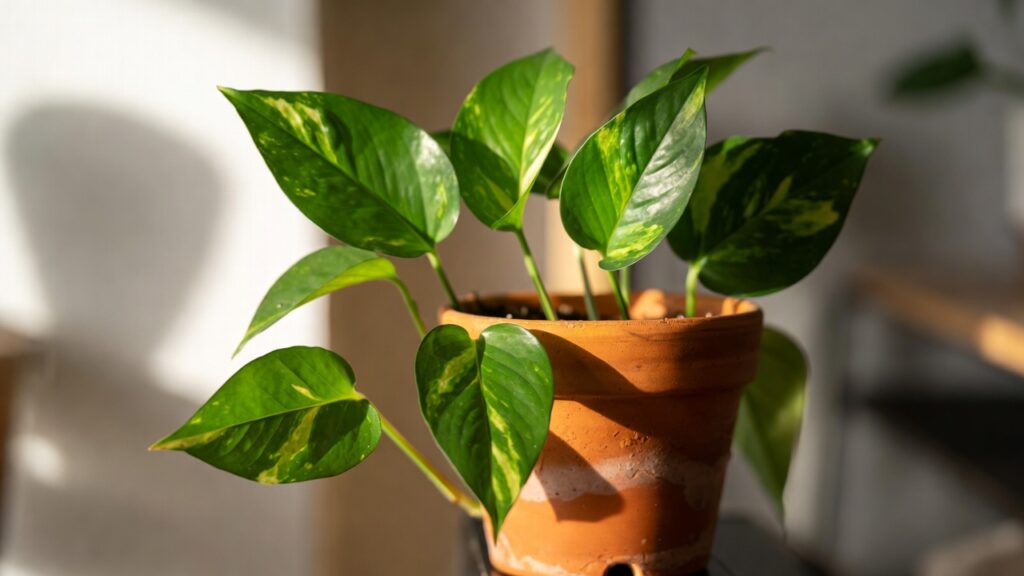
Golden Pothos (the classic with yellow-green variegation) is more forgiving:
- Tolerates lower light better without losing color as dramatically.
- Grows faster and produces larger leaves.
- Less prone to reversion since yellow variegation involves different pigments.
White varieties need more light to fuel the chlorophyll-limited leaves, grow slower (especially highly variegated ones), and can revert if conditions aren’t optimal. In return, they offer brighter, more elegant contrast—perfect for modern, minimalist, or boho decor.
Ideal Growing Conditions for White Pothos
Success with white pothos hinges on mimicking its tropical origins while compensating for reduced chlorophyll.
Light Requirements — The #1 Factor for Stunning Variegation
Bright, indirect light is non-negotiable. Aim for 1,000–2,000 foot-candles (or east/west-facing window with sheer curtain filtering).
- Ideal spots: Near an east-facing window (morning sun) or bright north-facing with supplemental light; 4–6 hours of filtered light daily.
- Too little light: Leaves turn greener (reversion), growth leggy, smaller leaves.
- Too much direct sun: Scorched, bleached, or crispy white areas.
- Grow light solution: If natural light is limited, use full-spectrum LED grow lights (10,000–20,000 lux) for 10–12 hours daily. Position 12–18 inches above the plant.
Pro tip: Rotate the plant quarterly for even growth and variegation.
Watering White Pothos: Avoid the Biggest Beginner Mistake
Overwatering kills more pothos than anything else—especially variegated types with slower growth (less water uptake).
- Rule: Water when the top 1–2 inches of soil feel dry (use finger test or moisture meter).
- Frequency: Every 7–10 days in average home conditions; less in winter, more in warm/humid summers.
- Technique: Water thoroughly until it drains out the bottom, then empty saucer. Use room-temperature water to avoid shock.
- Signs:
- Overwatering: Yellow lower leaves, mushy stems, root rot smell.
- Underwatering: Wilted, curled leaves, dry crispy tips.
Always err on the dry side—pothos are drought-tolerant once established.
Soil and Potting Mix — Drainage Is Key
Standard potting soil retains too much moisture, leading to rot.
- Recommended mix: 50% well-draining potting soil + 30% perlite + 20% orchid bark or coco coir for aeration.
- DIY aroid mix: Equal parts coco coir, perlite, and orchid bark.
- Pot choice: Terracotta or plastic with drainage holes; repot every 1–2 years in spring if roots circle the pot.
Temperature, Humidity, and Fertilizer Needs
Perfect Temperature Range and Seasonal Adjustments
- Ideal: 65–85°F (18–29°C) year-round.
- Avoid: Below 60°F (cold drafts cause leaf drop); above 90°F (stress in low humidity).
- Seasonal note: Reduce watering and fertilizing in cooler months when growth slows.
Humidity Tips for Lush Leaves
Pothos thrive in 50–60% humidity but tolerate average household levels (40%).
- Boost methods: Pebble tray with water, humidifier, grouping plants, or bathroom/kitchen placement.
- Signs of low humidity: Brown leaf tips/edges.
When and How to Fertilize for Healthy Growth
Fertilize sparingly—variegated plants are sensitive to buildup.
- Use balanced liquid fertilizer (e.g., 20-20-20 diluted to half strength).
- Frequency: Every 4–6 weeks during spring/summer; skip fall/winter.
- Tip: Flush soil monthly with plain water to prevent salt accumulation.
Pruning, Training, and Propagation — Grow More Plants Easily
One of the joys of white pothos is how easily it responds to a little grooming and can be multiplied into an entire collection with minimal effort.
Pruning for Bushier Growth or Shape
Regular pruning keeps your plant looking full and prevents it from becoming a long, leggy vine with sparse leaves.
- When to prune: Spring or early summer during active growth is best, but you can trim lightly year-round if needed.
- How to do it:
- Use clean, sharp scissors or pruning shears.
- Cut just above a leaf node (the small bump where leaves and roots emerge).
- Remove leggy sections, dead or yellow leaves, or any reverted (solid green) stems to encourage more variegated growth.
- Benefit: Each cut stimulates new shoots from the node below, creating a bushier, more compact appearance.
Tip from experience: If your plant has reverted heavily, prune back to mostly variegated sections—this often encourages brighter new growth when light conditions improve.
Training White Pothos: Trailing, Climbing, or Hanging

White pothos is naturally a trailing vine, but you can shape it to suit your style.
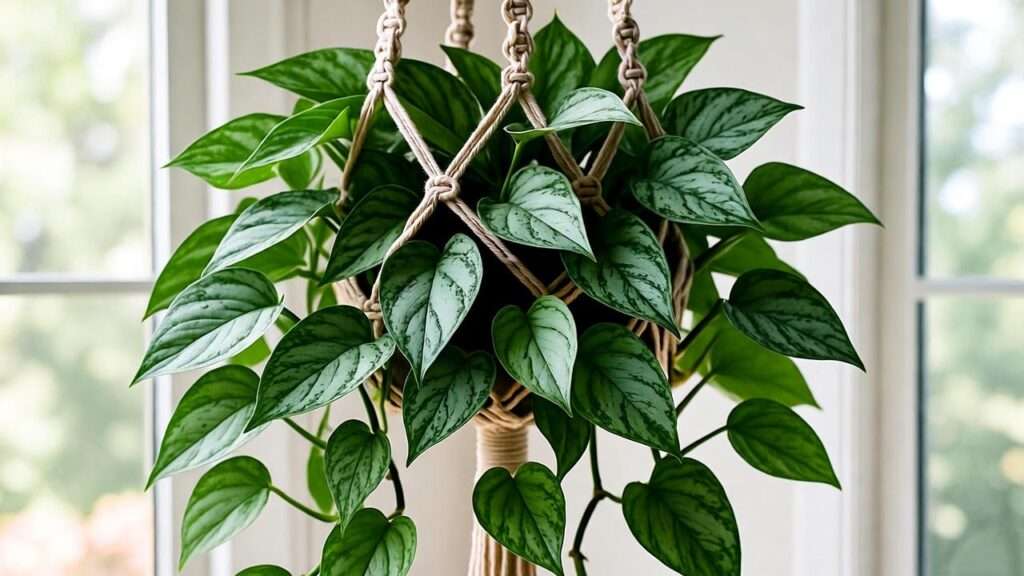
- Hanging baskets: Let vines cascade freely for a waterfall effect—perfect for bright corners or bathrooms.
- Shelf or mantle trailing: Drape over edges for a soft, romantic look.
- Climbing / moss pole: Provide a moss-wrapped pole or trellis. Gently tie vines with soft plant ties. As aerial roots attach, the plant will climb upward, producing larger, more mature leaves with potentially stronger variegation.
- Creative display ideas: Wrap vines around a decorative hoop, train along a curtain rod, or let them spill from high shelves.
Highly variegated varieties like Snow Queen tend to produce slightly smaller leaves when trailing, but larger, bolder ones when allowed to climb.
Step-by-Step Propagation Guide (Water and Soil Methods)
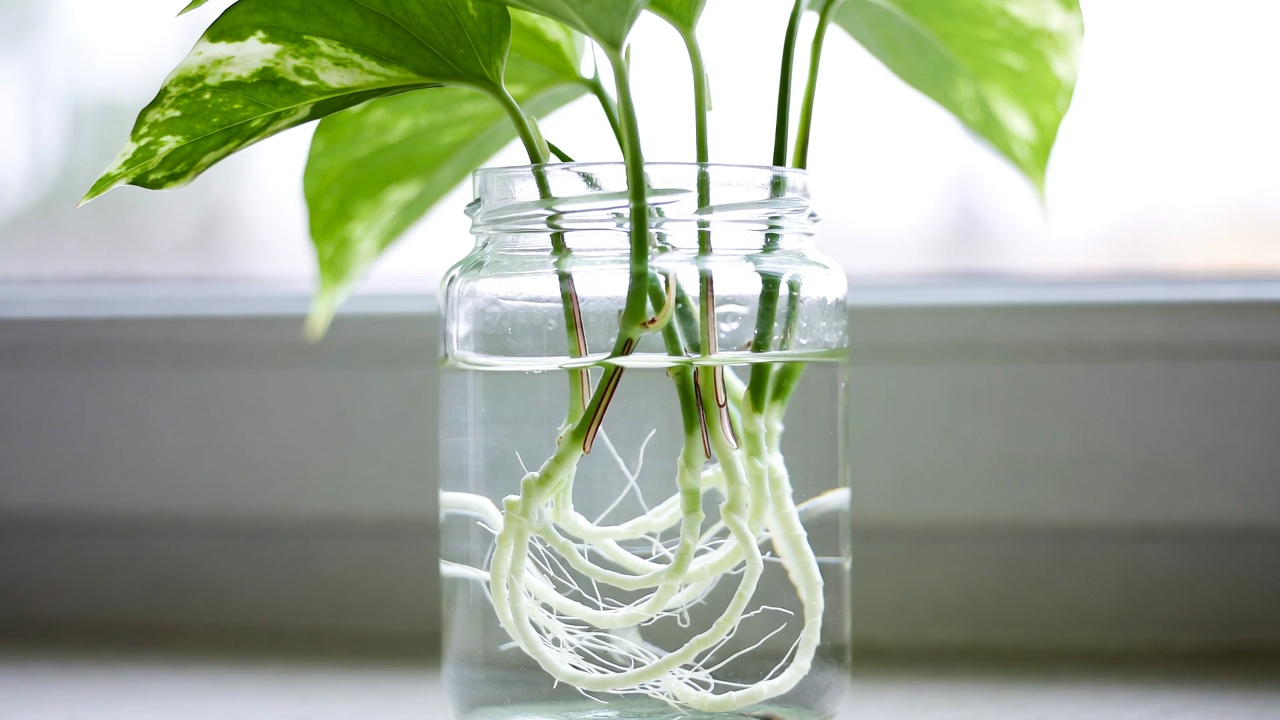
Propagation is almost foolproof with pothos and a great way to share or expand your collection.
Water Propagation (Easiest for Beginners)
- Take 4–6 inch stem cuttings with at least 2–3 nodes.
- Remove leaves from the bottom 2 nodes.
- Place cuttings in a clear jar of room-temperature water (filtered or dechlorinated is best).
- Position in bright, indirect light (same conditions as the mother plant).
- Change water every 5–7 days to prevent rot and algae.
- Roots typically appear in 2–4 weeks. Once roots are 1–2 inches long, pot in well-draining mix.
Soil Propagation (Faster Transition to Pot)
- Take cuttings as above.
- Dip cut end in rooting hormone (optional but speeds success with variegated types).
- Plant directly into moist, well-draining mix.
- Cover with a clear plastic bag or propagation dome for humidity (remove once new growth appears).
- Keep soil lightly moist but never soggy.
Success tip: Variegated cuttings can be slower to root and more prone to drying out—maintain higher humidity and brighter light than you would for solid-green pothos.
Common Problems and Solutions for White Pothos
Even with good care, issues can arise. Here’s how to diagnose and fix the most frequent complaints.
Why Is My White Pothos Turning Green? (Reversion Fix)
Reversion is the #1 frustration with white pothos owners.
- Cause: Insufficient light → plant produces more chlorophyll to survive, prioritizing green tissue.
- Solutions:
- Immediately move to a brighter location (or add grow lights).
- Prune off fully green stems and leaves.
- Be patient—new growth should show improved variegation within a few weeks if light is corrected.
- Prevention: Never place in low-light areas; aim for consistent bright indirect exposure.
Yellow Leaves, Brown Tips, or Leggy Growth — Diagnose & Treat
- Yellow leaves (lower ones): Usually overwatering or poor drainage. Check roots; repot if soggy.
- Brown, crispy tips/edges: Low humidity, underwatering, or fertilizer burn. Increase humidity and flush soil if salts are suspected.
- Leggy growth, small leaves: Not enough light. Relocate and prune back to encourage bushier regrowth.
- Drooping/wilting: Temporary thirst (recover quickly after watering) or severe root rot (check roots).
Pests (Spider Mites, Mealybugs) and Root Rot Prevention
- Spider mites: Tiny webbing, stippled leaves. Treat with neem oil spray or insecticidal soap weekly for 3–4 weeks.
- Mealybugs: White cottony spots. Dab with alcohol-soaked cotton swab; follow with neem.
- Root rot: Black, mushy roots. Trim affected parts, repot in fresh mix, reduce watering.
Toxicity note: White pothos, like all Epipremnum aureum, is mildly toxic to pets and children if ingested (causes mouth irritation). Place out of reach or educate household members.
Styling and Displaying White Pothos in Your Home
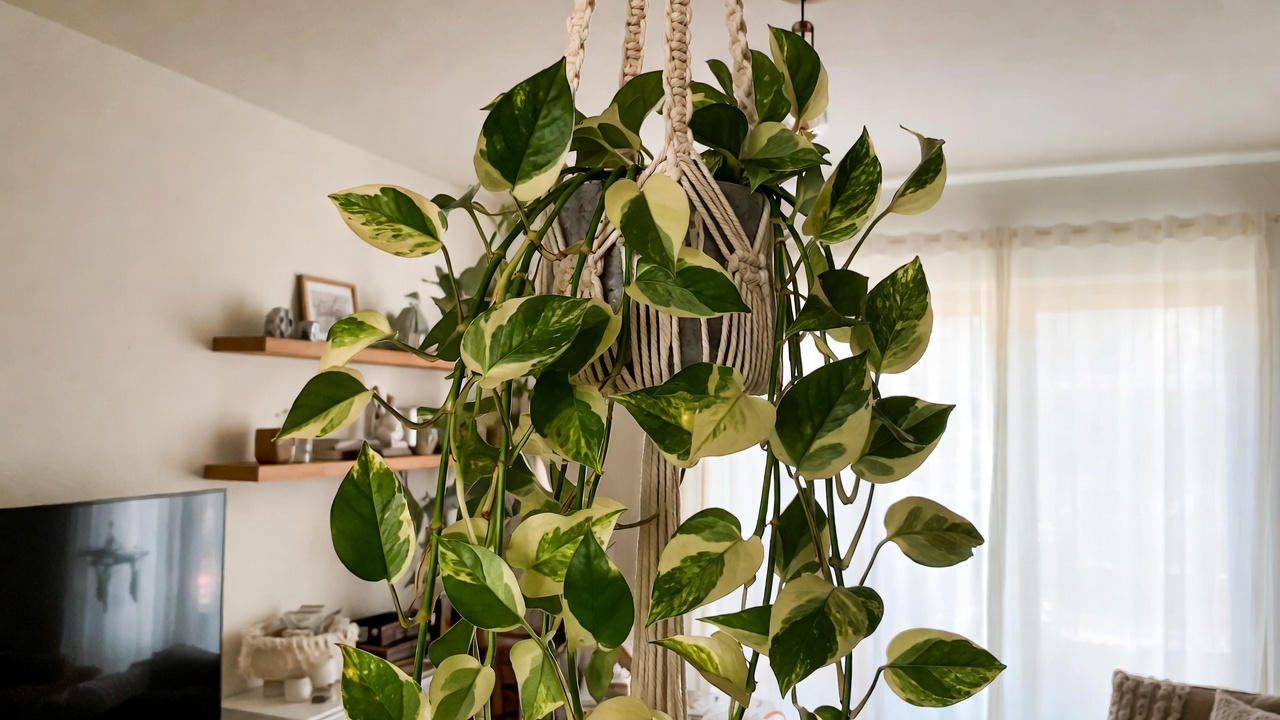
The bright, creamy variegation makes white pothos exceptionally versatile for interior design.
- Modern minimalist: Single trailing vine in a sleek white or black ceramic pot on a floating shelf.
- Boho/jungle vibe: Multiple plants in macramé hangers or grouped with other trailing foliage (string of hearts, philodendron brasil).
- Bathroom or kitchen: Higher natural humidity helps leaves stay lush; bright window light is often perfect.
- Low-effort styling tip: Use a tall plant stand with a hanging basket to create instant height and drama without taking floor space.
Pro styling insight: The white tones reflect light beautifully, making small or dimly lit rooms feel larger and brighter.
Frequently Asked Questions (FAQs)
Is white pothos the same as Snow Queen? Not exactly—Snow Queen is a specific, extremely high-variegation cultivar often marketed as “white pothos,” while Marble Queen is the more common classic version. Both are stunning.
How often should I water white pothos? Every 7–14 days, depending on light, temperature, and humidity. Always check soil dryness first.
Can white pothos survive in low light? It will survive, but variegation will fade significantly and growth will slow. For the signature white look, bright indirect light is essential.
How do I make white pothos more variegated? Increase light exposure, prune reverted stems, and maintain optimal conditions. Highly variegated new growth often follows improved lighting.
Is white pothos toxic to cats and dogs? Yes, mildly toxic (calcium oxalate crystals). Ingestion may cause drooling, pawing at mouth, or vomiting. Keep elevated or use deterrents.
Where can I buy healthy white pothos plants? Local nurseries, Etsy sellers specializing in aroids, or reputable online shops (Etsy, The Sill, Costa Farms, etc.). Look for plants with strong variegation and no signs of pests.
How fast does white pothos grow? Slower than golden pothos—expect 6–12 inches per year under ideal conditions, especially for highly variegated forms.
Can I grow white pothos outdoors? In USDA zones 10–11 or as a summer patio plant. Bring indoors before temperatures drop below 60°F.
Conclusion
White pothos is more than just another houseplant—it’s a living piece of art that brightens rooms, purifies air, and rewards thoughtful care with breathtaking variegated foliage. By prioritizing bright indirect light, careful watering, well-draining soil, and occasional pruning/propagation, even complete beginners can keep this beauty thriving for years.
Start small: choose a healthy Marble Queen or Snow Queen, give it the light it craves, and watch it transform your space. Once you master one, propagating extras becomes addictive—in no time, you’ll have a stunning trailing display or thoughtful gifts for fellow plant lovers.
Have questions about your specific white pothos? Drop them in the comments—I’m here to help your indoor jungle flourish.