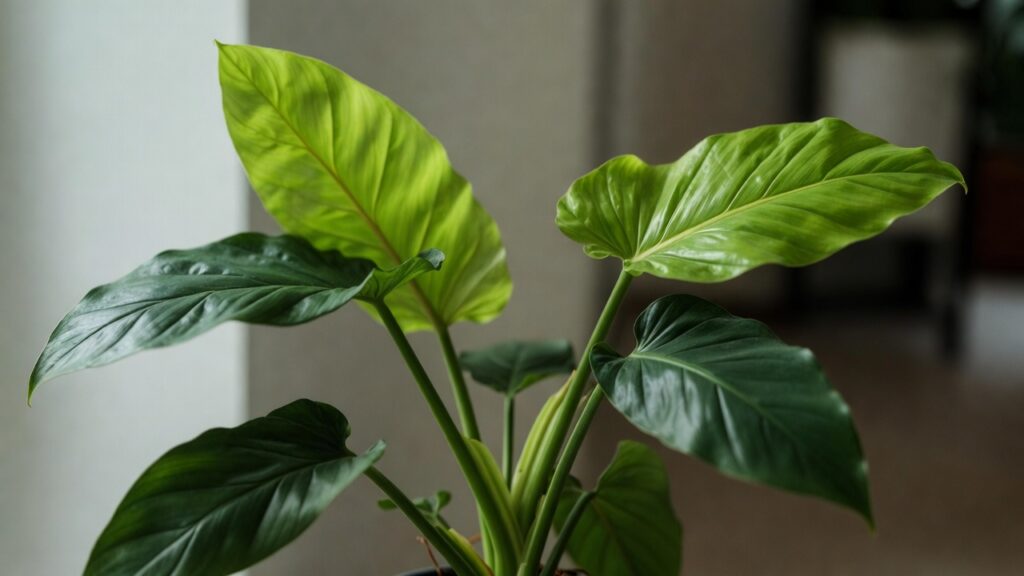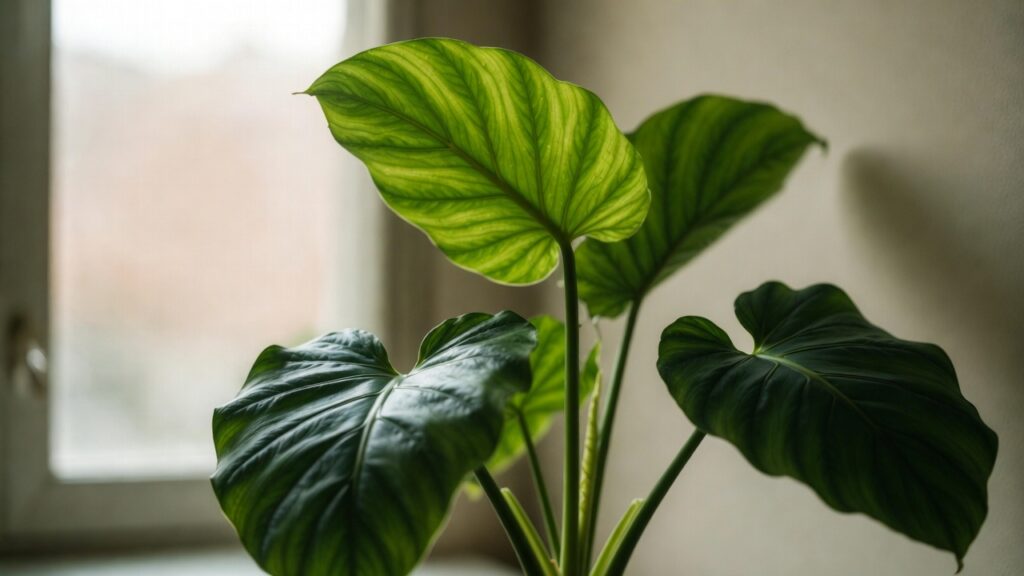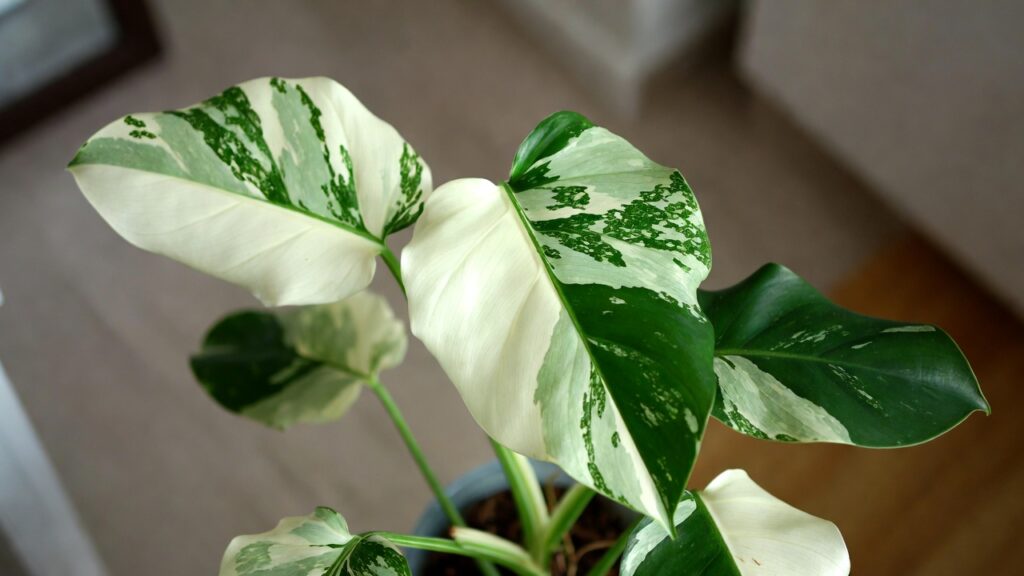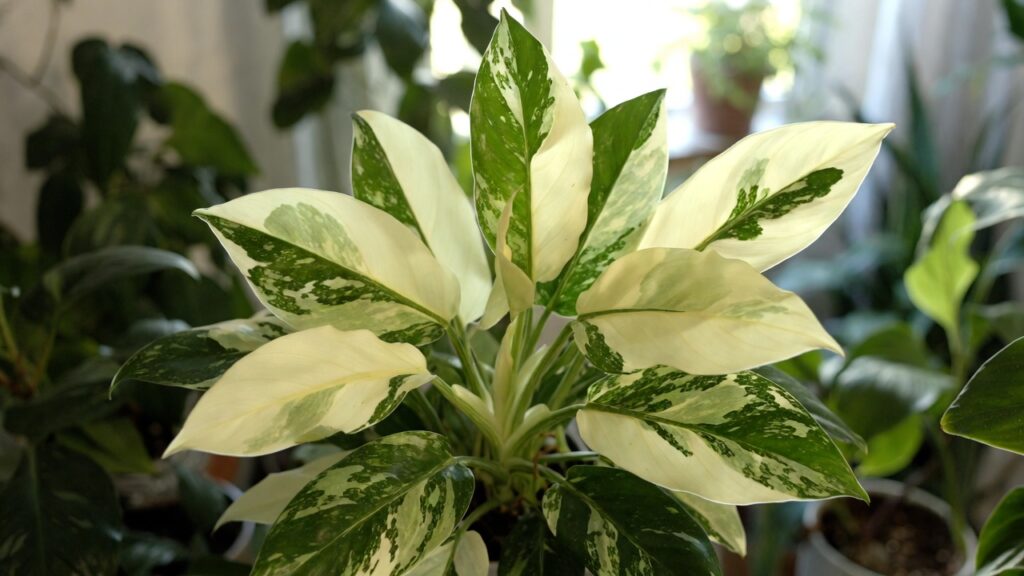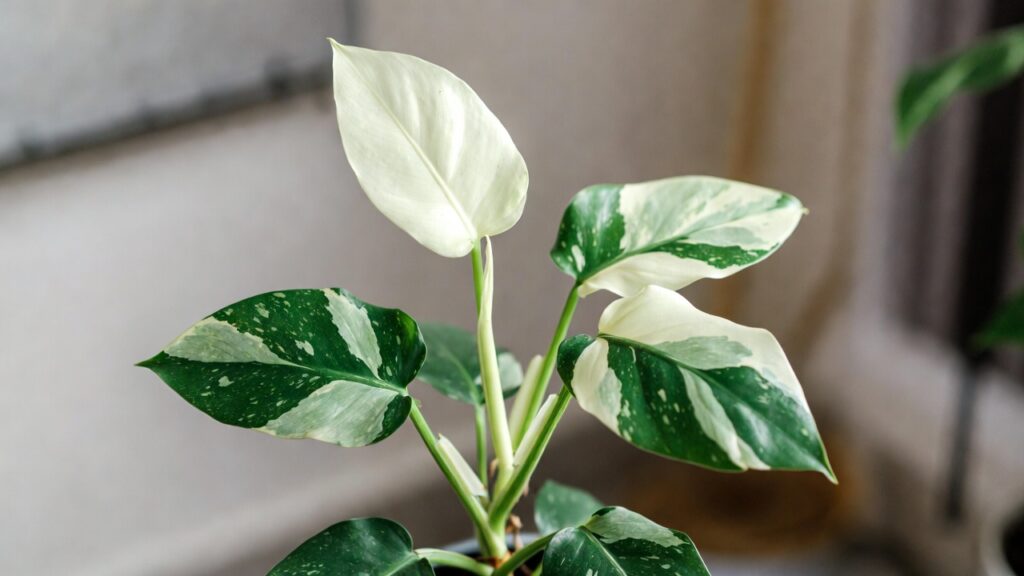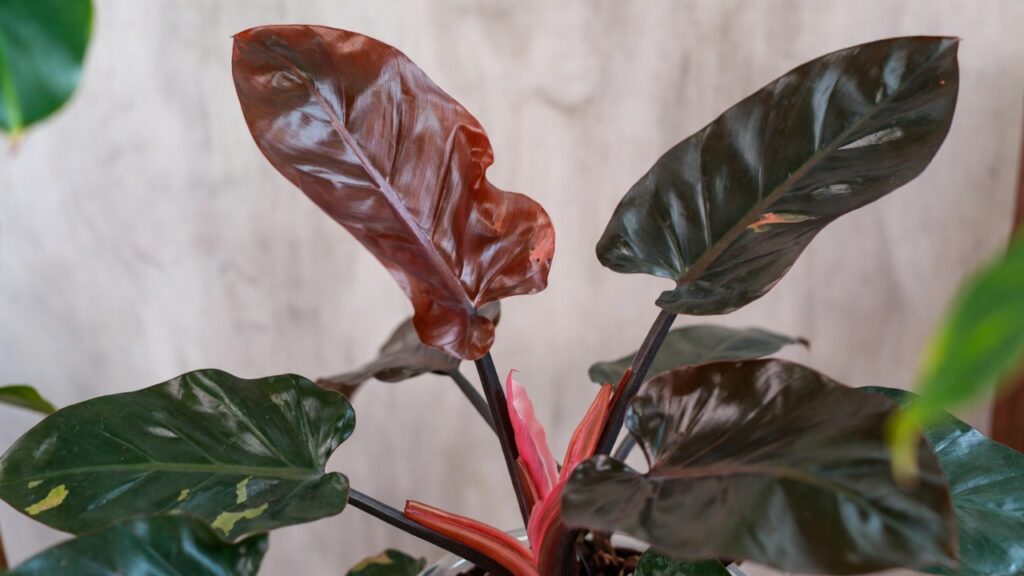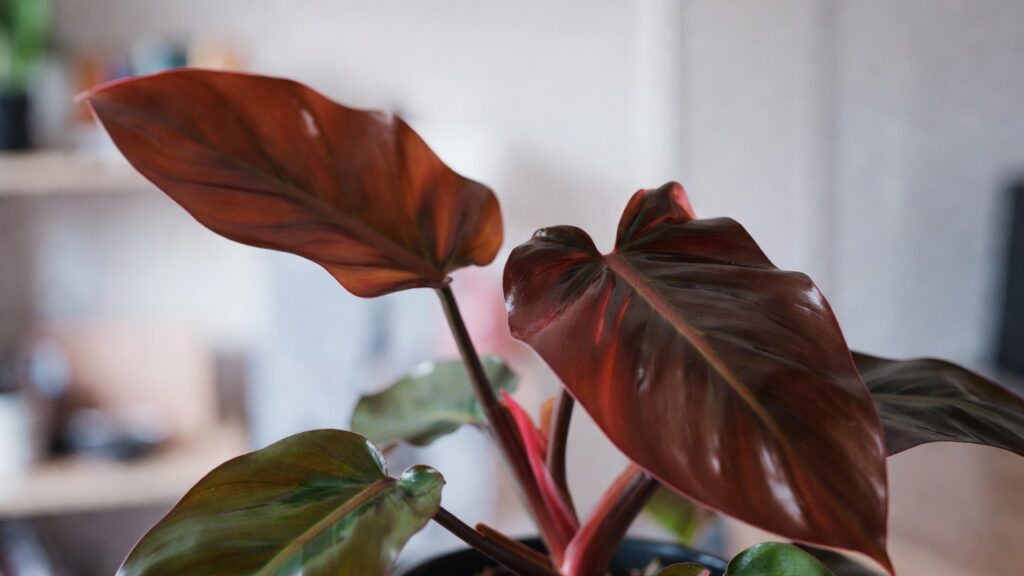
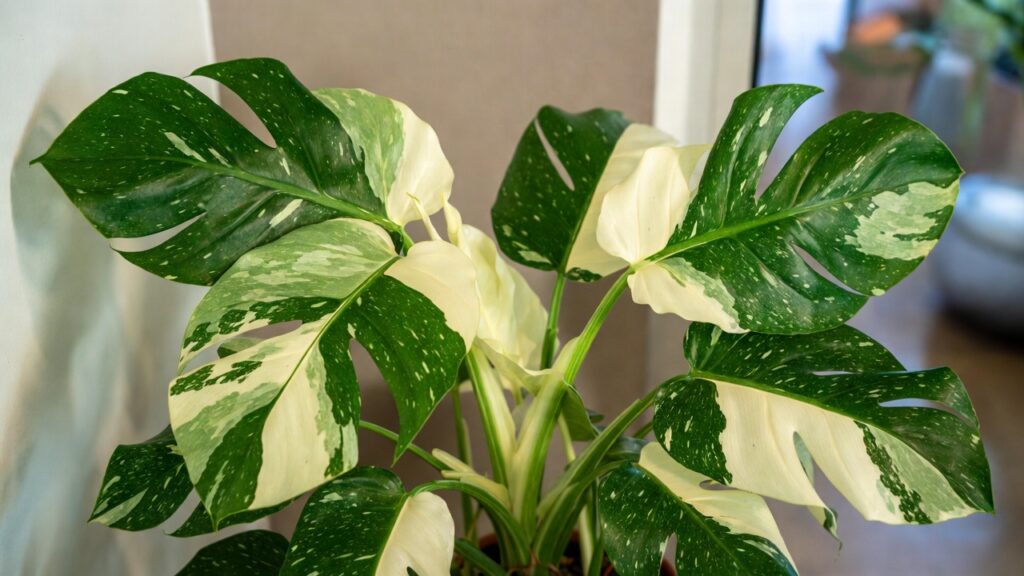
Few houseplants capture attention quite like a White Knight Philodendron. With its deep green leaves splashed with crisp white variegation and striking burgundy stems, it’s easy to see why plant collectors and indoor gardening enthusiasts consider it a prized addition to their plant collections. But while this plant is undeniably beautiful, many growers struggle to keep it healthy—especially when the white variegation begins to fade or the leaves start browning.
If you’ve recently added a white knight philodendron to your indoor plant collection, you might already be asking questions like:
-
Why is my variegation disappearing?
-
How much light does it really need?
-
Why are the white parts of the leaves turning brown?
The truth is that this rare variegated philodendron thrives only when its tropical needs are properly understood. Incorrect lighting, improper watering, and poor soil conditions are the most common reasons these plants struggle indoors.
In this comprehensive expert guide, you’ll learn exactly how to grow, maintain, and protect the stunning variegation of your White Knight Philodendron. We’ll cover ideal lighting conditions, soil recipes, watering strategies, humidity requirements, propagation methods, and solutions to common problems. By the end of this article, you’ll have everything you need to keep your plant thriving and producing beautiful, high-contrast foliage.
What Is a White Knight Philodendron?
Plant Overview
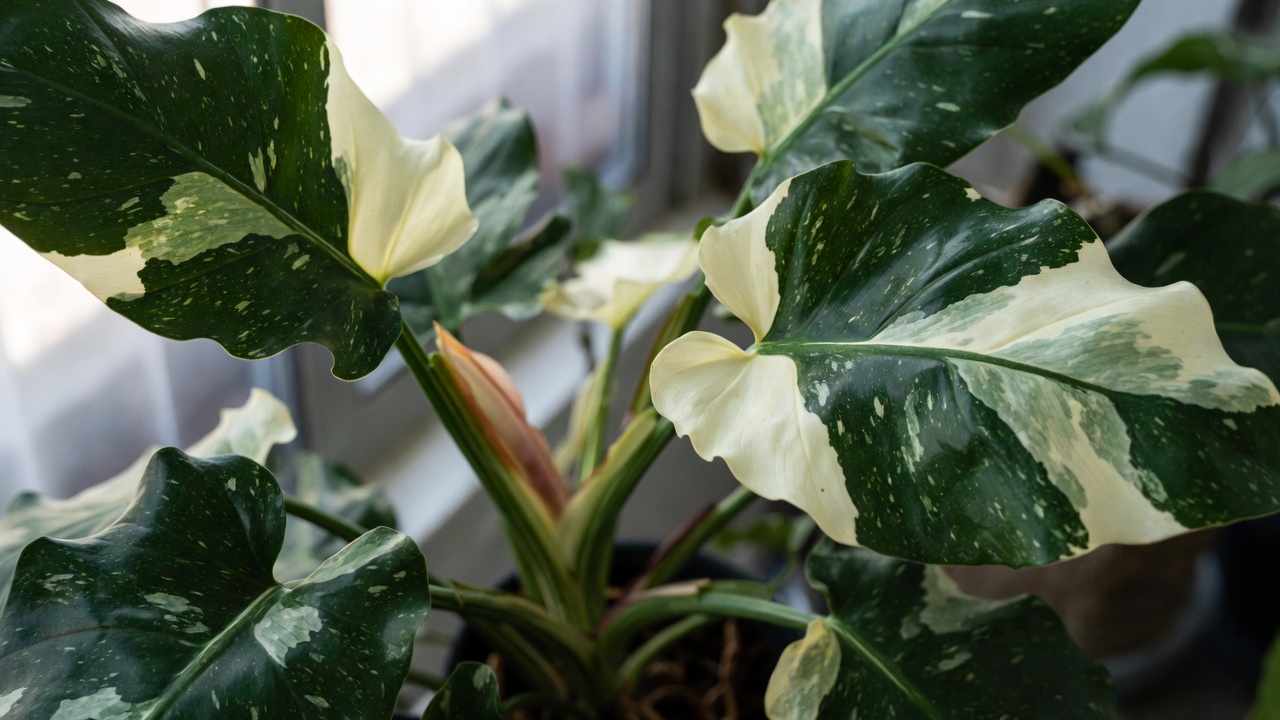
The White Knight Philodendron is a rare and highly sought-after variegated aroid known for its dramatic foliage and striking stem coloration.
Botanical name: Philodendron erubescens “White Knight”
Plant family: Araceae
Plant type: Climbing tropical houseplant
Growth habit: Climbing or vining aroid
Native region: Tropical rainforests of South America
Unlike many common philodendrons, the White Knight is prized for its bold white variegation that contrasts beautifully with deep green leaves. When mature and well-supported, the plant produces larger leaves and stronger variegation patterns.
Why the White Knight Philodendron Is So Popular
Several characteristics make this plant particularly desirable among indoor plant collectors:
1. Stunning Variegated Leaves
Each leaf features unique patterns of white and green marbling, making every plant visually distinct. No two leaves are exactly the same.
2. Deep Burgundy Stems
Unlike other white variegated philodendrons, the White Knight has dark burgundy or reddish stems, which add even more visual interest.
3. Collector-Level Appeal
Because it is less commonly available than many houseplants, the White Knight has become a favorite among rare plant collectors.
4. Impressive Climbing Growth
When given a moss pole or climbing support, the plant can produce larger, more dramatic leaves over time.
White Knight vs White Princess vs White Wizard
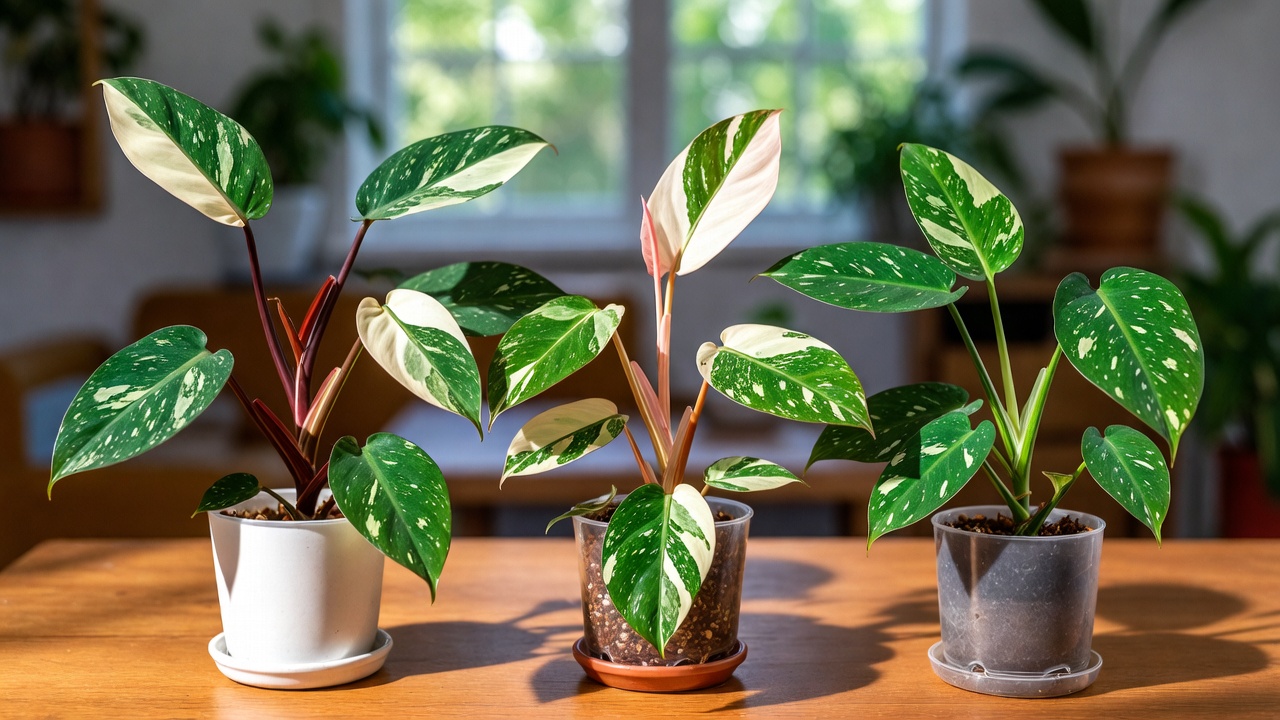
Many plant lovers confuse these three popular variegated philodendrons. While they share similarities, there are key differences.
| Feature | White Knight | White Princess | White Wizard |
|---|---|---|---|
| Stem Color | Burgundy / Dark Red | Green with pink tones | Solid green |
| Leaf Shape | Broad oval | Slightly narrower | Wide and round |
| Variegation | Bold white patches | White with occasional pink | Large white blocks |
| Growth Style | Climbing | Climbing | Climbing |
The easiest way to identify a White Knight is by its dark burgundy stems combined with white variegated foliage.
Ideal Growing Conditions for White Knight Philodendron
To grow a thriving White Knight Philodendron, it’s important to replicate the tropical environment where philodendrons naturally grow. These plants originate from warm, humid forests where they climb trees under filtered sunlight.
Providing the right balance of light, temperature, humidity, and airflow will dramatically improve growth and variegation.
Light Requirements
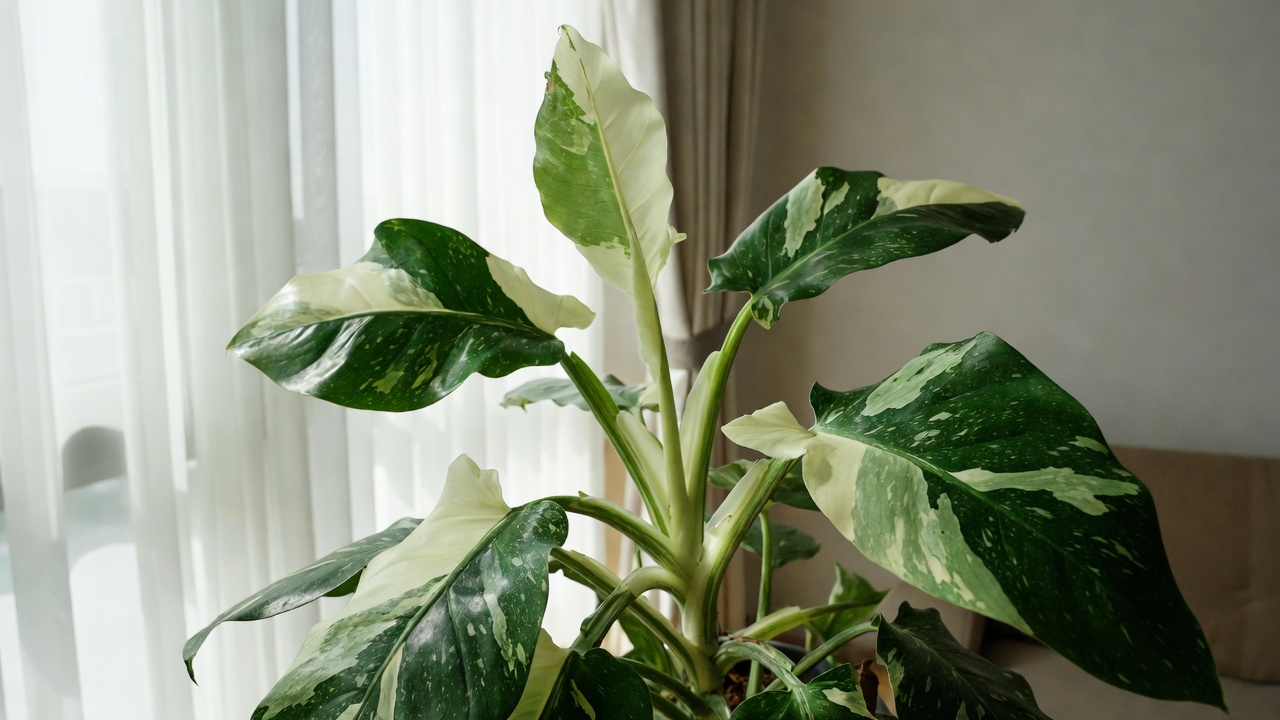
Lighting is one of the most important factors affecting variegation in a White Knight Philodendron.
Best Lighting Conditions
The plant thrives in:
Bright, indirect light
This means strong light that is filtered through curtains or reflected from nearby windows.
Ideal placement locations include:
-
Near an east-facing window
-
A few feet from a south-facing window
-
Under LED grow lights
Why Light Matters for Variegation
Variegated leaves contain less chlorophyll than fully green leaves. Because of this, the plant needs more light to produce energy.
When lighting is insufficient:
-
White variegation may disappear
-
Leaves may become mostly green
-
Growth slows significantly
When lighting is optimal:
-
Variegation becomes more vibrant
-
Leaf size increases
-
Growth improves
Signs Your Plant Needs More Light
Look for these indicators:
-
Leaves turning mostly green
-
Long, stretched stems
-
Slow or weak growth
If this happens, gradually move your plant to a brighter location.
Avoid Direct Harsh Sunlight
Too much direct sun can cause:
-
Leaf burn
-
Brown patches
-
Damaged variegation
The white areas of the leaves are particularly sensitive to intense sunlight.
Temperature Needs
White Knight Philodendrons prefer warm indoor temperatures similar to tropical climates.
Ideal Temperature Range
65°F – 80°F (18°C – 27°C)
Within this range, the plant will grow actively and maintain healthy foliage.
Temperature Stress
Cold temperatures can cause serious problems.
Avoid exposing your plant to:
-
Temperatures below 55°F (13°C)
-
Cold drafts
-
Air conditioning vents
-
Sudden temperature changes
Cold stress may result in:
-
Yellowing leaves
-
Slowed growth
-
Root damage
Keeping your plant in a stable indoor climate is essential for long-term health.
Humidity Requirements
Humidity plays a crucial role in maintaining healthy leaves and preventing browning variegation.
Ideal Humidity Level
White Knight Philodendrons prefer humidity between:
60% – 80%
While they can tolerate normal indoor humidity, higher humidity significantly improves leaf quality.
Signs of Low Humidity
Low humidity can cause:
-
Brown edges on white leaf sections
-
Curling leaves
-
Slow growth
How to Increase Humidity
Here are some effective strategies:
Use a humidifier
This is the most reliable method for maintaining consistent humidity.
Group plants together
Plants naturally increase humidity around each other.
Use pebble trays
Place a tray of water and pebbles beneath the pot.
Choose humid rooms
Bathrooms and kitchens often provide higher humidity levels.
Maintaining proper humidity will help keep the white portions of the leaves healthy and crisp.
Best Soil Mix for White Knight Philodendron
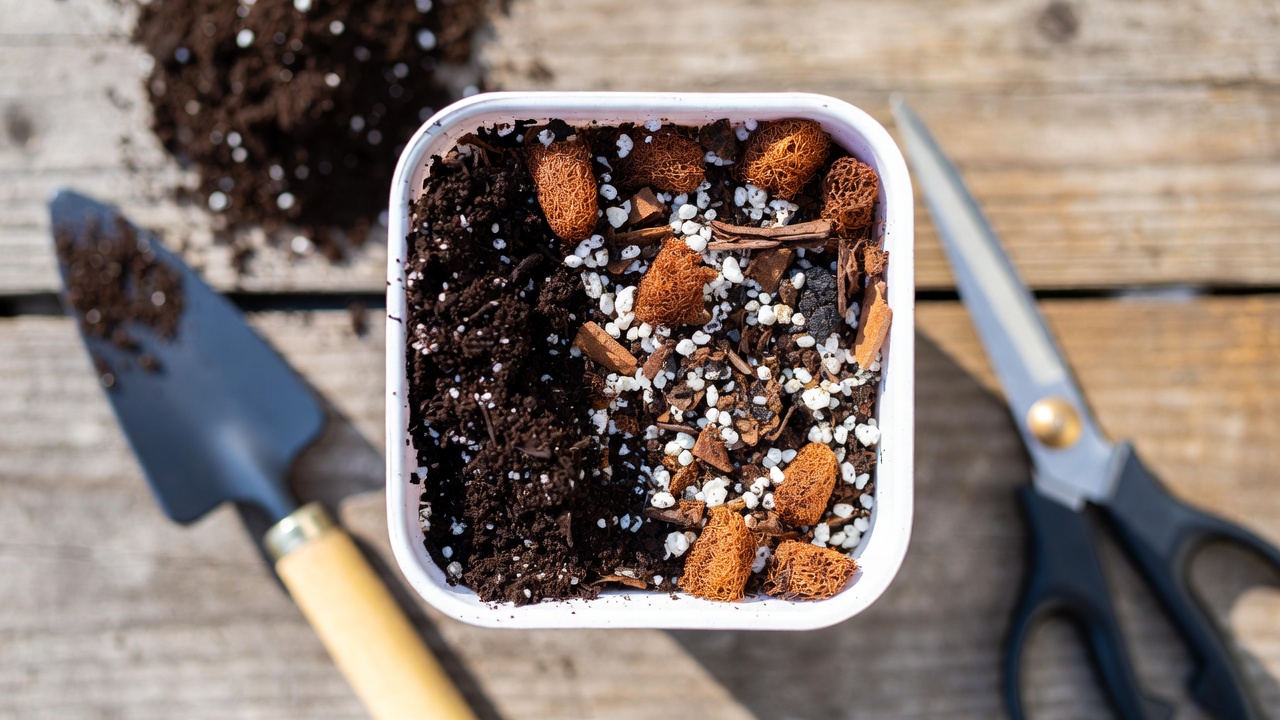
One of the biggest mistakes beginners make is planting philodendrons in heavy, compact soil.
These plants require loose, well-draining soil that allows oxygen to reach the roots.
Why Well-Draining Soil Is Important
Philodendron roots are sensitive to excess moisture.
Poor soil can cause:
-
Root rot
-
Fungal infections
-
Slow growth
-
Yellow leaves
A chunky soil mix mimics the aerated forest floor environment where these plants naturally grow.
Ideal DIY Soil Mix Recipe
A great soil mix for White Knight Philodendron includes:
-
40% potting soil or coco coir
-
25% orchid bark
-
20% perlite
-
10% peat moss
-
5% activated charcoal
This combination provides:
-
Excellent drainage
-
Root aeration
-
Moisture retention without waterlogging
Best Ready-Made Soil Options
If you prefer store-bought options, look for mixes labeled:
-
Aroid soil mix
-
Philodendron soil mix
-
Tropical houseplant mix
These typically contain bark, perlite, and other aerating components.
Watering Guide for Healthy Growth
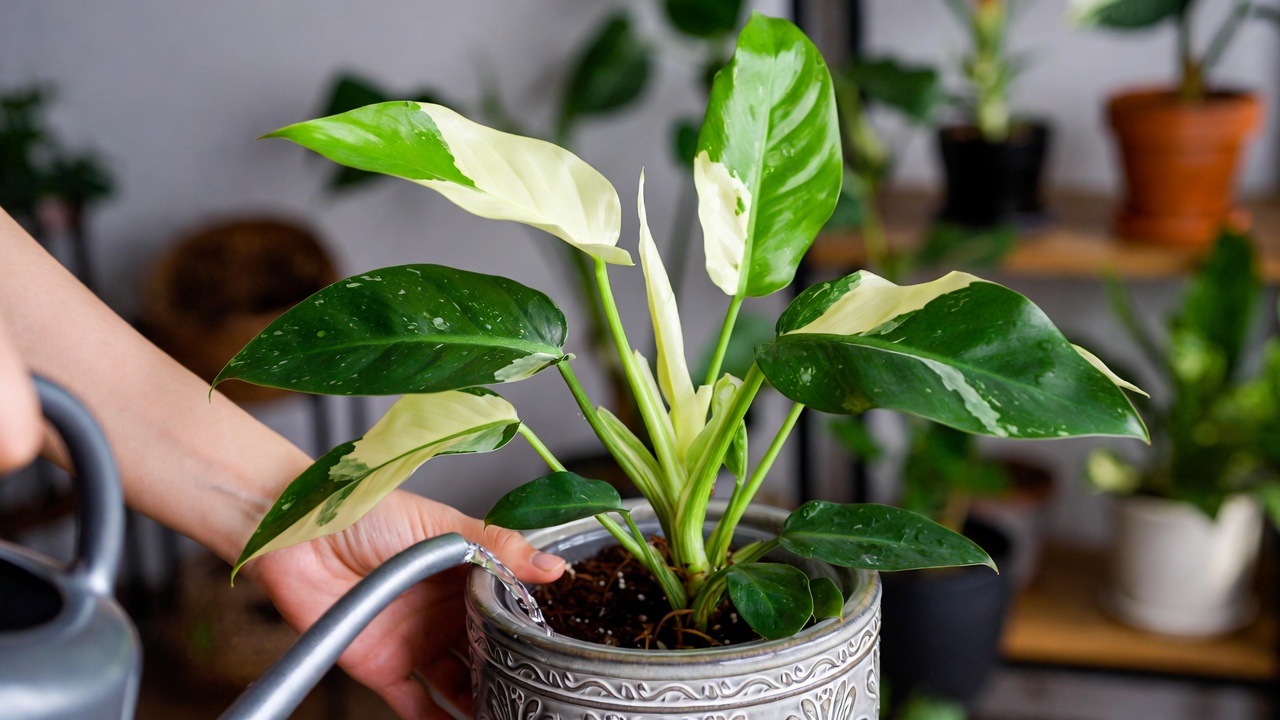
Proper watering is essential for maintaining a healthy White Knight Philodendron.
Overwatering is the most common cause of plant death.
How Often to Water White Knight Philodendron
Instead of watering on a strict schedule, use the soil dryness method.
Water your plant when:
The top 2–3 inches of soil are dry.
For most indoor environments, this usually means watering every:
-
7–10 days in warm seasons
-
10–14 days in winter
However, factors like humidity, pot size, and lighting will affect this.
Proper Watering Technique
Follow these steps:
-
Water slowly and evenly around the soil surface.
-
Allow water to drain fully from the bottom of the pot.
-
Empty the drainage tray.
Deep watering encourages strong root development.
Signs of Overwatering vs Underwatering
| Issue | Symptoms |
|---|---|
| Overwatering | Yellow leaves, mushy stems, root rot |
| Underwatering | Drooping leaves, dry soil, slow growth |
Monitoring your plant regularly helps prevent both problems.
Fertilizing for Faster Growth and Better Variegation
While philodendrons aren’t heavy feeders, proper fertilization helps promote healthy foliage and steady growth.
Best Fertilizers for Philodendrons
Use a balanced liquid fertilizer with a ratio such as:
10-10-10 or 20-20-20
Organic alternatives include:
-
Fish emulsion
-
Seaweed fertilizer
-
Compost tea
Fertilizing Schedule
During the growing season (spring and summer):
Fertilize every 4–6 weeks
During fall and winter:
-
Reduce fertilization
-
Feed every 8–10 weeks or stop completely
Overfertilizing can cause leaf burn and salt buildup, so moderation is key.
How to Maintain Strong White Variegation
One of the biggest reasons plant lovers purchase a White Knight Philodendron is for its dramatic white variegation. However, maintaining that contrast between white and green can be challenging if the plant’s needs are not properly met.
Understanding why variegation happens and how to support it is key to keeping your plant looking spectacular.
Why Variegation Happens
Variegation occurs due to a genetic mutation that limits chlorophyll production in certain areas of the leaf.
Chlorophyll is responsible for the green color in plants and plays a critical role in photosynthesis. Because the white sections lack chlorophyll, they cannot produce energy as efficiently as green tissue.
This is why variegated plants require better growing conditions than fully green plants.
Factors That Affect Variegation
Several environmental factors influence how much white variegation your plant produces.
Light Exposure
Light is the most important factor.
-
Bright indirect light encourages stronger variegation
-
Low light often causes the plant to produce greener leaves
This is the plant’s natural survival response — producing more chlorophyll helps it gather more energy.
Nutrient Balance
Excess nitrogen fertilizer may encourage rapid green growth, which can reduce visible variegation.
Using a balanced fertilizer prevents this issue.
Plant Maturity
Young plants often produce less dramatic variegation. As the plant matures and climbs, leaf patterns usually become more striking.
What to Do If Variegation Starts Fading
If you notice your plant producing mostly green leaves, try these solutions:
Move the plant to brighter indirect light
Gradually increase light exposure over several days.
Prune reverted stems
If a stem produces fully green leaves repeatedly, pruning it may encourage new growth with variegation.
Provide climbing support
Plants that climb moss poles often develop larger leaves with stronger variegation.
Pruning and Training Your White Knight Philodendron
Pruning plays an important role in maintaining a healthy, well-shaped plant.
Regular pruning encourages fuller growth and prevents leggy stems.
When to Prune
The best time to prune your White Knight Philodendron is during the active growing season (spring or summer).
Pruning during this period allows the plant to recover quickly and produce new growth.
Signs your plant needs pruning include:
-
Long, sparse stems
-
Reverted green growth
-
Damaged or yellow leaves
Always use clean, sterilized pruning shears to prevent disease.
How to Encourage Bushier Growth
If you want a fuller plant, pruning is essential.
Steps to encourage bushy growth:
-
Identify a healthy node (where leaves emerge).
-
Cut just above the node.
-
New growth will emerge from that node.
Over time, this process results in multiple stems and a thicker plant structure.
Using Moss Poles for Climbing
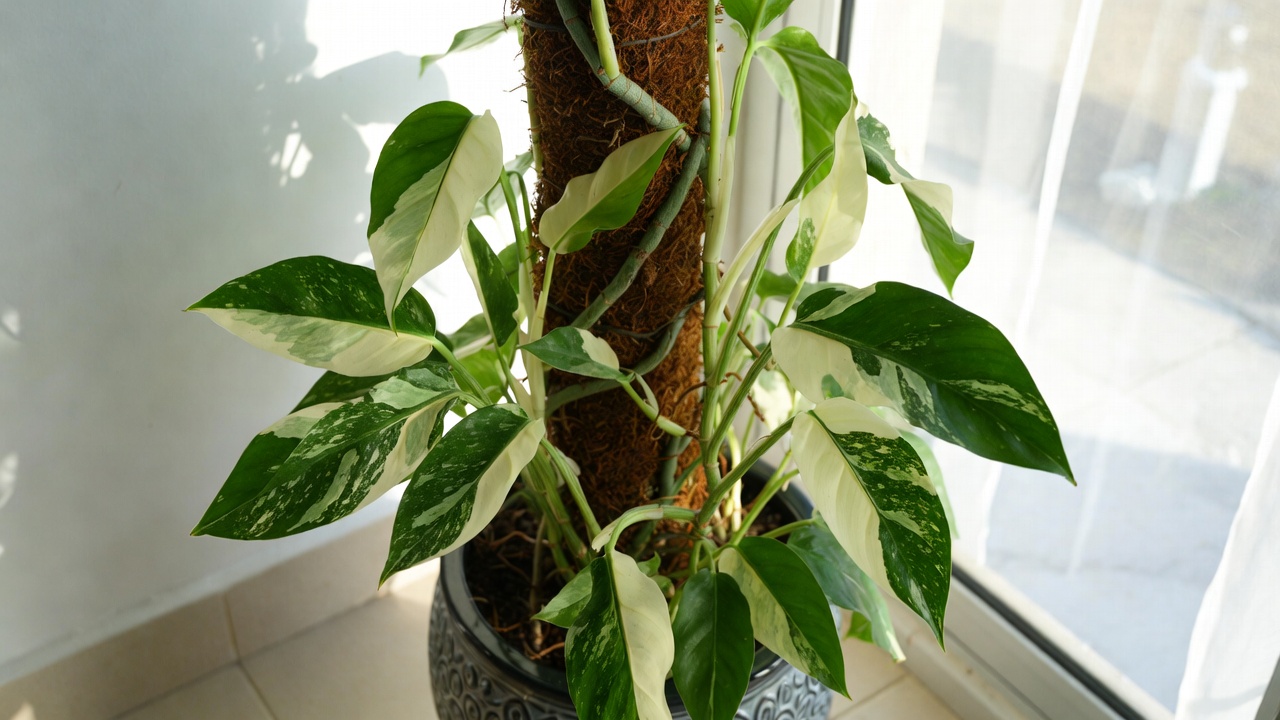
White Knight Philodendrons are natural climbers.
In their native rainforest habitat, they grow by climbing trees toward sunlight.
Using a moss pole provides several benefits:
-
Larger leaf size
-
Stronger stems
-
Faster growth
-
Improved variegation
To install a moss pole:
-
Place the pole in the pot near the plant.
-
Gently tie stems to the pole.
-
Keep the moss slightly moist.
As the plant climbs, its leaves typically become larger and more dramatic.
How to Propagate White Knight Philodendron
Propagation is a great way to expand your plant collection or share plants with friends.
Fortunately, the White Knight Philodendron is relatively easy to propagate.
Propagation by Stem Cuttings
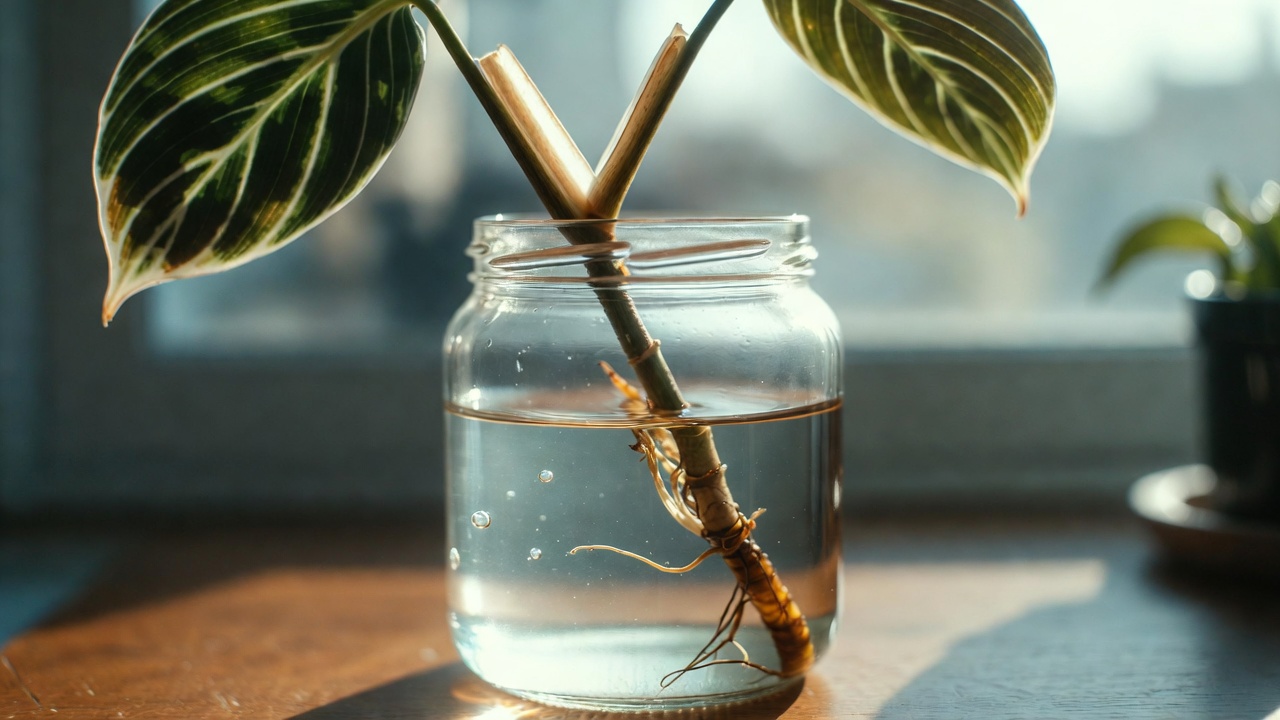
The most reliable method is stem cutting propagation.
Each cutting must contain:
-
At least one node
-
One healthy leaf
Step-by-Step Propagation Process
-
Choose a healthy stem with a visible node.
-
Cut just below the node using sterilized scissors.
-
Place the cutting in water or moist soil.
-
Provide bright indirect light.
-
Wait for roots to develop.
Roots usually begin forming within 2–4 weeks.
Water vs Soil Propagation
Both methods work well, but each has advantages.
Water Propagation
Pros:
-
Easy to monitor root development
-
Beginner-friendly
Cons:
-
Roots may need adjustment when transferred to soil
Soil Propagation
Pros:
-
Roots adapt to soil immediately
-
Less transplant shock
Cons:
-
Root growth cannot be easily observed
Best Time to Propagate
Propagation is most successful during the growing season (spring and summer) when the plant is actively producing new growth.
Common Problems and How to Fix Them
Even experienced plant growers occasionally encounter issues. Fortunately, most problems with White Knight Philodendrons are easy to correct.
Browning White Leaves
One of the most common concerns is browning on the white parts of the leaves.
Causes
-
Low humidity
-
Excessive direct sunlight
-
Inconsistent watering
Solutions
-
Increase humidity levels
-
Move the plant away from direct sunlight
-
Maintain consistent watering habits
Because white leaf sections lack chlorophyll, they are more delicate than green areas.
Yellow Leaves
Yellow leaves are often a sign of stress.
Possible Causes
-
Overwatering
-
Poor drainage
-
Nutrient imbalance
-
Sudden temperature changes
Solutions
-
Allow soil to dry before watering again
-
Improve drainage with better soil
-
Reduce watering frequency
If only the oldest leaves are turning yellow, this may simply be natural aging.
Pests That Affect White Knight Philodendron
Like most tropical houseplants, White Knight Philodendrons can occasionally attract pests.
Common pests include:
-
Spider mites
-
Mealybugs
-
Thrips
-
Aphids
How to Treat Pests
Effective treatment options include:
-
Neem oil spray
-
Insecticidal soap
-
Wiping leaves with diluted alcohol solution
Early detection makes pest control much easier.
Regularly inspect your plant’s leaves, especially the undersides where pests often hide.
Repotting White Knight Philodendron
Repotting helps maintain healthy roots and provides fresh nutrients.
Most White Knight Philodendrons need repotting every 1–2 years.
When to Repot
Signs that your plant needs repotting include:
-
Roots growing from drainage holes
-
Soil drying out very quickly
-
Slowed growth
-
Compact root ball
Repotting gives the roots more room to expand.
Best Pot Types
Choose a pot with good drainage holes.
Popular options include:
Terracotta Pots
Pros:
-
Excellent airflow
-
Prevents overwatering
Cons:
-
Soil dries faster
Plastic Pots
Pros:
-
Retain moisture longer
-
Lightweight
Cons:
-
Less breathable
Both options work well as long as drainage is adequate.
Step-by-Step Repotting Guide
-
Gently remove the plant from its current pot.
-
Loosen the root ball slightly.
-
Place the plant in fresh aroid soil mix.
-
Fill gaps with new soil.
-
Water thoroughly.
Avoid repotting during winter unless absolutely necessary.
Expert Tips for Growing a Stunning White Knight Philodendron
Professional plant growers follow several techniques to keep their variegated plants thriving.
Here are some expert-level tips:
Rotate your plant regularly
This ensures even growth and prevents leaning toward light sources.
Clean the leaves
Dust can block sunlight and reduce photosynthesis. Wipe leaves gently with a damp cloth.
Use climbing supports early
Training your plant early encourages healthier structure and larger leaves.
Avoid heavy pruning of highly variegated stems
These stems are valuable because they produce the most attractive foliage.
Maintain consistent care routines
Plants thrive when watering, lighting, and humidity remain stable.
Is White Knight Philodendron Rare?
The White Knight Philodendron was once considered extremely rare, but its availability has improved as more growers propagate the plant.
However, it is still regarded as a collector-level houseplant due to its unique appearance.
Typical Price Range
Prices vary depending on plant size and variegation.
-
Small plants: $30 – $80
-
Medium plants: $80 – $150
-
Large mature plants: $150+
Plants with highly variegated leaves tend to be more expensive.
Frequently Asked Questions
How fast does White Knight Philodendron grow?
Under ideal conditions, the plant grows moderately fast, producing several new leaves during the growing season. Growth slows significantly in winter.
Why are my White Knight leaves turning brown?
The most common causes are:
-
Low humidity
-
Excessive sunlight
-
Inconsistent watering
Increasing humidity and adjusting lighting usually solves the issue.
Can White Knight Philodendron revert?
Yes. Variegated plants sometimes revert to fully green growth. Pruning reverted stems can encourage new variegated growth.
Does White Knight Philodendron need a moss pole?
While not mandatory, a moss pole greatly benefits the plant by encouraging larger leaves and stronger climbing growth.
Is White Knight Philodendron toxic to pets?
Yes. Like most philodendrons, it contains calcium oxalate crystals, which can be toxic if ingested by pets or humans.
Keep the plant out of reach of cats and dogs.
Conclusion
The White Knight Philodendron is one of the most stunning variegated houseplants you can grow indoors. Its dramatic white-and-green foliage and burgundy stems make it a standout centerpiece in any plant collection.
Although it has a reputation for being challenging, the truth is that success simply comes down to providing the right conditions.
To keep your plant thriving, remember these key principles:
-
Provide bright indirect light
-
Use well-draining aroid soil
-
Water only when the top soil dries
-
Maintain high humidity
-
Support the plant with a moss pole
With proper care and patience, your White Knight Philodendron will reward you with breathtaking variegated leaves and healthy climbing growth for years to come.
If you’re passionate about indoor plants, mastering the care of this plant is a rewarding experience that will elevate your houseplant collection. 🌿